Fit Colon Ca Screening: How It Works, Results and What to Expect

FIT is a home stool test that detects human blood that cannot usually be seen in the stool. A negative FIT result lowers the likelihood of colorectal cancer at that time, but routine testing should be repeated as advised.
Key Takeaways
- FIT is a home stool test that detects human blood that cannot usually be seen in the stool.
- A negative FIT result lowers the likelihood of colorectal cancer at that time, but routine testing should be repeated as advised.
- A positive FIT does not diagnose cancer; it means a colonoscopy is needed to find the source of bleeding.
- FIT is convenient and does not usually require diet changes, bowel preparation, sedation, or time away from normal activities.
- People with symptoms, a strong family history, or certain bowel conditions may need colonoscopy rather than FIT screening.
FIT colon CA screening is a simple, noninvasive stool test that looks for tiny amounts of blood that may come from colorectal polyps or cancer. It is commonly used for routine screening in people at average risk, but an abnormal result needs timely follow-up with colonoscopy.
Overview: how FIT colon CA screening works
FIT colon CA screening, also called a fecal immunochemical test, is a stool-based test used to screen for colorectal cancer. It detects small amounts of human hemoglobin, a protein in blood, that may be present in stool but invisible to the eye. Bleeding can occur from colorectal cancer or from some polyps, which are growths in the lining of the colon or rectum.
The test is completed at home using a kit supplied by a healthcare provider or screening program. A small sample of stool is collected, placed in the provided container or tube, and returned as instructed for laboratory analysis. FIT is a screening test rather than a diagnostic test: it helps identify people who may benefit from further assessment.
For many adults at average risk, FIT offers a practical way to take part in regular colorectal cancer screening. Because it looks specifically for human blood, it is generally less affected by food than older stool blood tests. However, it does not directly view the bowel, remove polyps, or explain the cause of bleeding.
Who is a good candidate for FIT screening?
FIT is most often offered to adults at average risk of colorectal cancer who do not have bowel symptoms. Screening recommendations differ between countries and individual health systems, but many guidelines begin regular screening at age 45 for average-risk adults. A clinician can advise when screening should begin and how often it should be repeated based on personal circumstances.
People may be considered at higher risk if they have a personal history of colorectal polyps or cancer, inflammatory bowel disease, previous abdominal or pelvic radiation, or a close relative with colorectal cancer or certain inherited cancer syndromes. In these situations, colonoscopy or another individualized screening plan is often more appropriate than FIT alone.
FIT is not intended to assess new warning symptoms. Rectal bleeding, persistent changes in bowel habit, unexplained iron-deficiency anemia, unexplained weight loss, or ongoing abdominal pain should be discussed with a doctor even if a recent FIT result was negative.
- Average-risk adults without symptoms may be suitable for routine FIT screening.
- People unable or unwilling to have colonoscopy may use FIT when appropriate within a clinician-guided screening plan.
- Higher-risk individuals often need earlier or more direct bowel examination.
Step by step: what happens during a FIT test?
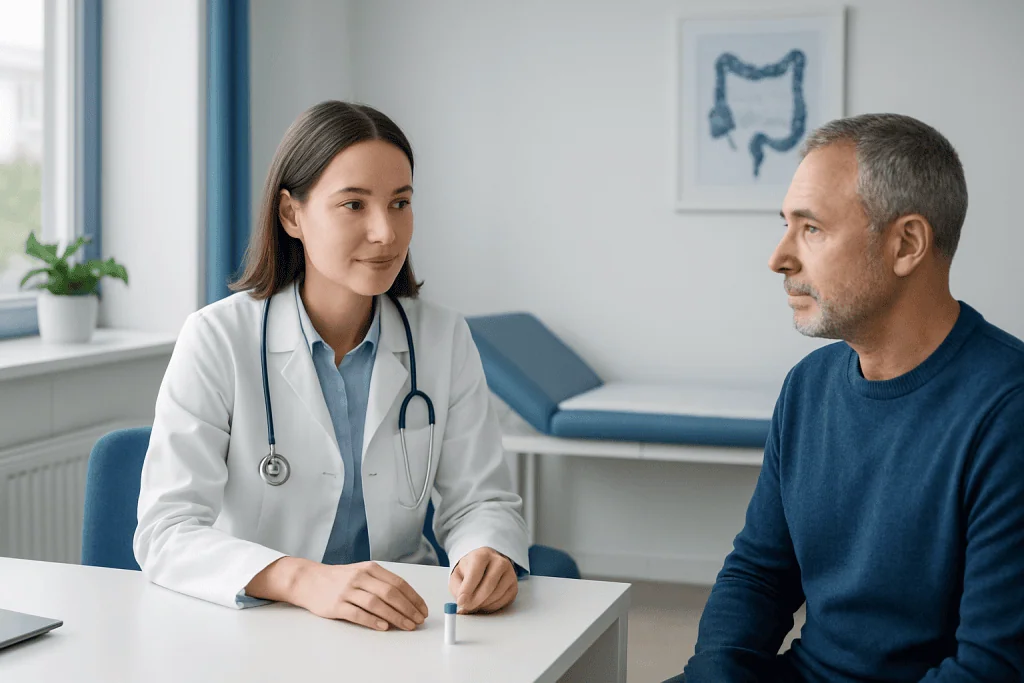
First, the person receives a FIT kit and reads the collection instructions carefully. The kit commonly includes a collection device, a small sample tube or card, identification labels, and directions for returning the specimen. The exact method varies, so the instructions provided with the specific kit should always take priority.
At home, stool is passed into a clean, dry receptacle or onto the collection paper supplied with the kit. The sampling stick is used to take a small amount of stool from the sample, then placed back into the tube or collection device. The sample is labelled and returned promptly by the method requested, such as delivery to a laboratory or mailing through an approved system.
There is no sedation, bowel cleansing, instrument insertion, or recovery period. After collecting the sample, the person can immediately resume usual daily activities. Results are typically shared by the screening provider or doctor, who will explain whether further testing is needed.
What not to do before a FIT test?
Most people do not need to change their diet or stop routine medicines before a FIT test. Unlike some older stool tests, FIT does not usually require avoiding red meat, vitamin C, or particular vegetables. A person should not stop prescribed medicines, including blood thinners, unless their own clinician specifically tells them to do so.
It is important to follow the kit instructions about timing and collection. The sample should not be contaminated with urine, toilet water, cleaning products, or menstrual blood. If a person has active menstrual bleeding, bleeding hemorrhoids, or visible rectal bleeding, they should ask the healthcare team whether the test should be postponed or whether clinical assessment is more suitable.
A FIT test should not be used to reassure someone who has concerning symptoms. If there is visible blood in the stool or toilet, persistent bowel changes, or unexplained anemia, medical advice is needed rather than relying on home screening alone.
FIT test results: what negative and positive results mean
A negative FIT means that blood was not detected above the laboratory’s threshold in the sample. This is reassuring, but it cannot completely rule out polyps or colorectal cancer because bleeding may be intermittent or absent. Regular repeat screening remains important according to the recommended schedule.
A positive FIT means that blood was detected in the stool sample. Blood can come from several causes, including polyps, colorectal cancer, hemorrhoids, inflammation, diverticular disease, or other gastrointestinal conditions. The result does not identify where bleeding came from and does not, by itself, diagnose cancer.
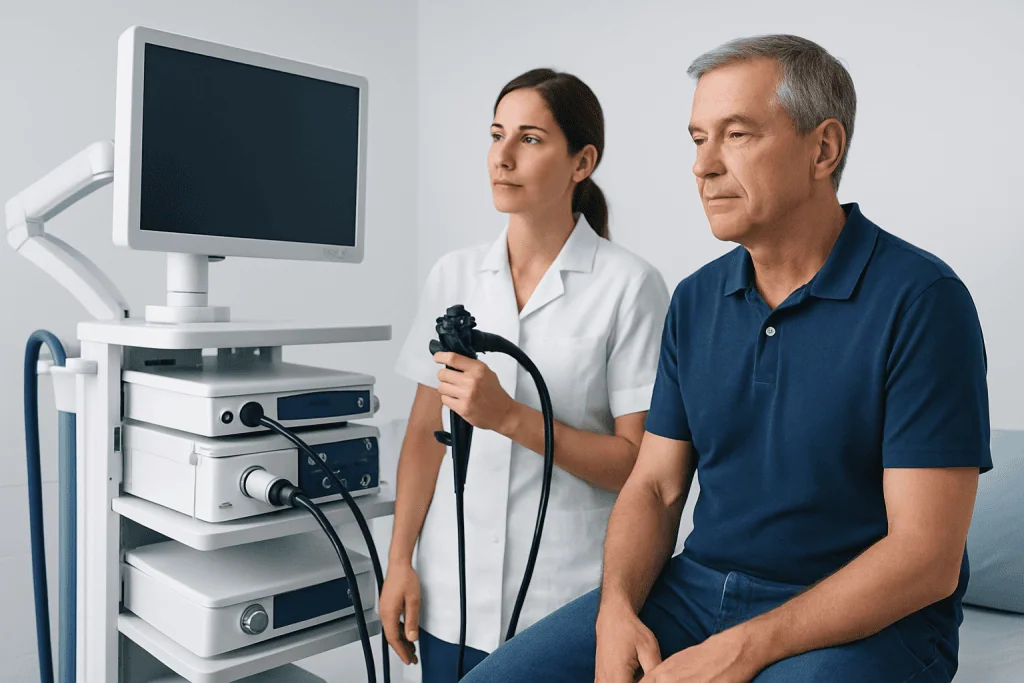
The key next step after a positive result is diagnostic colonoscopy. During colonoscopy, a specialist examines the rectum and colon with a flexible camera and may remove polyps or take tissue samples when needed. Completing this follow-up promptly is an essential part of an effective screening pathway.
Is FIT testing as good as colonoscopy?
FIT and colonoscopy serve different roles, so one is not simply “as good as” the other in every situation. FIT is a convenient screening test that can be repeated regularly and may increase participation in colorectal cancer screening. It is noninvasive and does not require bowel preparation, sedation, or a procedure appointment.
Colonoscopy is more comprehensive because it allows the doctor to inspect the inside of the colon and rectum directly. It can find and remove many polyps during the same procedure, which can help prevent some colorectal cancers. It is also the appropriate follow-up test after a positive FIT result.
Colonoscopy requires bowel preparation and carries small procedural risks, such as bleeding after polyp removal, reactions to sedation, or rarely a tear in the bowel wall. FIT has no procedure-related risks, but it must be repeated on schedule and can miss some cancers and advanced polyps. The most appropriate choice depends on risk level, symptoms, preferences, local screening guidance, and clinician advice.
What is the chance of colon cancer with a positive FIT test?
A positive FIT increases the likelihood that further investigation will find a colorectal abnormality, but most positive results are not caused by cancer. The chance of cancer varies with age, sex, the amount of blood detected, the test threshold used, screening history, and individual risk factors. Polyps and noncancerous causes of bleeding are also common findings.
Because FIT cannot determine the source of blood, it is not possible to estimate an individual’s cancer risk accurately from the result alone. A colonoscopy provides the information needed to assess the colon and rectum properly. It may identify no important abnormality, find polyps that can be removed, or occasionally diagnose cancer at a stage that needs further care.
A positive screening result can understandably feel worrying. The most helpful response is to arrange the recommended colonoscopy and discuss any symptoms, family history, medicines, and previous screening results with the healthcare team.
What happens if my FIT test is positive?
After a positive FIT, the healthcare provider should arrange or refer the person for colonoscopy. Before the procedure, the specialist reviews medical history, medicines, allergies, and any symptoms. The person receives bowel-preparation instructions because the colon must be clean for the examination to be accurate.
During colonoscopy, the doctor examines the bowel lining and can remove many polyps immediately or take biopsies from areas that need laboratory assessment. Most people go home the same day after sedation, although they need someone to accompany them and should avoid driving or important decisions until the sedative has worn off.
Results and next steps depend on what the examination shows. If no significant finding is present, the doctor will recommend the next screening interval. If polyps are removed or another condition is found, follow-up is tailored to the pathology result and the person’s wider health needs. Acibadem International’s multidisciplinary specialists in JCI-accredited hospitals support international patients requiring colorectal assessment and treatment planning.
Benefits, limitations, and when to seek medical care
The main benefits of FIT are that it is private, noninvasive, and easy to complete at home. It does not require dietary restrictions in most cases and may help detect bleeding from colorectal cancer or some advanced polyps before symptoms develop. Its value is greatest when eligible people complete it regularly and follow through with colonoscopy after a positive result.
Its limitations are equally important. FIT can be negative when a polyp or cancer is not bleeding at the time of sampling, and it can be positive because of bleeding unrelated to cancer. It does not replace colonoscopy for people who have significant symptoms or who are at increased risk.
Medical care should be sought promptly for visible rectal bleeding, black or tar-like stool, persistent or worsening abdominal pain, a continuing change in bowel habits, unexplained weight loss, marked tiredness, or symptoms of anemia such as shortness of breath or dizziness. Urgent assessment is particularly important if bleeding is heavy, associated with fainting, or accompanied by severe pain. A qualified doctor can determine whether urgent testing is needed.
Frequently asked questions
How often should FIT colon CA screening be done?
For average-risk adults using FIT as their screening method, it is commonly repeated every year. Recommendations can vary by country, age, personal risk factors, and the screening program. A healthcare professional can confirm the appropriate schedule for the individual.
Can hemorrhoids cause a positive FIT test?
Yes. Hemorrhoids can bleed and may contribute to a positive FIT result, although FIT cannot determine the source of blood. A positive result still requires follow-up as recommended, usually with colonoscopy, because bleeding should not be assumed to be from hemorrhoids alone.
Can a FIT test detect polyps?
FIT does not detect polyps directly. It detects blood in stool, and some larger or advanced polyps may bleed intermittently. Many polyps do not bleed, which is one reason colonoscopy remains important after a positive FIT and for people at higher risk.
Can I do a FIT test while taking blood thinners?
People should generally continue prescribed blood thinners unless their clinician gives specific instructions otherwise. These medicines may make bleeding more likely to be detected, but stopping them without medical advice can be unsafe. The screening provider should be told about all medicines being taken.
What should I do if my FIT test is negative but I have symptoms?
A negative FIT should not delay medical assessment of persistent or concerning symptoms. Visible bleeding, bowel habit changes, unexplained weight loss, abdominal pain, or anemia need evaluation by a doctor. Further testing may be needed even when the stool test is negative.
Is there any recovery after completing a FIT test?
No physical recovery is needed after FIT sample collection. The test is performed at home and does not involve sedation, bowel preparation, or an invasive procedure. Normal activities can continue immediately after the sample is collected.
References
- World Health Organization
- American Cancer Society
- U.S. Preventive Services Task Force
- National Cancer Institute
- Centers for Disease Control and Prevention
This article is for general information only and is not a substitute for professional medical advice. Please consult a qualified doctor about your individual situation.
Persistent digestive symptoms? Get evaluated in Turkey
JCI-accredited · board-certified surgeons · reply within 24h
Add us as a Preferred Source to see more of our trusted health content across Google Search, AI Overviews and Discover.