Fit Legs Workout: An Evidence-Based Guide for Patients
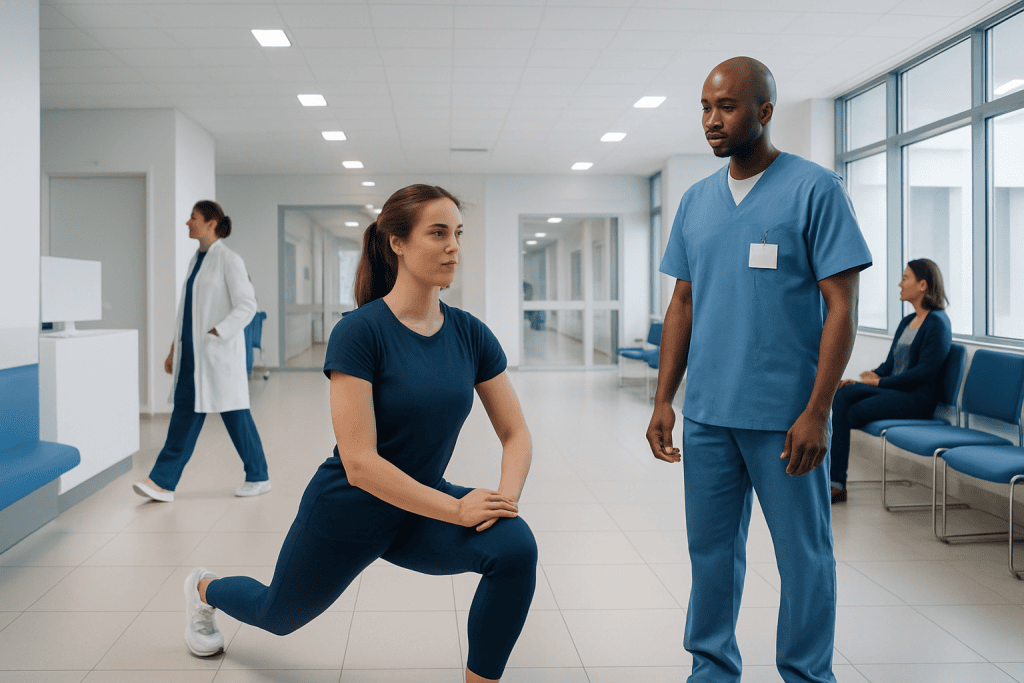
A fit legs workout should train the thighs, hips, glutes, calves, and core rather than focusing on one muscle group alone. Good technique, gradual progression, and rest days help reduce the risk of strain or overuse injuries.
Key Takeaways
- A fit legs workout should train the thighs, hips, glutes, calves, and core rather than focusing on one muscle group alone.
- Good technique, gradual progression, and rest days help reduce the risk of strain or overuse injuries.
- Leg training supports daily activities such as walking, climbing stairs, standing up, and maintaining balance.
- Pain, marked swelling, joint instability, or symptoms after an injury should be assessed by a qualified clinician.
- People with arthritis, back pain, heart disease, or recent surgery may need a modified program and medical guidance.
A fit legs workout is a balanced lower-body exercise plan that improves strength, stability, mobility, and everyday function. For most adults, the safest approach combines squatting, hip-hinge, step-up, calf, and balance exercises with gradual progression and adequate recovery.
Overview: what a fit legs workout means
A fit legs workout is not simply a high-intensity session for building muscle size. In clinical and fitness terms, it is a structured lower-body program designed to improve strength, joint control, muscular endurance, balance, and movement quality. A well-designed routine trains the major muscles of the hips, thighs, and calves while also supporting the knees, ankles, pelvis, and lower back.
For patients and the general public, the most effective plan is usually one that includes a small number of basic movement patterns performed consistently. These patterns include squatting, hinging at the hips, stepping, calf raises, and balance work. Together, they can help with walking, climbing stairs, lifting objects, and reducing the physical decline that may occur with age or inactivity.
The goal is not to copy athletic programs from social media or to exercise through pain. Instead, a fit legs workout should match a person’s age, current fitness, health conditions, and prior injuries. Many people benefit from starting with body-weight movements and then adding resistance gradually as technique and confidence improve.
Why leg training matters for health and function
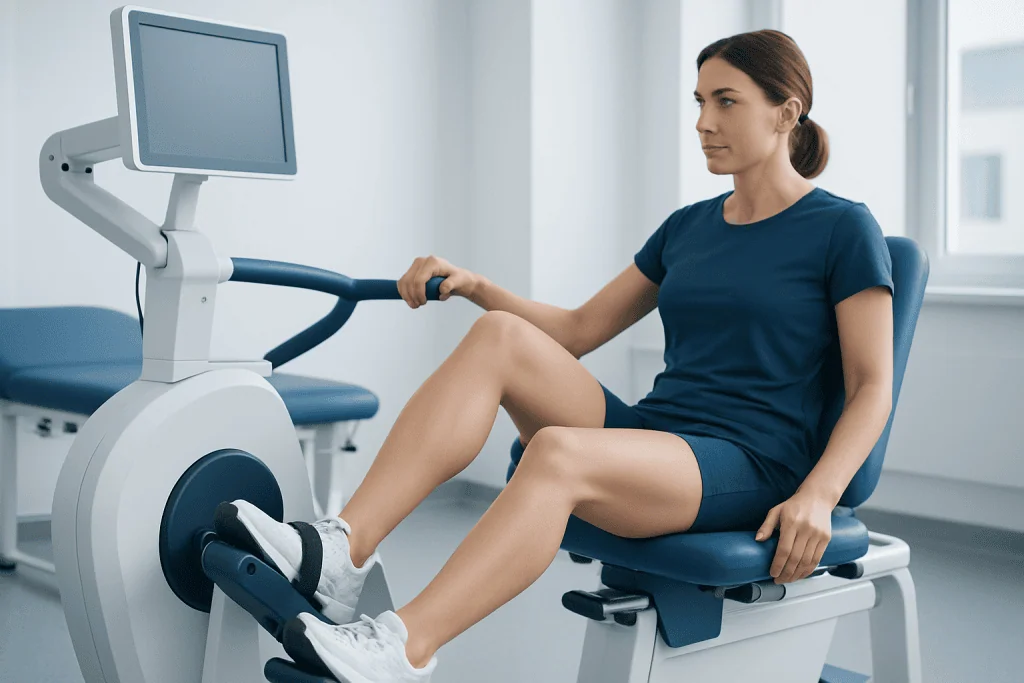
Leg muscles are among the largest muscle groups in the body, so training them can have benefits beyond appearance. Stronger lower-body muscles support posture, mobility, and balance. This may lower the risk of falls, improve walking speed, and make everyday tasks feel easier.
Lower-body exercise can also support metabolic health as part of an overall active lifestyle. Regular muscle-strengthening activity is associated with better insulin sensitivity, healthier body composition, and improved bone loading, which is important for maintaining bone strength over time. These benefits are especially relevant for adults who sit for long periods or who have become less active due to work, pain, or illness.
In rehabilitation and preventive care, leg training is often part of a broader plan for joint health and recovery. Patients with conditions such as knee pain or osteoarthritis may still be able to exercise, but they often need movement modifications, supervised progression, and attention to symptom response.
Core parts of an evidence-based fit legs workout
A balanced lower-body routine usually includes five categories of exercise. First are squat-based movements, such as chair squats or supported squats, which train the quadriceps, gluteal muscles, and trunk control. Second are hip-hinge movements, such as glute bridges or light deadlift patterns, which strengthen the hamstrings and glutes and teach safe bending mechanics.
Third are single-leg or step-based exercises, such as step-ups, split squats, or sit-to-stand drills. These help improve balance, coordination, and side-to-side stability. Fourth are calf raises, which support ankle function, walking efficiency, and stair climbing. Fifth are balance or control exercises, such as standing on one leg while holding support, which are particularly helpful for older adults and people returning after injury.
A practical beginner session may include 1 to 3 sets of 8 to 15 repetitions of each exercise, depending on the movement and the person’s ability. The resistance should feel challenging but still allow controlled form. It is usually reasonable to train the legs two or three times per week with at least one rest day between harder sessions.
- Squat pattern: chair squat, wall squat, supported body-weight squat
- Hip hinge: glute bridge, hip hinge drill, light Romanian deadlift
- Step pattern: step-up, split squat, sit-to-stand
- Calf work: standing calf raise, seated calf raise
- Balance: tandem stance, single-leg stand with support
How to build a safe routine and progress over time
Warm-up matters because it prepares the joints and muscles for loading. A simple warm-up may include 5 to 10 minutes of brisk walking, cycling, or marching in place, followed by gentle mobility work for the hips, knees, and ankles. The aim is to increase blood flow and improve movement quality, not to cause fatigue before the workout starts.
Progression should be gradual. This may mean adding a few repetitions, increasing resistance slightly, slowing the movement to improve control, or advancing from supported to unsupported versions. A common mistake is increasing volume and intensity too quickly, which can contribute to tendon irritation, delayed recovery, or flare-ups of joint pain.
Technique is more important than the amount of weight used. The knees should generally track in line with the feet, the trunk should stay controlled, and breathing should remain steady. Mild muscle fatigue is expected, but sharp pain, sudden instability, or pain that worsens throughout the session is a sign to stop and reassess. People who need structured recovery after injury may benefit from physical therapy and rehabilitation to rebuild leg strength safely.
Common mistakes, symptoms, and injury prevention
Many lower-body problems come from training errors rather than from exercise itself. Frequent issues include poor technique, skipping warm-up, doing too much too soon, training through pain, and neglecting recovery. Wearing unsuitable footwear or exercising on an unstable surface can also affect alignment and increase discomfort in the feet, knees, or hips.
It is useful to distinguish normal post-exercise soreness from warning signs. Mild soreness that peaks a day or two after a new workout is common and often improves with gentle movement, hydration, and rest. In contrast, sharp pain, swelling, joint locking, giving way, bruising, or persistent pain during daily activities may suggest an injury or an underlying condition that should be assessed.
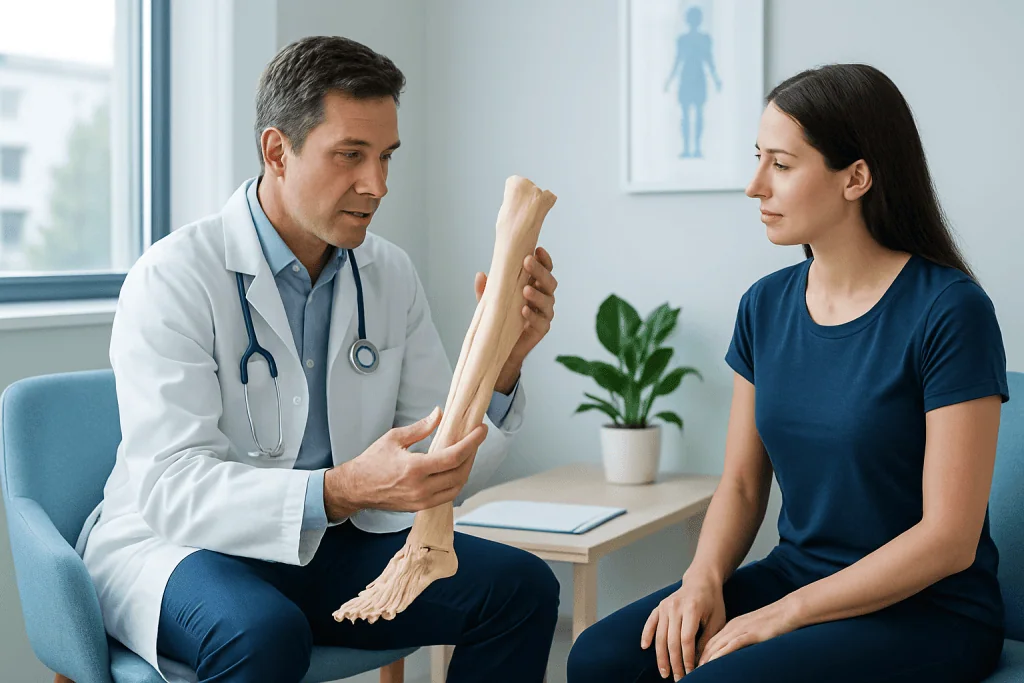
Patients with previous ligament injuries, tendon problems, or recurring knee symptoms may need professional evaluation before returning to higher-impact exercise. In some cases, a doctor may recommend imaging or further orthopedic assessment, particularly if there is suspected structural damage such as a meniscus tear. If surgery or an invasive procedure is being considered for a significant joint problem, care may involve orthopedics and traumatology.
Who may need modifications or medical guidance
Not every person should follow the same leg workout plan. Older adults, people who are new to exercise, and those with obesity, diabetes, heart disease, osteoporosis, arthritis, or chronic back pain often benefit from tailored exercise choices. For example, a chair squat may be more suitable than a deep squat, and a low step may be safer than a jump-based drill.
Pregnant individuals, people recovering from surgery, and patients with balance disorders should also seek personalized advice. The same applies to anyone with numbness, significant weakness, or symptoms that radiate down the leg, because these may indicate a spine or nerve issue rather than simple muscle fatigue. If circulation problems are suspected, a vascular assessment may be needed before starting a demanding lower-body program.
When symptoms are persistent or movement is limited, supervised rehabilitation can help identify whether the main issue is muscle weakness, reduced mobility, poor motor control, or joint pathology. Near the end of the care pathway, some patients may also be guided on safe return to exercise by multidisciplinary teams. Acibadem International’s multidisciplinary specialists in JCI-accredited hospitals diagnose and treat musculoskeletal and rehabilitation needs for international patients.
When to seek medical care
Medical advice should be sought if leg exercise causes severe pain, visible swelling, redness, warmth, marked bruising, or a popping sensation at the time of injury. Urgent assessment is also important if a person cannot bear weight, the knee or ankle repeatedly gives way, or there is sudden calf swelling or shortness of breath.
Less urgent but still important reasons to see a doctor include pain that lasts more than a few days after exercise, symptoms that keep returning, reduced range of motion, night pain, or worsening performance despite rest. People with fever, unexplained weight loss, chest symptoms during exercise, or known heart disease should not ignore new exercise-related symptoms.
A clinician can look for causes such as overuse injury, arthritis, tendon irritation, nerve compression, or biomechanical problems. Depending on the findings, treatment may include activity modification, rehabilitation exercise, medication advice, or further assessment by specialists.
Frequently asked questions
How often should a fit legs workout be done?
For many adults, leg strengthening two or three times per week is a reasonable starting point. Rest days between harder sessions help muscles recover and reduce the risk of overuse.
Is walking enough for leg fitness?
Walking is excellent for general health and endurance, but it may not fully train strength, balance, and joint control. Adding simple resistance exercises can make a leg program more complete.
Should a fit legs workout cause pain?
Mild effort and temporary muscle soreness can be normal, especially after a new routine. Sharp pain, joint instability, swelling, or pain that changes the way a person walks should not be ignored.
Can older adults do leg workouts safely?
Yes, in many cases they can and should, because leg strength supports independence and balance. Exercises often need to be adapted to current mobility, medical history, and fall risk.
What are the best beginner leg exercises?
Common starting exercises include chair squats, glute bridges, step-ups on a low platform, calf raises, and supported single-leg balance. These movements are practical and can be progressed gradually.
Do people with knee arthritis need to avoid leg training?
Not usually. Many people with knee arthritis benefit from well-chosen strengthening and mobility work, but the program should be modified to keep symptoms manageable and technique safe.
References
- World Health Organization
- American College of Sports Medicine
- National Institute on Aging
- American Academy of Orthopaedic Surgeons
- Centers for Disease Control and Prevention
This article is for general information only and is not a substitute for professional medical advice. Please consult a qualified doctor about your individual situation.
Explore treatments in Turkey — costs, top hospitals & a free quote
JCI-accredited · board-certified surgeons · reply within 24h
Add us as a Preferred Source to see more of our trusted health content across Google Search, AI Overviews and Discover.

More from the Health Library

Arm Bones: An Evidence-Based Guide for Patients

Feeding Tube: An Evidence-Based Guide for Patients

Sgpt/alt lab test: A Complete Medical Guide for Patients

Can you survive without kidneys? A Doctor-Reviewed Answer

Bed Iodine: What Patients Need to Know