Flat Poop — Explained by Medical Evidence, Not Myths

Flat poop is often caused by stool compression, commonly related to constipation or difficulty emptying the bowel. A one-time or short-lived change in stool shape is usually not a sign of serious disease.
Key Takeaways
- Flat poop is often caused by stool compression, commonly related to constipation or difficulty emptying the bowel.
- A one-time or short-lived change in stool shape is usually not a sign of serious disease.
- Persistent flat or pencil-thin stool, especially with bleeding or abdominal symptoms, should be evaluated by a doctor.
- Diet, hydration, physical activity, and healthy toilet habits can help support normal stool form.
- Tests may include a physical exam, stool testing, blood tests, or endoscopic evaluation depending on symptoms.
Flat poop usually happens when stool is compressed as it passes through the rectum or anal canal, often because of constipation, straining, or muscle-related bowel emptying problems. A temporary change is commonly harmless, but stool that stays persistently flat or is accompanied by bleeding, pain, weight loss, or a major change in bowel habits should be medically assessed.
What Flat Poop Usually Means
Flat poop refers to stool that looks squashed, ribbon-like, or unusually narrow rather than rounded or sausage-shaped. In many cases, this happens because stool becomes compressed during its passage through the lower bowel. A short-term change in shape can occur with constipation, straining, or temporary changes in how the pelvic floor and anal muscles relax during a bowel movement.
Medical evidence does not support the idea that one isolated episode of flat stool automatically means a dangerous condition. Stool shape can vary from day to day depending on hydration, diet, bowel speed, and muscle coordination. What matters more is whether the change is persistent, clearly new, or accompanied by other symptoms such as rectal bleeding, ongoing abdominal pain, unexplained weight loss, or a lasting change in bowel habits.
The bowel normally forms stool in the colon and stores it in the rectum before it is passed. If stool sits in the bowel longer than usual, it may become harder and more difficult to pass. During this process, it can be squeezed into a flatter shape. For some people, the stool itself is not the main issue; instead, the way the pelvic floor muscles tighten or fail to relax properly can alter the stool’s shape as it leaves the body.
How Stool Shape Can Change
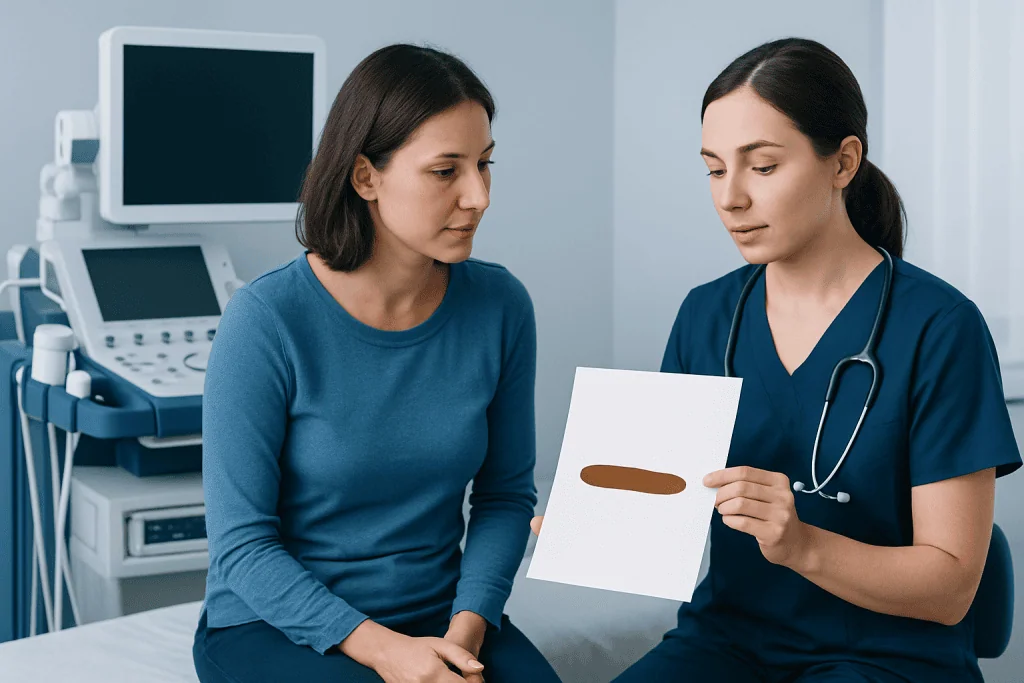
Stool shape is influenced by several factors, including water content, fiber intake, bowel movement frequency, and the mechanics of the rectum and anal canal. Soft, well-formed stool is more likely when the bowel moves regularly and enough fluid remains in the stool. Harder stool can break into pieces, become lumpy, or flatten if it is compressed during passage.
Temporary narrowing or flattening may also happen if there is increased pressure in the rectum, swelling around the anal area, or incomplete emptying. Some people notice flatter stool after periods of travel, dehydration, reduced physical activity, or a significant change in eating habits. Stress can also affect bowel function through the gut-brain connection, contributing to constipation or irregular bowel movements.
Doctors usually look at stool shape in context rather than in isolation. A lasting pattern of flat stool together with urgency, mucus, blood, abdominal bloating, or a sensation that the bowel has not fully emptied may point toward an underlying digestive issue that deserves further investigation. Conditions affecting bowel motility, the rectum, or the colon may be considered if symptoms continue.
Common Causes of Flat Poop

The most common explanation for flat poop is constipation. When stool stays in the colon too long, excess water is absorbed, making it firmer and harder to pass. As it moves through the lower bowel, that stool may be compressed into a flatter shape. People with constipation may also notice straining, infrequent bowel movements, abdominal discomfort, or a feeling of incomplete emptying.
Another common cause is pelvic floor dysfunction, in which the muscles used for bowel movements do not coordinate normally. Instead of relaxing at the right moment, the muscles may tighten or work against the body, making stool difficult to pass and potentially altering its shape. Hemorrhoids, anal spasm, and swelling in or around the anal canal may also sometimes contribute to temporary stool flattening.
Less commonly, flat or narrow stool may be linked to structural changes in the bowel. These can include inflammation, rectal narrowing, or a mass that reduces the space through which stool passes. For example, persistent stool narrowing may sometimes be seen with certain colorectal conditions, including colon cancer, although stool shape alone is not enough to diagnose it. Functional bowel disorders such as irritable bowel syndrome can also change bowel habits, especially when constipation is part of the pattern.
- Constipation and hard stool
- Straining during bowel movements
- Pelvic floor dysfunction or difficulty relaxing the anal muscles
- Hemorrhoids or local swelling
- Irritable bowel syndrome, especially constipation-predominant forms
- Inflammation, narrowing, or less commonly a growth in the colon or rectum
Symptoms That May Happen Alongside It
Flat poop can occur on its own, but associated symptoms often help doctors understand whether it is likely to be minor or whether further tests may be needed. Many people with a benign cause have signs of constipation, such as hard stools, bowel movements less often than usual, bloating, abdominal pressure, or straining. Some may feel that the rectum is not fully empty after using the toilet.
Symptoms that deserve more attention include blood in the stool, black or tarry stool, persistent abdominal pain, ongoing nausea, anemia, or unexplained weight loss. A major change in bowel habits that lasts for several weeks, especially in adults over midlife or in people with a family history of colorectal disease, also warrants medical review. These symptoms do not always indicate a serious illness, but they should not be ignored.
There can also be overlap with other digestive symptoms. Alternating constipation and diarrhea, excess gas, mucus in the stool, and urgent bowel movements can occur with functional bowel disorders or inflammation. If symptoms are recurrent, a gastroenterology assessment may help determine whether simple constipation management is enough or whether evaluation for other conditions is appropriate.
How Doctors Evaluate Flat Stool
Evaluation begins with a careful history. A doctor may ask how long the stool shape has changed, whether constipation is present, how often bowel movements occur, and whether there is bleeding, pain, weight loss, or family history of bowel disease. Diet, fluid intake, medications, supplements, and recent travel or illness can also provide important clues.
A physical examination may include an abdominal exam and, when appropriate, a rectal examination to check for stool in the rectum, muscle tone, tenderness, hemorrhoids, or other local causes. If symptoms suggest constipation alone, initial treatment may be recommended without extensive testing. However, red-flag symptoms often lead to additional investigations.
Depending on the situation, tests may include blood work, stool tests, imaging, or direct examination of the bowel. A doctor may recommend colonoscopy if there is persistent change in bowel habits, bleeding, unexplained anemia, or other concerning symptoms. In selected cases, evaluation of the lower digestive tract with gastroenterology assessment can help identify constipation disorders, inflammation, or structural causes and guide treatment.
Treatment and Self-Care
Treatment depends on the underlying cause. If constipation is contributing to flat poop, the first steps usually focus on improving stool consistency and bowel regularity. This may include drinking enough fluids, gradually increasing dietary fiber, staying physically active, and responding to the urge to have a bowel movement instead of delaying it. Some people benefit from reviewing how they sit on the toilet, since foot support and a relaxed posture can make bowel movements easier.
Doctors may also review medications that can worsen constipation, such as some pain medicines, iron supplements, or other drugs that slow bowel movement. In some cases, a clinician may recommend short-term or longer-term constipation treatments based on the person’s symptoms and health history. Pelvic floor therapy or biofeedback may be useful if the problem relates to muscle coordination rather than stool hardness alone.
If testing finds an inflammatory, structural, or more serious bowel problem, treatment is tailored to that diagnosis. This may involve further endoscopic care, medical treatment, or surgery when needed. For patients who need specialist digestive evaluation, options such as general surgery or advanced endoscopic management may be part of care planning after the cause has been clearly identified.
When to Seek Medical Care
Medical care is advisable if flat poop continues for more than a short period, keeps returning, or appears together with other bowel changes. While many cases are linked to constipation or bowel function, persistent stool narrowing should be discussed with a doctor so the cause can be assessed rather than guessed.
Urgent medical attention is important if there is significant rectal bleeding, black stool, severe abdominal pain, vomiting, inability to pass stool or gas, fainting, or symptoms of dehydration. These signs may indicate a problem that needs prompt evaluation.
A routine medical appointment should also be arranged if there is unintentional weight loss, fatigue, ongoing bloating, unexplained anemia, or a family history of colorectal disease. Near the end of the diagnostic pathway, some people may benefit from multidisciplinary care; Acibadem International’s JCI-accredited hospitals support international patients with specialist assessment and treatment for digestive conditions when needed.
Frequently asked questions
Is flat poop always a sign of cancer?
No. Flat poop is often related to constipation, stool compression, or difficulty relaxing the pelvic floor during bowel movements. However, if the change is persistent or comes with bleeding, weight loss, pain, or anemia, a doctor should evaluate it.
Can constipation cause flat stool?
Yes. Constipation is one of the most common reasons stool may appear flat, narrow, or ribbon-like. Hard stool can be compressed as it passes through the rectum and anal canal, especially when there is straining or incomplete emptying.
How long should flat poop last before seeing a doctor?
A brief change that resolves may not be concerning. If flat stool continues for several days to weeks, keeps recurring, or is clearly different from a person's usual bowel pattern, medical advice is reasonable. Earlier evaluation is important if there are warning signs such as blood or pain.
Can hemorrhoids make stool look flat?
They sometimes can, especially if there is local swelling, discomfort, or altered muscle tension during bowel movements. Even so, hemorrhoids are not the only possible cause, so persistent symptoms should not be assumed to come from hemorrhoids alone.
What lifestyle changes may help improve stool shape?
Helpful steps often include drinking enough water, increasing fiber gradually, staying active, and avoiding repeated straining. Establishing regular toilet habits and not ignoring the urge to pass stool can also support more normal bowel movements.
What tests might be needed for persistent flat poop?
A doctor may start with a history and physical examination, including questions about constipation, bleeding, pain, and weight changes. Depending on the findings, blood tests, stool tests, imaging, or colonoscopy may be recommended to check for inflammation, narrowing, or other bowel conditions.
References
- National Institute of Diabetes and Digestive and Kidney Diseases
- American Gastroenterological Association
- American College of Gastroenterology
- National Health Service
- Mayo Clinic
This article is for general information only and is not a substitute for professional medical advice. Please consult a qualified doctor about your individual situation.
Medical weight-loss options in Turkey — costs & eligibility
JCI-accredited · board-certified surgeons · reply within 24h
Add us as a Preferred Source to see more of our trusted health content across Google Search, AI Overviews and Discover.