Fluoro Procedure: An Evidence-Based Patient Guide

Fluoroscopy is a real-time imaging technique rather than one single procedure. Preparation depends on the body area examined and whether contrast medicine or sedation is needed.
Key Takeaways
- Fluoroscopy is a real-time imaging technique rather than one single procedure.
- Preparation depends on the body area examined and whether contrast medicine or sedation is needed.
- Most people are awake during fluoroscopy, although sedation may be used for some image-guided interventions.
- Radiation exposure is carefully managed and kept as low as reasonably achievable for the clinical purpose.
- Recovery is often quick after diagnostic imaging but may take longer after a catheter-based or interventional procedure.
A fluoro procedure, also called fluoroscopy, uses a continuous or pulsed X-ray beam to create moving images inside the body. It helps clinicians observe organs in motion or guide instruments accurately during selected diagnostic and minimally invasive treatments.
Fluoro Procedure Overview: What It Is and How It Works
A fluoro procedure is an examination or treatment performed with fluoroscopy, a type of X-ray imaging that produces moving images in real time. A fluoroscopy machine directs a controlled X-ray beam through the body, while a detector turns the information into images displayed on a monitor. This allows the clinical team to watch structures move, follow the flow of contrast material, or guide medical instruments.
Unlike a standard X-ray, which produces a still image, fluoroscopy can show swallowing, joint movement, blood flow, catheter position, or the path of contrast through the digestive or urinary tract. It may be used on its own for diagnosis or as fluoroscopy guidance during a procedure such as a catheter placement, injection, drainage, angiography, or certain spine and joint treatments.
The term “fluoro procedures” covers a broad group of tests and interventions. The exact experience depends on why fluoroscopy is being used, which body area is involved, whether contrast is required, and whether the procedure is diagnostic or therapeutic. The referring clinician or radiology team should explain the individual plan before consent is requested.
Why Fluoroscopy May Be Recommended
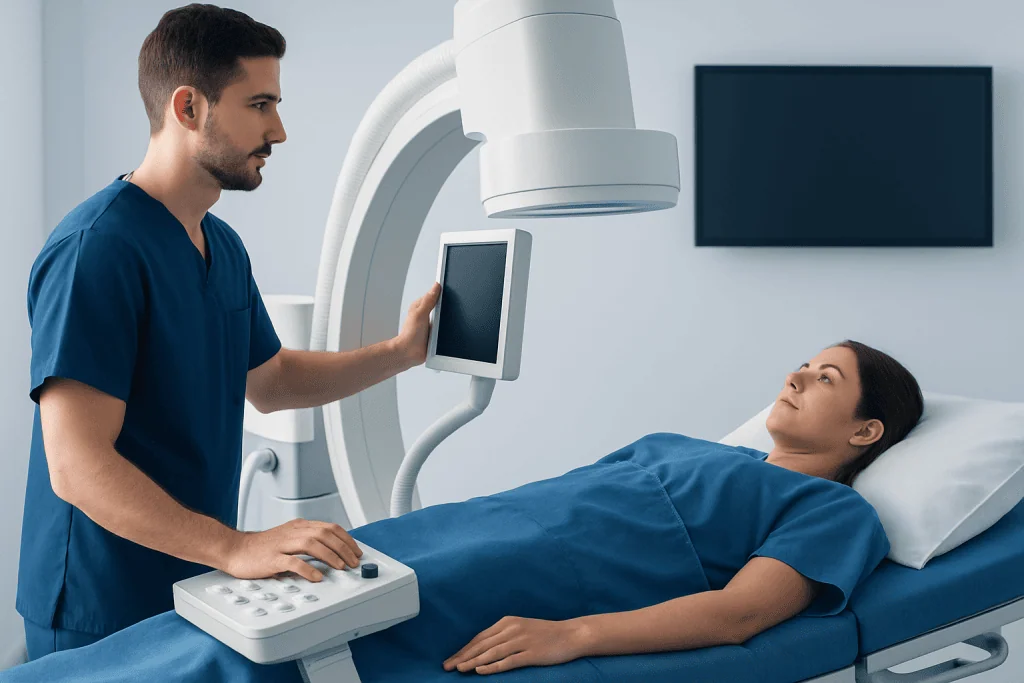
Clinicians may recommend fluoroscopy when real-time information can answer an important clinical question or improve the accuracy of treatment. For example, it can help assess swallowing difficulties, examine the digestive tract with contrast, evaluate the urinary system, or guide a catheter through blood vessels. In orthopedics and pain medicine, it may help confirm placement of a needle near a joint or spine structure.
During interventional procedures, fluoroscopy guidance can help a specialist place devices precisely while avoiding nearby structures. It is commonly used in cardiology, vascular medicine, gastroenterology, urology, orthopedics, and interventional radiology. The clinical team considers whether fluoroscopy is the most appropriate imaging method or whether ultrasound, CT, MRI, or another approach may be better suited.
Candidacy is individualized. Factors that may affect planning include pregnancy or the possibility of pregnancy, kidney disease, a prior reaction to iodinated contrast material, use of blood-thinning medicines, diabetes medicines, infection, and the ability to lie still in the required position. These factors do not always prevent a procedure, but they may require precautions or a modified plan.
What Should You Not Do Before a Fluoroscopy?

Before a fluoroscopy procedure, patients should not assume that preparation is the same for every test. They should follow the instructions from the ordering clinician or imaging department, especially regarding food, drink, medicines, and arrival time. Some simple examinations require little or no preparation, while procedures involving contrast, sedation, or a catheter may require fasting for several hours.
Patients should not eat or drink if they have been told to fast, and they should not stop prescribed medicines unless a clinician specifically advises this. It is important to report all medicines and supplements, particularly anticoagulants, antiplatelet medicines, insulin or other diabetes treatments, and medicines that may affect kidney function. A clinician can provide safe, personalized instructions if temporary changes are needed.
Jewelry, removable dental appliances, belts, and clothing with metal may need to be removed because they can interfere with imaging. Patients should tell the team before the procedure if they are pregnant or might be pregnant, have had a contrast reaction, have asthma or significant allergies, have kidney problems, or have recently been unwell. If sedation is planned, an adult may need to accompany the patient home.
- Bring an up-to-date medication list and relevant allergy information.
- Ask whether fasting, blood tests, or a driver are required.
- Wear comfortable clothing and follow instructions about valuables.
- Contact the department in advance if pregnancy is possible or symptoms of illness develop.
What Happens During a Fluoro Procedure?
On arrival, a radiographer, nurse, technologist, or clinician confirms the patient’s identity, medical history, allergies, and the reason for the examination. The team explains the process and obtains consent when appropriate. Depending on the procedure, the patient may change into a gown, have an intravenous line placed, or receive a local anesthetic at the treatment site.
The patient lies, sits, or stands on an imaging table while the fluoroscopy unit is positioned around the relevant body area. The imaging team may ask the patient to remain still, hold their breath briefly, swallow contrast, change position, or move a limb. If contrast material is used, it may be swallowed, administered through a tube or catheter, injected into a vein, or placed into a joint or body cavity, depending on the examination.
For a fluoroscopy-guided intervention, the skin is cleaned and covered with sterile drapes. The clinician uses real-time images to guide a needle, wire, catheter, or device to the planned location. Imaging is used intermittently or in short pulses whenever possible. A diagnostic study may take minutes, while a more complex interventional procedure can take longer.
Reports sometimes contain billing or administrative terminology, such as a fluoro procedure code. These codes describe the imaging service for documentation and reimbursement; they do not by themselves explain the diagnosis, treatment result, or expected recovery. Patients who are unsure about a report should ask the ordering clinician to interpret it in the context of their care.
What Is the Most Common Fluoroscopy Procedure?
There is no single fluoroscopy procedure that is most common across every healthcare setting, because use differs by specialty and country. However, fluoroscopy is very commonly used to guide catheter-based cardiovascular procedures, including coronary angiography and related interventions, and it is also frequently used for digestive contrast studies and image-guided musculoskeletal injections.
A commonly recognized diagnostic example is an upper gastrointestinal contrast examination or swallow study, where the patient swallows contrast material while the clinician observes movement through the throat and esophagus. In cardiology, fluoroscopy is integral to many angiography procedures because it helps guide catheters through blood vessels. In pain and orthopedic care, it can verify the placement of needles for selected injections.
The appropriate examination is determined by the patient’s symptoms and clinical question, not by how common a test may be. When evaluating a concern involving the heart, circulation, digestive system, bones, or nerves, the treating clinician may use fluoroscopy alongside other tests to make a more complete assessment.
How Painful Is a Fluoroscopy?
Fluoroscopy itself is not painful. The X-ray imaging process cannot be felt. Comfort depends mainly on the underlying test or treatment, such as holding a position, receiving contrast, having an intravenous line inserted, or undergoing a needle- or catheter-based intervention.
For diagnostic fluoroscopy, many people experience little more than temporary discomfort from positioning or the taste and sensation of contrast material. Some contrast injections can cause a brief warm feeling, metallic taste, or urge to urinate; these sensations usually pass quickly. The team should be informed immediately about pain, breathing difficulty, itching, dizziness, or any unexpected symptom.
For an interventional procedure, local anesthetic is often used to numb the skin and deeper tissues. Patients may feel pressure, brief stinging during numbing medicine injection, or discomfort when maintaining a position. Sedation or pain relief may be considered for certain procedures, based on the procedure type, medical history, and safety needs.
Are You Awake During a Fluoroscopy?
Most patients are awake during a fluoroscopy examination. Being awake helps the team give instructions, such as when to swallow, hold a breath, move, or report symptoms. Routine diagnostic studies usually do not require general anesthesia.
Some fluoroscopy-guided procedures use light or moderate sedation to reduce anxiety or discomfort. With this type of sedation, a patient may feel relaxed or sleepy but can often still respond to simple instructions. More complex interventions may require deeper anesthesia, although this is less common and is determined by the procedure and the patient’s health needs.
When sedation is planned, patients should follow fasting instructions carefully and arrange transportation home. The team monitors breathing, blood pressure, heart rate, and oxygen levels as appropriate. Before the procedure, patients can ask what level of alertness to expect and whether they will need support after discharge.
Benefits, Risks, Recovery and When to Seek Medical Care
The main benefit of a fluoro procedure is real-time visualization. This may help clinicians make a diagnosis, evaluate body function, confirm device placement, or perform treatment with greater precision. For many procedures, using image guidance can reduce the need for larger incisions or exploratory surgery. The healthcare team balances these potential benefits against possible risks for each individual.
Risks depend on the specific procedure. Fluoroscopy involves ionizing radiation, and longer or more complex procedures may involve more exposure than brief studies. Imaging professionals use dose-reduction methods, including pulsed imaging, shielding when suitable, careful positioning, and limiting imaging time. Contrast material can occasionally cause nausea, allergic-like reactions, or kidney-related concerns in susceptible individuals. Interventional procedures can also carry risks such as bleeding, infection, bruising, blood-vessel injury, or damage to nearby structures.
Recovery after a straightforward diagnostic examination is usually immediate, and patients may often return to normal activities unless instructed otherwise. After sedation, they should avoid driving, alcohol, important decisions, and operating machinery for the time advised by the care team. Following a catheter-based procedure, patients may need observation, activity restrictions, wound-care guidance, and follow-up based on the access site and treatment performed.
Patients should seek urgent medical care after a procedure for chest pain, trouble breathing, facial swelling, widespread rash, fainting, severe or worsening pain, uncontrolled bleeding, fever, increasing redness or drainage at a puncture site, weakness, or new neurological symptoms. Acibadem International’s multidisciplinary specialists and JCI-accredited hospitals diagnose and treat conditions that may require fluoroscopy-guided care for international patients.
Frequently asked questions
How long does a fluoro procedure take?
The length varies widely by procedure. A simple diagnostic fluoroscopy examination may take only a short time, while an image-guided catheter procedure can take longer because preparation, monitoring, and recovery are also needed. The clinical team can provide a more specific estimate before the appointment.
Is fluoroscopy the same as an X-ray?
Fluoroscopy uses X-rays, but it differs from a standard X-ray image. Standard X-rays generally create still images, while fluoroscopy produces real-time moving images. This makes fluoroscopy useful for observing function and guiding procedures.
Does fluoroscopy use contrast dye?
Some fluoroscopy examinations use contrast material to make particular organs, blood vessels, joints, or pathways easier to see. Others do not require contrast. Patients should tell the team about prior contrast reactions, kidney problems, and all relevant medical conditions.
Is radiation from fluoroscopy safe?
Fluoroscopy uses ionizing radiation, so it is used when its expected clinical value outweighs the potential risk. Imaging teams apply established safety measures to keep exposure as low as reasonably achievable. The dose varies according to the body area, equipment, and duration of the procedure.
Can a pregnant person have fluoroscopy?
Pregnancy or possible pregnancy should always be reported before fluoroscopy. The care team can assess whether the examination should be delayed, replaced with another imaging method, or performed with additional precautions. In urgent situations, necessary imaging may still be possible when carefully planned.
Why would a doctor order fluoroscopy guidance?
Fluoroscopy guidance allows a clinician to see instruments and internal structures in real time. It may improve the accuracy of catheter, needle, wire, or device placement during selected diagnostic and treatment procedures. The reason for its use should be explained as part of informed consent.
References
- Radiological Society of North America
- U.S. Food and Drug Administration
- American College of Radiology
- National Institute of Biomedical Imaging and Bioengineering
This article is for general information only and is not a substitute for professional medical advice. Please consult a qualified doctor about your individual situation.
Explore treatments in Turkey — costs, top hospitals & a free quote
JCI-accredited · board-certified surgeons · reply within 24h
Add us as a Preferred Source to see more of our trusted health content across Google Search, AI Overviews and Discover.