Foam Roller Exercises: An Evidence-Based Guide for Patients
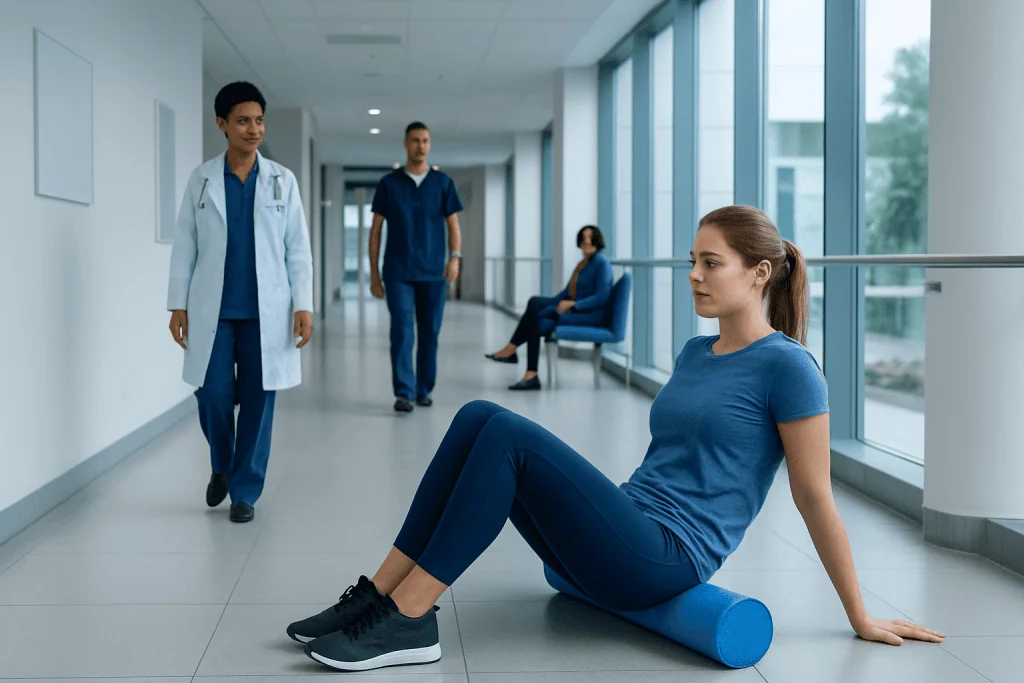
Foam roller exercises may help reduce muscle tightness and improve short-term mobility. They are most useful for healthy muscle and fascia, not for diagnosing or treating the cause of pain.
Key Takeaways
- Foam roller exercises may help reduce muscle tightness and improve short-term mobility.
- They are most useful for healthy muscle and fascia, not for diagnosing or treating the cause of pain.
- Pressure should be slow and tolerable, not sharp or intense.
- Foam rolling should be avoided directly over joints, bones, open wounds, or areas of acute injury.
- People with persistent pain, numbness, swelling, or weakness should seek medical advice before continuing.
Foam roller exercises are self-massage techniques that may help ease muscle tightness, support flexibility, and improve comfort before or after activity. They work best when used gently, on the right body areas, and as part of a broader movement or rehabilitation plan.
Overview: what foam roller exercises do
Foam roller exercises are a form of self-myofascial release, sometimes described as self-massage for muscles and the surrounding connective tissue. A person uses body weight over a cylindrical foam roller to apply steady pressure to specific muscle groups. The goal is usually to reduce the feeling of tightness, improve short-term range of motion, and make movement feel easier.
Current evidence suggests that foam rolling may offer modest benefits for flexibility, warm-up, and recovery, especially when paired with regular exercise or rehabilitation. It is not a cure for an injury or chronic pain condition, and it does not “break up” scar tissue in a dramatic way, as is sometimes claimed online. Instead, its effects are more likely related to changes in pain perception, muscle relaxation, and movement tolerance.
For many people, foam rolling is a practical addition to a healthy routine. It may be useful before exercise to prepare muscles for movement, or after activity to ease post-exercise soreness. The best approach is gentle, targeted, and consistent rather than forceful or prolonged.
Who may benefit from foam roller exercises
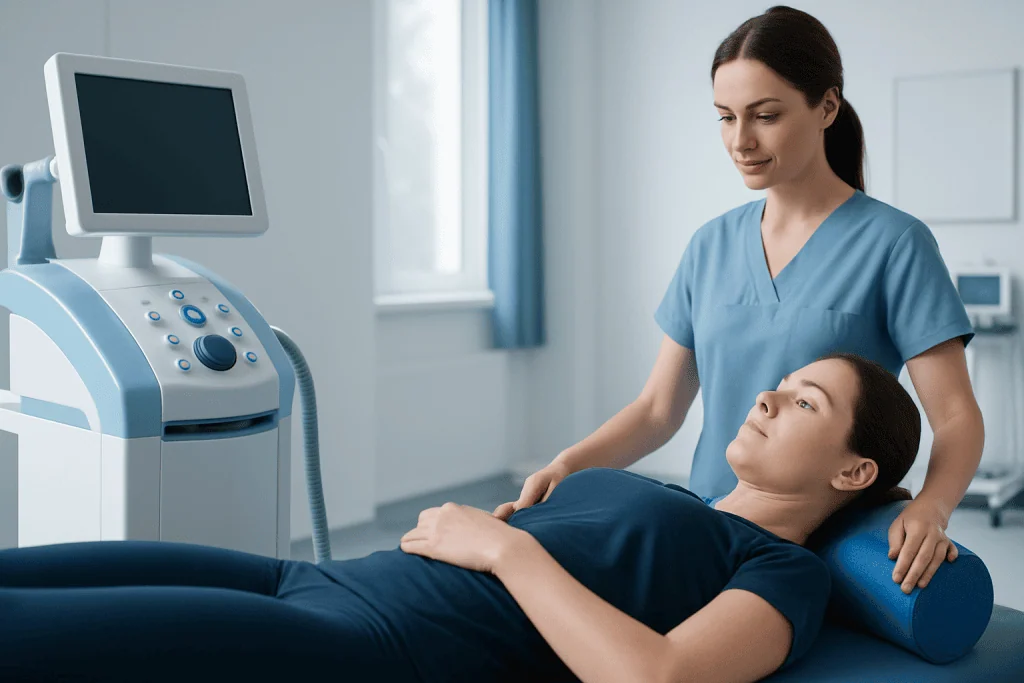
Foam roller exercises may help people who feel muscle stiffness after sitting for long periods, training, or repetitive daily activity. Common areas include the calves, thighs, hips, upper back, and the muscles around the shoulders. Many people use a foam roller as part of a warm-up before walking, running, strength training, or stretching.
They may also support a rehabilitation program when a clinician recommends them for muscle tightness linked to posture, overuse, or reduced mobility. For example, someone with movement limitations related to back pain or general muscular stiffness may be advised to combine guided exercise with careful self-release techniques. In some cases, a structured physical therapy and rehabilitation program is more helpful than self-treatment alone.
Foam rolling is not suitable for every cause of pain. If symptoms are related to a fracture, severe inflammation, nerve compression, a clotting problem, or another medical condition, pressure on the area may worsen discomfort or delay proper care. This is why persistent or unexplained pain should be medically assessed rather than treated only with a foam roller.
What the evidence says
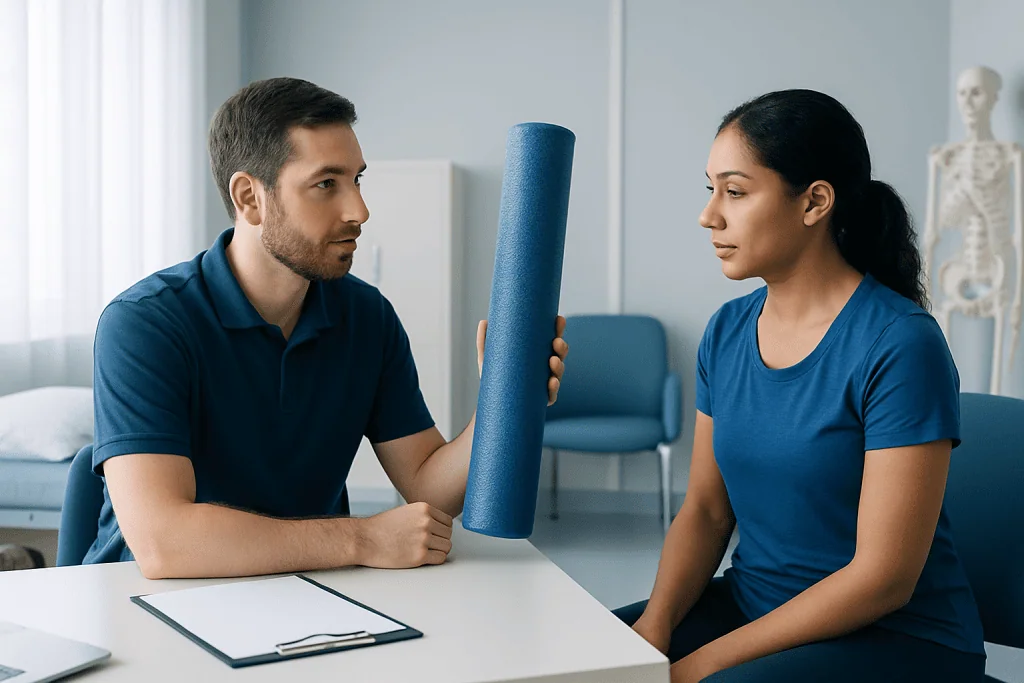
Research on foam roller exercises generally shows small to moderate short-term benefits, especially for flexibility and comfort with movement. Many studies report improved range of motion in areas such as the hips, knees, and ankles after brief sessions. These improvements may occur without the temporary loss of strength sometimes seen after long static stretching.
Evidence also suggests that foam rolling after exercise may reduce the feeling of delayed-onset muscle soreness in some people. However, the size of this effect varies, and not everyone notices a clear benefit. Foam rolling should be viewed as a supportive tool rather than the main treatment for performance, injury recovery, or chronic pain.
What matters most is how it is used. More pressure is not necessarily better, and painful rolling is not more effective. The best outcomes usually come from short, controlled sessions combined with strengthening, mobility work, sleep, hydration, and an exercise plan that matches the person’s needs.
How to do foam roller exercises safely
Safe foam roller exercises begin with light to moderate pressure. A person should position the roller under a larger muscle group, support the body with the hands or feet, and move slowly over the area. If a sensitive spot is found, it is usually better to pause briefly and breathe rather than aggressively rolling back and forth.
Each area can be rolled for about 30 to 90 seconds, depending on comfort. The sensation should feel like pressure or mild tenderness, not sharp pain, burning, tingling, or numbness. If symptoms spread down an arm or leg, or if the area becomes more painful afterward, the exercise should be stopped.
General safety points include:
- Avoid rolling directly over bones, joints, the front of the neck, or the low back if it causes strain.
- Do not use a foam roller on bruises, open wounds, rashes, or areas of recent surgery unless a doctor says it is safe.
- Use slower movement rather than extra force.
- Start with a softer roller if very firm rollers feel too intense.
- Combine rolling with gentle movement and strengthening, not as a stand-alone solution.
People receiving care for musculoskeletal problems may benefit from a professional assessment, especially if there is concern about posture, movement pattern, or tissue overload. In selected cases, orthopedic evaluation may help clarify whether symptoms are muscular or related to a joint, tendon, or spine problem.
Common foam roller exercises for major muscle groups
Some of the most practical foam roller exercises target large muscle groups that commonly feel tight. For the calves, a person can sit with the roller under one lower leg and use the hands to lift the hips slightly, then roll from the ankle toward the back of the knee. For the front of the thighs, lying face down with the roller under the quadriceps allows slow rolling from the hips toward the knees, avoiding direct pressure on the kneecaps.
For the side of the hips and outer thigh region, caution is important because this area can be very sensitive. Instead of aggressively pressing on the outer thigh, many people do better by focusing on the gluteal muscles. Sitting on the roller with one ankle crossed over the opposite knee can help reach the deep hip muscles more comfortably.
The upper back is another common target. Lying on the back with the roller placed across the thoracic spine can help release muscle tension between the shoulder blades. The head and neck should be supported by the hands, and the body should not roll into the lower back if that causes arching or discomfort. Those with symptoms such as arm tingling or neck pain may need an individualized program, especially if there is concern about a herniated disc.
Foam rolling can also be paired with movement. After rolling the calves, for example, ankle mobility drills may feel easier. After the upper back, gentle thoracic extension or shoulder mobility work may be more effective. This sequence can help turn temporary relief into useful movement practice.
When foam rolling may not be appropriate
Foam roller exercises should be used with caution or avoided altogether in certain situations. Direct pressure is usually not appropriate over an acute injury, a suspected muscle tear, severe sprain, inflamed joint, or swollen limb. It is also not a safe substitute for assessment if pain started after a fall, sports injury, or sudden twisting movement.
People with osteoporosis, bleeding disorders, skin infections, uncontrolled medical illness, severe varicose veins, or reduced sensation should ask a clinician before starting. This is especially important for anyone who takes blood thinners or has diabetes-related nerve problems, because they may not feel tissue stress normally.
Foam rolling may also be unhelpful when pain is coming mainly from a nerve or from spinal structures rather than from muscle tightness. Symptoms such as radiating pain, weakness, altered reflexes, balance problems, or loss of bladder or bowel control need urgent medical assessment rather than home treatment. In that setting, clinicians may recommend imaging, rehabilitation, or another targeted plan, and sometimes neurosurgical evaluation if symptoms suggest significant nerve compression.
When to seek medical care
Medical care is appropriate if pain is severe, keeps returning, or does not improve with rest and simple self-care. A person should also seek advice if foam roller exercises consistently make symptoms worse or if the painful area is tender, swollen, warm, or visibly bruised.
Urgent medical attention is needed for symptoms such as numbness, progressive weakness, pain after a major injury, unexplained fever, chest pain, shortness of breath, or loss of bladder or bowel control. These symptoms may point to a condition that should not be managed with self-massage.
If a clinician recommends a supervised recovery plan, a combination of exercise, hands-on assessment, and condition-specific treatment may be needed. Acibadem International’s multidisciplinary specialists and JCI-accredited hospitals diagnose and treat musculoskeletal conditions for international patients when further evaluation is required.
Frequently asked questions
Do foam roller exercises really work?
Foam roller exercises may help reduce the feeling of muscle tightness and can improve short-term flexibility or comfort with movement. The benefits are usually modest, but they can be useful when combined with regular exercise, stretching, or rehabilitation.
How long should a person use a foam roller on one area?
Many people do well with about 30 to 90 seconds per muscle group. Longer sessions are not always better, and the pressure should remain tolerable rather than intense.
Can foam rolling help back pain?
It may help some people if muscle tension around the upper back, hips, or legs is contributing to stiffness. However, back pain has many causes, so persistent, severe, or radiating pain should be assessed by a qualified doctor.
Should foam rolling be done before or after exercise?
It can be used either before or after activity, depending on the goal. Before exercise, it may help improve mobility and prepare muscles for movement; after exercise, it may help with recovery and soreness.
Can foam roller exercises replace stretching or physical therapy?
No. Foam rolling is best seen as one supportive tool rather than a replacement for stretching, strengthening, or professional rehabilitation when needed. A complete program usually provides better long-term results than foam rolling alone.
Is it normal for foam rolling to hurt?
Mild tenderness or pressure is common, especially over tight muscles. Sharp pain, numbness, tingling, or worsening symptoms are not expected and mean the technique should be stopped and reviewed.
References
- World Health Organization
- National Institutes of Health
- American College of Sports Medicine
- American Academy of Orthopaedic Surgeons
This article is for general information only and is not a substitute for professional medical advice. Please consult a qualified doctor about your individual situation.
Explore treatments in Turkey — costs, top hospitals & a free quote
JCI-accredited · board-certified surgeons · reply within 24h
Add us as a Preferred Source to see more of our trusted health content across Google Search, AI Overviews and Discover.

More from the Health Library

Tongue Stitches — Explained by Medical Evidence, Not Myths

Incontinence: An Evidence-Based Guide for Patients

Whole Grain Crackers: A Complete Medical Overview

Skull Nerve: A Complete Medical Overview

Oscillococcinum: What Patients Need to Know