Foam Roller Sore Back: An Evidence-Based Guide for Patients

Mild muscle soreness after foam rolling can happen, especially when pressure is too strong or technique is poor. Foam rolling should not cause sharp, shooting, numb, or worsening back pain.
Key Takeaways
- Mild muscle soreness after foam rolling can happen, especially when pressure is too strong or technique is poor.
- Foam rolling should not cause sharp, shooting, numb, or worsening back pain.
- The lower back should be approached carefully; many experts recommend focusing more on surrounding muscles such as the glutes, hips, and upper back.
- Rest, gentler movement, heat or ice, and stopping aggravating techniques usually help short-lived soreness.
- Medical care is important if pain is severe, follows an injury, radiates down the leg, or comes with weakness, fever, or bladder or bowel changes.
A foam roller sore back is often caused by short-term muscle tenderness or using too much pressure, too quickly, or on the wrong area. Mild soreness can be normal, but severe pain, nerve symptoms, or symptoms that do not settle should be assessed by a doctor.
Overview: Is a sore back after using a foam roller normal?
A foam roller sore back can be a normal, short-lived response if the tissues were pressed more firmly than they were used to. Foam rolling places body weight onto muscles and fascia, which may temporarily increase tenderness much like a deep massage or a new exercise session. In many people, this settles within a day or two.
That said, foam rolling should not create intense pain. If the back becomes sharply painful, increasingly stiff, bruised, or painful with tingling or numbness, the technique may have irritated a sensitive area rather than helped it. The lower back is especially important to treat cautiously because it contains bony structures, joints, and nerves that do not respond well to heavy direct pressure.
For this reason, patient education matters as much as the roller itself. The key questions are where the pressure was applied, how much body weight was used, how long rolling lasted, and whether there was already an underlying issue such as muscle strain, poor posture, or a spine problem. People with ongoing or recurrent symptoms may benefit from assessment for back pain rather than repeated self-treatment alone.
Why foam rolling can make the back sore
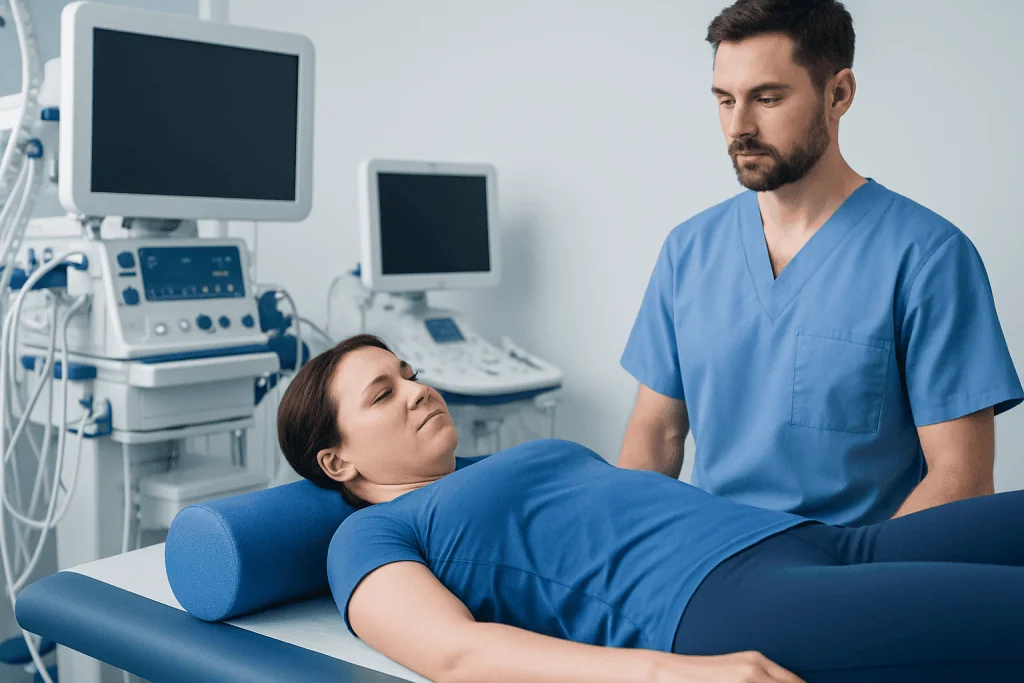
Foam rolling is often used to reduce muscle tightness and improve movement, but more pressure does not always mean better results. Soreness can happen when tissues that are already sensitive are compressed too strongly, too long, or too directly. A person may also hold their breath or tense the muscles while rolling, which can increase discomfort rather than relax the area.
The back can feel sore after foam rolling for several common reasons:
- Excess pressure: putting full body weight onto a small area, especially over the lower back.
- Rolling too quickly or too long: long sessions can irritate tissues instead of calming them.
- Poor target area: pressing on the spine, ribs, or bony points rather than the surrounding muscles.
- Underlying muscle strain: a recent workout, lifting injury, or postural tension can make the area more reactive.
- Existing spinal conditions: disc, joint, or nerve problems may be aggravated by direct pressure.
It can help to think of foam rolling as a mobility tool, not a test of pain tolerance. A gentle to moderate pressure that feels uncomfortable but manageable is generally preferred. Pain that causes the body to guard, tense, or twist away is usually too much.
Another reason soreness may appear is compensation. Some people avoid rolling the hips, buttocks, or upper back and instead place all the work on the lower back. Yet muscles around the pelvis and thoracic spine often contribute to the sensation of a “tight back.” Treating only the painful spot may miss the main source of stiffness.
What kind of pain is expected, and what is not
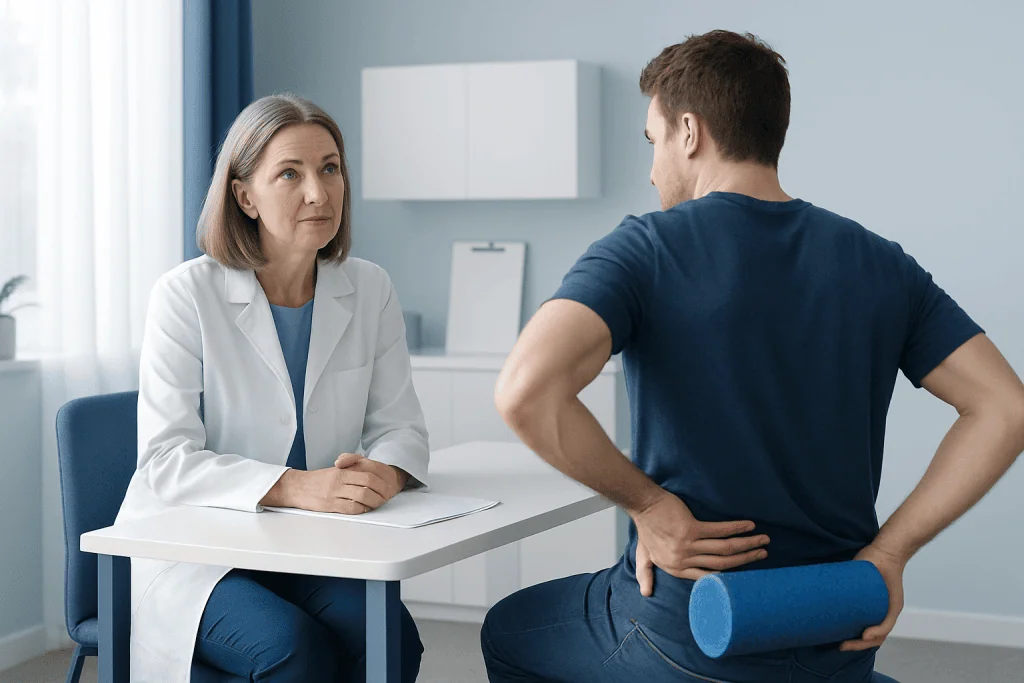
Expected soreness is usually dull, localized, and temporary. It may feel similar to post-exercise muscle tenderness and may be most noticeable when getting up from a chair, bending, or pressing the area. This kind of discomfort often improves with light walking, hydration, normal daily movement, and avoiding another hard rolling session for a short time.
Concerning pain is different. It may feel sharp, stabbing, electric, burning, or deep inside the spine rather than in the muscle. It can also travel into the buttock or leg, or come with tingling, numbness, weakness, or pain when coughing or sneezing. These features suggest that the issue may not be simple tissue tenderness.
If pain started after a twist, fall, heavy lift, or sports injury, it is sensible to consider muscle strain or structural irritation rather than assuming the foam roller is the only cause. Some symptoms can overlap with a herniated disc, especially when leg pain or nerve symptoms are present. In these situations, self-treatment should be cautious and medical advice may be appropriate.
Duration also matters. Mild soreness should gradually ease. Pain that worsens over 48 to 72 hours, interferes with sleep, limits walking, or repeatedly returns after each attempt at foam rolling deserves a more individualized evaluation.
How to respond if the back is sore after foam rolling
The first step is to stop the aggravating technique and allow the irritated area to settle. This does not always mean complete bed rest. Gentle activity, such as walking or changing positions regularly, is often more helpful than staying still for long periods. Many people feel better when they avoid heavy lifting, aggressive stretching, and repeated rolling directly on the painful area for a day or two.
Simple comfort measures may help. Some people prefer a warm shower or heating pad for muscle tightness, while others feel better with a cold pack if the area feels acutely irritated. Over-the-counter pain relief may be appropriate for some adults, but it is best used according to a clinician’s advice and the product label, especially for people with stomach, kidney, heart, or bleeding risks.
If self-care is not enough, a doctor or physical therapist can help identify whether the pain is muscular, joint-related, posture-related, or nerve-related. They may suggest guided physical therapy and rehabilitation to improve movement patterns, strengthen supportive muscles, and teach safer mobility strategies.
Patients should be especially cautious about “rolling through the pain.” A small amount of tenderness can be acceptable, but trying to force a release often backfires. The goal is to calm the tissues and improve movement, not to press until the discomfort disappears.
Safer foam rolling techniques for people with back tightness
For many people, the safest strategy is not to roll directly over the lower back at all. Instead, they can work on nearby muscle groups that influence spinal comfort, including the gluteal muscles, hip rotators, hamstrings, upper back, and the muscles along the sides of the trunk. These areas often tolerate pressure better and may reduce the feeling of back tightness without stressing sensitive structures.
When using a foam roller, technique matters. Helpful principles include using slow movements, supporting some body weight with the arms or feet, limiting each region to a short period, and stopping before pain becomes sharp. Breathing steadily and keeping the abdominal muscles lightly engaged can also make the experience more controlled.
Some practical tips include:
- Start with a softer roller rather than a very firm or textured one.
- Spend less time on highly tender spots.
- Avoid rolling directly over the spine, lower ribs, or bony prominences.
- Use a wall or bed to reduce pressure if floor rolling feels too intense.
- Focus on the glutes, hips, and upper back before considering the lumbar area.
People with known spinal conditions, osteoporosis risk, recent surgery, inflammatory arthritis, or persistent symptoms should ask a clinician before using a foam roller on the back. In some cases, guided exercise or other approaches are more suitable than self-myofascial techniques.
When diagnosis and treatment may be needed
If a sore back after foam rolling does not improve, doctors look beyond the roller itself. They consider posture, work setup, exercise habits, previous injuries, sleep position, flexibility, and muscle strength. A clinical assessment usually begins with questions about where the pain is felt, what movements trigger it, and whether there are nerve symptoms or warning signs.
Physical examination may check spinal movement, tenderness, reflexes, strength, sensation, and hip mobility. Imaging is not always needed for routine short-term back pain, but it may be considered if symptoms suggest a structural problem, trauma, infection, or nerve compression. In some cases, MRI may help evaluate discs, nerves, and other soft tissues when symptoms are persistent or more complex.
Treatment depends on the cause. Muscle irritation may improve with activity modification, exercise therapy, and posture correction. Nerve-related or persistent pain may need a more targeted plan, and severe structural problems sometimes require specialist review. In selected cases, doctors may discuss spine surgery only when clearly indicated after full evaluation and conservative care where appropriate.
Near the end of the care pathway, some patients seek coordinated international evaluation. Acibadem International’s multidisciplinary specialists and JCI-accredited hospitals diagnose and treat back-related conditions for international patients when a more detailed assessment is needed.
Prevention and self-care for future foam rolling sessions
Preventing a foam roller sore back begins with choosing the right goal. Foam rolling is best used as one part of a broader routine that may include walking, strengthening, mobility exercises, sleep support, and ergonomic changes. It should not be the only strategy for chronic tightness or pain.
A practical routine is to warm up first with light activity, then use the roller briefly on surrounding muscle groups rather than spending long periods on one painful spot. Afterwards, gentle movement or stretching can help the body use the temporary increase in mobility. Many people also benefit from strengthening the abdominal, hip, and gluteal muscles to reduce repeated overload on the back.
Consistency is usually more helpful than intensity. Short, comfortable sessions a few times a week are often better tolerated than occasional aggressive sessions. If a person notices that the same technique repeatedly causes soreness, it may be time to switch approach rather than continue experimenting.
For persistent or recurrent symptoms, structured exercise may be more effective than self-massage tools alone. A clinician can recommend whether the priority should be mobility work, strengthening, posture training, or investigation of another cause.
When to seek medical care
Medical advice is appropriate if back pain after foam rolling is severe, does not begin to improve after a few days, or keeps returning. It is also wise to seek care if the pain followed an injury, makes it difficult to stand upright, or disrupts sleep and normal activities.
Urgent assessment is important if back pain comes with leg weakness, numbness, spreading pain below the knee, loss of bladder or bowel control, fever, unexplained weight loss, or a history of cancer, major trauma, or infection risk. These symptoms do not always mean a serious problem, but they should not be managed with home rolling alone.
People with osteoporosis, long-term steroid use, pregnancy, recent surgery, or known spinal disease should be especially cautious. When in doubt, a qualified doctor or physical therapist can advise whether foam rolling is appropriate and what alternatives may be safer.
Frequently asked questions
Can a foam roller make back pain worse?
Yes, it can if too much pressure is used, if the technique is poor, or if it is applied directly to a sensitive area such as the lower spine. It may also worsen symptoms if the pain is coming from a disc, joint, or irritated nerve rather than simple muscle tightness.
How long should soreness last after foam rolling?
Mild muscle tenderness often settles within 24 to 48 hours and gradually improves. If pain is worsening, lasts longer than a few days, or keeps returning after each session, medical advice is sensible.
Should the lower back be rolled directly?
Many clinicians advise caution with direct rolling of the lower back because the area contains sensitive joints, bones, and nerves. It is often safer to target nearby muscles such as the glutes, hips, and upper back instead.
What should a person do if foam rolling causes sharp pain?
They should stop immediately and avoid repeating the same technique. Sharp, shooting, or radiating pain is not a typical response to foam rolling and may need assessment, especially if there is tingling, numbness, or weakness.
Is bruising normal after using a foam roller?
Visible bruising is not the goal and may suggest that the pressure was too aggressive or that the tissues are sensitive. People who bruise easily or take blood-thinning medicines should be especially cautious and ask a doctor if unsure.
Can foam rolling help chronic back tightness?
It may help some people as part of a broader program, especially when nearby muscle groups are targeted gently. Chronic or recurring tightness often improves more reliably when mobility work is combined with strengthening, posture changes, and professional guidance.
References
- National Institute of Neurological Disorders and Stroke
- American Academy of Orthopaedic Surgeons
- National Institute of Arthritis and Musculoskeletal and Skin Diseases
- Mayo Clinic
- World Health Organization
This article is for general information only and is not a substitute for professional medical advice. Please consult a qualified doctor about your individual situation.
Explore treatments in Turkey — costs, top hospitals & a free quote
JCI-accredited · board-certified surgeons · reply within 24h
Add us as a Preferred Source to see more of our trusted health content across Google Search, AI Overviews and Discover.