Foot Exercises: A Complete Medical Overview

Foot exercises can support strength, flexibility, circulation, and balance. The best routine depends on the person's symptoms, foot structure, activity level, and medical history.
Key Takeaways
- Foot exercises can support strength, flexibility, circulation, and balance.
- The best routine depends on the person's symptoms, foot structure, activity level, and medical history.
- Exercises should not cause sharp pain, marked swelling, or worsening symptoms.
- Persistent foot pain may need medical assessment rather than self-care alone.
- Supportive footwear, gradual progression, and consistency matter as much as the exercises themselves.
Foot exercises are simple movements that can help strengthen the small muscles of the feet, improve flexibility, support balance, and reduce everyday discomfort. When chosen carefully and done regularly, they may benefit people with overuse symptoms, age-related stiffness, sports strain, or recovery needs after medical evaluation.
Overview: What foot exercises do
Foot exercises are targeted movements used to improve the function of the feet and ankles. They are often recommended to support muscle strength, joint mobility, arch control, balance, and walking mechanics. In many people, a regular routine can reduce stiffness and help the feet tolerate daily activities such as standing, walking, or exercise more comfortably.
The feet contain many small muscles, ligaments, tendons, and joints that work together to absorb force and provide stability. Long periods of sitting, standing on hard surfaces, wearing unsupportive shoes, sports overuse, aging, or certain medical conditions can all affect how well the feet function. Exercises aim to keep these structures active and coordinated.
Unlike generic stretching advice, an effective foot exercise program should match the person’s needs. Some people benefit most from flexibility work, while others need strengthening, balance training, or offloading strategies. This medical overview focuses on how foot exercises fit into prevention, symptom relief, and rehabilitation rather than treating them as a one-size-fits-all solution.
Who may benefit from foot exercises
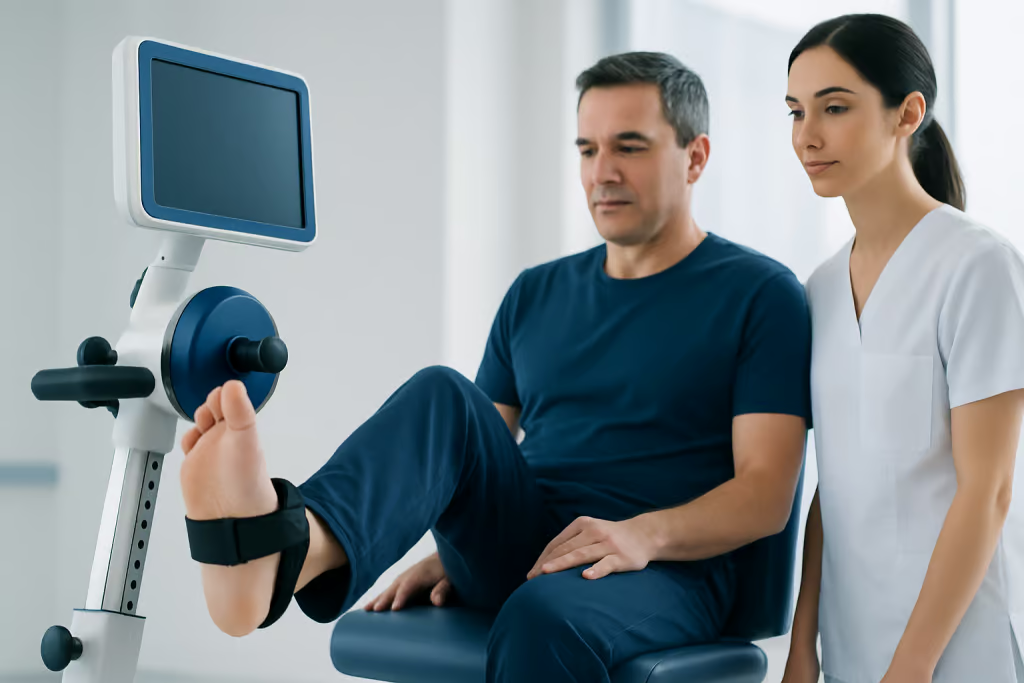
Foot exercises may help a wide range of people, including those with mild foot fatigue, stiffness after inactivity, balance concerns, or discomfort related to repetitive strain. They are commonly used by runners, walkers, older adults, people who stand for long periods at work, and those returning to activity after minor injury.
They are also frequently included in care plans for conditions affecting the plantar fascia, Achilles tendon, ankle stability, and the small muscles that support the arch. For example, a clinician may suggest foot exercises as part of conservative care for plantar fasciitis or overuse-related heel pain. In other cases, the goal is not pain relief alone but better movement quality and fall prevention.
People with diabetes, arthritis, nerve symptoms, flat feet, high arches, or previous foot surgery may also be advised to perform specific exercises, but they often need individualized guidance. In these situations, doing the wrong movements or progressing too quickly may worsen symptoms instead of helping.
Common types of foot exercises
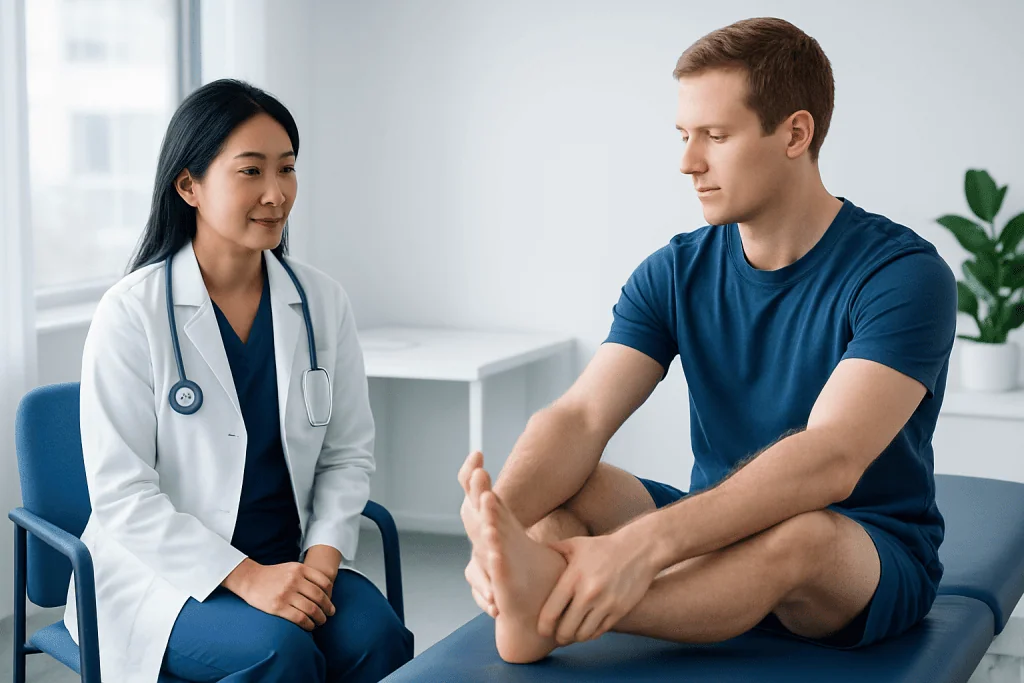
Foot exercise routines usually combine several categories rather than relying on one movement. Stretching may improve flexibility in the toes, arch, calf, and Achilles tendon. Strengthening targets the intrinsic foot muscles, the arch-supporting structures, and the ankle muscles that help stabilize the foot during standing and walking. Balance exercises train the foot and ankle to respond to small shifts in body position.
Examples often recommended in rehabilitation include toe spreads, towel scrunches, marble pickups, short-foot activation, heel raises, calf stretches, ankle alphabet movements, and single-leg balance drills. Some are designed to improve mobility, while others build endurance and control. A physical medicine or rehabilitation specialist may also combine them with gait training, orthotics advice, or supervised therapy such as physical therapy and rehabilitation.
A simple home routine may include:
- Gentle toe and arch mobility exercises
- Calf and plantar fascia stretches
- Heel raises for calf and ankle strength
- Short-foot exercises to improve arch control
- Single-leg standing for balance, if safe
The best program is usually gradual, low-impact, and consistent. It should be adjusted if there is swelling, limping, or pain that persists after exercise.
Potential benefits and realistic expectations
When practiced regularly, foot exercises may improve how the feet feel and function. Possible benefits include less morning stiffness, better tolerance for walking or standing, improved ankle control, and a steadier sense of balance. For some people, strengthening and flexibility work can also reduce strain on the knees and hips by improving alignment through the lower limb.
However, exercises are not a cure for every type of foot pain. Symptoms caused by fractures, severe tendon injury, active inflammation, nerve compression, infection, significant deformity, or circulation problems may need medical treatment first. Even in common overuse conditions, improvement often depends on addressing footwear, training habits, body mechanics, and surface load in addition to exercise.
Results are usually gradual. Many people need several weeks of regular practice before noticing clearer changes in comfort or control. A realistic goal is steady functional improvement rather than an immediate disappearance of symptoms.
How to start foot exercises safely
Starting slowly is one of the safest ways to use foot exercises. In general, movements should feel gentle to moderately challenging but not sharply painful. A person may begin with a few repetitions once or twice a day and increase the time or difficulty only if symptoms remain stable. Rest days may be helpful when tissues are irritated.
Warm tissues often respond better than cold, stiff tissues. Some people find it easier to exercise after a short walk, a warm shower, or gentle ankle circles. Good technique also matters. If the toes grip excessively, the arch collapses, or the ankle rolls inward or outward during an exercise, the intended muscles may not be working efficiently.
Supportive shoes can play an important role, especially for people with heel pain, prolonged standing, or sports-related strain. In some cases, custom advice from orthopedics, sports medicine, or rehabilitation specialists is needed. If symptoms are linked to biomechanical problems, care may include imaging, gait assessment, and orthopedic planning such as orthopedic rehabilitation alongside home exercise.
People with numbness, poor balance, previous ulcers, recent surgery, or severe pain should not start an unsupervised program without medical advice. This is especially important for anyone with diabetes or vascular disease.
When foot exercises may not be enough
Foot discomfort is sometimes a sign of a condition that needs diagnosis rather than self-management alone. Persistent heel pain, swelling around a tendon, repeated ankle instability, deformity of the toes, or pain after trauma may require clinical assessment. In these settings, exercises may still be useful, but only as part of a broader treatment plan.
Doctors may investigate problems such as stress fracture, tendon injury, arthritis, nerve entrapment, or advanced flatfoot. Depending on the cause, treatment can include activity modification, footwear changes, braces, medication, injections, or supervised rehabilitation. Some structural problems are better managed after assessment by specialists in orthopedics and traumatology.
If symptoms involve nerve irritation, burning, tingling, weakness, or pain that radiates from the back into the foot, the source may not be in the foot itself. Evaluation may sometimes include conditions affecting the spine or nerves, including sciatica, especially when symptoms travel down the leg.
Prevention, self-care, and daily habits
Foot exercises work best when combined with practical daily habits. Comfortable, well-fitting shoes with appropriate support can reduce unnecessary strain. Replacing worn footwear, avoiding sudden increases in training, and varying repetitive activity can all help protect the feet. People who spend long periods standing may benefit from scheduled breaks and changes in surface or posture.
Weight management, blood sugar control, and regular physical activity also contribute to long-term foot health. For active individuals, warming up before sport and progressing training gradually may lower the risk of overuse symptoms. Recovery matters too: tissues need time to adapt between demanding sessions.
Simple self-care strategies may include:
- Stretching after activity if tightness is present
- Using ice briefly for minor post-activity soreness, if advised
- Elevating the foot when mild swelling follows overuse
- Checking the feet regularly for skin changes, especially in diabetes
- Stopping any exercise that causes sharp or increasing pain
Near the end of a care pathway, some people need a more tailored rehabilitation plan to return safely to walking, work, or sport. Acibadem International’s multidisciplinary specialists in JCI-accredited hospitals diagnose and treat foot and ankle conditions for international patients when further assessment is needed.
When to seek medical care
Medical care is appropriate if foot pain lasts more than a short period, returns repeatedly, or limits walking, exercise, or daily activities. A doctor should also assess symptoms that do not improve with rest, supportive footwear, and a carefully modified exercise routine.
Prompt medical attention is important if there is significant swelling, visible deformity, inability to bear weight, numbness, weakness, fever, redness spreading across the foot, or pain after a fall or direct injury. People with diabetes, poor circulation, or reduced sensation should seek care earlier because even minor foot problems can become more serious.
A clinical assessment may involve an examination of the foot, ankle, gait, muscle strength, and flexibility. Imaging or referral to rehabilitation, orthopedics, neurology, or other specialists may be recommended depending on the suspected cause.
Frequently asked questions
What are foot exercises good for?
Foot exercises can help improve strength, flexibility, balance, and overall foot function. They may also ease mild stiffness or strain and support recovery as part of a broader treatment plan.
Can foot exercises help with foot pain?
They can help some types of foot pain, especially when symptoms are related to overuse, muscle weakness, tightness, or reduced control. However, persistent or severe pain may have another cause and should be assessed by a qualified doctor.
How often should foot exercises be done?
The ideal schedule depends on the person's condition and the type of exercise. Many routines are done several times a week or daily in gentle amounts, but progression should be gradual and based on comfort and clinical advice.
Should foot exercises hurt?
Mild effort or stretching discomfort may be acceptable, but sharp pain is not. If an exercise increases pain, swelling, limping, or symptoms later in the day, it should be stopped and reviewed with a clinician.
Are foot exercises safe for older adults?
They are often helpful for older adults because they can support balance, mobility, and confidence while walking. Still, anyone with poor balance, nerve symptoms, arthritis, or a history of falls should start with professional guidance.
Can people with diabetes do foot exercises?
Many people with diabetes can benefit from carefully selected foot exercises, especially to maintain mobility and circulation. Because diabetes can affect sensation and wound healing, it is safest to ask a doctor or rehabilitation professional before starting a new routine.
References
- American Academy of Orthopaedic Surgeons
- American Podiatric Medical Association
- National Institute of Arthritis and Musculoskeletal and Skin Diseases
- National Health Service
- American College of Sports Medicine
This article is for general information only and is not a substitute for professional medical advice. Please consult a qualified doctor about your individual situation.
Joint and spine care in Turkey — expert assessment & treatment
JCI-accredited · board-certified surgeons · reply within 24h
Add us as a Preferred Source to see more of our trusted health content across Google Search, AI Overviews and Discover.