Forehead Acne: An Evidence-Based Guide for Patients

Forehead acne commonly affects the hairline and T-zone because these areas produce more oil. Typical triggers include clogged pores, sweat, friction from hats or helmets, and oily hair products.
Key Takeaways
- Forehead acne commonly affects the hairline and T-zone because these areas produce more oil.
- Typical triggers include clogged pores, sweat, friction from hats or helmets, and oily hair products.
- Gentle cleansing and evidence-based acne treatments can help, but improvement often takes several weeks.
- Painful, scarring, widespread, or treatment-resistant acne should be assessed by a doctor or dermatologist.
- Not every forehead bump is acne; some cases are due to irritation, folliculitis, or other skin conditions.
Forehead acne is a common form of acne that often develops when oil, dead skin cells, sweat, and hair products clog pores along the forehead and hairline. In many people, it can improve with consistent skin care, avoidance of triggers, and medical treatment when breakouts are persistent or severe.
Overview: What forehead acne is
Forehead acne is a type of acne that appears on the skin between the eyebrows and the hairline. It usually develops when pores become blocked with excess oil, dead skin cells, and sometimes bacteria. Because the forehead is part of the face’s oilier “T-zone,” breakouts in this area are especially common in teenagers and adults.
Forehead acne may look like tiny bumps under the skin, whiteheads, blackheads, red inflamed pimples, or deeper tender spots. In some people, the bumps cluster near the hairline, while in others they spread across the middle of the forehead. The exact pattern can offer clues about likely triggers, such as hair products, sweat, or friction.
Although forehead acne is common, it is not always caused by poor hygiene, and scrubbing harder usually does not help. Acne is influenced by a combination of skin biology, hormones, inflammation, and outside factors. A patient-friendly approach focuses on identifying triggers, protecting the skin barrier, and using treatments that are known to work.
What forehead acne looks and feels like
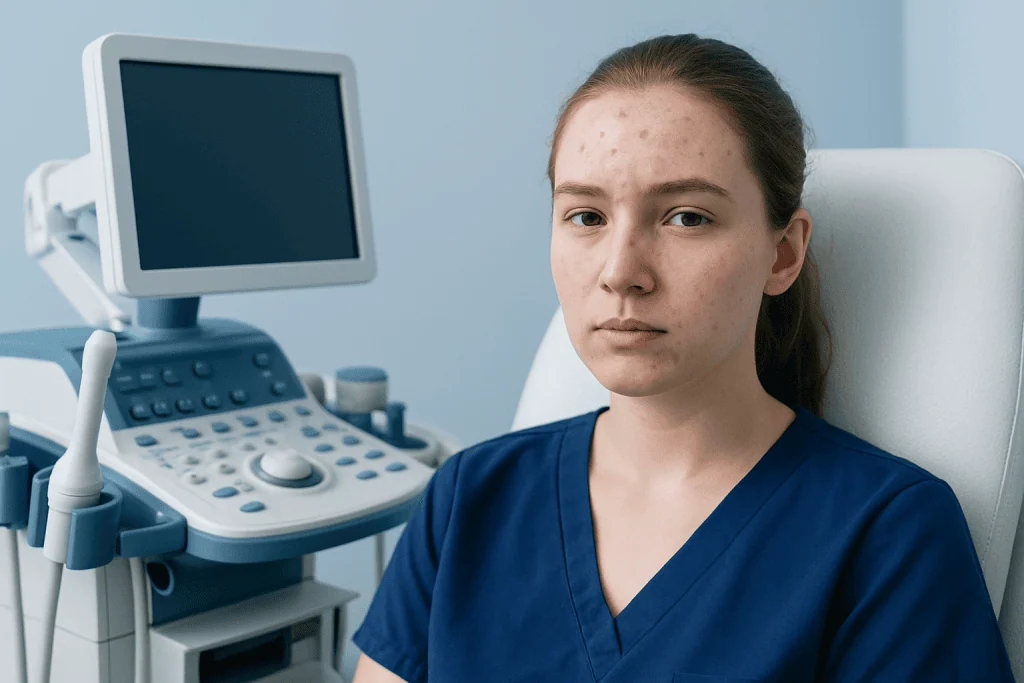
Forehead acne can present in several ways. Some people notice many small, skin-colored bumps that make the skin feel rough. Others develop blackheads, whiteheads, or larger red pimples that may be sore to the touch. In more inflamed cases, spots can linger and leave dark marks after healing.
Symptoms may worsen during hot weather, periods of stress, hormonal changes, or after using certain cosmetics or styling products. Breakouts often appear where sweat collects under bangs, hats, helmets, headbands, or sports gear. Itching is not a classic acne symptom, so an itchy rash-like eruption may suggest another condition such as folliculitis or irritation.
- Small clogged pores or rough bumps
- Whiteheads and blackheads
- Red or tender pimples
- Oily skin, especially in the T-zone
- Post-inflammatory dark spots after lesions heal
Not every bump on the forehead is acne. Conditions such as acne, contact dermatitis, heat rash, and yeast-related folliculitis can look similar. If the rash is sudden, very itchy, spreading quickly, or not improving with standard acne care, a clinician may need to confirm the diagnosis.
Why forehead acne happens

Forehead acne develops when four processes come together: increased oil production, blockage of hair follicles, inflammation, and changes involving skin bacteria. The forehead has many sebaceous glands, so pores in this area can clog more easily. Hormonal shifts during puberty, the menstrual cycle, or times of stress can increase oil production and make breakouts more likely.
External triggers are especially important on the forehead. Oily shampoos, pomades, leave-in conditioners, sunscreens, and makeup can migrate onto the skin and block pores, especially along the hairline. Sweat that stays on the skin, combined with friction from hats, helmets, scarves, or sports equipment, can also worsen acne. This type of friction-related breakout is sometimes described as acne mechanica.
Some everyday habits may contribute as well. Frequently touching the forehead, picking spots, sleeping on unwashed pillowcases, or failing to remove makeup can all add to pore blockage or irritation. However, acne is not caused by being “dirty,” and aggressive washing can inflame the skin further.
Diet does not affect everyone in the same way, but some patients notice worse acne with high-glycemic foods or certain dairy products. This does not mean those foods must always be eliminated; rather, any dietary changes should be individualized and discussed with a healthcare professional if needed.
Common triggers and risk factors to check
A practical way to approach forehead acne is to look for patterns. Breakouts clustered at the hairline may point to pomades, oils, waxes, or heavy conditioners. Pimples that flare after exercise may be linked to sweat remaining on the skin for too long. Recurrent spots beneath a cap, helmet, or headband may suggest friction and heat are contributing factors.
People with naturally oily skin, a family history of acne, hormonal fluctuations, or a history of facial breakouts are more likely to develop forehead acne. Certain medications can also worsen acne in some people. If breakouts started after a new medicine, supplement, or skin product, it is reasonable to ask a doctor or pharmacist whether there could be a link.
- Oily or comedogenic hair products
- Heavy makeup, sunscreen, or moisturizers not suited to acne-prone skin
- Sweat, humidity, and delayed cleansing after exercise
- Friction from hats, helmets, or tight headwear
- Hormonal changes and family history
- Picking, squeezing, or harsh exfoliation
Sometimes what seems like forehead acne is another follicle-based condition. If the bumps are very uniform, itchy, and concentrated on the forehead, a clinician may consider folliculitis rather than traditional acne. This matters because treatment can be different.
How forehead acne is diagnosed
Forehead acne is usually diagnosed by a doctor through a skin examination and a review of symptoms, skin-care habits, and triggers. In most cases, laboratory tests are not needed. The main goals are to confirm that the bumps are truly acne, determine how severe it is, and identify any factors that may be making it worse.
A clinician may ask when the acne started, whether it changes with menstruation or stress, what hair and face products are used, and whether there is itching, pain, scarring, or acne on the chest or back. Photos of flare-ups can sometimes help if the skin changes over time. If hormonal symptoms such as irregular periods or unwanted hair growth are present, additional evaluation may be recommended.
Accurate diagnosis is important because treatment depends on the type of lesions present. Comedonal acne with blackheads and whiteheads is managed differently from more inflamed acne or from look-alike conditions. In selected cases, a dermatologist may recommend specialized assessment to rule out other skin disorders or irritation from cosmetic products.
Treatment options that are commonly recommended
Treatment for forehead acne depends on severity and on what seems to be triggering the breakouts. Mild cases often improve with a simple routine: a gentle cleanser, non-comedogenic moisturizer, sunscreen, and one or two evidence-based acne ingredients. Common over-the-counter options include benzoyl peroxide, salicylic acid, and adapalene. These can be effective, but they usually need consistent use for several weeks before results become noticeable.
When starting treatment, using too many active products at once can irritate the skin and make acne appear worse. A gradual approach is usually more comfortable and sustainable. Patients should avoid picking lesions, since this increases the risk of inflammation, dark marks, and scarring. If over-the-counter care is not enough, a doctor may prescribe topical retinoids, antibiotic combinations, hormonal therapy in suitable patients, or other medicines based on the acne pattern.
For moderate to severe or scarring acne, specialist care may be helpful. A dermatologist may discuss options such as acne treatment tailored to the skin type and acne severity. If acne leaves textural changes or marks after it settles, some people may later benefit from treatments used for scar treatment or selected procedures such as chemical peels under medical guidance.
The best plan is one that matches the skin’s needs and can be followed consistently. Improvement is often gradual rather than immediate, and follow-up matters if a treatment is too irritating or does not appear to be working.
Daily skin care and self-care strategies
Self-care can make a meaningful difference in forehead acne, especially when triggers come from hair products, sweat, or friction. Washing the face gently twice daily and after heavy sweating is usually enough. Cleansing more often or using abrasive scrubs may damage the skin barrier and lead to more irritation.
Choosing lighter, non-comedogenic products for the face and hair can help reduce new clogged pores. Hair should be kept clean and, if possible, off the forehead when products are fresh or when sweating during exercise. It may also help to wash pillowcases regularly and clean headgear that touches the skin.
- Use a gentle cleanser rather than harsh soaps
- Apply non-comedogenic moisturizer and sunscreen daily
- Keep oily hair products away from the forehead
- Shower or cleanse after sports and sweating
- Avoid squeezing, rubbing, or over-exfoliating the skin
- Introduce one new treatment at a time
Some people become discouraged if improvement is slow. Acne care usually works best when kept simple and consistent for at least 6 to 8 weeks, unless significant irritation occurs. If the skin becomes very dry, stings intensely, or develops a widespread rash, the routine may need adjustment with professional advice.
When to seek medical care
Medical care is a good idea if forehead acne is painful, deep, leaving scars, or not improving after a reasonable trial of over-the-counter treatment. A doctor should also assess acne that appears suddenly with other symptoms, or breakouts that are mainly itchy or very uniform, since these features can suggest something other than routine acne.
Patients may also benefit from professional advice if acne is affecting self-confidence, sleep, social comfort, or work and school life. Treatment can often be adjusted to reduce both active lesions and the chance of marks or scarring. In children before puberty, in adults with new severe acne, or in people with signs of hormonal imbalance, further evaluation may be recommended.
Near the end of the care journey, some people need support not only for active acne but also for lingering marks or scars. Acibadem International’s multidisciplinary specialists in JCI-accredited hospitals diagnose and treat skin conditions for international patients, including acne and related concerns when specialist assessment is needed.
Frequently asked questions
What causes forehead acne most often?
Forehead acne is most often linked to clogged pores in an oil-prone area of the face. Common contributors include excess oil, dead skin cells, sweat, friction from headwear, and oily hair products that touch the forehead.
How long does forehead acne take to improve?
Most acne treatments need time to work, so improvement is usually gradual rather than immediate. Many people need several weeks of consistent care before they notice fewer breakouts, and the full effect may take longer.
Can hair products cause acne on the forehead?
Yes. Pomades, oils, waxes, and heavy conditioners can transfer to the skin and block pores, especially along the hairline. This pattern is sometimes called pomade acne and often improves when pore-clogging products are changed.
Should forehead acne be scrubbed or washed more often?
No. Over-washing and scrubbing can irritate the skin and worsen inflammation. A gentle cleanser used twice daily and after heavy sweating is usually a better approach.
Is forehead acne related to diet?
Diet may play a role for some people, but it is not the only cause of acne. If a person notices clear food-related flare-ups, it can be helpful to discuss those patterns with a doctor rather than making extreme dietary changes alone.
When should someone see a doctor for forehead acne?
A doctor visit is sensible if acne is painful, severe, scarring, or not improving with over-the-counter care. Medical advice is also important if the bumps are very itchy, appear suddenly, or may be another skin condition.
References
- American Academy of Dermatology
- National Institute of Arthritis and Musculoskeletal and Skin Diseases
- Mayo Clinic
- National Health Service
- Merck Manual
This article is for general information only and is not a substitute for professional medical advice. Please consult a qualified doctor about your individual situation.
Acne in Turkey — costs, top hospitals & a free quote
JCI-accredited · board-certified surgeons · reply within 24h
Add us as a Preferred Source to see more of our trusted health content across Google Search, AI Overviews and Discover.