Forward Head Posture: A Complete Medical Overview

Forward head posture means the head is positioned too far in front of the shoulders. It may lead to neck pain, stiffness, headaches, shoulder tension, and reduced mobility.
Key Takeaways
- Forward head posture means the head is positioned too far in front of the shoulders.
- It may lead to neck pain, stiffness, headaches, shoulder tension, and reduced mobility.
- Common contributors include prolonged screen use, weak deep neck and upper back muscles, and repetitive daily habits.
- Diagnosis is usually based on a physical examination and posture assessment, with imaging used when another condition is suspected.
- Treatment often includes exercise, ergonomic changes, physical therapy, and management of related spine or nerve problems.
- Medical review is important if symptoms are persistent, worsening, or include arm weakness, numbness, or balance problems.
Forward head posture is a common postural pattern in which the head sits in front of the shoulders rather than being balanced over the spine. It can contribute to neck pain, muscle fatigue, headaches, and shoulder tension, but many people improve with posture awareness, exercise, and treatment of underlying causes.
Overview
Forward head posture is a postural alignment pattern in which the head rests farther forward than normal relative to the shoulders and upper spine. In a balanced posture, the ears generally line up over the shoulders when viewed from the side. With forward head posture, this relationship shifts, increasing the workload on the muscles, joints, and soft tissues of the neck and upper back.
This posture does not always cause symptoms, but over time it can contribute to neck strain, upper back discomfort, muscle tightness, tension headaches, and reduced range of motion. Some people also notice jaw tension, shoulder rounding, or fatigue after desk work. The effect often develops gradually, so it may be overlooked until discomfort becomes more noticeable.
Forward head posture is not a disease on its own. Instead, it is usually a physical pattern influenced by daily habits, workplace setup, muscle imbalance, previous injury, or spine conditions. Because of this, evaluation focuses not only on posture itself but also on the reason it developed and whether there are related problems such as a herniated disc or ongoing neck muscle overload.
Symptoms and How It Feels
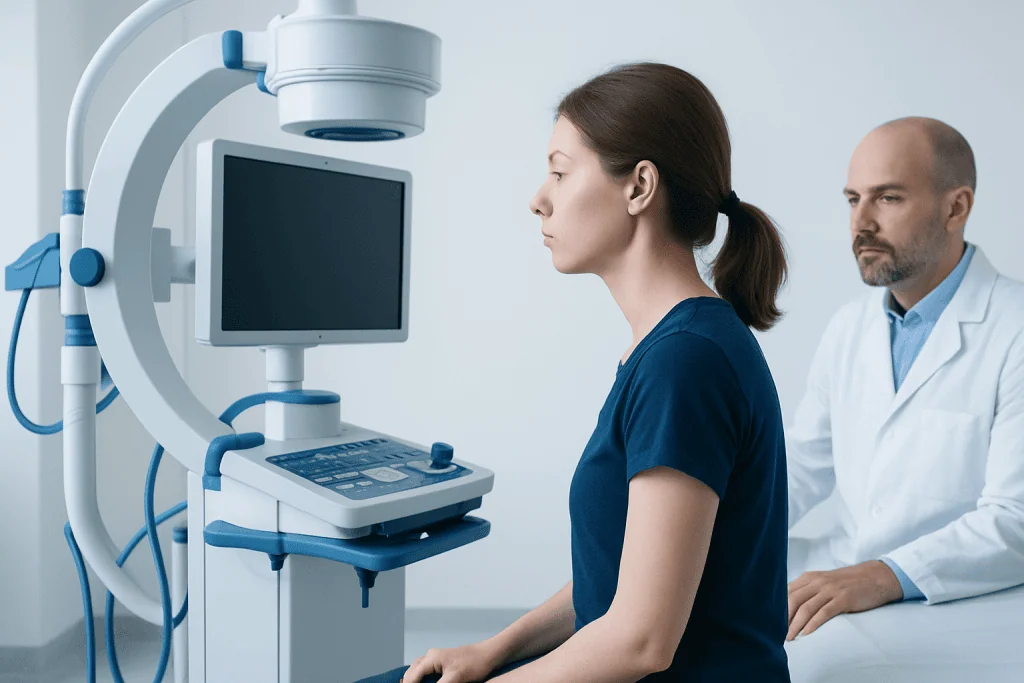
The most common symptoms of forward head posture involve the neck, shoulders, and upper back. Many people describe a dull ache at the base of the neck, tightness across the shoulders, or stiffness after using a phone or computer. Symptoms are often worse later in the day or after prolonged sitting.
Because the head becomes harder to support when it moves forward, the surrounding muscles may stay active for longer than they should. This can lead to fatigue, tenderness, and trigger-point type discomfort. Some people also experience headaches that begin in the neck or back of the head, limited ability to turn the head comfortably, or a feeling that the chest and shoulders are slumping.
Possible symptoms include:
- Neck pain or stiffness
- Upper back and shoulder tension
- Headaches, especially tension-type headaches
- Reduced neck mobility
- Muscle fatigue after sitting or screen use
- Occasional tingling or aching into the shoulder or arm if a nerve is irritated
If symptoms include numbness, weakness, clumsiness in the hands, or pain that shoots down the arm, posture alone may not be the full explanation. In these cases, a doctor may also look for cervical spine conditions, including cervical disc herniation, nerve compression, or other causes of neck-related pain.
Why Forward Head Posture Develops

Forward head posture usually develops from a combination of muscle imbalance and repeated daily positioning rather than from one single cause. Long periods spent leaning toward screens, reading in bed, driving, or looking down at a phone can encourage the head to drift forward. Over time, some muscles become shortened and tight while others become weaker and less supportive.
A common pattern is tightness in the chest, upper trapezius, and muscles at the back of the neck, along with weakness in the deep neck flexors and upper back stabilizers. Rounded shoulders often appear alongside this change. Once the body adapts to this position, it can feel normal even though it places extra stress on the cervical spine.
Risk factors and contributing factors may include:
- Prolonged desk or computer work
- Frequent smartphone or tablet use
- Poor workstation ergonomics
- Sedentary lifestyle
- Weak postural muscles
- Previous neck or shoulder injury
- Age-related spinal changes
- Chronic pain conditions that alter body mechanics
In some people, forward head posture also coexists with structural spine conditions, such as age-related disc wear, arthritis, or curvature changes. When pain is severe or persistent, clinicians may consider whether there is associated spinal alignment change or another musculoskeletal issue affecting posture and movement.
How Doctors Assess It
Assessment starts with a medical history and physical examination. A doctor or physiotherapist will usually ask when symptoms began, what activities make them worse, whether there are headaches or arm symptoms, and whether there has been a prior injury. They also look at posture from the side and back to assess head position, shoulder alignment, spinal curve, and muscle balance.
The examination often includes checking neck movement, shoulder mobility, muscle tenderness, strength, and nerve function. Clinicians may look for signs that point to a problem beyond posture, such as reduced reflexes, sensory changes, arm weakness, or balance difficulties. These findings help distinguish simple postural strain from a cervical spine disorder or nerve compression.
Imaging is not needed for everyone. X-rays, MRI, or other tests may be considered if symptoms are severe, persistent, follow trauma, or suggest another condition. In those cases, diagnostic imaging may help evaluate the discs, joints, spinal canal, and surrounding structures, sometimes alongside MRI scanning or other imaging studies when clinically appropriate.
Treatment Options
Treatment for forward head posture is usually conservative and focuses on reducing strain, improving muscle balance, and correcting the daily habits that reinforce the posture. For many people, the most effective plan combines targeted exercises, ergonomic changes, and physical therapy. Recovery often takes time because the goal is to retrain movement patterns, not just relieve pain temporarily.
Exercise programs commonly aim to strengthen the deep neck flexors, shoulder blade stabilizers, and upper back muscles while stretching tight chest and neck muscles. A structured physical therapy and rehabilitation program can guide this process and help ensure movements are safe and appropriate. Therapists may also use manual therapy, movement education, breathing training, and gradual activity modification.
Other treatments may be used when pain is limiting progress. These can include short-term pain relief strategies, heat, posture taping, or supervised exercise progression. If there is evidence of a more significant cervical problem, doctors may recommend evaluation by specialists in spine care or rehabilitation medicine, especially if nerve symptoms are present or conservative treatment has not helped.
Surgery is not a treatment for uncomplicated forward head posture. It is only considered if an underlying structural condition requires it, such as severe nerve compression, instability, or certain advanced spinal disorders. The treatment plan should always match the true cause of symptoms rather than posture alone.
Prevention and Self-care
Prevention focuses on reducing repeated strain and building better movement habits throughout the day. Small changes done consistently are often more helpful than trying to maintain a rigid “perfect posture.” The goal is comfortable alignment, regular movement, and enough muscle endurance to support the neck and upper back during normal activities.
At home and at work, it may help to bring screens closer to eye level, support the lower back when seated, keep shoulders relaxed, and avoid holding the phone low for long periods. Short movement breaks every 30 to 60 minutes can reduce stiffness. Many people benefit from alternating positions rather than staying seated for hours.
Helpful self-care steps include:
- Adjusting the workstation so the monitor is near eye level
- Taking regular stretch and walking breaks
- Practicing chin tuck and upper back strengthening exercises as advised by a clinician
- Improving shoulder and chest flexibility
- Using a supportive sleep position that does not push the head too far forward
- Staying physically active to maintain postural endurance
If exercises increase pain, cause dizziness, or trigger arm symptoms, they should be stopped until a professional review is completed. Self-care is most effective when tailored to the person’s symptoms, work demands, and any underlying medical conditions.
When to Seek Medical Care
Medical care is appropriate when forward head posture is causing ongoing pain, repeated headaches, or difficulty with work, sleep, or daily activities. It is also sensible to seek assessment if symptoms continue despite exercise, posture correction, and ergonomic changes over several weeks. A professional evaluation can help determine whether posture is the main issue or whether another neck or spine condition is involved.
Urgent medical attention is needed if neck pain follows an injury or if there are warning signs such as arm or hand weakness, numbness, worsening pain, problems with coordination, or changes in walking. These symptoms may suggest nerve or spinal cord involvement and deserve prompt review.
For people who need specialist support, Acibadem International’s multidisciplinary specialists in JCI-accredited hospitals evaluate posture-related neck problems and related spine conditions for international patients. Assessment may involve rehabilitation specialists, neurologists, orthopedic or spine experts, and imaging when needed, including orthopedic rehabilitation as part of a broader care plan.
Frequently asked questions
Can forward head posture be corrected?
Many people can improve forward head posture with a combination of exercise, movement retraining, and changes to daily habits. Improvement often takes time because muscles and movement patterns need to adapt gradually. A clinician can help identify the most effective approach for the individual.
Does forward head posture cause headaches?
It can contribute to tension-type headaches in some people, especially when neck and upper shoulder muscles become tight or fatigued. Headaches that begin in the neck or the back of the head may be related to posture, but other causes are also possible. Persistent or severe headaches should be evaluated by a doctor.
Is forward head posture permanent?
Not usually. In many cases, it is a functional pattern rather than a fixed deformity, and it can improve with consistent treatment and better body mechanics. However, if structural spine changes are present, full correction may not be possible, even though symptoms can still improve.
How long does it take to improve forward head posture?
The timeline varies depending on how long the posture has been present, the person’s activity habits, muscle strength, and whether there is an underlying neck condition. Some people notice less pain within a few weeks, while posture changes may take longer. Consistency is usually more important than intensity.
Can forward head posture cause numbness or tingling?
Posture alone usually causes muscle strain rather than nerve symptoms, but it can sometimes contribute to irritation around the neck and shoulders. Numbness, tingling, or weakness may point to nerve involvement, such as cervical disc or joint problems. These symptoms should be assessed by a qualified doctor.
What is the best sleeping position for forward head posture?
A sleep position that keeps the neck in a neutral, supported position is usually most comfortable. Many people do well sleeping on the back or side with a pillow that does not push the head too far forward. The best option depends on body shape, symptoms, and personal comfort.
References
- World Health Organization
- National Institute of Arthritis and Musculoskeletal and Skin Diseases
- American Academy of Orthopaedic Surgeons
- National Health Service
- American Physical Therapy Association
This article is for general information only and is not a substitute for professional medical advice. Please consult a qualified doctor about your individual situation.
Joint and spine care in Turkey — expert assessment & treatment
JCI-accredited · board-certified surgeons · reply within 24h
Add us as a Preferred Source to see more of our trusted health content across Google Search, AI Overviews and Discover.

More from the Health Library

Phenylephrine Hcl: An Evidence-Based Guide for Patients

Magnesium Hydroxide: A Complete Medical Overview

Absent Fits: An Evidence-Based Guide for Patients

Myelosuppression: An Evidence-Based Guide for Patients

Hyperpigmentation Around Mouth: What Patients Need to Know