Fractured Scapula Treatment: How It Works, Results and What to Expect
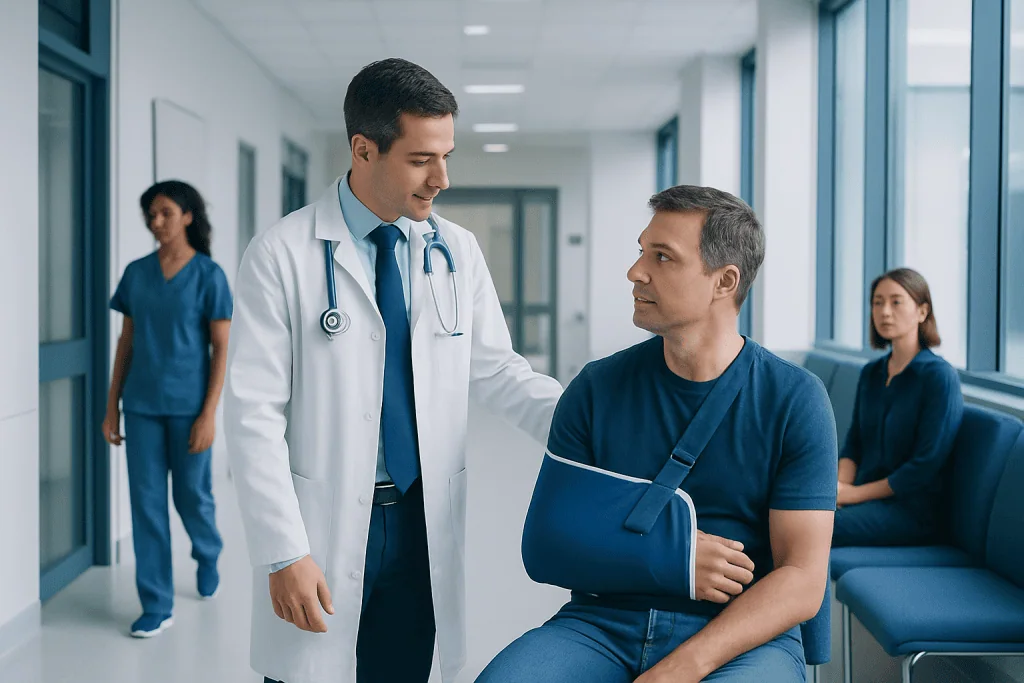
Most scapula fractures are treated without surgery using a sling followed by gradual shoulder rehabilitation. A fractured scapula can occur after significant trauma, so clinicians also assess the chest, lungs, head, spine and other bones.
Key Takeaways
- Most scapula fractures are treated without surgery using a sling followed by gradual shoulder rehabilitation.
- A fractured scapula can occur after significant trauma, so clinicians also assess the chest, lungs, head, spine and other bones.
- Surgery may be appropriate for selected displaced fractures, fractures involving the shoulder socket, or unstable injuries.
- Healing often takes several weeks, while strength and comfortable overhead motion can take longer to return.
- Urgent assessment is important after high-energy injury or when breathing trouble, chest pain, numbness or weakness occurs.
Fractured scapula treatment is most often non-surgical because many shoulder blade fractures remain stable and heal with temporary support, symptom relief and guided rehabilitation. Surgery is considered when fracture fragments are substantially displaced, the shoulder joint is involved, or associated injuries make fixation necessary.
Fractured Scapula Treatment: How It Works
A fractured scapula is a break in the shoulder blade, the broad triangular bone on the back of the upper chest. Fractured scapula treatment usually begins with protecting the shoulder in a sling, controlling pain and swelling, and arranging follow-up with an orthopedic specialist. Because the scapula is surrounded by strong muscles and has a good blood supply, many fractures remain aligned enough to heal without an operation.
The treatment plan depends on the exact fracture location, whether bone pieces have moved out of position, and whether the injury affects the shoulder joint. The scapular body and blade are commonly treated conservatively, while selected fractures of the glenoid (the shoulder socket), neck, or processes of the scapula may need surgery to restore stable shoulder mechanics.
A scapular fracture often follows a high-energy impact, such as a road traffic collision, fall from height, or sports collision. For that reason, treatment is not limited to the bone itself: the care team checks for related chest, rib, lung, collarbone, spine, nerve, and head injuries before finalizing the plan.
Assessment, Candidacy and Diagnosis
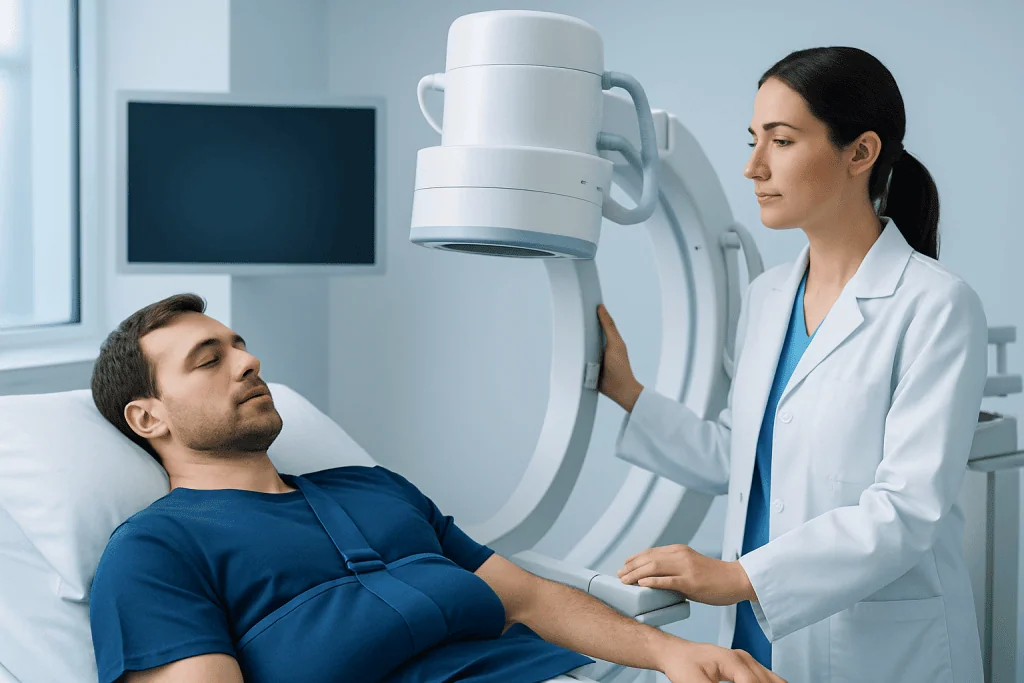
Clinicians ask how the injury happened and examine the shoulder, chest, neck and arm. Bruising, swelling, tenderness over the back of the shoulder, pain when moving the arm, and holding the arm close to the body can suggest a scapular injury. They also check circulation, sensation and muscle function in the hand and arm.
Standard X-rays may identify the break, but computed tomography (CT) is often used to show the fracture pattern in more detail, particularly if surgery is being considered or the shoulder joint may be involved. Imaging can help the orthopedic team measure displacement and determine whether the joint surface remains congruent.
Non-surgical care is generally suitable when the fracture is stable, minimally displaced and not causing loss of shoulder alignment. Surgical fixation may be considered for substantial displacement, unstable patterns, fractures entering the glenoid with joint incongruity, a fracture associated with a floating shoulder pattern, or an open fracture. The decision is individualized; an X-ray finding alone does not always determine whether surgery is needed.
Related shoulder injuries may also be assessed during the same evaluation. In particular, a collarbone injury can affect shoulder stability and may require separate planning for a clavicle fracture.
Non-Surgical Treatment and Surgical Repair Step by Step
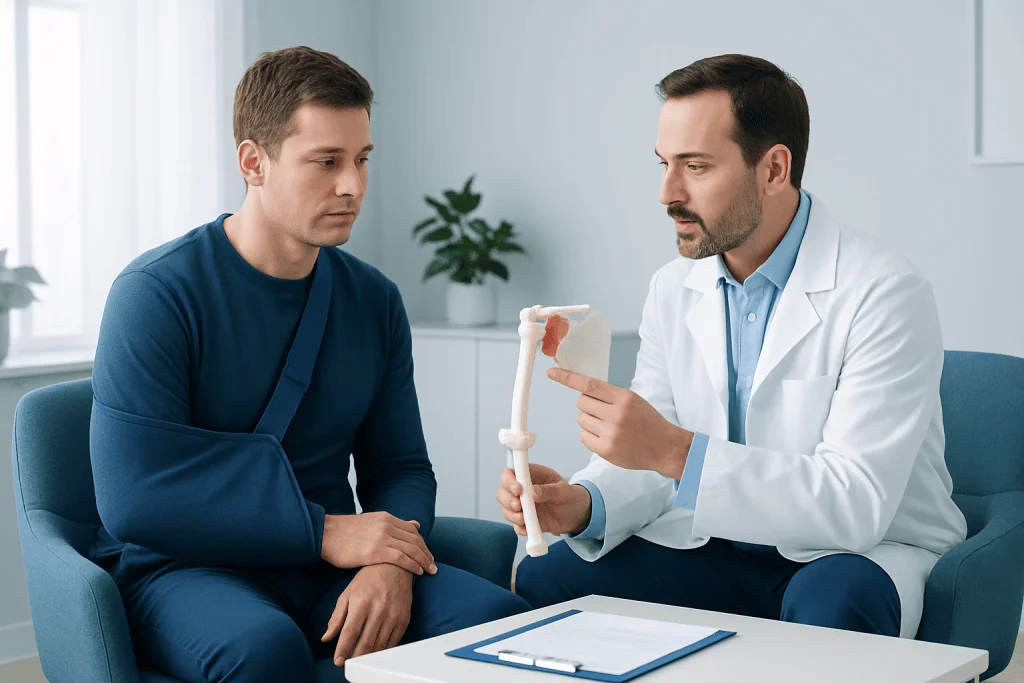
For non-surgical treatment, the arm is usually supported in a sling for comfort during the early painful period. The clinician may recommend cold packs protected by a cloth, prescribed or over-the-counter pain relief when appropriate, and gentle movement of the fingers, wrist and elbow. Prolonged complete immobilization is avoided where possible because it can contribute to shoulder stiffness.
Follow-up appointments and repeat imaging help confirm that the fracture remains in an acceptable position. As pain settles, a physiotherapist introduces carefully staged exercises to maintain motion and then rebuild shoulder-blade control, range of motion and strength. This is a key part of physical therapy and rehabilitation after a shoulder blade fracture.
When an operation is needed, it is generally performed under general anesthesia. The surgeon makes an incision positioned to reach the injured area, gently exposes the bone while protecting nearby muscles and nerves, realigns the fragments, and secures them with plates and screws. Imaging may be used during surgery to confirm alignment, and the wound is then closed and dressed.
After fixation, the arm is supported temporarily and rehabilitation begins according to the surgeon’s instructions. The timing of movement and strengthening varies with the fracture, the stability of repair, soft-tissue healing, and any associated injuries. Orthopedic surgery is therefore only one part of care; structured recovery planning remains essential.
Benefits, Limitations and Possible Risks
The main goals of fractured scapula treatment are pain relief, reliable bone healing, restoration of shoulder alignment when needed, and a gradual return to daily activity. With a stable fracture, non-surgical care avoids the risks of an operation and is effective for many people. Early, guided rehabilitation can support recovery of movement while respecting the healing bone.
For carefully selected displaced or joint-involving fractures, surgery can improve alignment and may reduce the likelihood of persistent mechanical problems caused by an uneven joint surface or altered shoulder position. However, surgery is not automatically better for every fracture. Its potential benefit must be balanced against the nature of the fracture, a person’s activity needs, general health and recovery goals.
Possible complications of a scapula fracture include stiffness, persistent pain, weakness, delayed union or nonunion, malunion, and later arthritis when the shoulder joint surface was injured. Surgical risks include infection, bleeding, blood clots, scarring, irritation from hardware, nerve or blood-vessel injury, anesthesia-related complications, and a need for further surgery in uncommon circumstances.
Attending follow-up visits, avoiding activities restricted by the clinician, and reporting new symptoms promptly can help identify complications early. The orthopedic team can explain which risks are most relevant to an individual’s fracture pattern and treatment plan.
How Long Does It Take to Heal a Fractured Scapula?
Bone healing commonly takes about 6 to 12 weeks, although the exact time varies. A simple, stable fracture may become comfortable sooner, while a displaced fracture, surgical repair, multiple injuries, smoking, diabetes, poor nutrition, or certain medicines can affect the pace of healing. Imaging and clinical examination, rather than time alone, guide decisions about advancing activity.
Recovery of normal shoulder function can take longer than bone healing. Some people need several additional months to regain strength, flexibility, endurance and confidence with lifting or overhead movements. People with physically demanding work or contact-sport goals may require a longer, tailored rehabilitation period.
It is important not to resume heavy lifting, pushing, pulling, impact activities or sport simply because pain has improved. The treating clinician or physiotherapist can advise when the shoulder has sufficient healing, range of motion and strength for each stage of return.
Can You Move Your Arm With a Scapular Fracture?
Many people can move the arm to some extent after a scapular fracture, but movement is often very painful and limited, especially when raising the arm or reaching across the body. The ability to move the arm does not rule out a fracture. Some fractures are stable enough to allow limited motion, while others cause marked pain, weakness or a sensation that the shoulder is not working normally.
In the first days after injury, the arm should be supported as advised and movements should be limited to those recommended by the care team. Gentle hand, wrist and elbow movement is often encouraged, while shoulder exercises are introduced at the appropriate stage rather than forced through pain.
Sudden inability to move the arm, visible deformity, increasing numbness, coldness or color change in the hand, or worsening weakness needs urgent medical review. These signs can indicate a more serious injury affecting the shoulder, nerves, blood supply or surrounding structures.
How Bad Is a Fractured Scapula?
A fractured scapula can range from a stable break that heals well with a sling and rehabilitation to a more complex injury involving the shoulder socket or multiple surrounding structures. The fracture itself is not always an emergency requiring surgery, but it should be assessed promptly because it is often caused by substantial force.
Clinicians take scapular fractures seriously because the same event may also injure the ribs, lungs, collarbone, spine or head. A thorough assessment helps identify and manage these injuries early. Once associated problems have been excluded or treated, many isolated scapular fractures have a favorable outlook with appropriate follow-up.
Long-term outcome is influenced by fracture position, joint involvement, treatment adherence and rehabilitation. Persistent symptoms should not be ignored, as targeted therapy or further assessment may be helpful when pain, stiffness or weakness is delaying recovery.
What Is the First Thing to Do After a Scapula Fracture? When to Seek Medical Care
The first step after a suspected scapula fracture is to stop the activity, support the arm in a comfortable position, and seek urgent medical assessment. Avoid trying to straighten the shoulder, test its range of motion repeatedly, or push the bone back into place. A cloth-supported sling can provide temporary comfort if it does not increase pain, but it is not a substitute for examination.
Emergency care is especially important after a major collision, fall or direct blow to the shoulder. Immediate assessment is also needed for difficulty breathing, chest pain, severe or escalating pain, fainting, confusion, an open wound, severe deformity, numbness, weakness, or a pale, cold or blue hand.
Even after a lower-impact injury, a person should arrange prompt review when shoulder-blade pain, swelling, bruising or reduced arm movement persists. Acibadem International’s multidisciplinary specialists and JCI-accredited hospitals diagnose and treat orthopedic injuries for international patients, coordinating imaging, surgery when indicated and rehabilitation planning.
Frequently asked questions
What is fractured scapula treatment?
Fractured scapula treatment usually includes a sling for short-term comfort, pain management, follow-up imaging and gradual physiotherapy. Surgery may be recommended when the fracture is significantly displaced, involves the shoulder socket, causes instability or occurs with certain related injuries.
Do all scapula fractures need surgery?
No. Most scapula fractures do not need surgery because they are stable or only minimally displaced. An orthopedic surgeon uses examination findings and imaging to determine whether non-surgical treatment is likely to restore comfortable, useful shoulder function.
How should a person sleep with a fractured scapula?
Many people are more comfortable sleeping on their back with pillows supporting the injured arm, or in a partly upright position. They should avoid lying directly on the injured shoulder and follow any individualized positioning advice from their clinician.
When can a person drive after a scapula fracture?
Driving should wait until the person is no longer using a sling, can control the steering wheel safely, can perform an emergency maneuver without pain or limitation, and is not taking medication that impairs alertness. The treating clinician should confirm when it is safe to return to driving.
Will a fractured scapula cause arthritis?
Arthritis is not expected after every scapular fracture. The risk is higher when the break extends into the glenoid, which is the shoulder joint socket, especially if the joint surface heals unevenly. Appropriate assessment and follow-up help guide management of this risk.
What exercises are safe during scapula fracture recovery?
Safe exercises depend on the fracture pattern and healing stage. Hand, wrist and elbow movement may be appropriate early, while shoulder range-of-motion and strengthening exercises are usually added gradually under medical or physiotherapy guidance. Exercises that create sharp pain or involve lifting should not be started without clearance.
References
- American Academy of Orthopaedic Surgeons
- OrthoInfo
- American College of Radiology
- AO Foundation
- National Health Service
This article is for general information only and is not a substitute for professional medical advice. Please consult a qualified doctor about your individual situation.
Joint and spine care in Turkey — expert assessment & treatment
JCI-accredited · board-certified surgeons · reply within 24h
Add us as a Preferred Source to see more of our trusted health content across Google Search, AI Overviews and Discover.