Freckle: What Patients Need to Know
Freckles are usually harmless flat brown spots caused by increased pigment in the skin. Sun exposure often makes freckles darker or more noticeable, especially in lighter skin types.
Key Takeaways
- Freckles are usually harmless flat brown spots caused by increased pigment in the skin.
- Sun exposure often makes freckles darker or more noticeable, especially in lighter skin types.
- Freckles are different from moles and from some other pigmented skin lesions.
- A new or changing spot should be reviewed by a dermatologist to rule out skin cancer.
- Daily sun protection can help prevent freckles from darkening and reduce UV-related skin damage.
A freckle is a small, flat, pigmented spot on the skin, most often linked to genetics and sun exposure. Most freckles are harmless, but any spot that changes noticeably or looks different from others should be assessed by a qualified doctor.
Overview
A freckle is a small, flat spot on the skin that appears darker than the surrounding area because of extra pigment. Freckles are very common, especially in people with lighter skin tones, red or blond hair, and a family history of freckling. They often appear on sun-exposed areas such as the face, shoulders, arms, and upper back.
In most cases, freckles are harmless and do not require treatment. They are not contagious, and they are not a sign of poor health. Many people notice that freckles become more visible in sunny months and fade somewhat during winter, which reflects the role of ultraviolet (UV) light in stimulating pigment production.
Even though freckles are usually benign, patients often want to know whether a spot is truly a freckle or another type of skin mark. This distinction matters because some pigmented lesions can resemble freckles at first. Understanding what freckles look like, why they form, and when a doctor should examine them can help people care for their skin with confidence.
What a Freckle Looks Like
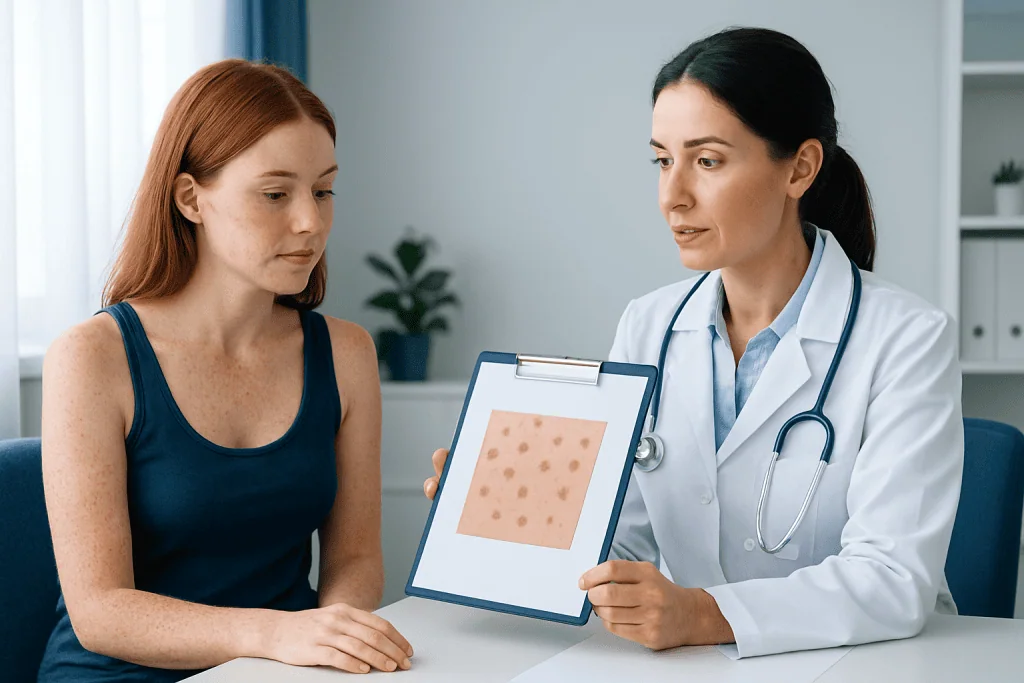
Freckles are typically small, round or irregularly shaped, flat spots that range from light tan to medium or dark brown. They are usually uniform in color and do not feel raised, rough, or scaly. A true freckle often appears among many similar spots rather than as a single isolated lesion.
Doctors commonly describe two broad patterns of freckling. One is the classic type that becomes darker with sun exposure and lighter with reduced sun exposure. The other includes sun-related pigmented spots that may persist more clearly over time. While people often use the word “freckle” for both, they are not always identical from a dermatology perspective.
Patients also commonly ask about a freckle vs. mole. A mole is often a separate type of pigmented lesion and may be flat or raised. A mole can be harmless, but some moles need monitoring, and a changing mole may require further evaluation. If a spot is asymmetrical, has uneven borders, contains more than one color, or changes over time, it should not simply be assumed to be a freckle.
Other skin conditions can also look similar, including sun spots, birthmarks, post-inflammatory pigmentation, and some early skin cancers. This is why a visual skin examination is important when there is any uncertainty, especially for a new or changing mark. Patients who need expert assessment may also be evaluated for related concerns such as skin cancer.
Causes and Risk Factors
Freckles form when skin cells produce more melanin, the pigment that gives skin its color. Genetics plays a major role. Some people are naturally more likely to freckle because of inherited traits that affect how their skin responds to sunlight.
UV exposure is another major factor. Sunlight stimulates pigment-producing cells, which can make freckles appear or darken. This is why freckles are often more noticeable after time outdoors and may be less visible during seasons with less sun exposure. Tanning beds can have a similar effect because they also emit UV radiation.
Certain people are more likely to develop freckles than others. Risk factors include:
- Light skin, light eyes, or light-colored hair
- A personal or family tendency to freckle
- Repeated or unprotected sun exposure
- Living in sunny climates or spending long periods outdoors
- A history of sunburn, especially in childhood
Freckles themselves are not dangerous, but the same UV exposure that darkens freckles can also increase the risk of premature skin aging and skin cancer. For that reason, freckles may serve as a visible reminder that the skin is receiving sun exposure and would benefit from better protection.
How Doctors Tell a Freckle from Other Skin Spots
Diagnosis usually begins with a clinical skin examination. A doctor, often a dermatologist, looks at the size, color, shape, texture, and distribution of the spot. They may also ask when it first appeared, whether it changes with sun exposure, and whether there is a personal or family history of skin cancer.
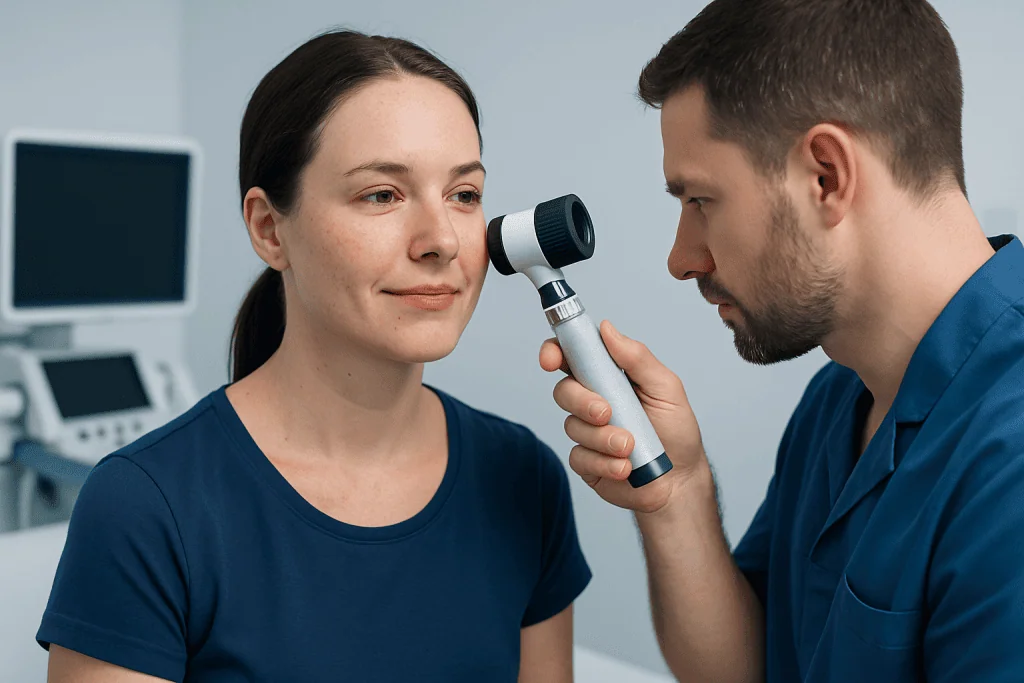
In many cases, a trained doctor can identify a typical freckle by appearance alone. A dermatoscope, a special magnifying device used to examine the skin, may help the doctor view pigment patterns more clearly. This can improve distinction between freckles, moles, solar lentigines, and suspicious lesions.
If a spot does not look typical, is changing, or raises concern, the doctor may recommend a biopsy. In this procedure, a small tissue sample is taken and examined under a microscope. A biopsy is not needed for most ordinary freckles, but it can be important when there is a question about melanoma or another skin condition.
Some people seek evaluation because they have many pigmented spots or a spot in a cosmetically sensitive area. In those situations, a detailed skin review may be combined with guidance on monitoring skin changes over time. If a lesion is suspicious, patients may be assessed using dermatology services or, where needed, further testing such as biopsy.
Treatment Options and Cosmetic Removal
Most freckles do not need medical treatment. If a doctor confirms that a spot is a harmless freckle, treatment is optional and usually cosmetic. The main medical priority is not removing ordinary freckles but identifying any lesion that is not behaving like a typical freckle.
For people who want freckles to become less noticeable, sun protection is often the first step. Daily sunscreen can help prevent darkening and may allow some freckles to fade over time. Some patients also ask about topical brightening products, chemical peels, or light-based treatments, but suitability depends on skin type, the exact lesion, and the risk of irritation or uneven pigmentation.
Laser and other pigment-targeting procedures may be used in selected cases for cosmetic reasons. These treatments should only be considered after a qualified clinician confirms that the spots are benign. Attempting to lighten or remove a suspicious lesion before diagnosis can delay detection of a more serious condition.
Patients should avoid self-treating uncertain pigmented spots with harsh products or home devices. A professional evaluation is especially important if a spot is new in adulthood, stands out from the others, or has features more consistent with a mole or another lesion. In selected cases, a doctor may discuss options such as laser treatment after confirming the diagnosis.
Prevention and Everyday Skin Care
Freckles cannot always be prevented because genetics strongly influences whether they develop. However, people can reduce darkening and limit UV-related skin damage with consistent sun protection. This approach is helpful for both cosmetic reasons and long-term skin health.
Protective habits include using a broad-spectrum sunscreen with appropriate SPF, applying it generously, and reapplying as directed, especially after swimming or sweating. Wearing a wide-brimmed hat, sunglasses, and protective clothing can also reduce UV exposure. Seeking shade during peak sun hours is another effective step.
Simple self-care measures include:
- Checking the skin regularly for new or changing spots
- Using sunscreen every day on exposed skin, even on cloudy days
- Avoiding tanning beds
- Protecting children from sunburn and excessive UV exposure
- Asking a doctor about routine skin checks if there are many moles or a family history of skin cancer
People with freckles sometimes assume all their skin spots are harmless. However, regular skin awareness is important because new lesions can appear over time. Taking photos for personal comparison may help some patients notice changes, but it should not replace professional evaluation when something looks unusual.
When to Seek Medical Care
Most freckles do not need urgent attention, but medical advice is appropriate if a spot changes in size, shape, color, or texture. A lesion that becomes irregular, darker in parts, raised, itchy, painful, crusted, or prone to bleeding should be assessed. A new pigmented spot appearing in adulthood also deserves review, especially if it looks different from nearby marks.
Doctors often advise patients to watch for the “ugly duckling” sign, meaning one spot that looks noticeably unlike the others. This can be useful for people who naturally have many freckles, moles, or sun spots. When in doubt, it is safer to ask a dermatologist than to monitor a concerning lesion without guidance.
People at higher risk may benefit from more regular skin examinations. This includes those with a personal or family history of skin cancer, significant past sun exposure, frequent sunburns, or many pigmented lesions. Early assessment can provide reassurance when a spot is harmless and allow prompt treatment if it is not.
Near the end of the care pathway, some patients may need a multidisciplinary approach if a lesion is suspicious or confirmed to be malignant. Acibadem International’s multidisciplinary specialists and JCI-accredited hospitals evaluate and treat skin conditions for international patients, including concerns related to melanoma when appropriate.
Frequently asked questions
What is a freckle?
A freckle is a small, flat, pigmented spot on the skin. It usually develops because the skin produces more pigment in response to genetics and sun exposure.
Are freckles harmful?
Most freckles are harmless and do not need treatment. The main concern is making sure a spot that looks like a freckle is not actually a different type of lesion that needs medical attention.
What is the difference between a freckle and a mole?
Freckles are usually flat, small, and become more noticeable with sun exposure. Moles may be flat or raised and can have different structures and patterns, so a changing mole should be evaluated by a doctor.
Can freckles turn into skin cancer?
A typical freckle is not usually considered cancerous. However, a skin cancer can sometimes resemble a freckle, which is why any new, changing, or unusual spot should be checked.
Can freckles be removed?
Yes, some freckles can be lightened or treated for cosmetic reasons after a doctor confirms they are benign. Common approaches may include sun protection, topical products, or selected in-office procedures.
Why do freckles get darker in summer?
Freckles often darken in summer because UV light stimulates the skin to make more pigment. They may fade somewhat when sun exposure decreases.
When should someone see a doctor about a freckle?
A doctor should assess a spot if it changes in color, size, shape, or texture, or if it bleeds, crusts, or itches. It is also sensible to get advice about any new pigmented spot that appears in adulthood.
References
- American Academy of Dermatology
- National Cancer Institute
- Mayo Clinic
- National Health Service
- DermNet
This article is for general information only and is not a substitute for professional medical advice. Please consult a qualified doctor about your individual situation.
Hair transplant in Turkey — costs, graft counts & a free assessment
JCI-accredited · board-certified surgeons · reply within 24h
Add us as a Preferred Source to see more of our trusted health content across Google Search, AI Overviews and Discover.