Frontal lobe development: Symptoms, Causes, and Treatment — Complete Patient Guide

The frontal lobes help manage executive functions such as planning, attention, decision-making, emotional regulation, and self-control. Frontal lobe development continues from infancy through adolescence and into early adulthood.
Key Takeaways
- The frontal lobes help manage executive functions such as planning, attention, decision-making, emotional regulation, and self-control.
- Frontal lobe development continues from infancy through adolescence and into early adulthood.
- Symptoms linked to frontal lobe difficulties can include impulsivity, poor focus, behavior changes, language or motor problems, and trouble organizing tasks.
- Evaluation often involves developmental history, neurological examination, and sometimes imaging or neuropsychological testing.
- Treatment depends on the underlying cause and may include therapies, school supports, medication for specific symptoms, and regular follow-up.
- Urgent care is important if symptoms appear suddenly, especially after head injury, seizure, stroke-like signs, or major personality change.
Frontal lobe development refers to how the front part of the brain matures to support attention, planning, impulse control, language, movement, and social behavior. Changes in these abilities can be part of normal growth, but persistent or severe difficulties may need medical assessment to look for developmental, neurological, or acquired causes.
Overview: what frontal lobe development means
Frontal lobe development describes the maturation of the front portion of the brain, an area that plays a major role in thinking ahead, controlling impulses, solving problems, regulating emotions, starting tasks, and adapting behavior to different situations. It also contributes to movement, aspects of language, working memory, and social judgment. Because these abilities mature gradually, frontal lobe development is a long process rather than a single milestone.
In children and teenagers, it is normal for attention span, self-control, planning, and emotional regulation to improve over time. The frontal lobes are among the last brain regions to fully mature, which helps explain why younger children may act impulsively or find it hard to organize tasks. By adolescence and early adulthood, these functions usually become more consistent, although there is wide individual variation.
When people search for information about frontal lobe development, they are often asking whether certain symptoms are normal, delayed, or related to a medical condition. The answer depends on age, the pattern of symptoms, and whether problems are mild and improving or persistent and interfering with learning, work, behavior, or daily life. Some concerns reflect normal variation, while others may be linked to neurodevelopmental conditions, injury, infection, seizures, or structural brain problems.
How the frontal lobes affect everyday abilities
The frontal lobes support what clinicians often call executive functions. These are the mental skills that help a person plan steps, stay focused, shift between tasks, remember instructions, monitor mistakes, and manage time. They also help with inhibiting inappropriate responses, which is why frontal lobe development is closely tied to impulse control and decision-making.
These brain regions also influence personality and social behavior. A child or adult with frontal lobe difficulties may understand information well but still struggle to apply it in real-life settings. For example, they may know the rules yet have trouble waiting their turn, controlling frustration, or recognizing how their behavior affects others.
In addition, the frontal lobe contains areas involved in voluntary movement and, in most people, important language functions. Depending on which part is affected, a person may show changes in facial expression, speech output, fine motor control, or motivation. Because frontal lobe functions overlap with many other brain systems, symptoms can look different from one person to another.
Symptoms that may suggest a frontal lobe problem

Symptoms associated with frontal lobe development issues vary by age and by cause. In younger children, concerns may appear as delayed self-regulation, difficulty following multi-step directions, limited attention span beyond what is expected for age, or trouble shifting between activities. In school-age children, problems may become more noticeable when classroom demands increase and organization, sustained focus, and social judgment are tested more often.
In teenagers and adults, frontal lobe symptoms may include poor planning, forgetfulness for tasks, impulsive decisions, reduced motivation, emotional outbursts, or personality changes. Some people appear unusually disinhibited, while others seem slowed down, apathetic, or unable to start activities without prompting. Symptoms can also include difficulty expressing language, slowed thinking, or challenges with problem-solving.
Possible signs can include:
- Short attention span or distractibility
- Impulsivity and poor judgment
- Difficulty organizing, planning, or completing tasks
- Emotional dysregulation, irritability, or low frustration tolerance
- Social difficulties, including problems reading cues or respecting boundaries
- Reduced motivation or apathy
- Speech or language changes
- Weakness, coordination problems, or changes in voluntary movement
These symptoms are not specific to the frontal lobe alone. They can also be seen in conditions such as attention-deficit/hyperactivity disorder, learning disorders, mood disorders, sleep problems, traumatic brain injury, epilepsy, or broader developmental conditions. That is why a careful assessment is important rather than assuming a single explanation.
Causes and risk factors
Frontal lobe development can be influenced by genetics, prenatal health, birth history, childhood environment, education, sleep, nutrition, and overall neurological health. In many children, mild differences in executive function reflect normal developmental variation. In others, persistent difficulties may be associated with neurodevelopmental conditions that affect attention, behavior, communication, or learning.
Medical causes can include prematurity, low oxygen around birth, brain malformations, genetic syndromes, infections affecting the nervous system, seizures, inflammatory conditions, or exposure to toxins. Head injury is another important cause, especially when symptoms begin after a fall, accident, or sports-related trauma. In adults, frontal lobe symptoms may also be linked to stroke, tumors, neurodegenerative disease, or mental health conditions. Related neurological concerns may sometimes overlap with brain tumors or epilepsy, depending on the clinical picture.
Risk factors do not always mean a person will develop a problem, and many people with frontal lobe symptoms have more than one contributing factor. For example, poor sleep, chronic stress, hearing or vision problems, and untreated anxiety can worsen focus and organization even when the brain itself is structurally normal. A clinician will usually consider the whole person rather than one symptom in isolation.
How doctors evaluate frontal lobe development
Assessment starts with a detailed history. Doctors typically ask when symptoms began, whether they have changed over time, how they affect school, work, relationships, and daily tasks, and whether there is a history of pregnancy complications, developmental delay, head injury, seizures, or family neurological conditions. In children, input from parents and teachers is often very helpful because behavior may differ across settings.
A physical and neurological examination helps look for clues such as weakness, reflex changes, coordination difficulties, speech changes, or signs that point to a broader nervous system problem. Developmental screening or formal neuropsychological testing may be recommended to assess attention, memory, language, executive function, and emotional regulation in more detail. These tests do not diagnose every condition on their own, but they can show a person’s strengths and challenges clearly.
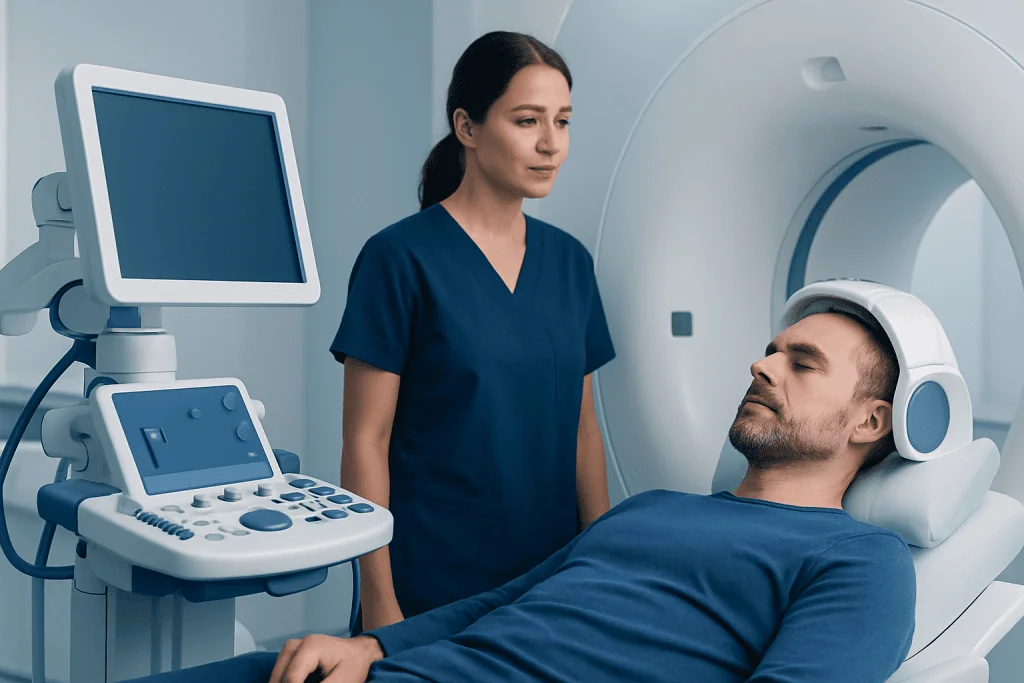
Some people also need further testing. Brain imaging such as MRI scanning may be used when there are focal neurological signs, sudden symptom onset, seizures, major developmental concerns, or suspicion of a structural cause. Depending on the situation, doctors may also request an EEG for seizure-related symptoms, blood tests, hearing or vision checks, or referrals to child development, neurology, psychiatry, psychology, speech therapy, or occupational therapy. In selected cases, advanced evaluation by neurology specialists is appropriate.
Treatment options and supportive care
There is no single treatment for frontal lobe development because care depends on the cause, age, and symptoms. If a child has developmental differences without an urgent structural problem, treatment often focuses on supporting the skills that are hardest for them. This may include speech and language therapy, occupational therapy, behavioral therapy, educational planning, and parent guidance on routines and communication strategies.
When symptoms are related to a specific diagnosis, treatment targets that condition. For example, seizure disorders are managed differently from attention disorders, traumatic brain injury, or mood disorders. Medication may help in some situations, but it is usually only one part of care. Sleep optimization, regular physical activity, structured daily routines, and school or workplace accommodations can also make a meaningful difference in attention and self-regulation.
For acquired frontal lobe problems, rehabilitation may play an important role. Cognitive rehabilitation can help with planning, memory strategies, task initiation, and problem-solving. Emotional and psychological support may also be needed, particularly when symptoms affect confidence, social relationships, or independence. Near the end of the care pathway, some families may seek multidisciplinary assessment at centers such as Acibadem International, where JCI-accredited hospitals support international patients with neurological evaluation and treatment.
Progress may be gradual, especially in children whose brains are still maturing. Regular follow-up helps clinicians adjust the plan as the person grows, enters new school stages, or faces new demands at work or home. Treatment is often most effective when families, schools, therapists, and doctors work together toward practical goals.
Prevention and self-care
Not all frontal lobe problems can be prevented, but healthy brain habits support development across childhood and adulthood. Good prenatal care, avoiding alcohol and harmful substances during pregnancy, early developmental monitoring, and routine pediatric visits can all help identify concerns early. For children and teens, consistent sleep, balanced nutrition, physical activity, and limited exposure to head injury are especially important.
At home, structure often helps people with executive function difficulties. Breaking tasks into smaller steps, using visual schedules or reminders, creating predictable routines, and reducing distractions can improve day-to-day functioning. Supportive communication also matters. Calm, clear instructions are often more useful than repeated criticism when a child or adult struggles with planning or impulse control.
In adults, managing cardiovascular risk factors, protecting the head during sports or cycling, treating sleep disorders, and addressing mental health needs can help preserve frontal lobe function. Anyone with new or worsening cognitive or behavioral changes should avoid self-diagnosing and seek professional advice, particularly if symptoms interfere with safety, driving, medication management, or work performance.
When to seek medical care
Medical advice is appropriate when symptoms are persistent, worsening, or affecting learning, behavior, work, relationships, or independence. Parents should consider an evaluation if a child consistently falls behind expected developmental skills, has major difficulty with self-control or attention beyond age expectations, or shows regression in language, behavior, or daily functioning.
Urgent medical care is needed if symptoms start suddenly or occur after head injury. Warning signs include seizure, severe headache, weakness on one side, sudden speech difficulty, confusion, loss of consciousness, major personality change, or trouble walking. These symptoms can indicate a time-sensitive neurological problem and should not be watched at home.
If concerns are less urgent but still significant, a primary care doctor, pediatrician, neurologist, developmental specialist, or mental health professional can help guide next steps. Early assessment does not mean something serious is certain; it is simply the safest way to understand what is happening and what support may help most.
Frequently asked questions
At what age does the frontal lobe fully develop?
Frontal lobe development continues through childhood and adolescence and may extend into early adulthood. Exact timing varies from person to person, so there is no single age that applies to everyone.
Can frontal lobe development problems improve over time?
Yes, some difficulties improve as the brain matures, especially with supportive routines, therapy, and educational help when needed. Improvement depends on the underlying cause, the severity of symptoms, and how early support begins.
Does poor impulse control always mean a frontal lobe disorder?
No. Impulsivity can be part of typical child development and can also occur with ADHD, sleep problems, stress, mood disorders, or other neurological conditions. A doctor looks at the full pattern of symptoms before drawing conclusions.
What tests are used to check frontal lobe function?
Doctors often begin with history-taking, observation, and a neurological examination. Depending on symptoms, they may recommend developmental or neuropsychological testing, brain imaging, EEG, or referrals to specialists such as neurology, psychology, or speech therapy.
Can adults develop frontal lobe symptoms later in life?
Yes. Adults can develop frontal lobe-related symptoms due to head injury, stroke, seizures, tumors, neurodegenerative disease, or certain mental health conditions. New personality change, poor judgment, or sudden difficulty planning tasks should be medically assessed.
When should parents worry about frontal lobe development in a child?
Parents should seek advice if a child has persistent problems with attention, planning, emotional control, or social behavior that are clearly interfering with school or home life. Regression, seizures, sudden changes, or symptoms after an injury need prompt medical review.
This article is for general information only and is not a substitute for professional medical advice. Please consult a qualified doctor about your individual situation.
Explore treatments in Turkey — costs, top hospitals & a free quote
JCI-accredited · board-certified surgeons · reply within 24h
Add us as a Preferred Source to see more of our trusted health content across Google Search, AI Overviews and Discover.

More from the Health Library

Toothache: A Complete Medical Overview

Osteomas: A Complete Medical Overview

Virilization — Explained by Medical Evidence, Not Myths

Upj Obstruction: What Patients Need to Know

Neck Discomfort Right Side: A Complete Medical Overview