FUE Transplant Cost: What Patients Really Pay

FUE transplant cost varies by graft number, hair-loss pattern, clinic expertise, location and included care; a personal assessment gives the most reliable…
Key Takeaways
- FUE is a hair-restoration procedure that transfers individual follicular units from a donor area to thinning or bald areas.
- A graft is not the same as a single hair; one graft may contain one to several hairs.
- A safe treatment plan is based on donor capacity, future hair-loss risk and realistic coverage goals, not on achieving the highest possible graft number.
- Hair-transplant quotes can differ because they may include different services, clinical staffing, medicines, aftercare and travel-related support.
- Transplanted follicles usually retain their genetic resistance to hair loss, but untreated surrounding hair may continue to thin over time.
FUE transplant cost is not determined by graft count alone. The final plan may reflect the extent of hair loss, donor-hair availability, clinical team expertise, procedure complexity, location and the follow-up care included.
FUE Transplant Cost: What Does a Patient Actually Pay For?
FUE transplant cost varies because each procedure is individually planned. Rather than having one standard price, a clinic may consider the number of grafts needed, the size and location of the area being restored, the quality of the donor area, the complexity of the hairline design, the clinical team involved and the aftercare provided.
Follicular unit extraction (FUE) is a method of harvesting hair follicles individually, usually from the back and sides of the scalp. Those follicles are then placed into carefully prepared recipient sites in thinning or bald areas. The method can be used for pattern hair loss and, in selected cases, for scar restoration or eyebrow hair restoration.
When comparing treatment plans, patients may wish to ask what is included in the estimate. Relevant details can include pre-procedure assessment, laboratory tests where appropriate, anaesthesia, graft extraction and implantation, medications, post-procedure checks, washing instructions and arrangements for support if travelling. The safest decision is based on clinical suitability and transparency, not cost alone.
How FUE Works and Who May Be a Candidate
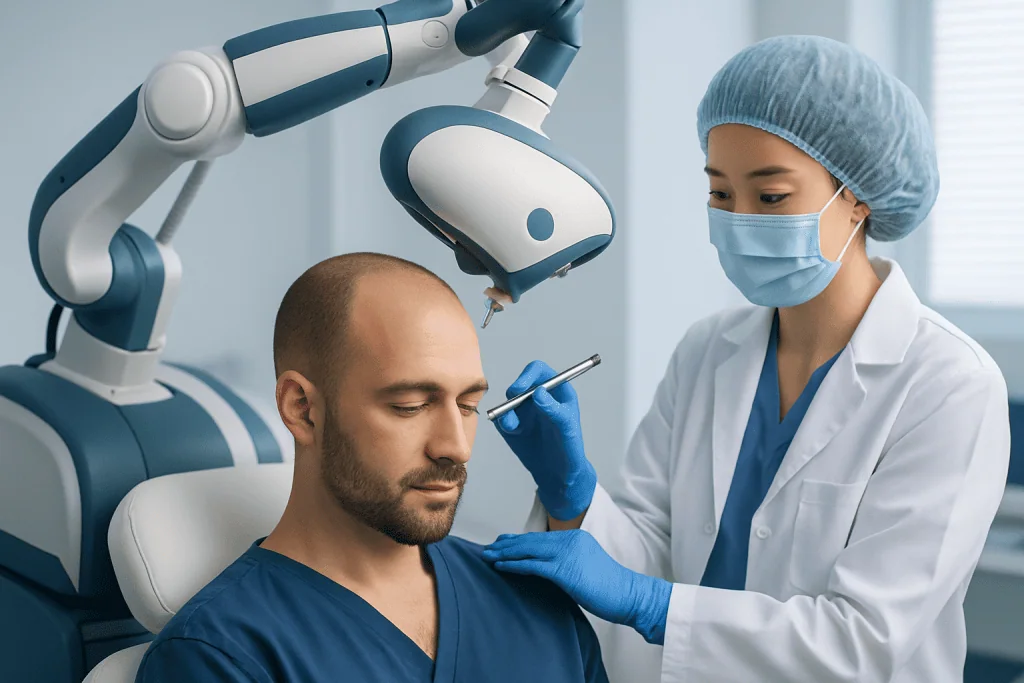
FUE moves naturally occurring follicular units from a donor zone to an area with reduced density. A follicular unit is a small grouping of hairs that grows together. Because a graft can contain more than one hair, the number of grafts does not directly equal the number of hairs transferred.
Suitable candidates often have stable or reasonably predictable hair loss, sufficient donor density and good general health. Assessment also considers scalp health, hair texture, the contrast between hair and scalp, previous procedures, medical history and expectations. People with active scalp inflammation, certain forms of scarring hair loss, poorly controlled medical conditions or inadequate donor supply may need treatment of the underlying issue first or may be advised against surgery.
Hair loss has several causes. Pattern hair loss is common, but sudden shedding, patchy loss, scaling or scalp discomfort should be evaluated before planning a cosmetic procedure. A clinician may consider conditions such as androgenetic alopecia or other medical and dermatologic causes of hair loss.
- Donor hair is limited and should be used conservatively.
- A mature hairline design should account for possible future loss.
- Medical treatment may help preserve existing, non-transplanted hair when appropriate.
The FUE Procedure Step by Step

Before the procedure, the clinician reviews the treatment plan, confirms the donor and recipient areas, discusses the intended hairline and checks that the patient understands the expected recovery. The scalp may be trimmed or shaved depending on the approach and the amount of work planned. Local anaesthesia is commonly used to keep the treatment area comfortable.
During extraction, a fine instrument is used to remove follicular units one at a time from the donor area. The team examines and preserves the grafts until placement. Recipient sites are then made at angles and directions intended to match natural hair growth, and the grafts are placed with attention to distribution and density.
The procedure may take several hours, particularly when more grafts are required. Some patients need more than one session because donor-hair preservation and safe graft handling are more important than completing an extensive area in a single day. Patients considering surgery can learn more about hair transplant treatment options during a formal consultation.
How Much Do 5000 FUE Grafts Cost?
There is no clinically reliable universal price for 5,000 FUE grafts. A plan of this size is substantial and may not be suitable, safe or necessary for every person. Its cost can vary widely by country, clinic, surgeon involvement, donor-area characteristics, whether the work is completed in one or more sessions and which elements of care are included.
It is also important to verify what a clinic means by “5,000 grafts.” A graft is a follicular unit, not a hair count, and grafts vary in the number of hairs they contain. Patients should request a written explanation of the estimated graft range, the planned areas of coverage, who will perform each stage of the procedure and the proposed follow-up plan.
For some people, extracting 5,000 grafts could overuse the donor area or leave too little reserve for future needs. A responsible assessment prioritizes a natural-looking result and long-term donor management over a high headline graft number.
How Much Will 2000 Hair Grafts Cover?
Two thousand grafts may improve a limited area, such as early frontal recession, a small hairline refinement, part of the frontal scalp or a localized crown area. However, the amount of visible coverage depends on the size of the recipient area, the patient’s original hair density, hair thickness, curl pattern, color contrast and the number of hairs in each graft.
It is generally not enough to recreate full youthful density across a large bald area. In hair restoration, grafts are often concentrated where they can make the greatest cosmetic difference, commonly the hairline and frontal region. Existing hair between transplanted follicles can also influence how dense the result appears.
A consultation should include a scalp examination and a discussion of priorities. For example, a person may choose stronger framing of the face through frontal restoration rather than thinner coverage over a larger surface area. Digital planning and clear pre-procedure photographs can help set realistic expectations.
Recovery Timeline, Benefits and Possible Risks
After FUE, the donor and recipient areas may feel tender, tight or itchy for several days. Small crusts typically form around implanted follicles. Patients are usually given instructions on gentle washing, sleeping position, activity restrictions and avoiding friction, scratching or direct sun exposure while the scalp heals.
In the first few weeks, the transplanted hair shafts often shed. This is an expected part of the process and does not usually mean the follicles have been lost. New growth commonly becomes noticeable over subsequent months, while maturation of density, texture and appearance takes longer. The precise timeline differs from person to person.
Potential benefits include improved hair distribution and a result that uses the patient’s own growing hair. Possible risks include swelling, bleeding, infection, temporary numbness, folliculitis, visible donor thinning, scarring, poor graft growth, an unnatural hairline or a result that does not meet expectations. Choosing a qualified, experienced medical team and following aftercare instructions can help reduce avoidable risks, although no procedure can guarantee a particular result.
What Happens 10 Years After a Hair Transplant?
Ten years after a hair transplant, transplanted follicles often continue to grow because donor hair is typically taken from areas that are relatively resistant to pattern hair loss. However, results are not completely static. Hair naturally changes with age, and the person’s untreated native hair can continue to thin due to ongoing androgenetic alopecia.
This is why long-term planning matters. A hairline that appears appropriate at one age may look too low or dense if hair loss progresses behind it. Some people choose medical management of ongoing hair loss, while others may consider an additional transplant later if donor supply and scalp health permit.
Regular review with a dermatologist or hair-restoration clinician can help identify progression early and discuss suitable options. The objective is to protect both the existing hair and the limited donor resource, rather than treating a transplant as a permanent solution to every future change in hair density.
How Much Cheaper Is FUE in Turkey and When to Seek Medical Care
It is not possible to state a dependable percentage by which FUE is cheaper in Turkey. Costs differ substantially between clinics and countries, and advertised prices may not cover the same services. Differences in staffing model, surgeon participation, facility standards, graft estimates, accommodation, transfers, medicines and follow-up can make direct comparisons misleading.
Patients travelling for care should confirm the clinician’s qualifications, the accredited setting where the procedure will take place, who performs extraction and implantation, what happens if complications arise after returning home and whether a written care plan is provided. Lower cost should never replace appropriate medical assessment, informed consent and safe clinical oversight.
Medical assessment is advised before considering a transplant if hair loss is sudden, patchy, associated with redness, pain, scaling or scarring, or accompanied by other symptoms such as fatigue or unexplained weight changes. After a procedure, urgent medical advice is appropriate for worsening pain, spreading redness, fever, pus, significant bleeding or rapidly increasing swelling. Acibadem International’s multidisciplinary specialists and JCI-accredited hospitals diagnose and treat hair and scalp concerns for international patients.
Frequently asked questions
What is included in FUE transplant cost?
Inclusions differ between providers, so patients should request an itemized written plan. It may include consultation, procedure-day care, local anaesthesia, graft harvesting and placement, medications, washing instructions and follow-up visits. Travel, accommodation, tests and treatment for unexpected complications may be separate.
Is a graft the same as one hair?
No. A graft usually refers to one follicular unit, which can contain one to several hairs. This is why graft count alone cannot predict exactly how much density a person will achieve.
How much do 5000 FUE grafts cost?
There is no standard price for 5,000 grafts because procedure complexity and included services vary widely. More importantly, 5,000 grafts may not be appropriate for every donor area or hair-loss pattern. A qualified clinician should determine a safe graft range after examining the scalp.
How much will 2000 hair grafts cover?
Two thousand grafts can often improve a smaller or focused area, such as frontal recession or part of the hairline. The visible result depends on the recipient area, hair caliber, curl, color contrast, existing hair and the number of hairs per graft. It will not usually create full density across a large bald scalp.
What happens 10 years after a hair transplant?
Transplanted donor hairs may continue growing for many years, but the surrounding non-transplanted hair may keep thinning. Natural aging can also change hair texture and density. Long-term planning and, when suitable, medical management can help preserve the overall appearance.
How much cheaper is FUE in Turkey?
A fixed comparison is not reliable because clinics and packages do not provide identical care. Patients should compare credentials, safety standards, surgeon involvement, graft planning, aftercare and the full cost of travel as well as the procedure quote. Clinical quality and transparent follow-up arrangements are essential considerations.
This article is for general information only and is not a substitute for professional medical advice. Please consult a qualified doctor about your individual situation.
Hair transplant in Turkey — costs, graft counts & a free assessment
JCI-accredited · board-certified surgeons · reply within 24h
Add us as a Preferred Source to see more of our trusted health content across Google Search, AI Overviews and Discover.

More from the Health Library

Proton Therapy Equipment: How It Works, Results and What to Expect

Retinal Damage Treatment: How It Works, Results and What to Expect

Understanding Pica Disorder: A Complete Patient Guide

Pap Screening Guidelines: How It Works, Results and What to Expect

Understanding Group Therapy: A Complete Patient Guide