FUE vs DHI Hair Transplant: Key Differences, Benefits, and Limitations
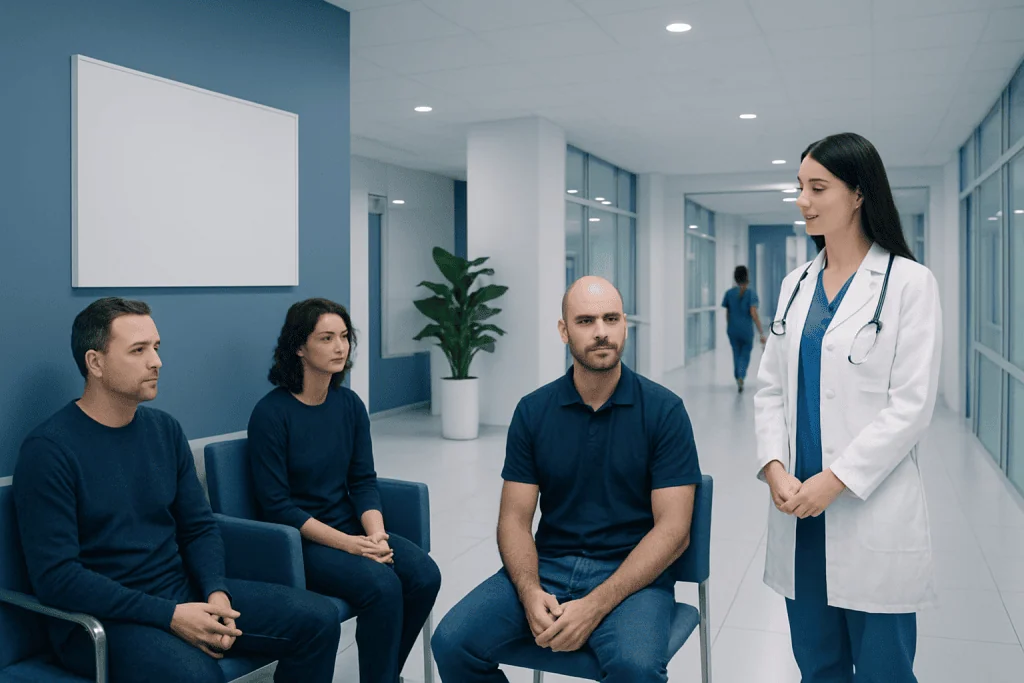
FUE and DHI both move individual hair follicles from a donor area to thinning or bald areas. The biggest difference is implantation: DHI uses a specialized implanter pen, while FUE often places grafts into pre-made channels.
Key Takeaways
- FUE and DHI both move individual hair follicles from a donor area to thinning or bald areas.
- The biggest difference is implantation: DHI uses a specialized implanter pen, while FUE often places grafts into pre-made channels.
- Neither technique is universally better; the right option depends on the patient’s goals, hair type, and surgeon experience.
- Natural-looking results rely on careful hairline design, graft handling, and realistic expectations.
- Recovery is usually manageable for both methods, but aftercare is important for graft survival and healing.
FUE and DHI are two modern hair transplant techniques that use a person’s own hair follicles to restore thinning or balding areas. The main difference is how the grafts are implanted, and the best choice depends on hair loss pattern, donor hair quality, scalp characteristics, and surgical planning.
Overview: What FUE and DHI Mean
FUE and DHI are both hair transplantation methods used to treat hair thinning and pattern baldness. In both techniques, healthy hair follicles are usually taken from the back or sides of the scalp, where hair is more resistant to shedding, and then transplanted into areas with reduced density. Because the transplanted follicles come from the person’s own scalp, the goal is a natural and lasting result.
FUE stands for Follicular Unit Extraction. In this method, follicular units are removed one by one from the donor area. After extraction, the surgeon typically creates tiny recipient sites or channels in the target area and then places the grafts into those sites. DHI, which stands for Direct Hair Implantation, is based on the same follicular unit extraction principle, but the implantation stage is different. The grafts are often inserted using a specialized implanter pen that can help control angle, direction, and depth during placement.
Patients often ask whether DHI is a completely different procedure from FUE. In practice, DHI is usually considered a variation or refinement of FUE rather than an entirely separate concept. The extraction process is similar, but the implantation tools and workflow differ. This is why comparisons between the two focus mainly on graft placement, surgical planning, and suitability for specific hair loss patterns.
Both methods may be used for people with hair loss related to androgenetic alopecia, some forms of traction-related thinning, or selected scar correction cases. A consultation with a qualified specialist helps determine whether a person is a good candidate and whether surgical restoration is appropriate at all.
Key Differences Between FUE and DHI
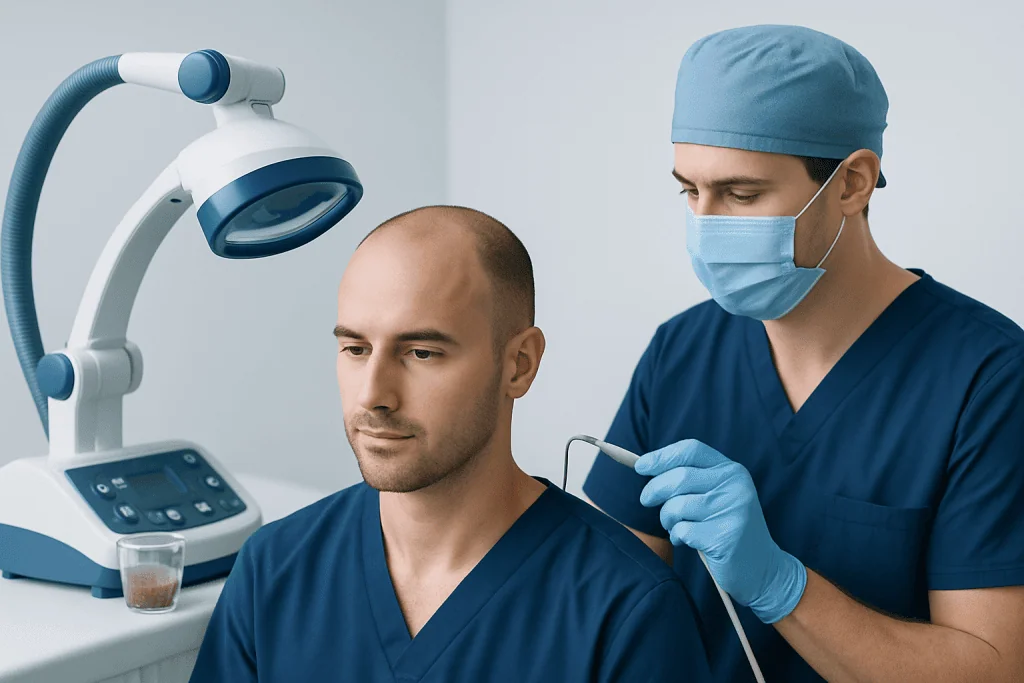
The main difference between FUE and DHI is the implantation step. In conventional FUE, the care team usually extracts grafts first, then opens small channels in the recipient area, and finally places the grafts into these channels. In DHI, grafts are loaded into a special implanter device and inserted directly into the scalp, often without a separate channel-opening stage in the same way. This can give the surgeon precise control during placement.
DHI may be especially useful when dense packing is planned in smaller areas or when shaving the entire recipient area is not preferred. It can sometimes allow for very focused placement, which may be helpful in hairline work or smaller sessions. Standard FUE can also produce very natural density and design, particularly in larger areas, and is widely used because it is versatile and efficient for many hair loss patterns.
Another difference is workflow. DHI can be more technique-sensitive and may require a highly coordinated team to protect graft quality during repeated loading and implantation. FUE with channel creation may be better suited for broad coverage in some patients, while DHI may be selected for precision-driven implantation in others. The choice is not only about equipment but also about the team’s training and experience.
It is also important to understand what does not differ. In both methods, success still depends on donor area assessment, atraumatic graft handling, correct angle and direction, and good post-procedure care. Terms and marketing language can sometimes make the techniques sound dramatically different, but in reality, both are established approaches within modern hair transplant practice.
Benefits and Limitations of FUE
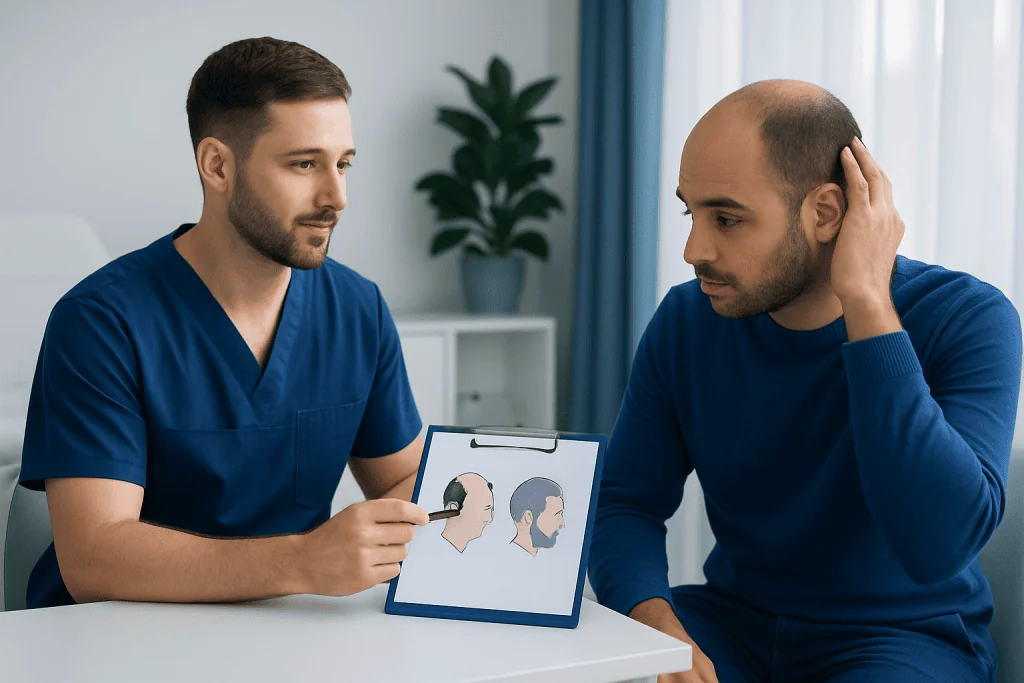
FUE is one of the most widely used hair transplant methods worldwide. A major benefit is flexibility. It can be used for different patterns of hair loss, from receding hairlines to wider crown or mid-scalp thinning. Because follicles are taken individually rather than removed as a strip, it avoids the linear scar associated with older strip-harvesting methods. This often appeals to people who prefer shorter hairstyles.
FUE is also suitable for large sessions in many cases, especially when broad coverage is needed. The surgeon can distribute grafts strategically to improve density where it matters most. With careful planning, FUE can create a soft, natural-looking hairline and balanced overall appearance. It may also be used in selected eyebrow, beard, or scar-related restoration cases depending on the clinic’s expertise.
Like any procedure, FUE has limitations. It still involves many tiny extractions from the donor area, so overharvesting can reduce donor density if planning is poor. Broad hair loss may require more grafts than the donor area can safely provide. FUE also does not stop future native hair loss, which means some people may need medical treatment or future touch-up procedures to maintain an even look over time.
Patients should also know that results are gradual. The transplanted hairs often shed before entering a new growth phase, so visible improvement takes time. FUE can be an excellent option, but the final result depends less on the name of the method and more on correct candidate selection, realistic expectations, and skilled execution.
Benefits and Limitations of DHI
DHI offers the same core advantage as other follicular-unit techniques: transplantation of a person’s own permanent hair follicles. Its main potential benefit is controlled implantation. The implanter pen may help place grafts with attention to depth, direction, and angle, which can be especially important around the frontal hairline and areas where natural growth pattern matters most. For some patients, DHI is also discussed when minimizing shaving in the recipient zone is a priority.
Another perceived benefit is that implantation and site creation can happen in a more integrated manner. In selected hands, this may support dense placement in smaller or more defined treatment zones. Some clinics consider DHI helpful when existing native hairs are still present and careful work is needed between them. It may therefore be considered for patients in earlier stages of thinning who want refinement rather than broad reconstruction.
DHI also has limitations. It is not automatically better for every patient, and it may not always be the most practical approach for very large balding areas. The method can be time-intensive and highly dependent on team skill, graft management, and workflow. If a clinic emphasizes the device more than the treatment plan, patients may be left with unrealistic expectations.
In addition, DHI does not guarantee higher survival, less scarring, or better results in every case. Outcome quality still depends on donor reserves, scalp characteristics, hair caliber, and overall surgical judgment. For this reason, many specialists view DHI as one useful implantation technique within the broader field of hair transplantation, rather than a one-size-fits-all solution.
Who May Be a Good Candidate
Good candidates for either FUE or DHI usually have stable enough hair loss, adequate donor hair at the back or sides of the scalp, and realistic expectations about density and coverage. The best candidates understand that transplantation redistributes existing hair rather than creating new follicles. This means donor supply is limited and must be used carefully.
Age, pattern of hair loss, family history, and ongoing shedding all matter during evaluation. A younger person with rapidly progressing hair loss may need a particularly cautious plan so that the transplanted area continues to look natural as native hair changes over time. Hair texture, curl, thickness, color contrast, and scalp laxity can also affect how full the final result appears.
Some people may need medical evaluation before surgery. Hair loss can sometimes be linked to nutritional issues, hormonal conditions, inflammation, or autoimmune disorders. In those cases, doctors may recommend assessment or treatment first. In selected situations, a specialist may discuss supportive therapies, including PRP treatment, as part of a broader hair restoration strategy, although suitability varies by patient.
Not everyone is a candidate for surgery. Very limited donor hair, certain scalp diseases, uncontrolled medical conditions, or unrealistic expectations may make a transplant unsuitable or best postponed. A careful consultation should cover medical history, scalp examination, donor analysis, and a clear discussion of goals, limitations, and alternatives.
What to Expect: Procedure, Recovery, and Results
Both FUE and DHI are usually performed under local anesthesia. During the procedure, the donor area is prepared, follicles are extracted individually, and then grafts are implanted into the target area using the chosen technique. The session length depends on the number of grafts, the complexity of the design, and whether treatment focuses on a small hairline refinement or a larger restoration.
After the procedure, mild swelling, redness, tiny crusts, and temporary tenderness are common. Patients are usually given instructions on washing, sleeping position, activity limits, and how to protect the grafts in the first days. It is important not to scratch, rub, or expose the scalp to avoidable trauma while the grafts are settling. Most people can return to non-strenuous daily activities relatively soon, but recovery timelines vary.
Hair growth does not happen immediately. The transplanted hairs often enter a shedding phase before new growth begins. Early regrowth may start over the following months, while fuller cosmetic improvement takes longer. Patience is essential, because the appearance changes gradually as transplanted follicles cycle into active growth.
Follow-up care matters just as much as the procedure itself. Doctors may discuss supportive options such as scalp care, medical treatment for ongoing non-transplanted hair loss, or selected adjunctive procedures. In international centers such as Acibadem International, multidisciplinary specialists in JCI-accredited hospitals evaluate candidates carefully and provide treatment planning for patients seeking restoration options abroad.
How to Choose Between FUE and DHI
Choosing between FUE and DHI is best done with a surgeon who explains the reasoning clearly rather than promoting one method for everyone. Important questions include how large the balding area is, whether the person wants maximum coverage or focused density, how strong the donor area is, and whether shaving preferences matter. The surgeon should also assess whether existing hair needs to be preserved carefully during implantation.
In many cases, the best technique is the one the surgical team performs consistently and well. A natural hairline, proper graft distribution, and donor area protection are more important than labels alone. Patients should feel comfortable asking how the plan was tailored to their scalp, what kind of density is realistic, and whether future hair loss could change the long-term appearance.
It is also wise to review before-and-after examples critically and ask about the expected timeline. Patients should be cautious with claims that one method is painless, scar-free, or guaranteed to be superior. Every hair transplant involves minor wounds, a healing period, and limitations based on donor supply and biology.
If a person is still unsure, a second opinion can be helpful. The goal is not to choose the trendiest option, but the most appropriate one for the individual case. A thoughtful consultation can often clarify whether conventional FUE, DHI, or even a non-surgical approach is the most sensible next step.
When to Seek Professional Advice
A doctor’s evaluation is helpful when hair loss becomes persistent, patchy, rapidly progressive, or distressing. A specialist can identify whether the cause is typical pattern hair loss or another condition that may need different treatment. This is especially important if there is scalp itching, scaling, redness, pain, or sudden shedding, because these features may suggest inflammation or a medical cause rather than straightforward hereditary thinning.
People considering surgery should seek advice before booking a procedure based only on online advertising or price. A proper assessment can help avoid unrealistic expectations and determine whether transplantation is likely to provide meaningful improvement. It also allows the care team to discuss risks, donor area limits, and how future hair loss may affect the long-term look.
After a transplant, medical advice should be sought if there is increasing pain, significant swelling, fever, unusual discharge, spreading redness, or any concern about healing. These issues are not always serious, but they deserve timely review. Early communication with the treating team supports safer recovery and better reassurance.
For many people, treatment decisions are easier once they understand the basics clearly. FUE and DHI are both valid techniques, and the best outcomes usually come from individualized planning, careful surgery, and ongoing follow-up rather than from the procedure name alone.
Frequently asked questions
Is DHI better than FUE?
DHI is not automatically better than FUE for every person. The main difference is how the grafts are implanted, and the best choice depends on the size of the balding area, donor hair quality, scalp features, and the surgeon’s experience.
Do FUE and DHI leave scars?
Both techniques involve tiny wounds where grafts are extracted and implanted, so some small scars can occur. However, these are usually very small and less noticeable than the linear scar associated with older strip methods.
How long does it take to see results after a hair transplant?
Results develop gradually. Transplanted hairs often shed first, and visible regrowth usually begins over the following months, with fuller cosmetic improvement taking longer as the hair growth cycle continues.
Is a hair transplant permanent?
Transplanted follicles are generally taken from areas that are more resistant to shedding, so they are often long-lasting. However, native non-transplanted hair may continue to thin over time, which is why long-term planning is important.
Which method is better for a natural hairline?
Both FUE and DHI can create a natural-looking hairline when performed well. Naturalness depends more on hairline design, graft angle, direction, and density planning than on the technique name itself.
Who may not be suitable for FUE or DHI?
People with very limited donor hair, uncontrolled medical problems, active scalp disease, or unrealistic expectations may not be ideal candidates. A doctor may also advise treating an underlying cause of hair loss before considering surgery.
References
- American Academy of Dermatology
- International Society of Hair Restoration Surgery
- British Association of Dermatologists
- National Health Service
- Mayo Clinic
This article is for general information only and is not a substitute for professional medical advice. Please consult a qualified doctor about your individual situation.
DHI Hair Transplant in Turkey — costs, top hospitals & a free quote
JCI-accredited · board-certified surgeons · reply within 24h
Add us as a Preferred Source to see more of our trusted health content across Google Search, AI Overviews and Discover.

Hair Transplant
Modern FUE and DHI hair restoration with natural, lasting results.