Functional Neurological Symptoms in Children: When Neuropediatric Assessment Helps

These symptoms are real and are not imagined or deliberately produced. Children may develop weakness, tremor, gait changes, non-epileptic episodes, sensory symptoms, or speech difficulties.
Key Takeaways
- These symptoms are real and are not imagined or deliberately produced.
- Children may develop weakness, tremor, gait changes, non-epileptic episodes, sensory symptoms, or speech difficulties.
- Neuropediatric assessment is important to confirm the diagnosis and look for any coexisting neurological or medical condition.
- Treatment often involves education, rehabilitation, psychological support, and a coordinated family-centered plan.
- Early recognition and a calm, supportive response can improve recovery and reduce school and social disruption.
Functional neurological symptoms in children are genuine symptoms that affect movement, sensation, speech, awareness, or daily functioning without evidence of structural nervous system damage explaining them. A neuropediatric assessment helps identify the pattern, rule out other causes when needed, and guide treatment that supports recovery.
Overview
Functional neurological symptoms in children are symptoms involving the nervous system that interfere with movement, sensation, attention, speech, or episodes of altered responsiveness, but are not explained by a structural injury or disease in the usual way. Doctors may also use the term functional neurological disorder, or FND. The symptoms are real, can be distressing, and may significantly affect school, play, sleep, and family life.
In functional symptoms, the brain has difficulty sending, receiving, or coordinating signals efficiently, even though standard scans or tests may not show damage such as a tumor, stroke, or inflammation. This does not mean that nothing is wrong. Instead, it means the problem is related to how the nervous system is functioning rather than to visible structural changes.
Children and adolescents can be especially affected during times of physical stress, emotional strain, illness, pain, fatigue, or rapid developmental change. A careful neuropediatric assessment helps the child and family understand the diagnosis in a clear, respectful way. It also helps avoid unnecessary fear and supports an appropriate treatment plan.
Symptoms and how they may appear
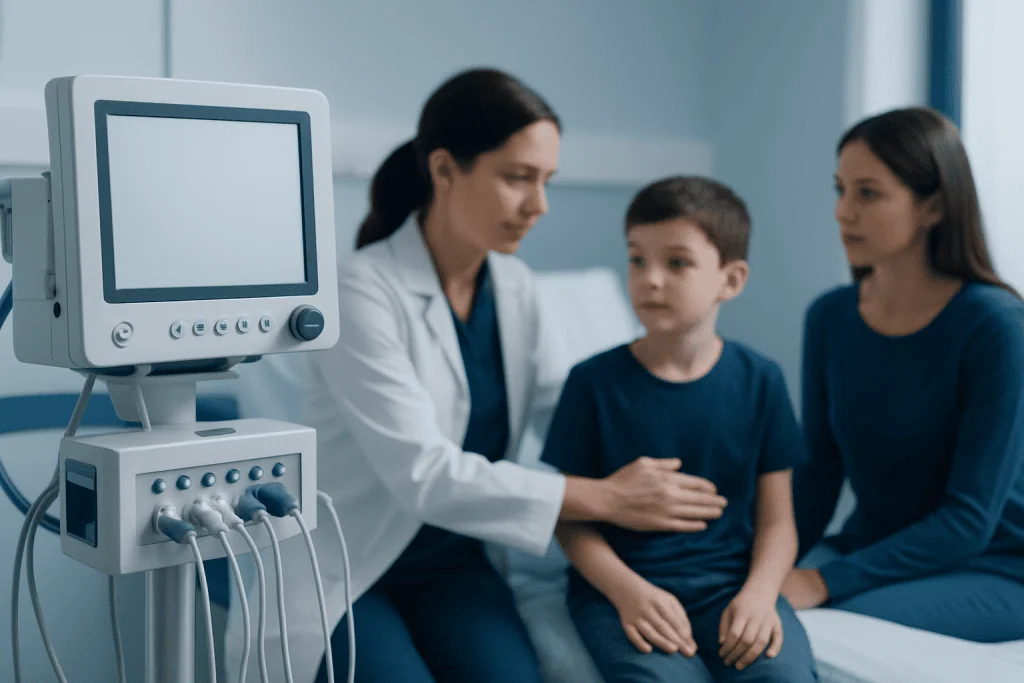
The symptoms can vary widely from one child to another. Some develop sudden weakness in an arm or leg, difficulty walking, shaking, tremor, jerky movements, or episodes that look like seizures. Others may have numbness, tingling, vision changes, dizziness, trouble speaking, swallowing difficulty, or periods of unresponsiveness. The pattern may change over time, and symptoms may become worse with stress, fatigue, pain, or attention to the symptom.
Functional symptoms often have clinical features that help specialists recognize them. For example, weakness may vary during the examination, gait may look unusual but remain surprisingly protected from falls, or tremor may change with distraction. In children with seizure-like episodes, the events may differ from typical epilepsy in timing, triggers, recovery, or movement pattern, though only a qualified clinician can assess this safely.
Children may also experience related symptoms such as headaches, abdominal pain, poor sleep, anxiety, low mood, concentration problems, or chronic fatigue. Sometimes there is more than one condition at the same time. A child may have functional symptoms alongside migraine, epilepsy, hypermobility, pain disorders, or another medical issue, which is one reason a thorough neuropediatric review is important.
- Movement symptoms: weakness, tremor, tics, gait difficulty, abnormal postures
- Sensory symptoms: numbness, altered sensation, blurred vision, hearing changes
- Episodes: non-epileptic attacks, faint-like spells, altered awareness
- Communication symptoms: speech difficulty, stuttering, voice changes
- Associated concerns: pain, fatigue, sleep problems, school avoidance
Why do functional neurological symptoms happen?

There is rarely a single cause. Functional neurological symptoms are best understood as the result of several interacting factors that affect how the brain and body respond to stress, attention, pain, fatigue, illness, and learned movement or symptom patterns. In some children, symptoms begin after a viral illness, minor injury, migraine, panic episode, pain flare, or a frightening event. In others, there may be no obvious trigger.
Emotional stress can play a role, but it is not present in every case and should not be assumed. School pressure, family conflict, bullying, trauma, perfectionism, sleep deprivation, and social difficulties can contribute in some children. Physical factors can also contribute, including chronic pain, dizziness, hyperventilation, concussion recovery, or another neurological condition. A careful clinician looks at the whole picture rather than reducing symptoms to a single explanation.
Risk does not mean blame. Parents do not cause functional neurological symptoms by caring too much, and children are not choosing the symptoms. Supportive communication matters because children often improve when adults understand that the symptoms are genuine and potentially reversible. Explaining the diagnosis clearly can itself be therapeutic and may reduce fear-driven symptom cycles.
When neuropediatric assessment helps
A neuropediatric assessment is especially helpful when a child has unexplained neurological symptoms, repeated emergency visits, school absence, or uncertainty about whether symptoms represent epilepsy, a movement disorder, migraine, neuropathy, or another neurological condition. The goal is not only to rule out disease, but also to positively recognize the signs of a functional neurological pattern. This is an important difference, because diagnosis should be based on what is present in the examination, not simply on normal test results.
During the assessment, the specialist takes a detailed history about symptom onset, triggers, progression, associated pain or fatigue, sleep, mental health, school functioning, previous illnesses, and family concerns. The neurological examination looks for patterns that suggest functional symptoms, while also checking for signs of disorders that may need further testing. Sometimes the doctor may recommend electroencephalography (EEG) for seizure-like episodes or electromyography if a neuromuscular problem needs to be considered.
The assessment may also identify conditions that can overlap with functional symptoms, such as epilepsy, migraine, or dizziness disorders. In selected cases, imaging such as MRI may be used when the history or examination suggests that a structural cause must be excluded. Once the diagnosis is explained carefully, many families feel relief because the symptoms are recognized as real and treatable.
How the diagnosis is made
Diagnosis is based on a combination of history, examination findings, and the overall clinical pattern. Doctors look for positive signs of functional symptoms, such as inconsistency over time, improvement with distraction, or movement patterns that do not match known neurological disease in the usual way. At the same time, they remain attentive to warning signs that could suggest another disorder.
Tests are used thoughtfully, not automatically. A child with seizure-like episodes may need EEG or video-EEG review if the events are unclear. Blood tests, imaging, cardiac assessment, or referral to other specialists may be appropriate when symptoms point in those directions. However, repeated testing without a clear reason can increase anxiety and may not help recovery.
A good diagnostic conversation is a key part of care. Families often need to hear that the symptoms are genuine, common enough to be recognized, and potentially reversible with the right support. Many specialists explain that the nervous system is not damaged, but is temporarily working in an inefficient pattern. This approach can make the diagnosis easier to understand and accept.
Treatment and recovery
Treatment is individualized and usually works best when it involves more than one approach. Education comes first: understanding functional neurological symptoms can reduce fear and help the child engage in recovery. The treatment plan may include physiotherapy for walking or weakness, occupational therapy for daily function, psychological therapy for coping skills and symptom triggers, and school support to maintain attendance and routine.
Rehabilitation focuses on retraining normal movement and attention patterns rather than repeatedly checking the symptom. For example, therapy may encourage automatic movement, graded activity, regular sleep, and pacing. If episodes resemble seizures but are diagnosed as non-epileptic events, treatment typically focuses on regulation, trigger management, and emotional or physical stressors rather than anti-seizure medicine, unless true epilepsy is also present.
Associated problems such as headaches, pain, anxiety, low mood, poor sleep, or deconditioning should also be treated. A coordinated plan involving neurology, pediatrics, mental health professionals, rehabilitation specialists, and school staff can be very helpful. Near the end of the care pathway, some families may seek multidisciplinary evaluation through centers such as Acibadem International, where JCI-accredited hospitals and specialist teams support international patients with neurological assessment and treatment.
What families can do at home and at school
Families can support recovery by responding in a calm, consistent way. It helps to validate the child’s experience without reinforcing disability. This means acknowledging that symptoms are real while also encouraging gentle return to normal routines, movement, and social participation. Clear expectations, regular meals, hydration, sleep routines, and reduced over-monitoring can all be useful.
School planning is often important. Many children benefit from a gradual return to full attendance, temporary adjustments for fatigue or mobility, and communication between parents, teachers, and clinicians. The aim is to support participation rather than prolonged exemption from everyday activities. Avoiding unnecessary avoidance can reduce symptom persistence.
- Keep routines predictable and age-appropriate.
- Encourage gradual activity rather than strict bed rest, unless a doctor advises otherwise.
- Support stress management, sleep hygiene, and regular exercise within tolerance.
- Limit repeated reassurance-seeking and frequent symptom checking.
- Follow the rehabilitation plan and attend scheduled reviews.
Parents should also care for their own wellbeing. Functional neurological symptoms can be confusing and emotionally tiring for families. Asking questions, seeking clear explanations, and staying connected with the treatment team can make day-to-day management easier.
When to seek medical advice urgently
Any new neurological symptom in a child deserves medical attention, especially if it is sudden, severe, or unexplained. Urgent assessment is important for first-time seizure-like episodes, sudden weakness, severe headache with concerning features, persistent altered consciousness, high fever with neurological symptoms, head injury, breathing difficulty, or signs of dehydration. Functional symptoms can resemble other conditions, so it is important not to assume the cause without professional evaluation.
Ongoing review is also important if symptoms change significantly, become more frequent, or do not improve with treatment. The clinician may revisit the diagnosis, look for coexisting conditions, and update the management plan. This is part of good care and does not mean the original symptoms were not real.
Families should feel able to ask for clarification if they do not understand the diagnosis or if school, therapy, or home management is becoming difficult. Early, coordinated support often helps children regain confidence and function more smoothly. A trusted specialist can guide next steps and make sure serious causes are not missed.
Frequently asked questions
Are functional neurological symptoms in children real?
Yes. These symptoms are genuine and can affect a child's ability to move, speak, feel, or function normally. They are not imagined, and the child is not choosing to have them.
Is this the same as pretending or attention-seeking?
No. Functional neurological symptoms are not the same as pretending. While stress or attention can influence symptoms, the symptoms themselves are involuntary and deserve proper medical assessment and support.
Can a child have functional symptoms and another neurological condition at the same time?
Yes. Some children have functional symptoms together with migraine, epilepsy, pain disorders, or other medical conditions. That is why a neuropediatric assessment is valuable before making a treatment plan.
Do all children with functional neurological symptoms need brain scans or extensive testing?
Not always. Tests are guided by the child's history and examination findings, and many children do not need large numbers of investigations. The diagnosis is often made from positive clinical signs rather than from tests alone.
What kind of treatment helps most?
Treatment usually works best when it is coordinated and tailored to the child's symptoms. Education, physiotherapy, occupational therapy, psychological support, sleep improvement, and school planning are commonly helpful.
Can children recover from functional neurological symptoms?
Many children improve, especially when the condition is recognized early and managed with a clear plan. Recovery may be gradual, and progress can vary, but supportive multidisciplinary care can make an important difference.
References
- National Institute of Neurological Disorders and Stroke
- American Academy of Pediatrics
- American Academy of Neurology
- National Health Service
- Functional Neurological Disorder Society
This article is for general information only and is not a substitute for professional medical advice. Please consult a qualified doctor about your individual situation.
Explore treatments in Turkey — costs, top hospitals & a free quote
JCI-accredited · board-certified surgeons · reply within 24h
Add us as a Preferred Source to see more of our trusted health content across Google Search, AI Overviews and Discover.