G L a N D S: A Complete Medical Overview

Glands are broadly divided into endocrine glands, which release hormones into the bloodstream, and exocrine glands, which release substances through ducts. Important glands include the thyroid, pituitary, adrenal glands, pancreas, salivary glands, sweat glands, and lymph nodes often mistakenly called glands.
Key Takeaways
- Glands are broadly divided into endocrine glands, which release hormones into the bloodstream, and exocrine glands, which release substances through ducts.
- Important glands include the thyroid, pituitary, adrenal glands, pancreas, salivary glands, sweat glands, and lymph nodes often mistakenly called glands.
- Gland-related symptoms vary widely and may include swelling, pain, dry mouth, hormonal changes, fatigue, weight changes, or fever.
- Diagnosis depends on the gland involved and may include physical examination, blood tests, imaging, and sometimes biopsy.
- Treatment ranges from observation and lifestyle support to medications, drainage procedures, surgery, or hormone replacement.
g l a n d s are specialized organs that produce and release substances the body needs, including hormones, saliva, sweat, and digestive enzymes. Understanding how glands work can make it easier to recognize symptoms of gland problems and know when medical evaluation may help.
Overview: what g l a n d s are and why they matter
g l a n d s are organs or groups of specialized cells that make and release substances the body needs to function. These substances may include hormones, saliva, sweat, tears, digestive juices, oils, and breast milk. In simple terms, glands help coordinate body processes such as growth, metabolism, temperature control, digestion, reproduction, and moisture balance.
Doctors usually classify glands into two main groups. Endocrine glands release hormones directly into the bloodstream, where those chemical signals travel to target tissues throughout the body. Exocrine glands release their products through small ducts onto body surfaces or into body cavities, such as the mouth, skin, or digestive tract.
Because glands work in many different systems, gland problems do not look the same in every person. Some disorders cause pain or visible swelling, while others cause subtle symptoms such as tiredness, weight change, dry eyes, constipation, sweating changes, or menstrual irregularity. The meaning of the word “glands” also varies in everyday language, since people may use it to describe lymph nodes, which are part of the immune system rather than true glands.
Main types of glands in the body
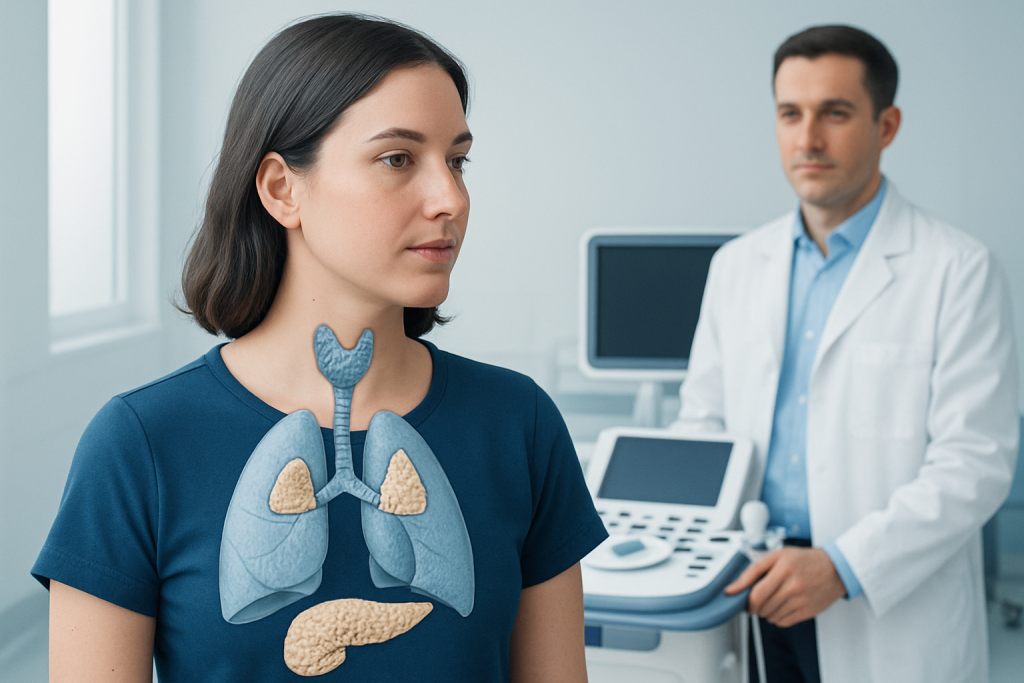
The endocrine system includes the pituitary gland, thyroid, parathyroid glands, adrenal glands, pancreas, ovaries, and testes. These glands regulate many internal functions by producing hormones. For example, the thyroid helps control metabolism, the adrenal glands help the body respond to stress, and the pancreas helps regulate blood sugar through insulin and other hormones.
Exocrine glands include the salivary glands, sweat glands, sebaceous glands in the skin, mammary glands, and glands in the stomach and intestines that help digestion. Their secretions act locally rather than traveling through the bloodstream. If a duct becomes blocked or inflamed, symptoms often occur in the area where the gland is located.
Some structures commonly called glands are not technically endocrine or exocrine glands. Lymph nodes, for example, are small immune organs that may enlarge during infection or inflammation. They are often referred to as “swollen glands,” especially in the neck, even though they are not true glands. This distinction matters because the possible causes and evaluations can be different.
- Endocrine glands: pituitary, thyroid, parathyroids, adrenals, pancreas, ovaries, testes
- Exocrine glands: salivary, sweat, sebaceous, mammary, digestive glands
- Often mistaken for glands: lymph nodes, tonsils
Symptoms of gland problems

Symptoms depend on which gland is affected and whether the problem involves inflammation, infection, blockage, underproduction, or overproduction. A person with a salivary gland problem may notice swelling near the jaw, pain when eating, dry mouth, or a bad taste in the mouth. Sweat gland disorders may cause too much sweating or very little sweating, while thyroid disorders may lead to unexplained weight changes, heat or cold intolerance, palpitations, or fatigue.
Endocrine gland disorders often produce symptoms gradually because hormones influence many body systems over time. Mood changes, sleep disruption, irregular periods, changes in blood pressure, skin changes, weakness, and bowel habit changes can all be clues. The symptoms may seem unrelated at first, which is one reason hormonal gland disorders sometimes require careful evaluation.
Swollen lymph nodes are another common reason people search for information about glands. These may enlarge with a cold, throat infection, dental problem, or skin infection, but they can also swell because of inflammatory disease or, less commonly, cancer. Persistent swelling, hard nodes, or associated fever or weight loss should be medically assessed.
Common causes and risk factors
Gland disorders can develop for many reasons. Infection is a frequent cause, especially in salivary glands and lymph nodes. Viruses and bacteria may cause temporary swelling, pain, and fever. Blockage can also occur, such as salivary stones that obstruct saliva flow and lead to swelling or infection. Cysts and benign growths may affect some glands as well.
Hormonal glands may be affected by autoimmune disease, inherited conditions, medication effects, tumors, chronic illness, or structural abnormalities. For example, autoimmune disorders can cause the thyroid to become underactive or overactive. The pancreas may be affected by diabetes, and the adrenal or pituitary glands may develop hormone-producing or nonfunctioning tumors. Relevant background conditions may include diabetes or thyroid cancer, depending on the gland involved.
Risk factors vary by condition but may include age, family history, smoking, dehydration, poor oral hygiene, radiation exposure, autoimmune disease, obesity, and metabolic disease. In some cases there is no clear preventable cause. A clinician usually considers the exact gland, the person’s age, medical history, and pattern of symptoms before estimating likely causes.
How doctors diagnose gland disorders
Diagnosis starts with a medical history and physical examination. The doctor asks where symptoms are occurring, how long they have been present, whether swelling comes and goes, and whether there are related symptoms such as fever, dry mouth, sweating changes, appetite change, or weight fluctuation. On examination, the clinician may gently feel the neck, jaw, abdomen, skin, or other affected areas.
Blood tests are especially important when an endocrine gland problem is suspected. These may evaluate hormone levels, inflammation, infection, blood sugar, kidney function, or immune markers. Imaging can also be useful. Ultrasound is often used for the thyroid, salivary glands, and enlarged lymph nodes, while CT or MRI may be needed for deeper structures. When appropriate, doctors may recommend MRI or ultrasound as part of the workup.
Sometimes additional tests are needed, such as saliva sampling, nuclear medicine scans, endoscopy, fine-needle aspiration, or biopsy. Biopsy helps clarify whether a lump is benign, inflammatory, or malignant. The goal of diagnosis is not only to name the condition but also to determine how the gland is functioning and whether nearby tissues are affected.
Treatment options for gland conditions
Treatment depends entirely on the gland involved and the underlying cause. Minor viral illnesses that enlarge lymph nodes often improve with time and supportive care. Bacterial infections may require antibiotics. Salivary gland blockage may respond to hydration, gland massage, sour foods that stimulate saliva, or procedures to remove a stone. If there is a collection of pus, drainage may be necessary.
Hormonal gland disorders are treated by correcting hormone imbalance and addressing the cause. This may involve hormone replacement, medicines that reduce hormone production, blood sugar management, or monitoring of a small noncancerous growth. Some people need specialist care in endocrinology, ENT, general surgery, or oncology. Depending on findings, care may include thyroid surgery or interventional radiology or imaging-guided procedures.
Surgery may be recommended when a gland has a large cyst, recurrent obstruction, suspicious nodule, significant enlargement, or confirmed cancer. Recovery and long-term follow-up vary widely. Many gland disorders are treatable, and some are temporary, but successful care usually depends on identifying the exact source of the problem rather than treating all “gland swelling” the same way.
Prevention and self-care
Not every gland disorder can be prevented, but some practical habits may lower risk or help reduce symptoms. Good hydration supports saliva production and may reduce the chance of salivary blockage. Regular oral care and dental treatment help lower the risk of infections that can affect nearby glands and lymph nodes. Balanced nutrition, physical activity, sleep, and regular follow-up for chronic conditions support endocrine health more broadly.
People with known thyroid disease, diabetes, autoimmune conditions, or previous gland surgery benefit from routine monitoring. Taking prescribed medicines consistently and attending follow-up appointments can help prevent complications. Avoiding tobacco and discussing new symptoms early may also help, particularly if there is a personal or family history of endocrine or head-and-neck disease.
Self-care should not replace evaluation when symptoms are persistent, severe, or unexplained. Home measures are most useful for mild, short-lived problems. If a lump enlarges, becomes firm, causes trouble swallowing, or is accompanied by fever or significant fatigue, a clinician should guide next steps.
When to seek medical care
Medical care is advisable if gland-related symptoms last more than a couple of weeks, keep returning, or interfere with eating, swallowing, speaking, sleep, or daily activities. A person should also seek evaluation for unexplained weight change, ongoing fatigue, marked sweating changes, or symptoms that suggest a hormone imbalance. The same is true for a new neck lump, swelling under the jaw, or dry mouth that does not improve.
More urgent assessment is appropriate if there is high fever, redness spreading over the skin, severe pain, difficulty breathing, rapid enlargement of a lump, confusion, dehydration, or inability to swallow liquids. These signs do not always mean a serious condition, but they should not be ignored. Early assessment can help identify treatable causes before complications develop.
When diagnosis is complex, multidisciplinary care can be helpful. Acibadem International’s specialists in endocrinology, ENT, radiology, surgery, and oncology evaluate gland disorders in JCI-accredited hospitals for international patients, with treatment plans based on the gland involved and the individual’s overall health.
Frequently asked questions
What are g l a n d s in the human body?
Glands are organs or specialized groups of cells that produce and release substances the body needs. These include hormones, saliva, sweat, oils, tears, and digestive juices.
What is the difference between endocrine and exocrine glands?
Endocrine glands release hormones directly into the bloodstream, allowing them to act throughout the body. Exocrine glands send their secretions through ducts to a specific surface or body cavity, such as the skin or mouth.
Why do people say they have swollen glands?
In everyday language, “swollen glands” often refers to enlarged lymph nodes, especially in the neck. Lymph nodes are part of the immune system, not true glands, but they commonly enlarge during infections or inflammation.
Can gland problems cause fatigue and weight changes?
Yes, some gland disorders can affect hormone levels, metabolism, sleep, and appetite. Thyroid, adrenal, pituitary, and pancreatic conditions are examples that may contribute to fatigue or unexplained weight change.
How are gland disorders tested?
Testing depends on the gland involved and the symptoms present. A doctor may use a physical exam, blood tests, ultrasound, CT, MRI, or sometimes a biopsy to identify the cause.
Are gland lumps always cancer?
No, many gland-related lumps are caused by infection, inflammation, cysts, stones, or benign growths. Even so, a new or persistent lump should be checked by a qualified doctor, especially if it is hard, enlarging, or associated with other symptoms.
References
- National Institute of Diabetes and Digestive and Kidney Diseases
- American Thyroid Association
- National Cancer Institute
- Mayo Clinic
- Merck Manual Consumer Version
This article is for general information only and is not a substitute for professional medical advice. Please consult a qualified doctor about your individual situation.
Explore treatments in Turkey — costs, top hospitals & a free quote
JCI-accredited · board-certified surgeons · reply within 24h
Add us as a Preferred Source to see more of our trusted health content across Google Search, AI Overviews and Discover.
Check your numbers in seconds
BMI, calories, due date, blood pressure and 30+ more clinical calculators — free, instant, doctor-reviewed ranges.

More from the Health Library

At Birth the Average Infant Weighs: A Complete Medical Overview

Throat Chakra: An Evidence-Based Guide for Patients

Anion Gap: A Complete Medical Overview

Physiatrist: A Complete Medical Overview

Remineralize Teeth: An Evidence-Based Guide for Patients