Gagging: A Complete Medical Overview

Gagging is a normal airway-protection reflex, but repeated episodes are not always harmless. Common triggers include throat irritation, acid reflux, postnasal drip, strong smells, anxiety, and certain medicines.
Key Takeaways
- Gagging is a normal airway-protection reflex, but repeated episodes are not always harmless.
- Common triggers include throat irritation, acid reflux, postnasal drip, strong smells, anxiety, and certain medicines.
- Doctors diagnose persistent gagging by reviewing symptoms, triggers, medical history, and sometimes using throat, digestive, or imaging tests.
- Treatment depends on the cause and may involve lifestyle changes, treating reflux or allergies, adjusting medications, or managing anxiety.
- Urgent evaluation is needed if gagging comes with choking, trouble breathing, severe swallowing problems, or unexplained weight loss.
Gagging is usually a protective reflex that helps keep food, liquid, or irritants out of the airway. When it happens often, without a clear trigger, or with other symptoms, it may be linked to digestive, throat, neurological, medication-related, or emotional causes that deserve medical attention.
Overview
Gagging is a reflex that helps protect the body. It happens when the back of the throat, tongue, or nearby structures are stimulated and the muscles respond by tightening. This reflex is meant to prevent food, liquid, or foreign material from entering the airway.
Occasional gagging can happen in healthy people. Common situations include brushing the teeth, coughing hard, smelling something unpleasant, eating too quickly, or having mucus collect in the throat. In these settings, gagging is often brief and does not point to a serious problem.
However, gagging can also be a symptom rather than just a reflex. If it becomes frequent, appears without an obvious trigger, interrupts eating, causes distress, or comes with nausea, coughing, vomiting, or swallowing difficulty, a medical evaluation may help identify the reason. Sometimes the cause lies in the throat or nose, while in other cases it begins in the stomach, nervous system, or emotional stress response.
Understanding the pattern matters. A person may gag only in the morning, only while eating, only during strong anxiety, or only when lying down. These details often give important clues about what is driving the symptom and what type of treatment may help.
How the gag reflex works
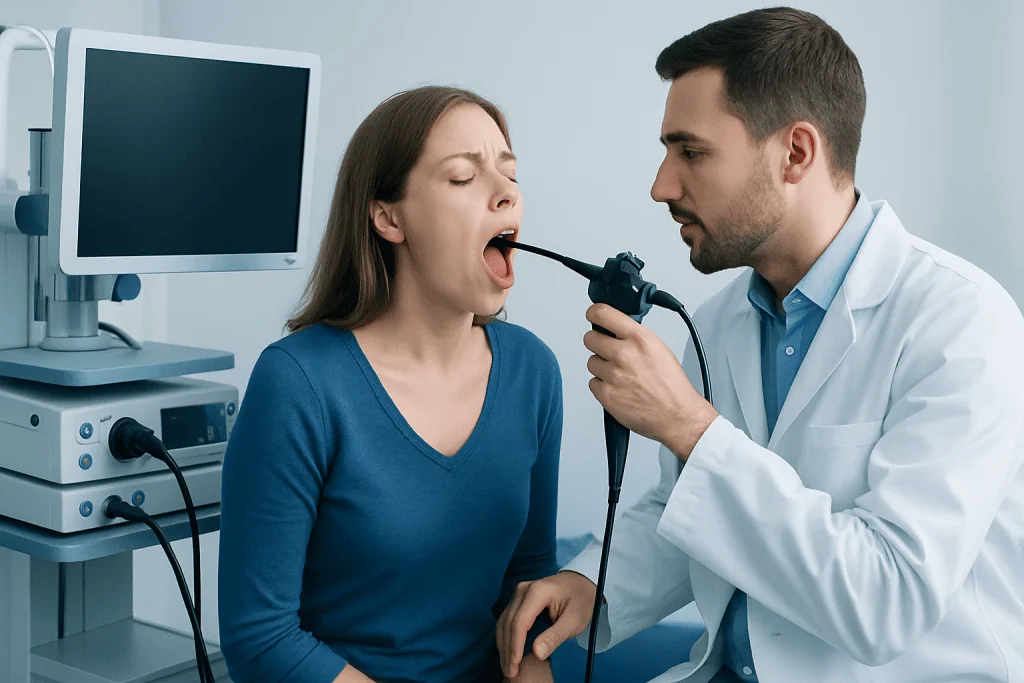
The gag reflex is part of the body’s defense system. Nerves in the mouth and throat detect touch, pressure, secretions, or irritation. They then send signals to the brainstem, which coordinates a rapid muscle response in the throat and upper digestive tract. This can create the feeling of retching or the urge to vomit, even when vomiting does not happen.
People naturally vary in how sensitive this reflex is. Some have a very strong gag reflex and gag easily during dental care, toothbrushing, tongue cleaning, or when swallowing large pills. Others have a weaker reflex and rarely notice it. A sensitive gag reflex is not always a sign of disease, but it can become more noticeable when the throat is inflamed, the nose is congested, or stress levels are high.
Gagging is different from choking, although the two may happen close together. Choking means something is blocking airflow and can become an emergency. Gagging, by contrast, is an attempt by the body to avoid that blockage. It is also different from vomiting, which involves stronger contractions of the stomach and abdominal muscles.
Because many body systems are involved in swallowing and airway protection, persistent gagging can overlap with symptoms seen in acid reflux, sinus problems, tonsil irritation, swallowing disorders, and some neurological conditions. This is why a broad, symptom-based assessment is often more useful than focusing on the reflex alone.
Symptoms and patterns that may accompany gagging

Gagging can occur by itself or with other symptoms. Some people feel a tight, uncomfortable sensation in the throat, while others develop a dry heaving feeling, nausea, coughing, or occasional vomiting. The episodes may last only a few seconds or may repeat over time, especially around meals or during upper airway irritation.
Associated symptoms often help narrow the cause. Throat clearing, hoarseness, a sour taste, and a burning feeling in the chest may suggest reflux. Nasal congestion, postnasal drip, and frequent mucus can point to allergy or sinus-related irritation. A feeling that food gets stuck, pain with swallowing, or repeated coughing while eating may indicate a swallowing problem that needs medical review.
Some people notice gagging mainly in the morning. This can happen with overnight reflux, mucus drainage from the nose and sinuses, smoking-related irritation, or nausea related to medications. Others gag during dental care or toothbrushing because contact with the tongue or soft palate triggers a strong reflex.
Patterns that may be useful to mention to a doctor include:
- Whether gagging happens during eating, drinking, coughing, brushing teeth, or at random
- Whether it is linked to lying down, exercise, strong smells, or anxiety
- Whether vomiting, weight loss, fever, or pain is also present
- Whether symptoms are new, worsening, or ongoing for weeks
Causes and risk factors
Gagging has many possible causes, and often more than one factor is involved. Irritation in the throat is a common reason. This can result from viral infections, enlarged tonsils, chronic cough, smoking, dry mouth, or mucus draining from the nose into the throat. People with allergies or chronic sinus inflammation may develop repeated throat stimulation from secretions. In some cases, evaluation by an ear, nose, and throat specialist and treatments such as ENT care can help identify and manage the source of irritation.
Digestive causes are also common. Acid reflux can irritate the throat and voice box, leading to gagging, coughing, or a lump-in-the-throat feeling. Nausea from stomach infections, medications, pregnancy, or motion sensitivity may also trigger gagging. Problems affecting swallowing can increase the risk of gagging during meals, especially if food is not moving smoothly from the mouth to the esophagus.
Neurological and sensory causes are less common but important. Conditions that affect nerve function, muscle coordination, or the brain’s control of swallowing may lead to gagging, coughing, or choking while eating. Sometimes this is seen after a stroke or with other neurological illness. If there is concern about swallowing control or airway protection, a broader assessment in neurology care may be appropriate.
Emotional and situational factors can play a role as well. Anxiety can heighten body awareness, tighten the throat muscles, and increase nausea, all of which may trigger gagging. Certain odors, textures, medications, alcohol use, dental procedures, and very fast eating can also make gagging more likely. Risk is higher when there is an underlying reflux problem, chronic nasal symptoms, poor oral tolerance, or a naturally sensitive gag reflex.
How doctors diagnose persistent gagging
Diagnosis begins with a careful history. A doctor will usually ask when gagging started, what triggers it, how often it happens, and whether there are other symptoms such as heartburn, nausea, coughing, hoarseness, nasal congestion, trouble swallowing, or weight loss. Medication use, smoking, recent infections, dental issues, and emotional stress can also be relevant.
A physical examination may include the mouth, throat, neck, lungs, and abdomen. Depending on the symptoms, the doctor may look for throat inflammation, enlarged tonsils, signs of sinus drainage, reflux-related irritation, or dehydration. Sometimes no single obvious cause is seen on the first visit, especially if episodes are intermittent.
Further tests are guided by the suspected cause rather than ordered for everyone. If reflux, persistent nausea, or swallowing symptoms are present, digestive evaluation may be useful, sometimes including gastroenterology assessment or tests of the esophagus and stomach. If there is concern about structural changes, chronic infection, or masses, targeted imaging or endoscopic examination may be recommended.
In people with suspected swallowing disorders, doctors may arrange swallowing studies to see how food and liquid move. Blood tests may be used if infection, metabolic problems, or medication effects are possible. The goal is to identify whether the gagging is a normal but overactive reflex, a sign of throat irritation, a digestive problem, a nerve-related swallowing issue, or part of a broader condition such as dysphagia.
Treatment options
Treatment depends on the cause. If gagging is related to a temporary throat infection, mucus, or irritation, symptoms may improve as the underlying issue settles. If reflux is contributing, treatment often focuses on reducing acid exposure and irritation through diet and habit changes, along with doctor-recommended medicines when needed. For sinus or allergy-related drip, the main goal is to reduce inflammation and secretion buildup.
When gagging occurs during meals because of swallowing difficulty, treatment may include swallowing therapy, texture changes, and practical strategies to make eating safer and more comfortable. These approaches can be especially helpful after neurological illness or in older adults. If medication side effects are involved, a doctor may review alternatives rather than stopping prescribed treatment suddenly.
Behavioral techniques may help people with a very sensitive gag reflex. Slower eating, smaller bites, good posture, nasal breathing when possible, and gradual desensitization during toothbrushing or dental care can reduce episodes. If anxiety is a clear trigger, relaxation techniques, counseling, or treatment for anxiety may improve both the physical symptom and the distress around it.
In more complex cases, care may involve more than one specialty. A person may need evaluation from gastroenterology, ENT, neurology, speech and swallowing therapy, or primary care. Near the end of the care pathway, some international patients seek coordinated assessment at centers such as Acibadem International, where multidisciplinary specialists in JCI-accredited hospitals diagnose and treat symptoms related to gagging based on the suspected underlying cause.
Prevention and self-care
Not every episode of gagging can be prevented, but some practical steps may lower the frequency. Eating slowly, chewing thoroughly, and avoiding very large bites can reduce throat stimulation and help food move more comfortably. Sitting upright during and after meals may also help, especially in people who notice symptoms after eating.
If reflux seems to be involved, avoiding heavy late-night meals and known trigger foods may reduce irritation. Good hydration can thin mucus and make throat clearing less frequent. Managing nasal allergies or sinus symptoms early may also help prevent secretions from collecting in the throat and triggering gagging.
People with a sensitive gag reflex during oral care may do better with a smaller toothbrush head, gentle brushing, and avoiding contact with the back of the tongue. Breathing calmly through the nose, when possible, can make oral care easier. Dental teams can often suggest positioning and pacing techniques for those who gag during procedures.
Self-care is most useful when symptoms are mild and the cause is straightforward. Persistent, unexplained, or worsening gagging should not be managed only at home. A medical review is important if the symptom begins to affect nutrition, hydration, sleep, or quality of life.
When to seek medical care
Medical advice is appropriate if gagging happens often, lasts for more than a short period, or interferes with eating, drinking, or daily activities. It is also worth discussing with a doctor if it is a new symptom without a clear explanation, especially in adults who have not had a sensitive gag reflex before.
Prompt medical evaluation is important if gagging occurs with pain when swallowing, repeated vomiting, food sticking in the throat, chronic hoarseness, coughing during meals, or unexplained weight loss. These features can suggest a swallowing or digestive problem that may need specific treatment.
Emergency help is needed if gagging is accompanied by choking, blue lips, severe breathing difficulty, inability to swallow saliva, or signs that the airway may be blocked. Sudden gagging with weakness, facial droop, or trouble speaking also needs urgent assessment because it can point to a neurological emergency.
In general, the safest approach is to look at gagging in context. Occasional episodes are often harmless, but frequent or unexplained gagging deserves professional attention so that the underlying cause can be identified and treated appropriately.
Frequently asked questions
Is gagging always a sign of something serious?
No. Gagging is often a normal protective reflex and may happen occasionally with toothbrushing, strong smells, coughing, or eating too quickly. It becomes more important to evaluate when it is frequent, unexplained, or happens with other symptoms such as trouble swallowing or weight loss.
Can acid reflux cause gagging?
Yes. Acid reflux can irritate the throat and voice box, which may trigger gagging, coughing, throat clearing, or a lump-in-the-throat feeling. A doctor can help determine whether reflux is contributing and suggest appropriate treatment.
Why do some people gag while brushing their teeth?
Some people have a more sensitive gag reflex, especially when the toothbrush touches the back of the tongue or soft palate. Congestion, throat irritation, anxiety, and brushing too far back can make this more likely. Using a smaller brush and brushing gently may help.
Can anxiety cause gagging?
It can. Anxiety may tighten throat muscles, increase nausea, and heighten awareness of normal throat sensations, all of which can trigger gagging in some people. This does not mean the symptom is imaginary; it means the stress response may be part of the cause.
When should gagging be checked by a doctor?
A doctor should assess gagging if it happens repeatedly, affects eating or drinking, wakes someone from sleep, or appears with vomiting, pain, hoarseness, coughing during meals, or weight loss. Urgent care is needed if there is choking, trouble breathing, or inability to swallow.
How is persistent gagging treated?
Treatment depends on the reason for the symptom. Doctors may address reflux, nasal drainage, throat irritation, medication side effects, anxiety, or swallowing problems. Many people improve once the underlying trigger is identified and managed.
References
- National Institute of Diabetes and Digestive and Kidney Diseases
- American Academy of Otolaryngology–Head and Neck Surgery
- National Institute of Neurological Disorders and Stroke
- Mayo Clinic
- Cleveland Clinic
This article is for general information only and is not a substitute for professional medical advice. Please consult a qualified doctor about your individual situation.
Explore treatments in Turkey — costs, top hospitals & a free quote
JCI-accredited · board-certified surgeons · reply within 24h
Add us as a Preferred Source to see more of our trusted health content across Google Search, AI Overviews and Discover.

More from the Health Library



Related Specialists

Assoc. Prof. Dr. Ender Cesur
Psychiatry
Assoc. Prof. Dr. Tayfun Yoldaş
General Surgery
Dr. Nevin Sarıgüzel
Infectious Diseases & Clinical Microbiology
Assoc. Prof. Dr. Ata Can
Orthopedic Surgery & Traumatology