

Gallbladder and Back Ache Explained: Common Triggers and Red Flags

Gallbladder-related pain often begins in the upper right or middle abdomen and may spread to the right shoulder blade or back. A fatty or large meal may trigger gallbladder pain, although symptoms can also occur without an obvious trigger.
Key Takeaways
- Gallbladder-related pain often begins in the upper right or middle abdomen and may spread to the right shoulder blade or back.
- A fatty or large meal may trigger gallbladder pain, although symptoms can also occur without an obvious trigger.
- Severe or persistent pain, fever, vomiting, jaundice, or dark urine require prompt medical assessment.
- Back pain alone is not usually caused by the gallbladder; the pattern and accompanying symptoms are important.
- Ultrasound and blood tests are commonly used to assess suspected gallbladder disease.
Gallbladder and back ache may be connected when pain from the upper right abdomen spreads, or is referred, to the right shoulder blade or mid-back. Gallstones and gallbladder inflammation are common causes, but muscle, spine, kidney, stomach, and pancreatic conditions can produce similar symptoms.
Gallbladder and back ache: can they be related?
Gallbladder and back ache can be related, particularly when discomfort starts in the upper right side of the abdomen or beneath the breastbone and travels to the right shoulder blade or upper-to-mid back. This happens because the brain can interpret pain signals from internal organs as coming from nearby areas of the body, a process called referred pain. Gallstones, blockage of a bile duct, and inflammation of the gallbladder are common reasons for this pattern.
However, back ache is extremely common and has many possible causes. A strained muscle, spinal joint irritation, nerve-related pain, peptic ulcer disease, kidney stones, pancreatitis, and lung conditions can sometimes resemble gallbladder discomfort. The timing, location, severity, and associated symptoms help a clinician distinguish between these possibilities.
The gallbladder is a small sac located under the liver in the upper right abdomen. It stores bile, a digestive fluid that helps the body break down fats. After eating, especially after a meal high in fat, the gallbladder contracts to release bile into the small intestine. If a gallstone obstructs the outlet of the gallbladder or a bile duct, it can cause significant pain and, in some cases, inflammation or infection.
What gallbladder pain commonly feels like
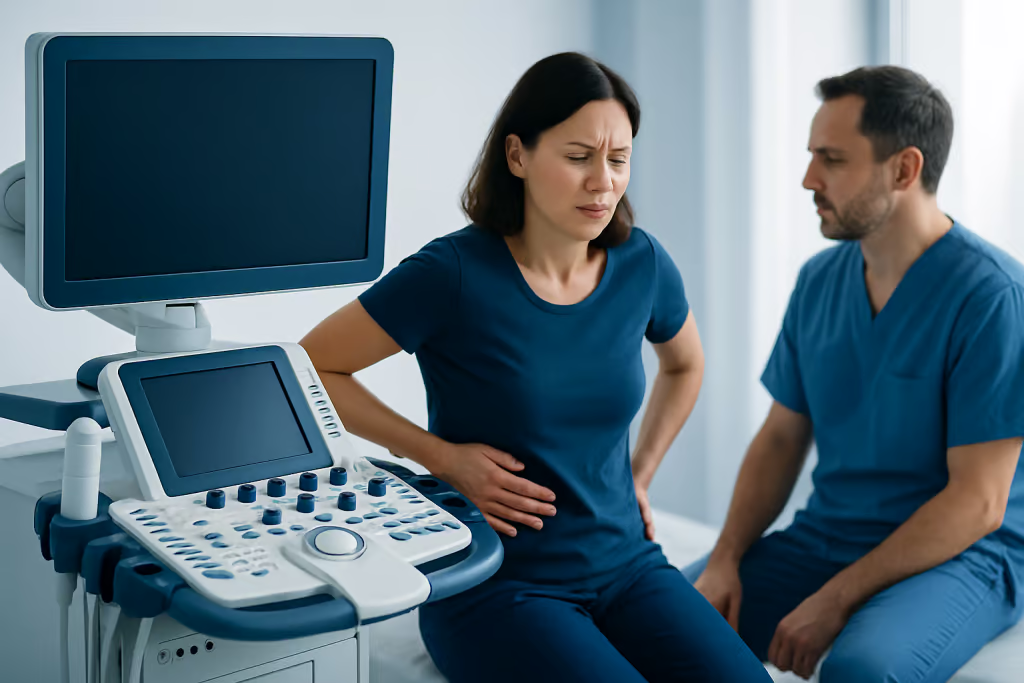
Typical gallbladder pain is often felt in the upper right abdomen, though some people feel it in the upper middle abdomen. It may be steady, intense, and difficult to get comfortable with rather than a brief, sharp twinge. The pain can spread around the right side of the rib cage and into the area between the shoulder blades or beneath the right shoulder blade.
An episode caused by a temporarily blocked gallbladder outlet is often called biliary colic. Despite the name, the pain is usually constant during an episode. It frequently develops after eating and may last from minutes to several hours before easing as the obstruction resolves. Indigestion, bloating, nausea, or vomiting may occur at the same time.
Features that can make a gallbladder source more likely include pain after rich meals, pain that interrupts sleep, recurrent episodes with a similar pattern, and abdominal tenderness under the right ribs. Still, symptoms vary considerably. Some people with gallstones never have symptoms, while others first experience symptoms when inflammation or a complication has already developed.
- Upper right or upper central abdominal pain
- Pain moving to the right shoulder blade or upper back
- Nausea, vomiting, bloating, or belching
- Discomfort after meals, especially fatty meals
- Episodes that recur in a similar location and pattern
Common gallbladder-related triggers and conditions
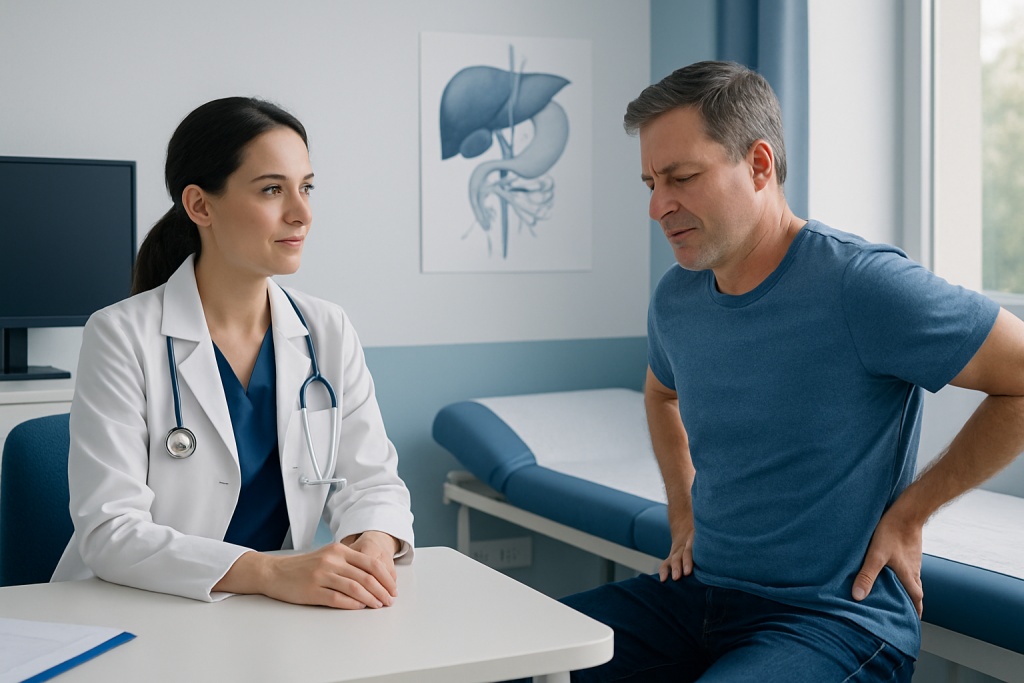
Gallstones are hardened deposits that can form in bile. They are the most frequent cause of gallbladder-related pain. A stone may temporarily block the cystic duct, which drains the gallbladder, causing biliary colic. When the blockage persists, the gallbladder can become inflamed; this condition is called acute cholecystitis and generally causes pain that lasts longer and becomes more constant.
Gallbladder inflammation can also occur without stones, although this is less common and is more often seen in people who are seriously unwell for other reasons. Other possible causes of similar symptoms include stones in the main bile duct, inflammation or infection of the bile ducts, and reduced gallbladder emptying. These conditions need medical evaluation because the appropriate management depends on the cause and whether there is obstruction or infection.
Meals are a frequent trigger because digestion prompts the gallbladder to contract. Fried foods, high-fat meals, and large portions may bring on symptoms in some people, but they do not create an immediate gallstone problem on their own. Stress, activity, and body position may influence how pain is perceived, yet pain that consistently follows meals should not automatically be dismissed as simple indigestion.
Factors associated with gallstone formation include increasing age, a family history of gallstones, pregnancy, obesity, diabetes, rapid weight loss, certain blood disorders, and some medicines. These factors do not mean that a person will develop symptoms, and gallbladder disease can occur in people without obvious risk factors.
How gallbladder pain differs from other back pain
Gallbladder-related back pain is usually accompanied by abdominal symptoms or discomfort under the right ribs. In contrast, musculoskeletal back pain often changes clearly with movement, lifting, twisting, prolonged sitting, or pressing on a sore muscle. It may improve with rest, gentle movement, heat, or changes in posture. These differences are useful clues, but they are not definitive.
Kidney stones or kidney infections can cause pain in the side or flank that travels toward the lower abdomen or groin. Urinary burning, blood in the urine, fever, or frequent urination may occur. Pancreatitis can cause severe upper abdominal pain that spreads straight through to the back, commonly with nausea and vomiting; it requires urgent assessment. Acid reflux, ulcers, and other digestive conditions can also cause upper abdominal or chest discomfort that may be mistaken for gallbladder pain.
Heart and lung conditions can occasionally present with upper abdominal, shoulder, or back discomfort rather than classic chest pain. New symptoms accompanied by shortness of breath, sweating, fainting, chest pressure, or pain spreading to the arm, jaw, or neck should be treated as urgent. A clinician should assess any uncertain or persistent pattern rather than relying on symptom location alone.
Diagnosis: what to expect at a medical assessment
A healthcare professional will usually ask when the pain started, how long it lasts, where it travels, whether it is linked to meals, and whether fever, vomiting, bowel changes, urinary symptoms, or yellowing of the skin have occurred. They may examine the abdomen for tenderness, particularly beneath the right rib cage, and assess for signs of dehydration, infection, or jaundice.
An abdominal ultrasound is commonly the first imaging test when gallstones or gallbladder inflammation are suspected. It can show gallstones, thickening of the gallbladder wall, fluid around the gallbladder, and widening of the bile ducts. Blood tests may check liver function, bilirubin, signs of inflammation or infection, and pancreatic enzymes.
If ultrasound results do not explain ongoing symptoms, clinicians may consider other tests. These can include magnetic resonance imaging of the bile ducts, a specialized nuclear medicine scan that evaluates gallbladder emptying, CT imaging, or endoscopic procedures in selected situations. The test chosen depends on the person’s symptoms, examination findings, blood results, and the concern for a duct blockage or another diagnosis.
Keeping a brief symptom record can be helpful before an appointment. Recording the location of pain, duration, food intake, associated symptoms, medicines taken, and anything that makes the pain better or worse can give the clinician a clearer picture.
Treatment and day-to-day care
Treatment depends on the diagnosis and the severity of symptoms. For a first brief episode where gallstones are suspected but no complication is found, a clinician may recommend monitoring, symptom relief, and follow-up testing. People should not attempt to self-treat severe abdominal pain with home remedies, as delay can be risky if inflammation, infection, or a bile duct blockage is present.
When gallstones cause repeated attacks or gallbladder inflammation, removal of the gallbladder is often recommended. This operation, called cholecystectomy, is commonly performed using minimally invasive techniques. A person can usually digest food normally without a gallbladder because the liver continues to produce bile, although some people notice temporary changes in bowel habits during recovery.
If a stone has moved into a bile duct, an endoscopic procedure may be used to remove it before or around the time of gallbladder surgery. Antibiotics, intravenous fluids, anti-nausea medicines, and pain management may be needed when there is infection or significant inflammation. The treatment plan should be individualized by a qualified surgical and digestive health team.
Until medical advice is obtained, it may help to choose smaller meals and limit foods that reliably trigger symptoms, particularly very fatty or fried foods. Maintaining hydration and avoiding rapid, unsupervised weight-loss diets may also support general gallbladder health. These measures may reduce symptom triggers but do not remove gallstones or treat an inflamed gallbladder.
When to seek medical care
Prompt medical care is important for severe upper abdominal pain, particularly if it lasts more than a few hours, worsens, or is accompanied by fever, chills, repeated vomiting, or marked tenderness. These symptoms can indicate inflammation or infection of the gallbladder and should be assessed without delay.
Urgent assessment is also needed if the skin or whites of the eyes become yellow, urine becomes dark, stools become unusually pale, or there is generalized itching. These signs may suggest that bile flow is blocked. Sudden severe pain with fainting, confusion, chest pressure, breathing difficulty, or cold sweating warrants emergency care.
A non-urgent medical appointment is appropriate for recurrent pain after meals, repeated upper abdominal discomfort that spreads to the back, or persistent digestive symptoms that do not settle. Early assessment can help identify gallstones and rule out other causes before symptoms become more disruptive. Acibadem International’s multidisciplinary specialists and JCI-accredited hospitals also assess and treat gallbladder conditions for international patients.
Frequently asked questions
Can gallbladder problems cause pain in the back?
Yes. Gallbladder pain can be referred to the right shoulder blade or upper-to-mid back, especially when it begins in the upper right abdomen. Back pain without abdominal symptoms is less likely to come from the gallbladder, although a clinical assessment may still be needed if the cause is unclear.
Where is gallbladder back pain usually felt?
It is commonly felt beneath the right shoulder blade, between the shoulder blades, or around the right side of the upper back. It often occurs together with pain below the right ribs or in the upper middle abdomen. The precise location can vary from person to person.
Can gallbladder pain happen after eating?
Yes. Gallbladder symptoms commonly occur after a meal because the gallbladder contracts during digestion. Large or fatty meals may trigger attacks in some people, but symptoms may also occur at other times.
How long can a gallbladder pain attack last?
A pain episode caused by temporary blockage may last from minutes to several hours. Pain that persists, intensifies, or occurs with fever, vomiting, or jaundice may indicate inflammation or blockage and needs prompt medical evaluation.
Can gallbladder pain go away without treatment?
An individual episode may settle if a temporary blockage resolves, but gallstones can remain and symptoms may recur. A person with recurring pain should speak with a doctor to confirm the cause and discuss appropriate treatment options.
What are the warning signs of a gallbladder emergency?
Warning signs include severe or persistent abdominal pain, fever or chills, repeated vomiting, jaundice, dark urine, pale stools, or confusion. These symptoms can be associated with infection or obstruction and require urgent medical care.
References
- National Institute of Diabetes and Digestive and Kidney Diseases
- National Health Service
- Mayo Clinic
- Merck Manual Consumer Version
This article is for general information only and is not a substitute for professional medical advice. Please consult a qualified doctor about your individual situation.
Persistent digestive symptoms? Get evaluated in Turkey
JCI-accredited · board-certified surgeons · reply within 24h
Add us as a Preferred Source to see more of our trusted health content across Google Search, AI Overviews and Discover.

More from the Health Library



Related Specialists

Dr. Ali Şenol Çelebi
Radiology
Fzt. Hakan Sazak
Physical Medicine & Rehabilitation
Fzt. Erkan Akpınar
Physical Medicine & Rehabilitation
Prof. Dr. Süleyman Özyalçın
Treatment of Pain Algology