Gallium Injection: How It Works, Results and What to Expect

Gallium injection is an imaging tracer, not chemotherapy or radiation treatment. Images are usually taken one or more days after the injection because the tracer needs time to circulate and collect in tissues.
Key Takeaways
- Gallium injection is an imaging tracer, not chemotherapy or radiation treatment.
- Images are usually taken one or more days after the injection because the tracer needs time to circulate and collect in tissues.
- A gallium scan may help identify inflammation, infection, or some cancers, but it cannot confirm a diagnosis on its own.
- Most people tolerate the injection well, and the radiation exposure is limited and medically controlled.
- Pregnancy, breastfeeding, medicines, and recent imaging tests should be discussed with the nuclear medicine team in advance.
A gallium injection is a small intravenous dose of a radioactive tracer used for nuclear medicine imaging. The tracer can collect in areas of inflammation, infection, or certain cancers, helping clinicians assess the body alongside symptoms, blood tests, and other scans.
Overview: What a Gallium Injection Does
A gallium injection is used before a gallium scan, a type of nuclear medicine imaging test. It contains a very small amount of radioactive material, commonly gallium-67 citrate, that is injected into a vein. The material acts as a tracer: it travels through the bloodstream and may concentrate in particular tissues, allowing a special camera to detect its distribution.
The test can support the evaluation of unexplained fever, inflammation, infection, and selected cancers. It is not a treatment, and it does not mean that cancer is suspected in every case. A radiologist or nuclear medicine physician interprets the images in the context of the person’s symptoms, examination, laboratory results, and other imaging findings.
Gallium imaging has a more focused role today because other tests, such as CT, MRI, PET/CT, and targeted infection imaging, may be preferable in certain situations. However, it can still provide useful clinical information when a care team needs to assess inflammatory activity or investigate a possible source of disease.
What Is a Gallium Injection Used For?
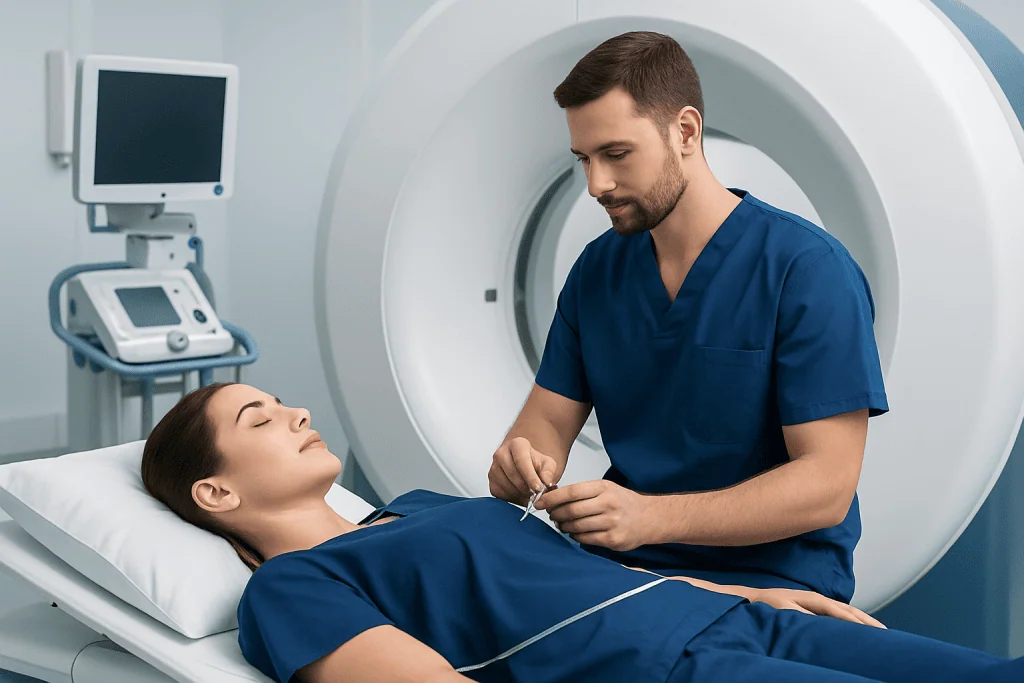
A gallium injection is used to prepare for imaging that looks for abnormal tracer uptake. Areas with active inflammation, infection, or rapid cell activity may take up more gallium than surrounding tissue. The resulting images can help point to locations that need closer assessment.
Clinicians may consider a gallium scan when investigating persistent fever without a clear cause, suspected inflammatory conditions, certain lung or lymphatic abnormalities, or possible bone infection. It may also be used in selected situations to assess known disease, monitor response to treatment, or clarify findings seen on another test.
The scan is generally one part of a broader diagnostic plan. For example, suspected infection may also require blood tests, cultures, ultrasound, CT, MRI, or tissue sampling. If a scan suggests a suspicious area, additional imaging or a biopsy may be needed to determine the exact cause.
What Is Gallium Used for Medically?

In this setting, gallium is used as a radiopharmaceutical tracer for diagnostic imaging. The radioactive component emits signals that a gamma camera can record outside the body. These signals are processed into images showing where the tracer has accumulated.
Gallium has also been used in other medical contexts. Certain gallium-containing medicines have been studied or used for specific clinical purposes, but these are different from a gallium injection given for diagnostic scanning. A person scheduled for a scan receives gallium to obtain images, not to treat infection, inflammation, or cancer.
Medical use is carefully planned by nuclear medicine professionals. The tracer activity is selected for the test, and the team follows radiation-safety procedures designed to keep exposure as low as reasonably achievable while obtaining clinically useful images.
How a Gallium Scan Works and What to Expect
The procedure begins with an intravenous injection, usually into a vein in the arm or hand. The injection itself is brief and feels similar to a routine blood draw or IV placement. In most cases, the person can leave after the injection and return later for imaging.
Gallium needs time to clear from the blood and distribute through the body. Imaging may therefore be scheduled approximately 24 to 72 hours after the injection, and sometimes later depending on the clinical question and local protocol. This delay is an expected part of the test rather than a sign of a problem.
During imaging, the person lies still on a padded examination table while a gamma camera moves close to the body. The camera does not usually touch the body and does not cause pain. A whole-body scan may take some time, and additional focused images or SPECT/CT images may be obtained for greater detail.
Preparation instructions vary. The team may ask about medicines, supplements, bowel habits, recent contrast studies, and previous nuclear medicine examinations. Some people are advised to use a bowel preparation plan because tracer in the intestines can make interpretation more difficult; this should only be followed as instructed by the clinical team.
Who May Be a Candidate and How Results Are Interpreted
A gallium scan may be considered when a clinician needs more information about a possible inflammatory, infectious, or malignant process. Suitability depends on the reason for testing, existing health conditions, and whether another imaging study can answer the question more directly. The referring clinician and nuclear medicine specialist decide whether the scan is appropriate.
People should tell their care team if they are pregnant, think they could be pregnant, or are breastfeeding. The team can discuss whether the test should be delayed, modified, or replaced with another study. It is also important to mention allergies, kidney problems, recent procedures, and all medicines, although allergic reactions to the tracer are uncommon.
A result may be described as normal, showing no unusual pattern of uptake, or abnormal, showing uptake in one or more locations. Increased uptake is not specific to one diagnosis. It can occur with infection, inflammation, healing tissue, and some tumors, so an abnormal result does not by itself diagnose cancer.
Results are often available after a nuclear medicine physician reviews the images. The referring clinician explains what the report means for the individual situation and whether follow-up testing is needed. If cancer is being evaluated, cancer assessment typically combines imaging with clinical review and, when appropriate, pathology from a biopsy.
Can a Gallium Scan Detect Cancer?
A gallium scan can detect areas that may be associated with certain cancers, particularly some lymphomas and other tumors with gallium uptake. It may help show the extent of active disease or identify sites that warrant additional evaluation. However, it is not a definitive cancer test and cannot reliably distinguish every cancer from infection or inflammation.
Modern cancer imaging often uses CT, MRI, PET/CT, or other specialized methods depending on the suspected cancer type and body area. These tests may offer higher detail or better sensitivity for many situations. A clinician selects imaging based on the individual diagnostic question rather than using one scan for every concern.
When a scan finding is suspicious, the next step may include targeted imaging, laboratory tests, follow-up scanning, or a biopsy. A biopsy examines cells or tissue and is often needed to confirm a cancer diagnosis. Patients should avoid interpreting scan findings without discussing them with their treating clinician.
Is a Gallium Scan the Same as a Bone Scan?
No. A gallium scan and a bone scan are both nuclear medicine studies, but they use different tracers and answer different clinical questions. A standard bone scan usually uses a technetium-based tracer that highlights areas of increased bone turnover, such as fractures, arthritis, bone infection, or some bone metastases.
A gallium scan uses gallium tracer and is often more relevant to inflammatory activity, infection, and selected cancers. Gallium can also show uptake in bone, but it is not interchangeable with a standard bone scan. In some complex cases, clinicians may order both tests because comparing the uptake patterns can provide additional information.
The choice depends on the symptoms and suspected condition. For persistent bone pain, injury, possible bone infection, or cancer staging, a care team may use a combination of clinical assessment and imaging such as X-ray, MRI, CT, nuclear medicine studies, or bone marrow transplant care when relevant to an underlying blood cancer treatment plan.
Benefits, Risks, Recovery and When to Seek Medical Care
The main benefit of a gallium injection is that it can reveal functional changes that may not be visible on an anatomical scan alone. It can help clinicians localize a possible source of inflammation or infection and guide the next diagnostic step. The information may help avoid unnecessary testing in some cases, although additional tests are sometimes still needed.
Most people have no significant side effects. Mild soreness, bruising, or irritation can occur at the injection site. Allergic reactions are rare. The scan involves a controlled amount of radiation, and the tracer naturally loses radioactivity over time and leaves the body mainly through urine and stool. Drinking fluids and urinating regularly after the test may be advised, unless a clinician has recommended fluid restriction.
Recovery is usually immediate: people can generally return to normal activities after the injection and after imaging. The nuclear medicine department may give temporary instructions about close contact with infants, young children, or pregnant people, as well as hygiene after using the toilet. Instructions can vary by tracer, dose, and personal circumstances.
Medical care should be sought promptly for signs of a severe allergic reaction after an injection, such as trouble breathing, swelling of the face or throat, widespread hives, fainting, or severe dizziness. A person should also contact their healthcare team if the injection site becomes increasingly painful, red, swollen, or warm. For planned testing and interpretation, Acibadem International’s multidisciplinary specialists and JCI-accredited hospitals can support international patients through appropriate diagnostic evaluation.
Frequently asked questions
How long does a gallium scan take?
The injection takes only a few minutes, but the imaging is usually performed after a delay of one to three days because gallium needs time to distribute through the body. The scan appointment itself can take from about 30 minutes to several hours, depending on the areas being imaged and whether extra images are needed.
Do you need to fast before a gallium injection?
Many gallium scans do not require fasting, but preparation varies by the reason for the test and the imaging center’s protocol. The nuclear medicine team will provide specific instructions about food, fluids, medicines, and possible bowel preparation before the appointment.
Is a gallium injection painful?
The injection is usually no more painful than having blood drawn or an IV placed. Some people notice brief discomfort at the needle site, and mild bruising or soreness can occur afterward. The imaging portion is painless, although staying still may be uncomfortable for some people.
How radioactive is a gallium scan?
A gallium scan uses a small, medically controlled amount of radiation. The dose is selected to produce useful images while following radiation-safety principles. The nuclear medicine team can explain the expected exposure and any individual precautions, especially for people who are pregnant or breastfeeding.
Can a gallium scan show infection?
Yes, gallium can accumulate in areas of active inflammation or infection, so the scan may help locate a possible source. It cannot identify the exact organism causing an infection, and results are interpreted together with symptoms, examination findings, blood tests, cultures, and other imaging.
What should a person do after a gallium scan?
Most people can resume normal activities unless they receive different instructions from the imaging team. Drinking fluids and using the toilet regularly may help the tracer leave the body, if medically appropriate. Following hygiene and contact guidance from the nuclear medicine department is important, particularly around pregnant people and young children.
References
- International Atomic Energy Agency
- Society of Nuclear Medicine and Molecular Imaging
- Radiological Society of North America
- National Cancer Institute
- U.S. Food and Drug Administration
This article is for general information only and is not a substitute for professional medical advice. Please consult a qualified doctor about your individual situation.
Explore treatments in Turkey — costs, top hospitals & a free quote
JCI-accredited · board-certified surgeons · reply within 24h
Add us as a Preferred Source to see more of our trusted health content across Google Search, AI Overviews and Discover.