Gastric Cancer: Symptoms, Causes, and Treatment Options

Gastric cancer often causes vague early symptoms such as indigestion, feeling full quickly, nausea, or unexplained weight loss. Risk factors include Helicobacter pylori infection, smoking, chronic stomach inflammation, certain dietary patterns, and family history.
Key Takeaways
- Gastric cancer often causes vague early symptoms such as indigestion, feeling full quickly, nausea, or unexplained weight loss.
- Risk factors include Helicobacter pylori infection, smoking, chronic stomach inflammation, certain dietary patterns, and family history.
- Diagnosis usually involves upper endoscopy with biopsy, followed by imaging and staging tests.
- Treatment depends on the stage and may include surgery, chemotherapy, immunotherapy, targeted therapy, or supportive care.
- Persistent digestive symptoms, vomiting blood, black stools, or trouble swallowing should be assessed by a doctor promptly.
Gastric cancer, also called stomach cancer, develops when abnormal cells grow in the lining or deeper layers of the stomach. Symptoms may be subtle at first, but timely evaluation, accurate staging, and personalized treatment can improve care and outcomes.
Overview of Gastric Cancer
Gastric cancer is a cancer that starts in the stomach. It most often begins in the inner lining and can gradually grow into deeper layers of the stomach wall. Some tumors stay localized for a time, while others spread to nearby lymph nodes or more distant organs.
The term stomach cancer is often used interchangeably with gastric cancer. The most common type is adenocarcinoma, which starts in the gland-forming cells of the stomach lining. Less common types include lymphomas, gastrointestinal stromal tumors, and neuroendocrine tumors, but these behave differently and are treated in different ways.
One reason gastric cancer can be difficult to recognize early is that symptoms may resemble common digestive problems. Mild indigestion, bloating, or early fullness may not seem concerning at first. Because of this, diagnosis sometimes happens after symptoms become more persistent or more serious.
Modern care focuses not only on finding the cancer but also on identifying its stage, exact location, and biological features. This helps doctors decide whether treatment should begin with surgery, systemic therapy, or a combination of approaches.
Symptoms and Early Warning Signs

Early gastric cancer may cause no symptoms at all. When symptoms do appear, they can be non-specific and easy to confuse with gastritis, ulcers, or reflux. That is why persistent or changing digestive symptoms deserve medical attention, especially in adults with risk factors.
Common symptoms of gastric cancer may include ongoing indigestion, upper abdominal discomfort, bloating after meals, feeling full after eating only a small amount, nausea, loss of appetite, and unexplained weight loss. Some people also notice fatigue, which can be related to anemia caused by slow bleeding from the tumor.
As the disease progresses, symptoms may become more noticeable. These can include vomiting, difficulty swallowing if the tumor is near the upper stomach, black stools, vomiting blood, or worsening abdominal pain. These symptoms do not always mean cancer, but they should be evaluated promptly.
- Persistent indigestion or stomach discomfort
- Early satiety, or feeling full quickly
- Nausea or vomiting
- Loss of appetite and weight loss
- Fatigue or weakness from possible anemia
- Black stools or vomiting blood
Causes and Risk Factors
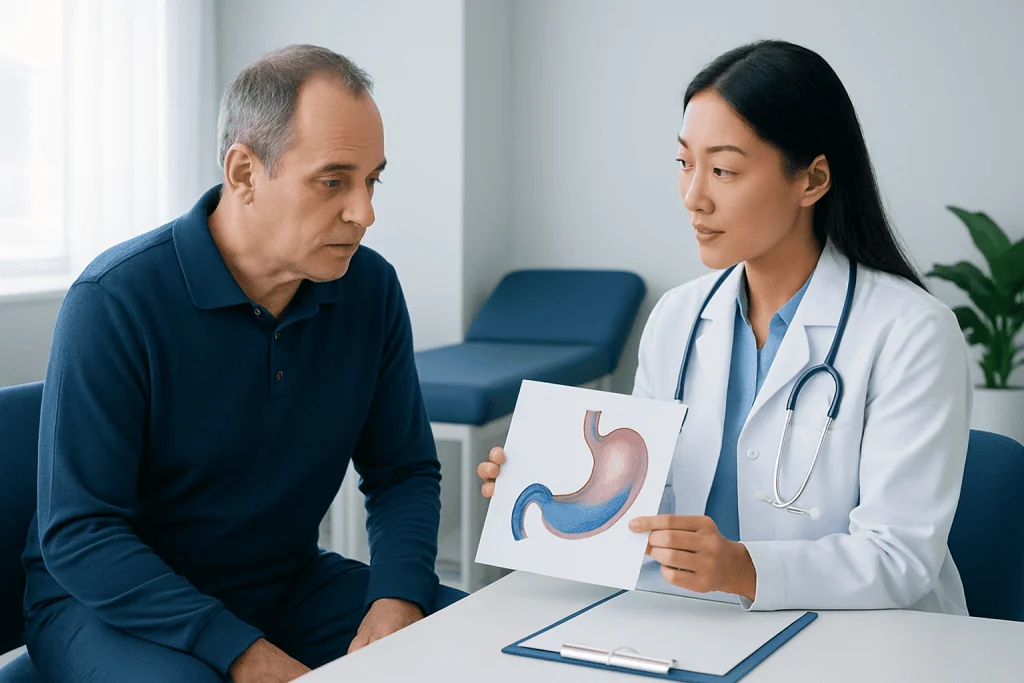
Gastric cancer develops through changes in stomach cells over time. These changes can be influenced by chronic inflammation, environmental exposures, infections, and inherited factors. In many cases, there is no single cause, but rather a combination of risks that increase the chance of cancer developing.
One of the best-known risk factors is infection with Helicobacter pylori, a bacterium that can lead to long-term inflammation of the stomach lining. Chronic atrophic gastritis, intestinal metaplasia, and some stomach ulcers may also be linked with increased risk. Smoking is another important risk factor, and heavy alcohol use may contribute to overall digestive tract damage.
Dietary patterns may play a role as well. Regular intake of highly salted, smoked, or preserved foods has been associated with higher risk, while diets rich in fruits and vegetables may be protective. Obesity, especially for cancers near the upper part of the stomach, can also increase risk.
Family history matters in some people. Certain inherited syndromes and genetic mutations can increase susceptibility, particularly when gastric cancer occurs at a young age or in multiple relatives. People with persistent inflammation or conditions such as gastritis may benefit from medical follow-up to manage symptoms and evaluate underlying causes.
How Gastric Cancer Is Diagnosed and Staged
The main test used to diagnose gastric cancer is upper endoscopy. During this procedure, a doctor passes a thin flexible tube with a camera through the mouth into the stomach to look for abnormal areas. If anything suspicious is seen, small tissue samples are taken. A biopsy is the only way to confirm the diagnosis.
Once cancer is confirmed, further tests help determine the stage. Staging shows how deeply the tumor has grown, whether lymph nodes are involved, and whether the cancer has spread elsewhere. This information is essential for planning treatment and understanding the likely course of the disease.
Imaging tests may include CT scans, endoscopic ultrasound, PET scans in selected cases, and sometimes diagnostic laparoscopy. Blood tests can assess overall health, anemia, liver function, and nutritional status, but they cannot diagnose gastric cancer on their own.
Pathology results may also include biomarker testing. Doctors may check for features such as HER2 status, mismatch repair deficiency, or PD-L1 expression, because these can influence whether immunotherapy or targeted treatments are appropriate as part of care.
Treatment Options for Gastric Cancer
Treatment depends on the cancer stage, the tumor’s location, the patient’s overall health, and the biological features of the tumor. In many cases, care is planned by a multidisciplinary team that may include gastroenterologists, surgical oncologists, medical oncologists, radiation oncologists, radiologists, pathologists, and nutrition specialists.
Surgery is often the main treatment for localized gastric cancer. Depending on the size and location of the tumor, the surgeon may remove part of the stomach or the entire stomach, along with nearby lymph nodes. In very early cases, selected superficial cancers may sometimes be treated endoscopically, but many patients require an operation such as gastrectomy.
Chemotherapy is commonly used before surgery, after surgery, or both, to reduce the risk of recurrence and treat cancer cells that may have spread beyond the stomach. Some patients also receive chemotherapy for advanced disease to help control symptoms and slow progression. Radiation therapy may be used in selected situations, often together with chemotherapy.
Targeted therapy and immunotherapy may be recommended when tumor testing shows that they are likely to help. For advanced or metastatic stomach cancer, the goal may be to control disease, relieve symptoms, maintain nutrition, and preserve quality of life. Supportive care, pain management, and emotional support remain important at every stage of treatment.
Nutrition, Recovery, and Daily Self-care
Nutrition is a central part of gastric cancer care. The tumor itself can make eating difficult, and treatment may affect appetite, digestion, and weight. Many patients benefit from working with a dietitian to find foods and meal patterns that are easier to tolerate and that support strength during treatment and recovery.
Small, frequent meals are often better tolerated than large meals, especially after stomach surgery. Protein-rich foods, adequate fluids, and practical strategies to manage nausea or early fullness can make a meaningful difference. Vitamin and mineral monitoring may be needed after partial or total stomach removal.
General self-care also matters. Stopping smoking, limiting alcohol, staying physically active as tolerated, and attending follow-up appointments can support recovery. Emotional wellbeing should not be overlooked, as cancer diagnosis and treatment can affect sleep, mood, and relationships.
After treatment, regular follow-up helps monitor healing, nutrition, side effects, and any signs that the cancer has returned. Near the end of the care journey, some international patients may choose evaluation at centers such as Acibadem International, where multidisciplinary specialists in JCI-accredited hospitals diagnose and treat gastric cancer and related conditions.
When to Seek Medical Care
Medical care should be sought if digestive symptoms do not improve, keep returning, or start to interfere with normal eating. Persistent indigestion, early fullness, ongoing nausea, unexplained weight loss, or tiredness from possible anemia should be discussed with a doctor, especially in adults over midlife or those with known risk factors.
Urgent medical attention is needed for warning signs such as vomiting blood, black or tarry stools, severe weakness, dehydration from repeated vomiting, or trouble swallowing that is getting worse. These symptoms are not specific to gastric cancer, but they can signal bleeding or blockage that needs prompt assessment.
People with a strong family history of gastric cancer, known hereditary cancer syndromes, or long-standing stomach conditions may need individualized advice about testing and follow-up. Seeing a doctor early does not mean cancer is likely, but it can help identify the true cause and allow treatment to begin sooner if needed.
If symptoms suggest a serious stomach disorder, a doctor may recommend endoscopy and sometimes evaluation for related problems such as stomach ulcer disease. Seeking timely care can provide reassurance when symptoms are benign and speed diagnosis when they are not.
Frequently asked questions
Is gastric cancer the same as stomach cancer?
Yes. Gastric cancer and stomach cancer are two names for the same disease. The term gastric is the medical word for the stomach.
What are the first symptoms of gastric cancer?
Early symptoms are often vague and may include indigestion, bloating, nausea, loss of appetite, or feeling full quickly. Some people have no symptoms at first, which is one reason medical evaluation is important if symptoms persist.
Can gastric cancer be cured?
Some cases can be cured, especially when the cancer is found at an earlier stage and can be fully treated with surgery and other therapies. Even when cure is not possible, treatment can still help control the disease and improve quality of life.
How is gastric cancer usually found?
Gastric cancer is usually diagnosed with upper endoscopy and biopsy. Imaging tests are then used to stage the disease and help doctors choose the most appropriate treatment plan.
Does Helicobacter pylori cause gastric cancer?
Helicobacter pylori infection does not mean a person will definitely develop gastric cancer, but it is an important risk factor. Over time, the infection can cause chronic inflammation and changes in the stomach lining that increase cancer risk in some people.
What treatments are used for gastric cancer?
Treatment may include surgery, chemotherapy, radiation therapy, targeted therapy, immunotherapy, or supportive care. The right approach depends on the tumor's stage, location, and test results, as well as the patient's overall health.
References
- World Health Organization
- National Cancer Institute
- American Cancer Society
- National Comprehensive Cancer Network
- European Society for Medical Oncology
This article is for general information only and is not a substitute for professional medical advice. Please consult a qualified doctor about your individual situation.
Persistent digestive symptoms? Get evaluated in Turkey
JCI-accredited · board-certified surgeons · reply within 24h
Add us as a Preferred Source to see more of our trusted health content across Google Search, AI Overviews and Discover.