Gastrinoma and Zollinger Ellison: Early Signs, Risk Factors, and How It Is Treated

A gastrinoma is a tumor that makes too much gastrin, causing excessive stomach acid. Zollinger-Ellison syndrome is the set of symptoms and complications caused by that excess acid.
Key Takeaways
- A gastrinoma is a tumor that makes too much gastrin, causing excessive stomach acid.
- Zollinger-Ellison syndrome is the set of symptoms and complications caused by that excess acid.
- Common early clues include repeated or hard-to-treat ulcers, burning upper abdominal pain, reflux, and diarrhea.
- Diagnosis usually combines blood tests, acid-related evaluation, endoscopy, and imaging to locate the tumor.
- Treatment often includes strong acid-suppressing medicines and, when possible, surgery or other tumor-directed care.
- Some cases are linked to MEN1, an inherited endocrine syndrome, so family history matters.
Gastrinoma and Zollinger-Ellison syndrome refer to a rare condition in which a gastrin-producing tumor causes the stomach to make too much acid. This can lead to recurrent ulcers, abdominal pain, reflux, and diarrhea, but modern treatment can often control symptoms and address the tumor itself.
Overview: what gastrinoma and Zollinger-Ellison mean
Gastrinoma and Zollinger-Ellison syndrome are closely related terms. A gastrinoma is a usually slow-growing neuroendocrine tumor that releases too much gastrin, a hormone that tells the stomach to produce acid. Zollinger-Ellison syndrome is the group of effects caused by that excess gastrin and acid, including persistent ulcers, abdominal pain, reflux, and diarrhea.
Most gastrinomas develop in the pancreas or the first part of the small intestine, called the duodenum. Some are small and hard to find, while others may spread to nearby lymph nodes or the liver. Although the condition is uncommon, recognizing it matters because symptoms may look like ordinary acid reflux or peptic ulcer disease at first.
A useful way to understand this condition is to think beyond a single ulcer. In many people, the real pattern is repeated acid-related problems that return despite standard therapy, ulcers in unusual locations, or digestive symptoms that seem out of proportion. This broader pattern often prompts doctors to investigate for hormone-producing tumors such as neuroendocrine tumors.
Early signs and symptoms
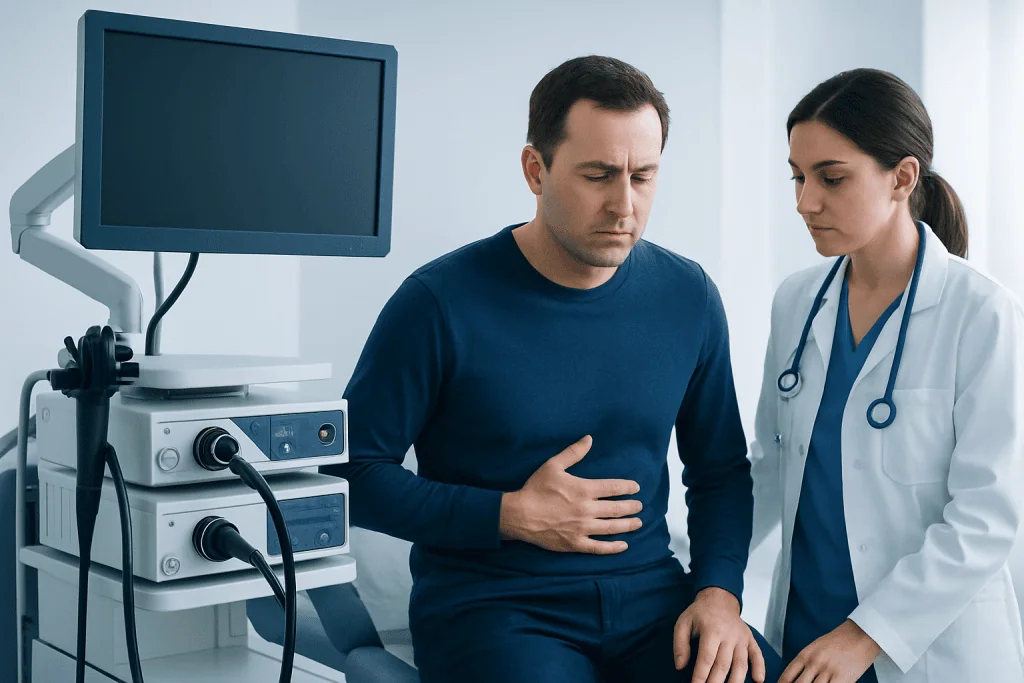
The early signs of gastrinoma and Zollinger-Ellison syndrome often overlap with more common digestive problems, which is one reason diagnosis can be delayed. A person may notice a burning or gnawing pain in the upper abdomen, frequent heartburn, acid regurgitation, nausea, bloating, or symptoms that improve only partly with usual ulcer or reflux medicines.
Repeated peptic ulcers are a particularly important clue. Ulcers may come back after treatment, occur more than once, or appear in areas that are less typical. Some people also have diarrhea, which can happen because the large amount of stomach acid affects the intestines and interferes with normal digestion.
Symptoms vary from person to person, but common features include:
- Upper abdominal pain or discomfort
- Frequent heartburn or severe acid reflux
- Recurrent stomach or duodenal ulcers
- Diarrhea, sometimes with weight loss
- Nausea or vomiting
- Loss of appetite or early fullness
- Complications such as bleeding, anemia, or ulcer perforation in more advanced cases
Not everyone has all of these symptoms. In some cases, diarrhea is more prominent than pain. In others, the first sign may be an ulcer complication or persistent symptoms despite medicines that would usually control ordinary peptic ulcer disease.
Causes and risk factors

The direct cause of Zollinger-Ellison syndrome is a gastrinoma. These tumors arise from neuroendocrine cells and produce gastrin in an uncontrolled way. The excess gastrin stimulates the stomach to release much more acid than normal, which can damage the lining of the stomach and small intestine and cause ulcers.
Many gastrinomas occur sporadically, meaning they develop without a clear inherited cause. However, an important risk factor is multiple endocrine neoplasia type 1, or MEN1. This inherited syndrome increases the risk of tumors in several hormone-producing glands, including the parathyroid glands, pituitary gland, and pancreas or duodenum.
Doctors may think about MEN1 if a patient is diagnosed at a younger age, has more than one endocrine tumor, or has a family history of endocrine disorders. In that setting, genetic counseling and evaluation of relatives may be considered. Knowing whether MEN1 is present helps guide long-term follow-up, because treatment may need to address more than one gland or tumor type.
Having common reflux or an ordinary ulcer does not mean a person has gastrinoma. This condition is rare. Still, the possibility becomes more relevant when ulcers are severe, recurrent, resistant to treatment, or linked with unexplained diarrhea or a strong family history of endocrine disease.
How doctors diagnose it
Diagnosis starts with the clinical pattern. Doctors look for clues such as recurrent ulcers, severe reflux, diarrhea, or ulcer disease that continues despite treatment. They also review medicine use, especially acid-suppressing drugs, because these can affect test results and sometimes need to be managed carefully before certain evaluations are done.
Blood testing is central to diagnosis. A fasting gastrin level may be elevated, but interpreting it requires care because other conditions and medications can also raise gastrin. Additional testing may be needed to confirm that the high gastrin level is truly causing excessive acid production rather than being a secondary response to another issue.
Upper endoscopy can help assess ulcers, inflammation, and complications. Imaging tests are then used to try to locate the tumor and check whether it has spread. Depending on the situation, this may involve CT, MRI, endoscopic ultrasound, or specialized nuclear medicine scans used for neuroendocrine tumors. In complex cases, the workup may involve both endoscopy and advanced MRI to clarify the diagnosis.
Because gastrinomas can be small, diagnosis sometimes requires more than one test. A careful, stepwise approach is important, especially when symptoms suggest the condition but the tumor is not obvious on initial imaging.
Treatment options and long-term outlook
Treatment usually has two goals: controlling excess acid and treating the tumor. Acid control is often the first priority because it relieves symptoms and helps prevent ulcer complications. Many patients need potent acid-suppressing medicines, most commonly proton pump inhibitors, often for the long term and under medical supervision.
If the gastrinoma can be located and safely removed, surgery may be recommended. The exact plan depends on where the tumor is, whether there is more than one tumor, whether MEN1 is present, and whether the disease has spread. Surgery can be especially helpful in selected patients with localized disease.
When the tumor has spread or cannot be completely removed, doctors may still control the condition effectively with a combination of medical therapy and tumor-directed treatment. Depending on the case, care may include specialist oncology input, monitoring of neuroendocrine tumor behavior, and procedures aimed at reducing tumor burden or treating liver involvement.
The outlook varies, but many patients do well when the condition is recognized and managed by an experienced team. Follow-up is important because symptoms can return, tumors may grow slowly over time, and hormone levels or imaging findings may change. Treatment plans are usually individualized rather than one-size-fits-all.
Daily management, monitoring, and self-care
Self-care does not replace medical treatment, but it can support symptom control. Patients are often advised to take acid-suppressing medicines exactly as prescribed and to avoid stopping them suddenly without medical guidance. Tracking symptoms such as pain, reflux, bowel changes, or black stools can also help doctors assess whether treatment is working.
General digestive habits may reduce discomfort, although they do not treat the underlying tumor. Eating smaller meals, limiting foods that worsen reflux, reducing alcohol intake, and avoiding smoking may help some people. If diarrhea or reduced intake leads to weight loss, a doctor may suggest nutritional support or input from a dietitian.
Long-term follow-up usually includes regular review of symptoms, blood tests when appropriate, and imaging or endoscopy in selected cases. People with MEN1 may need broader endocrine monitoring as well. This is one reason care is often coordinated across gastroenterology, endocrinology, radiology, surgery, and oncology.
For international patients who need multidisciplinary assessment, Acibadem International’s specialists in JCI-accredited hospitals diagnose and treat gastrinoma and related endocrine tumors with coordinated care planning.
When to seek medical care
Medical review is important if a person has repeated ulcers, severe reflux that does not improve, or ongoing diarrhea with abdominal pain. These symptoms do not always mean gastrinoma, but they do justify evaluation, especially when they recur or do not respond as expected to treatment.
Prompt medical attention is especially important for warning signs such as vomiting blood, black or tarry stools, fainting, unexplained weight loss, persistent vomiting, or severe sudden abdominal pain. These symptoms can signal ulcer bleeding, obstruction, or perforation and should not be ignored.
It is also reasonable to ask a doctor about gastrinoma and Zollinger-Ellison syndrome when there is a personal or family history of MEN1 or other endocrine tumors. Early assessment can help shorten the time to diagnosis and reduce complications from excess acid.
Frequently asked questions
What is the difference between gastrinoma and Zollinger-Ellison syndrome?
A gastrinoma is the tumor itself, usually a neuroendocrine tumor that produces too much gastrin. Zollinger-Ellison syndrome is the group of symptoms and complications caused by that extra gastrin, mainly excessive stomach acid, ulcers, reflux, and diarrhea.
Is gastrinoma cancer?
Some gastrinomas behave like cancer because they can spread, especially to lymph nodes or the liver. Others grow slowly and may remain localized for a long time. Doctors usually assess both the hormone effects and the tumor’s behavior to guide treatment and follow-up.
Can gastrinoma be mistaken for ordinary acid reflux or ulcers?
Yes. Early symptoms often resemble common reflux disease or peptic ulcers, which can delay diagnosis. Doctors become more suspicious when ulcers keep returning, treatment does not work as expected, symptoms are unusually severe, or diarrhea is present.
How is Zollinger-Ellison syndrome confirmed?
Diagnosis usually combines a medical history, fasting gastrin blood testing, and tests to evaluate excess acid production. Endoscopy and imaging are then used to look for ulcers, complications, and the location of the tumor.
Can it be treated without surgery?
Yes. Many patients first need medicines to strongly reduce stomach acid, and these can control symptoms very effectively. Surgery is considered when the tumor can be safely removed, but some patients need long-term medical treatment and monitoring instead.
Is Zollinger-Ellison syndrome hereditary?
Most cases are not inherited, but some are linked to multiple endocrine neoplasia type 1, or MEN1. If there is a family history of endocrine tumors or the condition appears at a younger age, doctors may recommend genetic evaluation.
References
- National Institute of Diabetes and Digestive and Kidney Diseases
- National Cancer Institute
- National Organization for Rare Disorders
- American Cancer Society
- Merck Manual Professional Edition
This article is for general information only and is not a substitute for professional medical advice. Please consult a qualified doctor about your individual situation.
Persistent digestive symptoms? Get evaluated in Turkey
JCI-accredited · board-certified surgeons · reply within 24h
Add us as a Preferred Source to see more of our trusted health content across Google Search, AI Overviews and Discover.

More from the Health Library



Related Specialists
Assoc. Prof. Dr. Yüksel Erdal
Neurology
Asst. Prof. Dr. Mahmut Ozan Findik
Otorhinolaryngology
Dr. Narmın Ibrahımlı
Anesthesiology
Dyt. Gizem Katkıcı Taşkın
Nutrition & Diet