Gastrostomy Tube Replacement: Procedure, Recovery and Results
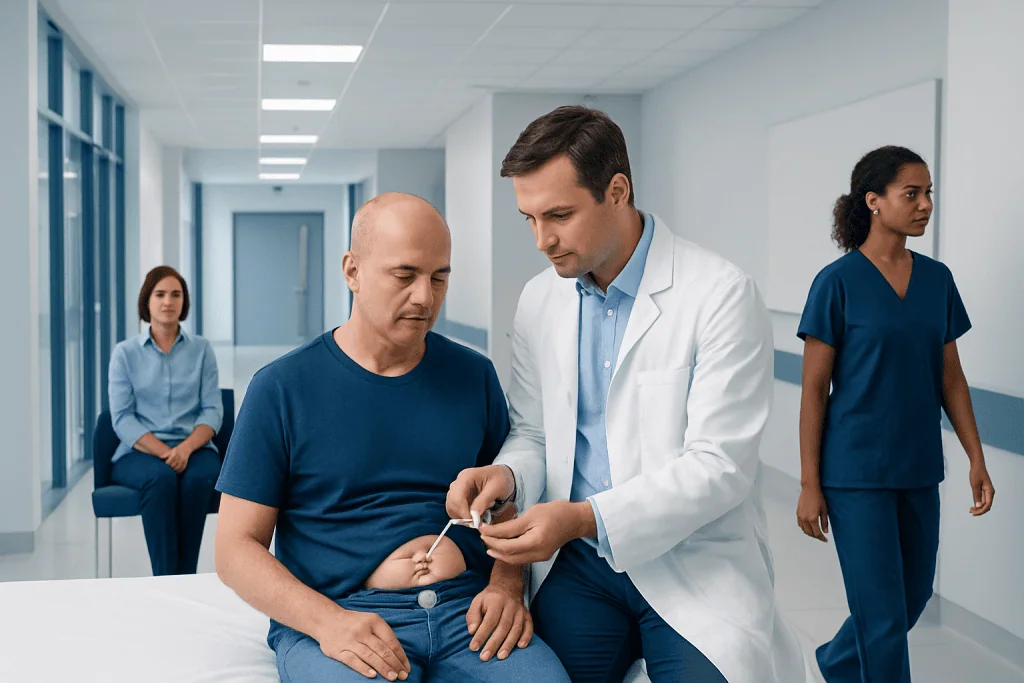
A gastrostomy tube provides direct access to the stomach for nutrition, fluids or medicines when swallowing is unsafe or inadequate. Most planned replacements are completed through the existing tract, often without major surgery.
Key Takeaways
- A gastrostomy tube provides direct access to the stomach for nutrition, fluids or medicines when swallowing is unsafe or inadequate.
- Most planned replacements are completed through the existing tract, often without major surgery.
- A newly placed tube tract may not be mature for several weeks; early tube dislodgement can be an emergency.
- Recovery after a routine tube exchange is commonly quick, although site discomfort and minor drainage may occur.
- Redness that spreads, fever, increasing pain, bleeding, persistent leakage or a blocked tube should be assessed by a healthcare professional.
Gastrostomy tube replacement is performed when an established feeding tube needs to be exchanged because it is worn, blocked, leaking, damaged or accidentally dislodged. Once the tract between the stomach and skin is mature, replacement is often straightforward, but a tube that comes out early after placement requires urgent medical assessment.
Overview: what is gastrostomy tube replacement?
Gastrostomy tube replacement means removing an existing tube that enters the stomach through the abdominal wall and placing a new tube through the same opening. These tubes are commonly called G-tubes. A percutaneous endoscopic gastrostomy (PEG) tube is one type of gastrostomy tube, originally inserted with endoscopic guidance.
The replacement may be planned because the tube has reached the end of its expected service life, or it may be needed because the tube is damaged, clogged, leaking, poorly fitting or has come out. In many people with a well-healed tract, the clinician can exchange the tube through the established channel rather than creating a new opening.
Gastrostomy feeding may support people with neurological conditions, swallowing difficulties, cancers affecting eating or swallowing, and other illnesses that limit adequate oral intake. The clinical team reviews the person’s nutrition, medicines, swallowing safety and underlying condition when planning tube care or replacement.
How gastrostomy tube replacement works
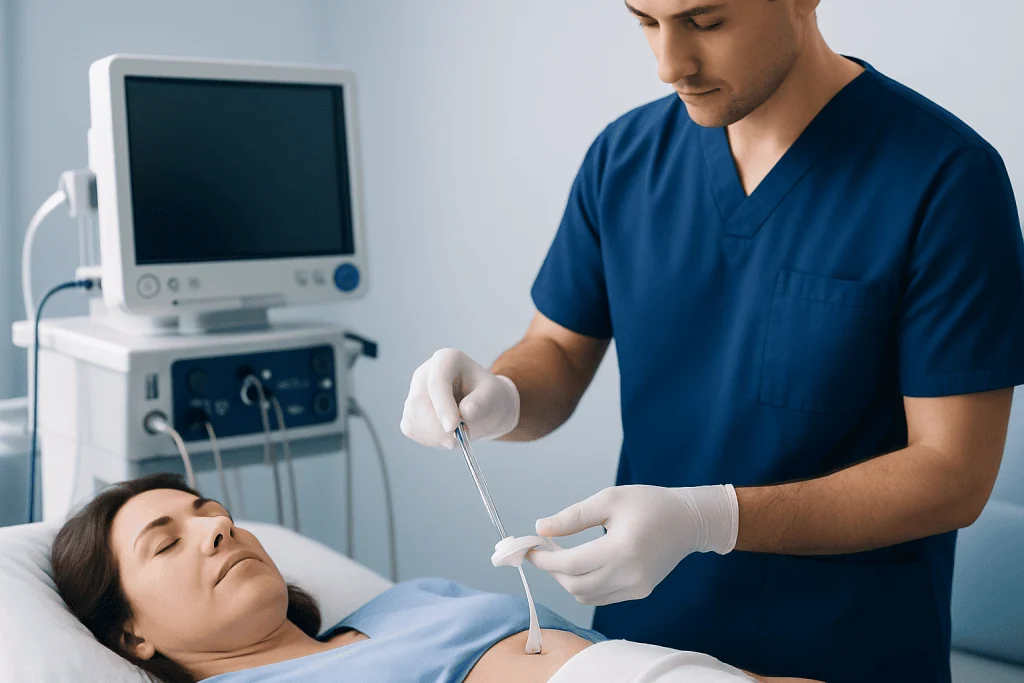
A gastrostomy tube is held in place inside the stomach by an internal retention device. Depending on the tube type, this may be a soft balloon filled with sterile water or a small internal bumper. The outer part of the tube rests against the skin and helps keep the tube at the correct depth.
For a routine exchange, the clinician checks the stoma, or skin opening, and confirms that the tract is established. The old tube is gently removed, and a correctly sized replacement tube is placed through the tract. Balloon tubes are typically secured by filling the internal balloon according to the manufacturer’s instructions.
Correct position must be confirmed before feeds, fluids or medicines are restarted. The method depends on the clinical setting and tube type and may include aspiration of stomach contents, pH testing, imaging or another assessment. People should not attempt to replace a tube themselves unless they have been specifically trained and instructed to do so by their care team.
Who may need a replacement and how clinicians prepare
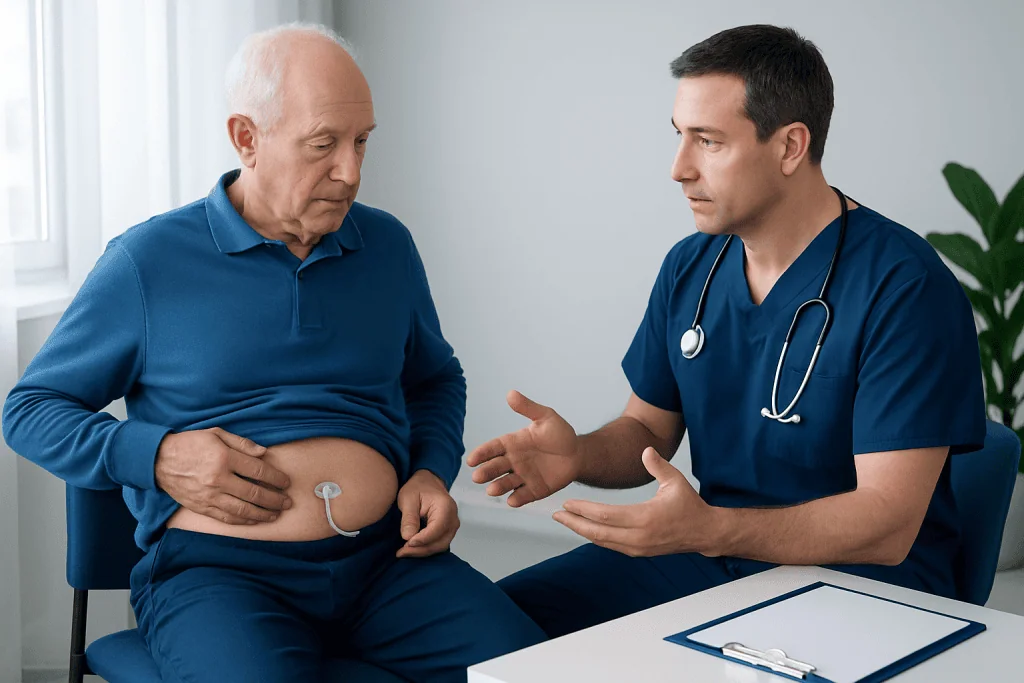
People may need a planned exchange when a tube becomes old or when its balloon, cap, connector or tubing no longer works reliably. Replacement may also be considered if there is recurrent blockage, persistent leakage caused by poor fit, skin irritation related to tube movement, or accidental removal.
Before the procedure, clinicians consider when the original tube was placed, the type and size of tube, current symptoms and whether there are signs of infection or injury. They also review medications, particularly medicines that affect bleeding, as well as allergies, previous abdominal surgery and nutritional needs.
A tube tract usually needs time to mature after initial placement. If a G-tube falls out soon after it has first been inserted, the opening may not safely lead into the stomach. In this situation, blind reinsertion can place a tube into the abdominal cavity and must be avoided. Urgent specialist assessment is needed.
- A planned exchange may be appropriate for a worn, damaged or poorly functioning established tube.
- Urgent assessment is needed for a newly placed tube that comes out, significant pain, bleeding or suspected infection.
- Tube size and replacement type should be selected by a trained clinician based on individual needs.
Step-by-step: what happens during the procedure?
Routine gastrostomy tube replacement is often carried out in an outpatient clinic, hospital ward or specialist feeding service. The person is positioned comfortably, and the clinician examines the skin around the tube for swelling, discharge, overgrowth of tissue or signs that the tube has shifted.
The external fixation device is loosened, and the old tube is removed according to its design. For a balloon-retained tube, the balloon is deflated first. The replacement tube is lubricated and passed gently through the existing tract. A new balloon may then be filled, and the external retention device is adjusted so it is secure but not too tight against the skin.
The clinician confirms that the tube is in the stomach before use. Some replacements, especially those involving a non-mature tract, difficult removal, uncertainty about position or a bumper-type PEG tube, may require endoscopy, imaging, sedation or a more specialised procedure. Instructions about when feeding can restart should come from the treating team.
For people who need long-term nutrition support, the same service may coordinate feeding plans, skin care and follow-up. gastrostomy care and tube placement services can help guide the appropriate approach for each individual.
What to expect after G-tube surgery?
After a routine replacement, mild tenderness, a small amount of clear or light-coloured drainage, or temporary discomfort around the stoma can occur. The site should remain clean and dry, and the care team may advise gentle daily cleaning with water and careful drying once the area is healed. Dressings are not always necessary unless there is drainage or a specific clinical reason.
Feeds and medicines should only be restarted as instructed after tube position has been confirmed. The tube should be flushed using the method and fluid recommended by the clinical team, particularly before and after feeds or medicines, to reduce the chance of blockage. Medicines should not be mixed together in the tube unless a pharmacist or clinician advises this.
Caregivers should check that the external tube marking and fixation device remain in the usual position. Excess pressure against the skin may contribute to pain, pressure injury or leakage, while a loose tube may move excessively. The team can explain the correct fit for the specific device.
People who use a feeding tube because of swallowing problems may also benefit from assessment of the underlying cause and safe eating plan. dysphagia is a common reason for specialist swallowing evaluation and nutrition support.
How long does it take to recover from PEG tube surgery?
Recovery depends on whether the question refers to the original PEG placement or a routine tube replacement. After initial PEG tube placement, people often need several days to recover from abdominal discomfort and sedation effects, while the tract generally takes several weeks to mature. The exact timing varies with overall health, nutrition, wound healing and the reason for the tube.
After a routine replacement through a mature tract, recovery is usually much faster. Many people return to their usual tube-feeding routine on the same day or shortly afterward once position is confirmed, although the site may feel mildly sore for a day or two.
Persistent or worsening pain is not expected and should be discussed with a clinician. The team may modify feeding, skin care or tube fit if discomfort, leakage or irritation continues.
How serious is G-tube surgery? Benefits and possible risks
G-tube placement and replacement are commonly performed procedures, but they are medical interventions and should be undertaken by trained clinicians. A gastrostomy can provide dependable access for nutrition, hydration and prescribed medicines when oral intake is insufficient or unsafe. This may help support energy, weight maintenance and treatment of an underlying illness.
Possible risks include pain, bleeding, skin infection, leakage around the tube, blockage, tube displacement and irritation from excess pressure or moisture. Less common but more serious complications can include injury to nearby organs, peritonitis, aspiration or an incorrectly positioned replacement tube. The likelihood and nature of risk depend on the person’s health, the type of procedure and whether the tract is fully mature.
Attention to daily tube care, correct flushing, secure positioning and early review of concerning symptoms can reduce complications. A doctor, dietitian, specialist nurse, gastroenterologist and speech and language therapist may all contribute to care, depending on the reason for gastrostomy feeding.
How long does it take to replace a G-tube?
A simple planned G-tube exchange through a mature tract often takes only a short time, commonly minutes, although the full appointment may be longer because it includes assessment, tube selection, position confirmation and education. Time can increase if the tube is difficult to remove, the tract is narrow, there is significant skin irritation or imaging is required.
Replacement should never be rushed when the tube position is uncertain. If a tube has fallen out, the tract can begin to narrow or close relatively quickly, so the care team should be contacted immediately. They can advise whether the person should attend an emergency service or return to the feeding-tube clinic.
Some people require endoscopic or radiological replacement rather than a bedside exchange. This is more likely when the original tract is new, there are complications, or the tube type requires a specialised removal technique.
When to seek medical care
Contact the treating team promptly if the tube is clogged and cannot be cleared using the care plan, if feeds will not flow, if there is new or increasing leakage, or if the tube appears to have changed position. Do not force fluids or objects through a blocked tube, and do not use improvised methods to reopen it.
Urgent medical care is important if a tube falls out, particularly within the first weeks after placement; if there is severe or increasing abdominal pain; fever; spreading redness; pus-like discharge; significant bleeding; vomiting; a swollen abdomen; or difficulty breathing. These symptoms may indicate infection, displacement or another complication requiring assessment.
Acibadem International’s multidisciplinary specialists and JCI-accredited hospitals support diagnosis, gastrostomy care and treatment planning for international patients. Follow-up should always be arranged with a qualified clinical team familiar with the person’s tube type and nutritional needs.
Frequently asked questions
Can a G-tube be replaced at home?
Some caregivers are trained to replace certain balloon-retained G-tubes in an established tract, following an individual plan from the clinical team. However, this is not appropriate for every tube or situation. A newly placed tube, uncertainty about tract maturity, pain, resistance during insertion or concern about position requires professional medical assessment.
What should be done if a gastrostomy tube falls out?
The treating team or emergency service should be contacted immediately, because the opening can narrow or close quickly. A tube that comes out soon after initial placement is especially urgent because the tract may not be mature. Do not insert a replacement tube without specific instructions from a qualified clinician.
Is pain normal after gastrostomy tube replacement?
Mild soreness around the site can occur after a routine exchange and generally improves quickly. Severe, persistent or worsening pain is not normal and should be assessed. Pain accompanied by fever, swelling, vomiting, bleeding or abdominal rigidity needs urgent medical attention.
When can feeding start after a G-tube replacement?
Feeding can resume only after the clinician has confirmed correct tube position and provided instructions. For a straightforward exchange through a mature tract, this may be soon after the procedure. The timing can be different when imaging, sedation or a more complex replacement is needed.
How can a G-tube blockage be prevented?
Following the prescribed flushing routine before and after feeds and medicines is an important preventive step. Medicines should be given in a form suitable for tube administration and separated as advised by a pharmacist or clinician. Regular review of the tube and feeding regimen can help identify problems early.
How often does a gastrostomy tube need replacement?
Replacement intervals vary by tube design, material and condition, as well as local clinical guidance. Some balloon-retained tubes are changed periodically, while other tubes may remain in place longer unless there is a problem. The treating team can provide a schedule tailored to the specific device and person’s needs.
References
- American Society for Parenteral and Enteral Nutrition
- European Society for Clinical Nutrition and Metabolism
- National Institute for Health and Care Excellence
- Mayo Clinic
This article is for general information only and is not a substitute for professional medical advice. Please consult a qualified doctor about your individual situation.
Persistent digestive symptoms? Get evaluated in Turkey
JCI-accredited · board-certified surgeons · reply within 24h
Add us as a Preferred Source to see more of our trusted health content across Google Search, AI Overviews and Discover.