Geographic Tongue: A Complete Medical Overview

Geographic tongue causes changing, map-like smooth patches on the tongue. It is usually harmless, noninfectious, and not a form of oral cancer.
Key Takeaways
- Geographic tongue causes changing, map-like smooth patches on the tongue.
- It is usually harmless, noninfectious, and not a form of oral cancer.
- Symptoms may come and go, and some people have sensitivity to spicy, acidic, or hot foods.
- Diagnosis is usually based on a clinical oral examination.
- Treatment focuses on symptom relief when discomfort is present.
Geographic tongue is a common, benign condition in which smooth red patches with pale borders appear on the tongue and shift location over time. It is not contagious or cancerous, though some people notice burning or sensitivity with certain foods.
Overview
Geographic tongue is a benign condition that affects the surface of the tongue. It creates smooth, red areas where the tiny finger-like projections on the tongue, called papillae, are temporarily lost. These areas often have slightly raised white or pale edges, giving the tongue a map-like appearance that can change shape, size, and location over days or weeks.
Another medical name for geographic tongue is benign migratory glossitis. “Benign” means it is not dangerous, and “migratory” refers to the way the patches move or reappear in different places. Although the appearance can be striking, the condition is not contagious and does not usually lead to serious health problems.
Many people discover geographic tongue by chance while brushing their teeth or looking in a mirror. Others notice it only when the tongue becomes sensitive to certain foods, toothpaste, or mouth rinses. In many cases, the condition causes no pain at all and may come and go over long periods.
What it looks and feels like
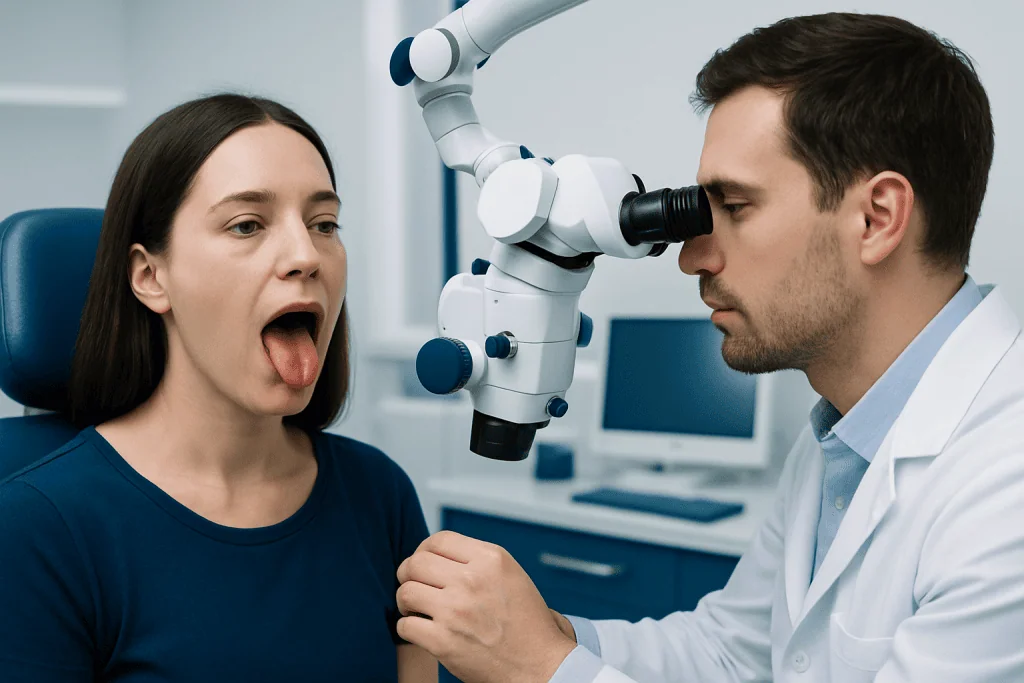
The most recognizable feature of geographic tongue is one or more smooth red patches on the upper or side surfaces of the tongue. These patches may be surrounded by a whitish, cream-colored, or slightly raised border. Because the pattern changes over time, the tongue can look different from one week to the next.
Some people have no symptoms beyond the visible changes. Others report burning, stinging, tenderness, or irritation, especially after eating spicy foods, acidic fruits, salty snacks, or very hot foods and drinks. Alcohol, tobacco, and strongly flavored oral care products can also make the tongue feel more sensitive.
Geographic tongue can sometimes resemble other mouth conditions, which is why an oral examination matters. It is different from a coated tongue, oral thrush, or persistent sores. If the appearance is unusual or the discomfort is ongoing, a clinician may also consider related oral conditions such as oral thrush when making a diagnosis.
- Smooth red patches on the tongue
- Pale or white borders around the patches
- Changing location, shape, or size over time
- Burning or sensitivity with certain foods
- Periods of improvement followed by recurrence
Causes and risk factors

The exact cause of geographic tongue is not fully understood. It is thought to involve inflammation affecting the tongue’s surface, but it is not caused by an infection and is not spread from person to person. In many people, no single trigger can be identified.
Research suggests that genetics may play a role, since the condition can run in families. Geographic tongue is also seen more often in people who have fissured tongue, a separate benign condition in which grooves or cracks appear on the tongue. Emotional stress, hormonal changes, and local irritation may contribute to flare-ups in some individuals, though these factors do not explain every case.
Some studies have found associations between geographic tongue and inflammatory or immune-related conditions, but an association does not mean one condition causes the other. For example, clinicians may occasionally see it in people with psoriasis or other skin disorders. Food sensitivities and irritation from dental products may worsen symptoms, but they are not considered proven root causes.
Risk factors and triggers can include:
- Family history of geographic tongue
- Fissured tongue
- Spicy, acidic, or salty foods
- Hot beverages or foods
- Tobacco or alcohol exposure
- Stress or periods of general irritation in the mouth
How doctors diagnose geographic tongue
Diagnosis is usually straightforward and begins with a medical history and an oral examination. A doctor or dentist looks for the typical map-like patches, the changing pattern over time, and the absence of other signs that suggest infection or an ulcerative condition. In most cases, no invasive tests are needed.
The clinician may ask about pain, burning, food triggers, smoking, oral hygiene products, and whether the patches come and go. They may also ask about skin conditions, allergies, recent illness, or medicines that could affect the mouth. Photographs taken over time can be helpful if the appearance changes between visits.
If the tongue changes do not look typical, if they persist in one area without migrating, or if there are sores, bleeding, or unexplained lumps, further assessment may be advised. Depending on the situation, the examination may involve specialists in dentistry or dermatology to rule out other oral or skin-related conditions.
Treatment options and symptom relief
Most people with geographic tongue do not need treatment. When there is no discomfort, reassurance and observation are usually enough. Because the condition often waxes and wanes, the main goal is to reduce irritation during symptomatic periods rather than to achieve a permanent cure.
If burning or soreness is present, a doctor may recommend avoiding known triggers such as spicy foods, acidic foods, alcohol, or tobacco. Gentle oral hygiene is also important. Using a soft toothbrush and choosing toothpaste or mouth rinses without harsh flavoring agents may help reduce sensitivity.
For more troublesome symptoms, clinicians may advise topical treatments designed to calm inflammation or reduce pain. These can include soothing mouth rinses or other symptom-directed oral therapies selected by a healthcare professional. Self-treating persistent tongue changes without an evaluation is not ideal, because different mouth conditions can look similar.
When symptoms are recurring or diagnosis is uncertain, more detailed evaluation through oral and dental health care can help confirm the cause and guide management. Acibadem International’s multidisciplinary specialists in JCI-accredited hospitals also diagnose and treat oral conditions for international patients when expert assessment is needed.
Self-care, prevention, and daily habits
There is no guaranteed way to prevent geographic tongue, especially when it tends to recur. However, many people can reduce irritation by noticing which foods or products make the tongue uncomfortable and limiting those triggers. A symptom diary can be useful when flare-ups seem linked to specific meals, stress, or oral care habits.
Daily mouth care should be gentle rather than aggressive. Brushing the teeth regularly, staying hydrated, and keeping routine dental appointments support overall oral health. It may also help to avoid scraping or rubbing the tongue if the surface feels tender.
Simple self-care steps include:
- Choose mild toothpaste if strong mint or whitening formulas sting
- Avoid very spicy, acidic, or extremely hot foods during flare-ups
- Limit alcohol and avoid tobacco
- Drink enough water to reduce dryness
- Seek advice before using medicated mouth products for ongoing symptoms
These measures do not cure the condition, but they can make day-to-day symptoms easier to manage. If discomfort continues despite self-care, a healthcare professional can review other possible causes of tongue pain or inflammation.
When to seek medical care
Geographic tongue is usually harmless, but a professional assessment is a good idea when the diagnosis is uncertain or symptoms are bothersome. Medical or dental evaluation is especially important if tongue changes do not move over time, if they are associated with ulcers or bleeding, or if eating becomes painful.
A person should seek care if they have persistent mouth pain, trouble swallowing, a lump in the mouth, fever, unexplained weight loss, or patches that last in exactly the same spot for a long time. These features are not typical of geographic tongue and may point to another condition that needs attention.
Children and adults with recurring oral symptoms may also benefit from evaluation if the problem interferes with nutrition, sleep, or quality of life. A clinician can confirm whether the changes fit geographic tongue and advise on symptom relief or further testing if needed.
Frequently asked questions
Is geographic tongue dangerous?
No. Geographic tongue is considered a benign condition, which means it is not dangerous and does not usually lead to serious complications. Its appearance can be dramatic, but it is not cancer and is not known to be contagious.
What causes geographic tongue?
The exact cause is not fully known. Experts believe it may be related to inflammation, genetic tendency, and sensitivity to certain triggers, but it is not caused by poor hygiene or an infection.
Does geographic tongue go away on its own?
It often improves without treatment, but it can come back. The patches may fade, reappear, and move to different areas of the tongue over time, which is a typical feature of the condition.
Can geographic tongue be painful?
Yes, some people feel burning, stinging, or tenderness, especially with spicy, acidic, salty, or hot foods. Others have no discomfort at all and notice only the changing appearance of the tongue.
Is geographic tongue related to vitamin deficiency?
Geographic tongue itself is not usually caused by a vitamin deficiency. However, if a person has persistent tongue symptoms or other signs of poor nutrition, a doctor may consider checking for deficiencies or other underlying conditions.
How is geographic tongue treated?
Most cases do not need medical treatment. Management usually focuses on avoiding triggers, using gentle oral care products, and seeking professional advice if symptoms are significant or the diagnosis is unclear.
References
- American Academy of Oral Medicine
- National Institute of Dental and Craniofacial Research
- Mayo Clinic
- Cleveland Clinic
- American Dental Association
This article is for general information only and is not a substitute for professional medical advice. Please consult a qualified doctor about your individual situation.
Explore treatments in Turkey — costs, top hospitals & a free quote
JCI-accredited · board-certified surgeons · reply within 24h
Add us as a Preferred Source to see more of our trusted health content across Google Search, AI Overviews and Discover.