Gluten Free Donuts: An Evidence-Based Guide for Patients

Gluten free donuts are appropriate for some people with celiac disease, non-celiac gluten sensitivity, or wheat-related concerns, but ingredient checks still matter. A gluten free label does not mean a donut is lower in sugar, fat, or calories.
Key Takeaways
- Gluten free donuts are appropriate for some people with celiac disease, non-celiac gluten sensitivity, or wheat-related concerns, but ingredient checks still matter.
- A gluten free label does not mean a donut is lower in sugar, fat, or calories.
- Cross-contact during baking or frying can make gluten free donuts unsafe for people with celiac disease.
- Symptoms after eating donuts may relate to gluten, wheat allergy, other ingredients, or the richness of the food itself.
- Persistent digestive symptoms should be assessed by a qualified doctor before starting a long-term restrictive diet.
Gluten free donuts may be suitable for people who must avoid gluten, but they are not automatically healthier than regular donuts. The safest choice depends on why gluten is being avoided, how the donuts are prepared, and whether cross-contact has been prevented.
What are gluten free donuts, and who are they for?
Gluten free donuts are donuts made without gluten-containing grains such as wheat, barley, and rye. They are usually prepared with alternatives like rice flour, almond flour, oat flour labeled gluten free, tapioca starch, potato starch, or blends designed for baking. For many people, they are simply a preference. For others, they are part of a medically necessary gluten-free eating pattern.
These donuts may be helpful for people with celiac disease, some individuals with non-celiac gluten sensitivity, and certain people with wheat-related dietary restrictions. However, not every person who feels unwell after eating baked goods has a gluten-related condition. Reactions may also come from wheat allergy, lactose, high sugar content, food additives, or the fat used in frying.
It is also important to understand that “gluten free” does not automatically mean “healthy.” Gluten free donuts can still be high in refined starches, sugar, and saturated fat, much like conventional donuts. From a nutrition perspective, they are best viewed as an occasional treat rather than a health food.
Why someone might need to avoid gluten
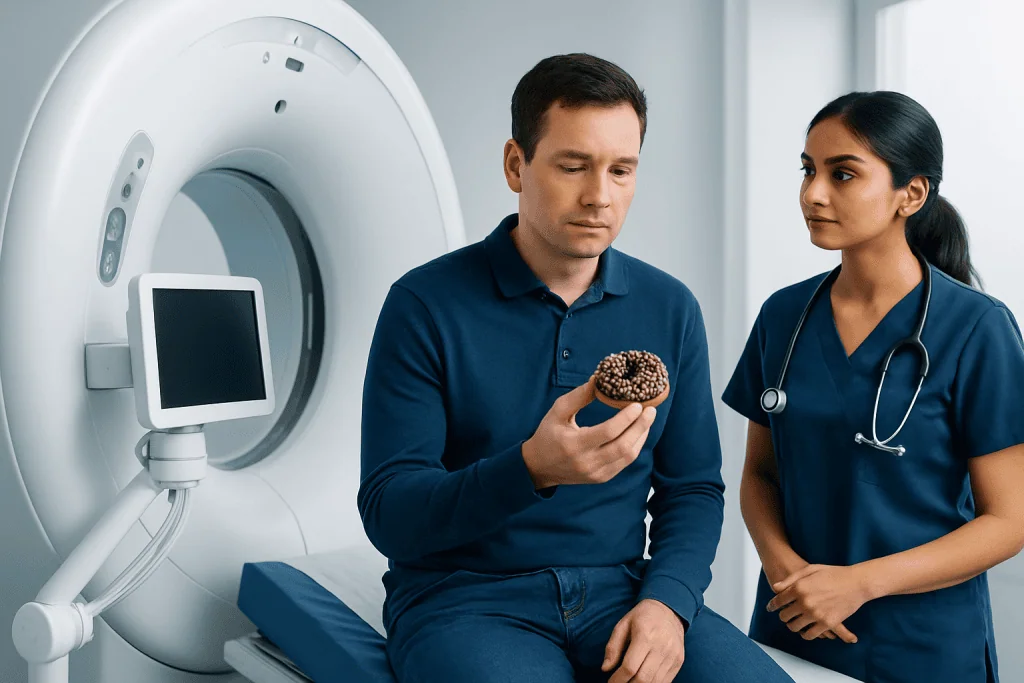
People avoid gluten for different reasons, and the reason matters when deciding how strict they need to be. In celiac disease, gluten triggers an immune reaction that damages the small intestine. Even small amounts can cause harm, so strict avoidance is essential. In this setting, the ingredients list and the preparation environment are both important.
Some people have symptoms after eating gluten but do not have celiac disease. This is often described as non-celiac gluten sensitivity. Symptoms can include bloating, abdominal discomfort, tiredness, or headache. Because there is no single test that confirms this condition in all cases, doctors usually first rule out celiac disease and other digestive disorders.
Others may have a wheat allergy, which is different from celiac disease and can cause itching, swelling, hives, breathing symptoms, or digestive upset after exposure to wheat. A product can be gluten free and still contain ingredients that are problematic for a person with allergies, so individualized advice is important. When symptoms are ongoing or unexplained, a medical assessment may include lab testing, dietary review, or gastroenterology evaluation.
Are gluten free donuts healthier than regular donuts?

In most cases, gluten free donuts are not inherently healthier than regular donuts. Removing gluten changes the flour source, but it does not automatically improve the overall nutritional profile. Many gluten free baked goods rely on refined starches to create a soft texture, and these ingredients can still be low in fiber and relatively high in rapidly absorbed carbohydrates.
It helps to look beyond the front-of-package claim. Nutrition facts and ingredient lists may show that a gluten free donut contains similar amounts of sugar, fat, and calories as a standard donut. Some versions may even contain more sugar or fat to improve flavor and texture.
That said, gluten free donuts can be a useful option for people who medically need to avoid gluten and still want to enjoy an occasional dessert. A practical approach is to compare products, consider portion size, and pair treats with an overall balanced eating pattern. If there are broader digestive concerns, a doctor or dietitian may suggest review through nutrition and diet support.
How to choose safer gluten free donuts
For people with celiac disease, choosing a donut involves more than finding the words “gluten free.” The product should be made in a way that limits contamination from shared equipment, shared oil, shared utensils, or airborne flour in a bakery. If a donut is fried in oil also used for wheat-based products, it may not be safe for someone who must avoid gluten strictly.
Reading labels carefully is essential. Patients can look for clear gluten free labeling and check whether the product contains oats that are specifically labeled gluten free. They can also review allergen statements for wheat, milk, eggs, soy, and nuts depending on their needs. In restaurants or bakeries, asking how the product is prepared is often just as important as asking what ingredients it contains.
A simple checklist can help when choosing gluten free donuts:
- Confirm that wheat, barley, and rye are not included in the ingredient list.
- Check whether the item is prepared in a dedicated gluten free area or with separate equipment.
- Ask whether frying oil is shared with regular donuts or breaded foods.
- Review other allergens if there is a history of food allergy.
- Choose modest portions, especially if sugar or fat intake is a concern.
Symptoms after eating donuts: is gluten always the cause?
Not necessarily. Donuts are rich foods, and symptoms after eating them can have several explanations. Some people experience bloating, reflux, cramping, or loose stools because of the sugar, fat, dairy, or portion size rather than gluten. Others may react to sugar alcohols, flavorings, or fillings. This is one reason self-diagnosis can be misleading.
When symptoms happen repeatedly, patterns are useful. A food and symptom diary may help identify whether symptoms appear with wheat-containing foods only, with fried foods in general, or with multiple unrelated foods. A doctor may also consider lactose intolerance, irritable bowel syndrome, gallbladder problems, reflux, or Crohn’s disease and other digestive conditions depending on the full clinical picture.
Patients are often advised not to start a gluten-free diet before testing if celiac disease is suspected, because test accuracy can be affected once gluten has been removed from the diet. Evaluation may include blood tests, medical history, and in some cases endoscopic assessment through endoscopy.
How gluten-related conditions are diagnosed
Diagnosis depends on the suspected condition. For celiac disease, doctors commonly begin with blood tests while the patient is still eating gluten regularly. If results suggest celiac disease, an upper endoscopy with biopsy of the small intestine may be recommended to confirm the diagnosis. This step matters because long-term treatment requires strict dietary changes and follow-up.
For wheat allergy, assessment may include an allergy-focused history and testing guided by an allergy specialist. In non-celiac gluten sensitivity, there is no single definitive laboratory test, so diagnosis often relies on ruling out celiac disease and wheat allergy first, then assessing whether symptoms improve and recur in a structured way under medical guidance.
Because nutritional deficiencies, anemia, weight changes, or chronic digestive symptoms can have many causes, professional evaluation is valuable. It helps avoid unnecessary food restriction and ensures that important conditions are not overlooked. In some cases, coordinated care involving gastroenterologists, dietitians, and primary care clinicians offers the clearest path forward.
Practical dietary guidance and self-care
For people who need a gluten-free diet, the goal is not simply to replace wheat-based sweets with gluten free sweets. A sustainable approach focuses on naturally gluten-free foods such as vegetables, fruits, legumes, eggs, dairy if tolerated, lean proteins, nuts, seeds, and gluten-free whole grains. This supports better fiber intake and overall nutrient balance.
Gluten free donuts can still have a place as an occasional treat. Choosing smaller portions, eating them mindfully, and balancing them with regular meals can help reduce discomfort. Some people find that eating rich fried foods on an empty stomach worsens symptoms, regardless of whether gluten is present.
Home preparation can offer more control over ingredients and contamination. Separate utensils, clean surfaces, and dedicated baking tools can be useful for households where some family members eat gluten and others do not. If a patient has celiac disease or complex digestive symptoms, structured support from a clinician or dietitian can make day-to-day eating safer and less confusing.
When to seek medical care
Medical advice is appropriate if digestive symptoms are persistent, disruptive, or worsening. This includes ongoing diarrhea, abdominal pain, bloating, unexplained weight loss, fatigue, iron deficiency, mouth ulcers, or symptoms that repeatedly occur after meals. A clinician can help determine whether gluten is involved or whether another condition may be responsible.
Urgent medical care is needed for signs of a severe allergic reaction such as trouble breathing, swelling of the lips or throat, faintness, or widespread hives after eating. Patients should also seek prompt attention for vomiting that does not stop, black stools, blood in the stool, severe dehydration, or significant abdominal pain.
Near the end of the care journey, some patients benefit from specialist review, especially if symptoms continue despite gluten avoidance. Acibadem International’s multidisciplinary specialists and JCI-accredited hospitals evaluate digestive complaints and gluten-related conditions for international patients using evidence-based diagnostic and treatment approaches.
Frequently asked questions
Can people with celiac disease eat gluten free donuts?
They may be able to, but only if the donuts are truly gluten free and protected from cross-contact during preparation. Shared fryers, shared utensils, or flour in the baking area can make a product unsafe even when the recipe itself contains no gluten.
Are gluten free donuts better for weight loss?
Usually not. Gluten free donuts can contain similar amounts of sugar, fat, and calories as regular donuts. Weight management depends more on total eating pattern, portion size, and activity than on whether a donut contains gluten.
Do gluten free donuts taste or digest differently?
Texture and flavor may differ because gluten-free flours behave differently in baking. Some people also digest particular ingredients differently, such as dairy, high-fat fillings, or sugar alcohols, so the eating experience can vary from one product to another.
Is a gluten free label enough to make a donut safe?
A label is helpful, but it is not the only factor. People with celiac disease should also consider where and how the donut was prepared, especially in bakeries and restaurants where cross-contact is possible.
Should someone try a gluten-free diet before seeing a doctor?
If celiac disease is suspected, it is usually better to speak with a doctor before removing gluten. Starting a gluten-free diet too early can interfere with blood tests and other diagnostic steps, making the condition harder to confirm.
What if symptoms continue even after switching to gluten free donuts?
Persistent symptoms may mean gluten is not the only issue. Other ingredients, cross-contact, or unrelated digestive conditions may be involved, so professional assessment is recommended if symptoms keep returning.
This article is for general information only and is not a substitute for professional medical advice. Please consult a qualified doctor about your individual situation.
Explore treatments in Turkey — costs, top hospitals & a free quote
JCI-accredited · board-certified surgeons · reply within 24h
Add us as a Preferred Source to see more of our trusted health content across Google Search, AI Overviews and Discover.

More from the Health Library

Leg Bones Broken — Explained by Medical Evidence, Not Myths

Milk of Magnesia: An Evidence-Based Guide for Patients

Leg Press Alternative: An Evidence-Based Guide for Patients
Radiation Therapist: A Complete Medical Overview

Disorganized Behavior: What Patients Need to Know