Leg Press Alternative: An Evidence-Based Guide for Patients
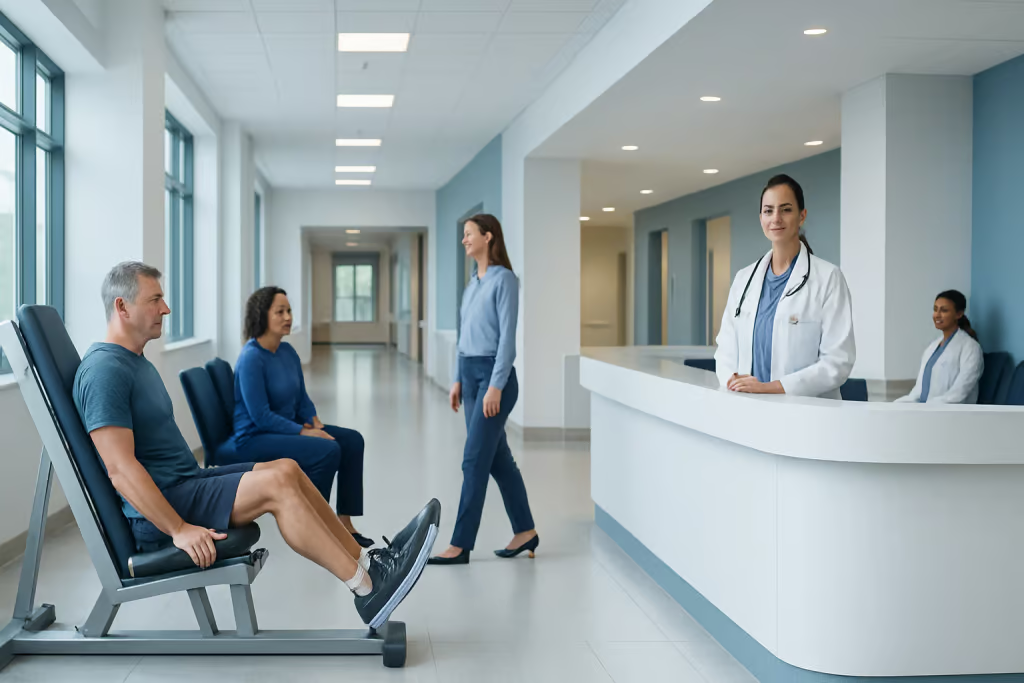
A leg press alternative should match the movement goal, such as strength, muscle endurance, balance, or rehabilitation. Bodyweight squats, sit-to-stands, step-ups, bridges, split squats, and resistance band exercises are practical options for many people.
Key Takeaways
- A leg press alternative should match the movement goal, such as strength, muscle endurance, balance, or rehabilitation.
- Bodyweight squats, sit-to-stands, step-ups, bridges, split squats, and resistance band exercises are practical options for many people.
- Exercise selection should be adjusted for knee pain, hip pain, back symptoms, balance problems, or recent injury.
- Good technique, gradual progression, and pain monitoring are more important than using heavy resistance.
- Persistent pain, swelling, weakness, or loss of function should be assessed by a qualified clinician.
A leg press alternative can help strengthen the quadriceps, glutes, hamstrings, and calves without relying on one machine. The best option depends on a person’s goals, mobility, joint comfort, and any existing knee, hip, or back concerns.
Overview: What Is a Good Leg Press Alternative?
A leg press alternative is any exercise that trains similar lower-body muscle groups without using a leg press machine. For many people, effective alternatives include sit-to-stands, squats, step-ups, glute bridges, split squats, and resistance band movements. These exercises can support leg strength, daily function, and rehabilitation while allowing easier adjustment for comfort and mobility.
The leg press mainly targets the quadriceps, gluteal muscles, and hamstrings, with support from the calves and core. However, it is not essential for building lower-body strength. A person may choose an alternative because they do not have access to gym equipment, want more functional movement patterns, or need to reduce stress on the knees, hips, or lower back.
From a patient education perspective, the most useful question is not simply “What replaces the leg press?” but “What movement safely trains the same region for this person?” The answer may differ for a healthy beginner, an older adult improving chair-rise strength, or someone recovering from injury. In that sense, the best leg press alternative is the one that supports safe form, consistent practice, and appropriate progression.
Why People Look for Leg Press Alternatives
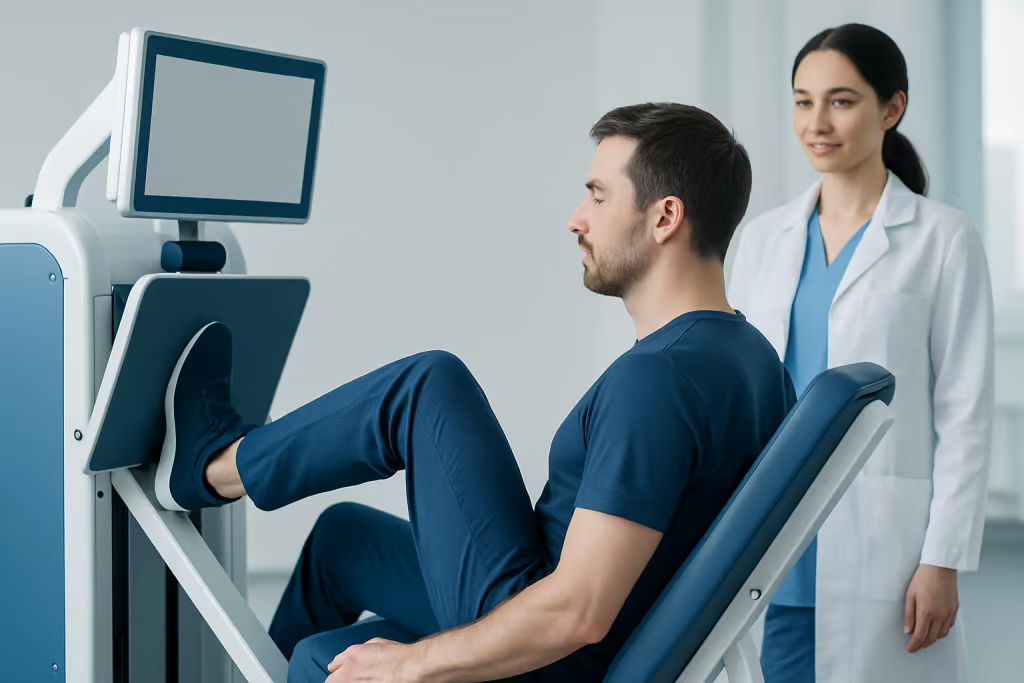
Many people search for a leg press alternative because the leg press can feel uncomfortable or impractical. Some find that the seated position increases pressure in the knees or hips, while others notice lower-back strain if the pelvis rounds at deeper ranges of motion. Equipment availability is another common reason, especially for people exercising at home or while traveling.
Alternatives can also be helpful because they train movement patterns used in daily life. Standing up from a chair, climbing stairs, stepping over obstacles, and maintaining balance all depend on coordinated work between the legs and trunk. Exercises such as step-ups, supported squats, and sit-to-stands may translate more directly to these functional tasks than a fixed-path machine exercise.
For some patients, alternatives are part of a broader care plan. People with knee pain, hip stiffness, deconditioning, or after orthopedic treatment may be advised to use modified lower-body exercises while symptoms settle or strength returns. A clinician or physiotherapist may also suggest alternatives after knee replacement or during recovery programs that focus on movement quality rather than heavy loading.
Best Leg Press Alternatives by Goal

The most appropriate leg press alternative depends on the goal. For general strength and everyday function, sit-to-stands and bodyweight squats are often excellent starting points. They train the quadriceps and glutes, can be scaled easily, and help a person practice safe control during a common daily movement. For people who need more support, using a chair, countertop, or rail can improve confidence and balance.
For glute and hamstring emphasis, bridges and hip hinges can be useful. A glute bridge places less demand on balance while strengthening the posterior chain. If tolerated, a hip hinge pattern such as a light Romanian deadlift can be added under supervision, especially when the aim is to improve lifting mechanics and hip strength.
For single-leg control and stair-related strength, step-ups and split squats are strong choices. Step-ups are especially practical because the step height can be adjusted to reduce joint stress. Split squats may be performed with bodyweight, hand support, or shallow depth at first, then progressed gradually as comfort improves.
For people in rehabilitation or with limited mobility, resistance band knee extensions, mini-squats, heel raises, and supported marching may be more appropriate than full squats. After some injuries or procedures, a tailored program through physical therapy and rehabilitation can help identify the safest sequence of exercises and progression.
- Beginner-friendly: sit-to-stands, supported squats, bridges
- Knee function and stairs: step-ups, controlled split squats
- Glute and hip strength: bridges, hip hinges, band walks
- Balance and coordination: single-leg sit-to-stand progressions, step patterns
- Rehabilitation-focused: mini-squats, band work, guided therapeutic exercise
How to Choose a Knee-Friendly or Back-Friendly Option
A knee-friendly leg press alternative usually reduces painful depth, excessive forward knee travel if that is irritating, and uncontrolled speed. Sit-to-stands from a higher chair, shallow step-ups, and partial squats holding onto support are commonly well tolerated. The exact choice depends on the person’s symptoms, strength, and confidence. Mild muscle effort is expected, but exercises should not create sharp pain, locking, or instability.
A back-friendly option often emphasizes neutral spinal posture, controlled breathing, and manageable resistance. Bridges, supported squats, and carefully taught hip hinge exercises may feel more comfortable than movements that encourage straining. If a person has back pain with leg training, it can help to reduce range of motion, shorten the session, and focus on technique rather than repetition count alone.
It is also important to remember that “joint-friendly” does not mean “no challenge.” Muscles need progressive loading to become stronger, but progression should be gradual. This may involve increasing repetitions, adding light resistance, slowing the lowering phase, or advancing from two-leg to one-leg variations only when form remains steady.
People with ongoing symptoms may benefit from assessment for related problems such as meniscus tear or soft tissue overload. In some cases, supportive services such as orthopedic rehabilitation help connect exercise selection with diagnosis, healing stage, and long-term return to activity.
How to Perform Alternatives Safely and Progress Over Time
Safe lower-body exercise begins with an appropriate starting level. A person should choose a variation that allows smooth, controlled movement and normal breathing. Knees should generally track in line with the toes, feet should remain stable, and the movement should be free from sudden collapse or twisting. A mirror, sturdy support, or guidance from a trainer or physiotherapist can help with early form practice.
A practical approach is to begin with one or two foundational exercises, such as sit-to-stands and bridges, then add one more demanding pattern, such as step-ups or split squats, once tolerance improves. Progression may include increasing the number of sets, adding resistance bands or light weights, or using a lower chair height for sit-to-stands. Sudden jumps in training volume can increase soreness and may aggravate symptoms.
Monitoring response after exercise is useful. Mild fatigue or delayed muscle soreness can be normal, especially in the first days of a new routine. However, notable swelling, limping, catching, night pain, or pain that worsens over the next 24 to 48 hours suggests the load may be too high or the exercise may need to be changed. In these situations, reducing intensity and seeking professional advice is sensible.
People returning after surgery or significant joint disease should follow individualized medical guidance. In selected cases, lower-body strengthening is introduced alongside care pathways related to robotic knee replacement surgery or other orthopedic treatment, with exercise tailored to healing and mobility goals.
When to Seek Medical Care
Medical review is appropriate if leg exercises cause persistent pain, visible swelling, repeated joint giving way, numbness, or worsening weakness. Care is also important if symptoms follow a fall, sports injury, or sudden twisting event. These signs do not always mean a serious problem, but they do suggest that a proper assessment is needed before continuing to progress exercise.
A person should also seek advice if lower-body pain limits normal walking, climbing stairs, getting out of a chair, or sleeping comfortably. New symptoms in the calf, marked redness, fever, or severe inability to bear weight need more urgent attention. People with osteoporosis, inflammatory arthritis, recent surgery, or significant balance problems may need exercise modifications from the beginning.
Near the end of a care pathway, some patients also benefit from specialist input if they plateau despite consistent exercise. Acibadem International’s multidisciplinary specialists in JCI-accredited hospitals diagnose and treat musculoskeletal conditions for international patients, including assessment, imaging, rehabilitation, and orthopedic care when appropriate.
Practical Self-Care Tips for Better Results
Consistency matters more than complexity. Many people do well with two to three lower-body sessions per week, using a small number of well-tolerated exercises performed with good control. A short warm-up, such as walking, gentle cycling, or easy mobility work, may make movement more comfortable before strengthening begins.
Supportive footwear, a stable surface, and a step or chair of appropriate height can make home exercise safer. It can also help to keep a simple log of symptoms and progress. Recording which movements feel better, how many repetitions were manageable, and whether discomfort settles by the next day can guide steady progression.
Recovery habits are part of the process. Adequate sleep, balanced nutrition, hydration, and pacing of activities all support muscle adaptation. If symptoms are present, rest should not always mean complete inactivity; often, reducing intensity while maintaining gentle movement is more helpful than stopping all exercise. A qualified clinician can advise when rest, rehabilitation, or further testing is most appropriate.
Frequently asked questions
What is the best leg press alternative for beginners?
For many beginners, sit-to-stands and supported squats are among the best starting options. They train similar muscles, require little equipment, and can be adjusted easily for strength, balance, and comfort.
Can a leg press alternative still build strong legs?
Yes. Leg strength can improve with bodyweight, resistance bands, free weights, or guided rehabilitation exercises when they are progressed gradually. The key is regular practice, proper technique, and choosing movements that target the quadriceps, glutes, and hamstrings safely.
Which leg press alternative is easiest on the knees?
Knee-friendly options often include sit-to-stands from a higher chair, shallow step-ups, mini-squats with support, and glute bridges. The best choice depends on the cause of the knee symptoms, the range of motion tolerated, and whether swelling or instability is present.
Is squatting always better than the leg press?
Not always. Squats can be highly functional, but they are not automatically better for every person. Someone with pain, poor balance, or limited mobility may do better with a modified exercise that matches their current ability and medical needs.
Should a person stop exercising if a leg press alternative causes pain?
Mild muscular effort or short-lived soreness can be normal when starting a new routine. Sharp pain, joint swelling, locking, giving way, or pain that worsens after exercise should be evaluated, and the exercise plan should be modified until the cause is clearer.
Are home-based leg press alternatives effective?
Yes, home-based options can be effective when they are done consistently and with good form. Chairs, stairs, resistance bands, and bodyweight exercises can provide enough challenge for many people, especially in early strengthening or rehabilitation.
References
- American Academy of Orthopaedic Surgeons
- National Institute of Arthritis and Musculoskeletal and Skin Diseases
- American College of Sports Medicine
- National Health Service
- Mayo Clinic
This article is for general information only and is not a substitute for professional medical advice. Please consult a qualified doctor about your individual situation.
Joint and spine care in Turkey — expert assessment & treatment
JCI-accredited · board-certified surgeons · reply within 24h
Add us as a Preferred Source to see more of our trusted health content across Google Search, AI Overviews and Discover.