Glutes — Explained by Medical Evidence, Not Myths

The glutes include three main muscles: gluteus maximus, gluteus medius, and gluteus minimus. These muscles are important for walking, climbing stairs, standing up, balance, and hip stability.
Key Takeaways
- The glutes include three main muscles: gluteus maximus, gluteus medius, and gluteus minimus.
- These muscles are important for walking, climbing stairs, standing up, balance, and hip stability.
- Glute pain or weakness may come from muscle strain, overuse, tendon problems, nerve irritation, or referred pain from the lower back.
- Evaluation may include a physical exam and, when needed, imaging to rule out spine, hip, or soft-tissue problems.
- Most glute-related problems improve with activity modification, targeted exercise, and medical guidance when symptoms persist.
Glutes are the group of muscles that form the buttocks and help control hip movement, pelvic stability, posture, and daily mobility. Understanding how the glutes work can help explain common symptoms such as buttock pain, weakness, poor balance, and strain-related injuries.
Overview: what the glutes are and why they matter
The glutes are the muscles of the buttocks. In medical terms, they include the gluteus maximus, gluteus medius, and gluteus minimus. Together, these muscles help extend, rotate, and stabilize the hip, while also supporting the pelvis during standing, walking, running, and climbing stairs.
Although glutes are often discussed mainly in fitness culture, their medical importance goes far beyond appearance. Healthy glute function helps distribute force through the hips and lower limbs, supports balance, and reduces strain on nearby structures such as the lower back, knees, and tendons. When the glutes are weak, tight, injured, or irritated, a person may notice pain, limping, reduced exercise tolerance, or difficulty with everyday movements.
The gluteus maximus is the largest of the three and is especially active during rising from a chair, climbing, sprinting, and lifting. The gluteus medius and minimus are smaller but essential for pelvic control. They help keep the pelvis level when a person stands on one leg, such as during walking. This is why glute dysfunction can sometimes lead to an unstable gait or aching on the side of the hip.
Anatomy and function of the glute muscles
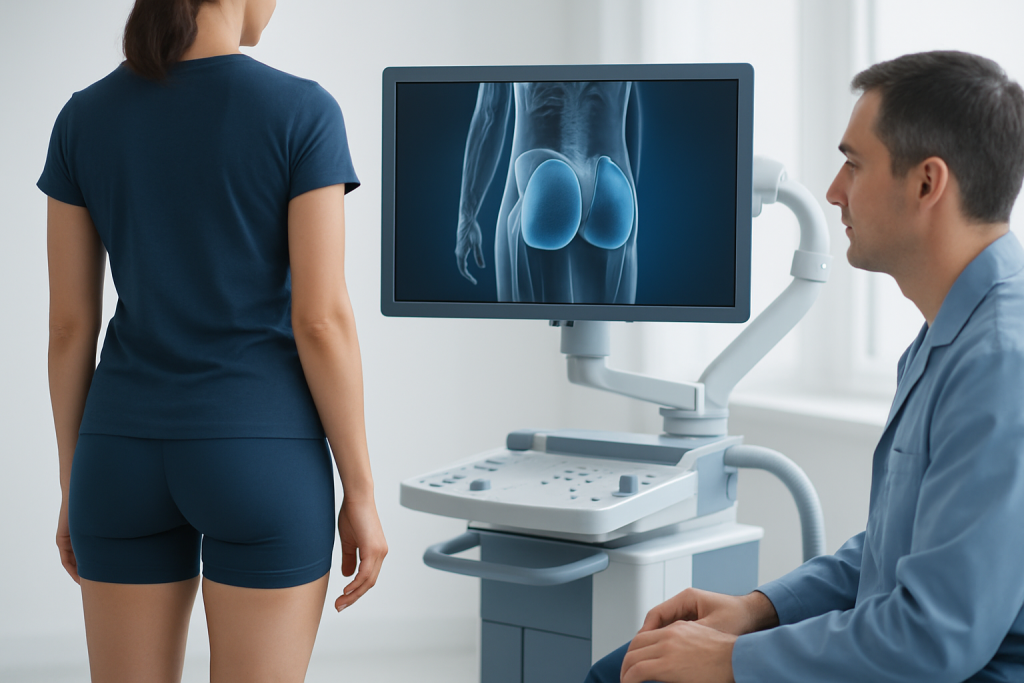
Each glute muscle has a slightly different role. The gluteus maximus generates power, especially for hip extension. The gluteus medius and gluteus minimus sit more to the side of the hip and are important for abduction, which means moving the leg outward, and for stabilizing the pelvis. These muscles also work with the deep hip rotators, abdominal muscles, and lower back muscles as part of a larger movement system.
In daily life, the glutes are active more often than many people realize. They help a person step up onto a curb, keep the trunk upright, and control the leg when walking downhill or sitting down slowly. During sport, they are heavily involved in acceleration, jumping, change of direction, and shock absorption. If they are not functioning well, other muscles may compensate, which can contribute to overload in the back, hamstrings, or knees.
Because the hip and lower back are closely connected, symptoms around the glutes may not always start in the glute muscles themselves. For example, lower back problems can sometimes cause buttock pain, and some hip conditions can feel like glute discomfort. This is one reason a careful assessment is useful when pain continues or interferes with normal movement.
Common symptoms linked to glute problems
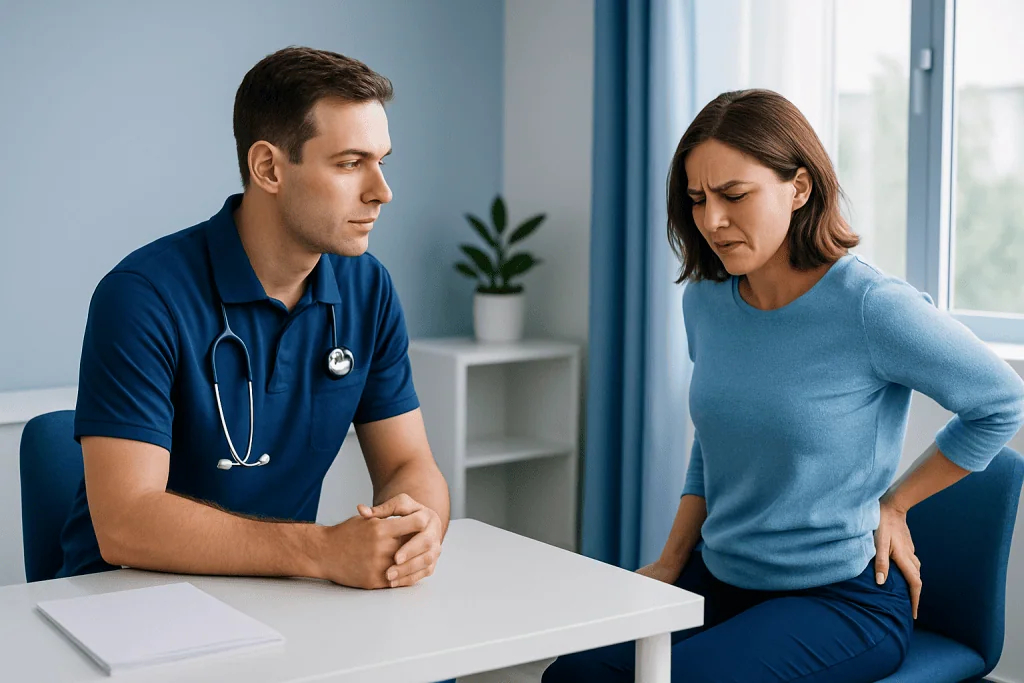
Glute-related symptoms can vary depending on the cause. Some people feel a dull ache in the buttock after walking or sitting for a long time. Others notice sudden pain after exercise, tenderness to touch, weakness when climbing stairs, or a feeling that one hip drops while walking. Pain may stay local or spread toward the side of the hip, upper thigh, or lower back.
In some cases, symptoms come from overuse or a minor strain. In others, the source may be a tendon problem, bursitis near the hip, nerve irritation, or referred pain from the spine. Sharp, burning, numb, or tingling sensations suggest that a nerve may be involved rather than the muscle alone. Deep pain with prolonged sitting may also need evaluation, especially if it is persistent or one-sided.
- Buttock pain during walking, running, or sitting
- Weakness when standing from a chair or climbing stairs
- Poor balance or pelvic drop when standing on one leg
- Tenderness over the buttock or side of the hip
- Reduced hip movement or stiffness after activity
- Pain that radiates down the leg or is associated with numbness
Some people use the term “sciatica” for buttock pain that travels down the leg. While true sciatica is caused by irritation of the sciatic nerve, not every glute pain pattern is sciatica. A doctor can help distinguish muscular pain from nerve-related symptoms.
Causes and risk factors
One of the most common causes of glute pain is muscle strain. This may happen after sprinting, heavy lifting, a sudden increase in exercise, or a slip or awkward movement. Strains can range from mild overstretching to more significant tearing. Another common cause is gluteal tendinopathy, where the tendons attaching the glute muscles become irritated or degenerated over time, often causing pain on the outer hip and buttock.
Weak glutes can also develop gradually. Long periods of sitting, reduced physical activity, previous injury, poor exercise technique, and deconditioning may all contribute. Weakness does not always cause pain immediately, but it can change movement patterns and increase load on the lumbar spine, hips, and knees. This may help explain why some people with glute weakness also experience lower back pain or recurring overuse discomfort.
Other possible causes include hip bursitis, sacroiliac joint irritation, hamstring tendon problems, arthritis of the hip, and referred pain from the lumbar spine. Nerve compression, including piriformis-related irritation, may produce buttock pain with tingling or shooting sensations. Risk tends to be higher in people who increase training quickly, sit for many hours, have biomechanical imbalances, or return to sport too soon after injury.
How doctors evaluate glute pain or weakness
Assessment usually begins with a detailed history. A doctor asks where the pain is felt, what movements make it worse, whether there was an injury, and whether symptoms include numbness, tingling, fever, weight loss, or nighttime pain. These details help separate muscle-related problems from hip joint, spine, or nerve conditions.
The physical exam may include checking posture, walking pattern, hip range of motion, tenderness, strength, and balance. Special movement tests can help identify whether symptoms are more likely to come from the glute muscles, tendons, hip joint, or lower back. For many straightforward muscle strains or mild weakness patterns, this clinical evaluation is enough to guide initial treatment.
If symptoms are severe, prolonged, or unclear, imaging or other tests may be recommended. Ultrasound can help assess some tendon problems, while MRI may be useful for deeper soft-tissue injury or to clarify whether symptoms come from the hip, pelvis, or lumbar region. In some cases, clinicians may use MRI scanning or orthopedic rehabilitation as part of a broader diagnostic and recovery plan.
Treatment options and rehabilitation
Treatment depends on the cause. For many muscle strains or overuse problems, early care focuses on reducing aggravating activity, allowing relative rest, and then gradually restoring movement. A complete stop to all activity is not always necessary, but painful or high-load movements often need to be limited for a short time. Ice or heat may be helpful for some people, depending on symptom timing and personal response.
Exercise-based rehabilitation is central for many glute problems. A physical therapist or rehabilitation specialist may guide hip strengthening, balance work, movement retraining, and gradual return to walking, running, or sport. The exact program should match the diagnosis. For example, a tendon problem is managed differently from a sudden strain, and a nerve-related condition may need treatment directed at the spine or surrounding tissues as well.
Doctors may also consider pain-relieving medication when appropriate, while taking a person’s overall health into account. If the main issue is referred pain from the back, treatment may overlap with care for herniated disc or other spinal conditions. In selected cases, referral to physical therapy and rehabilitation or a specialist in orthopedics and traumatology may be helpful. Surgery is not needed for most glute muscle complaints, but it may be considered for specific tendon tears, hip disorders, or structural problems diagnosed by a specialist.
Prevention, exercise habits, and self-care
Prevention focuses on balanced movement rather than myths about “activating” the glutes in isolation at all times. In medical practice, the goal is functional strength, good load management, and symptom-free movement. A gradual increase in training, proper recovery between sessions, and attention to technique can help reduce the risk of overload. People who sit for long periods may benefit from standing breaks and regular walking.
General conditioning can support glute health. Useful exercises often include bridges, sit-to-stand practice, step-ups, side-lying leg raises, controlled squats, and single-leg balance tasks, but the right choice depends on the person’s symptoms and baseline fitness. Pain during exercise should not be ignored, especially if it changes gait or gets worse over time.
Supportive self-care may include warming up before activity, varying repetitive training, and maintaining flexibility in surrounding muscle groups without overstretching an injured area. If symptoms recur despite rest or a home program, professional advice is appropriate. Near the end of the care pathway, some international patients may choose assessment through Acibadem International, where multidisciplinary specialists in JCI-accredited hospitals evaluate and treat musculoskeletal conditions.
When to seek medical care
Medical evaluation is advisable if glute pain lasts more than a few weeks, keeps returning, or limits walking, climbing stairs, exercise, or sleep. A person should also seek care if there is visible swelling, marked weakness, inability to bear weight, or pain after a significant fall or sports injury.
Prompt assessment is especially important if buttock pain is accompanied by numbness, tingling, progressive leg weakness, fever, unexplained weight loss, or changes in bladder or bowel control. These symptoms may point to a condition beyond a simple muscle problem and should not be self-diagnosed.
Even when symptoms are not urgent, a qualified clinician can help identify whether the source is the glutes, the hip joint, the sacroiliac region, or the lower back. Early diagnosis often makes rehabilitation more effective and can reduce the risk of long-term compensation patterns.
Frequently asked questions
What are the glutes?
The glutes are the muscles that form the buttocks: the gluteus maximus, gluteus medius, and gluteus minimus. They help move the hip, stabilize the pelvis, and support posture, walking, and climbing.
Why do the glutes become weak?
Glute weakness can develop from prolonged sitting, low activity levels, poor movement patterns, or recovery after injury. It may also happen when pain in the back or hip causes the muscles to be used less effectively over time.
Can glute pain come from the lower back?
Yes. Buttock pain can be referred from the lumbar spine or caused by nerve irritation, not only by the glute muscles themselves. This is why persistent pain, tingling, or pain radiating down the leg should be medically assessed.
Are glute exercises always safe to start at home?
Simple low-load exercises are often reasonable for mild stiffness or deconditioning, but they are not ideal for everyone. If exercise causes sharp pain, limping, numbness, or worsening symptoms, it is better to stop and seek professional guidance.
How long does a glute strain take to heal?
Recovery time depends on how mild or severe the strain is and whether treatment begins early. Minor strains may improve within days to weeks, while more significant injuries can take longer and may need supervised rehabilitation.
When should someone worry about glute pain?
Medical care is important if pain is severe, follows trauma, lasts more than a few weeks, or interferes with daily activities. Urgent evaluation is needed if there is leg weakness, numbness, fever, or bladder or bowel changes.
This article is for general information only and is not a substitute for professional medical advice. Please consult a qualified doctor about your individual situation.
Joint and spine care in Turkey — expert assessment & treatment
JCI-accredited · board-certified surgeons · reply within 24h
Add us as a Preferred Source to see more of our trusted health content across Google Search, AI Overviews and Discover.

More from the Health Library

Convergence Insufficiency: What Patients Need to Know

Rainbow Trout and: What Patients Need to Know

Roseola: An Evidence-Based Guide for Patients

Meloxicam 7.5: What Patients Need to Know

Hypertrophic — Explained by Medical Evidence, Not Myths