Goniometer: An Evidence-Based Guide for Patients
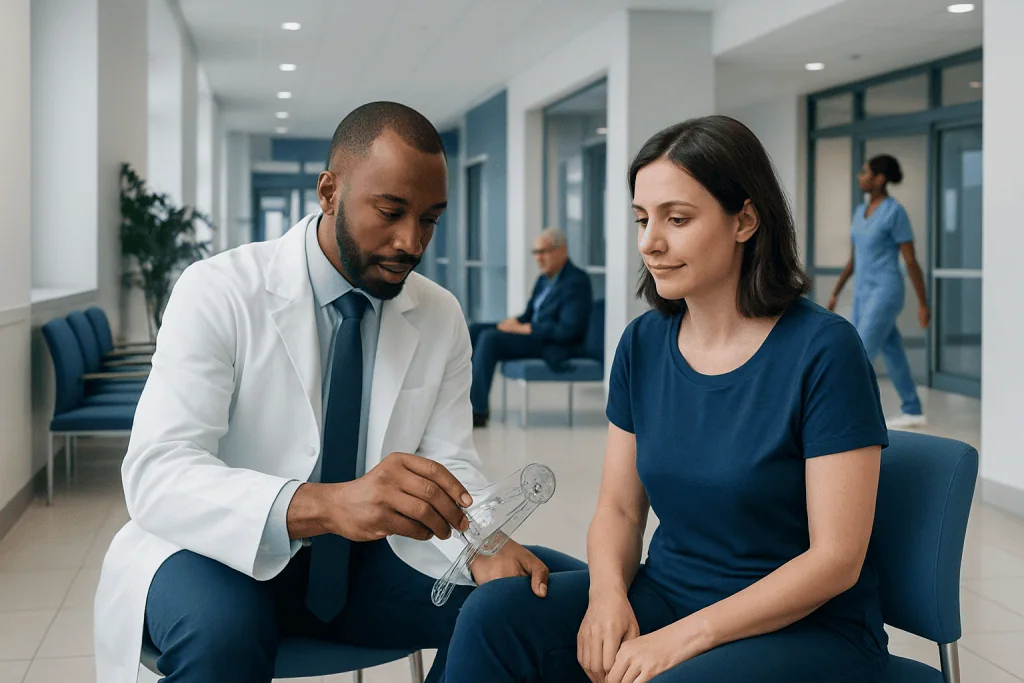
A goniometer measures joint angles and range of motion. It is commonly used in orthopedics, rehabilitation, and physical therapy.
Key Takeaways
- A goniometer measures joint angles and range of motion.
- It is commonly used in orthopedics, rehabilitation, and physical therapy.
- Measurements can help diagnose stiffness, injury, weakness, or recovery progress.
- Results are most useful when taken by a trained clinician using the same method over time.
- Pain, swelling, surgery, arthritis, or nerve problems can all affect range of motion.
A goniometer is a simple medical tool used to measure the angle of a joint and assess range of motion. It helps clinicians diagnose movement limits, monitor healing, and plan rehabilitation in a consistent, evidence-based way.
What Is a Goniometer?
A goniometer is a medical measuring tool used to assess the angle of a joint and the amount of movement a person has in that joint, also called range of motion. In patient care, it is most often used by physical therapists, rehabilitation specialists, orthopedic clinicians, and other trained professionals to evaluate how well a shoulder, elbow, wrist, hip, knee, ankle, neck, or other joint moves.
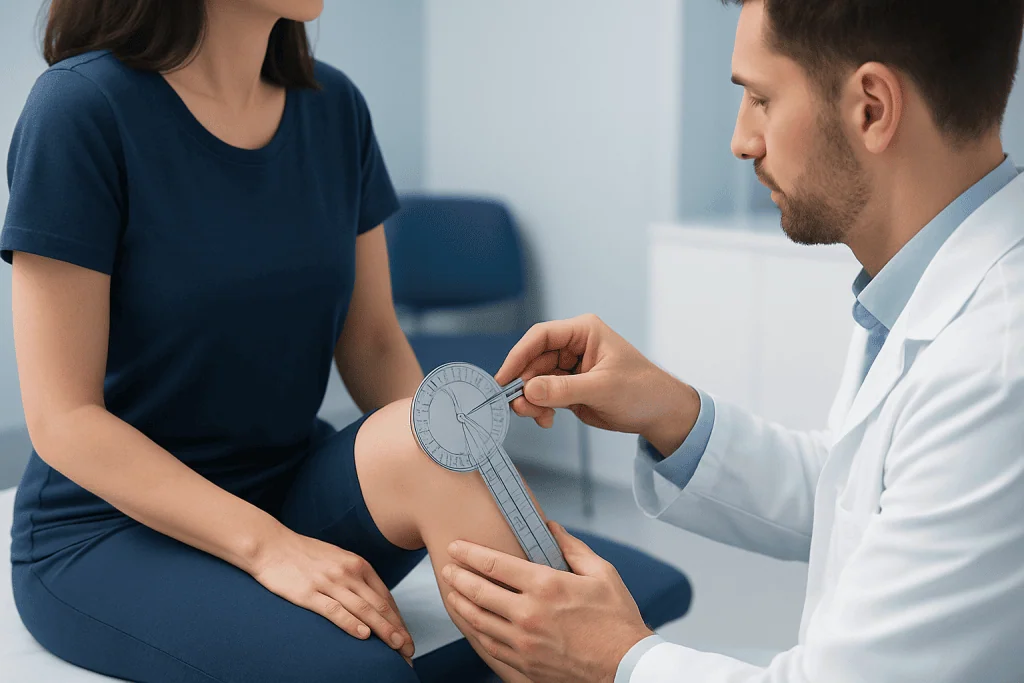
Most clinical goniometers look like a protractor with two arms. One arm is aligned with the body segment above a joint, and the other is aligned with the segment below it. The clinician then reads the angle to determine how far the joint bends, straightens, rotates, or moves in another direction. Digital versions also exist, but the purpose is the same: to measure movement in a standardized way.
For patients, the value of a goniometer is practical. It helps turn a symptom such as “the knee feels stiff” into an objective measurement that can be compared over time. This can support diagnosis, show whether treatment is helping, and guide decisions about exercise, rehabilitation, or further testing.
Why Joint Angle Measurement Matters
Joint movement is an important part of everyday function. Walking, reaching, dressing, climbing stairs, typing, and turning the head all depend on normal or near-normal range of motion. When movement is restricted or painful, it may affect independence, work, sleep, exercise, and quality of life.
Goniometer measurements help clinicians document movement accurately rather than relying only on observation. This is important because small changes may matter. For example, a few degrees of improvement in knee extension after injury or surgery can make walking easier, while loss of shoulder rotation may affect grooming or reaching overhead.
Measurements are often used to:
- Identify limited movement after injury or surgery
- Track improvement during rehabilitation
- Compare one side of the body with the other
- Support treatment planning and exercise goals
- Document progress in conditions such as arthritis, frozen shoulder, or neurological disorders
Because range of motion can change with pain, swelling, muscle tightness, and healing, repeat measurements over time are often more informative than a single reading.
How a Goniometer Is Used During an Examination
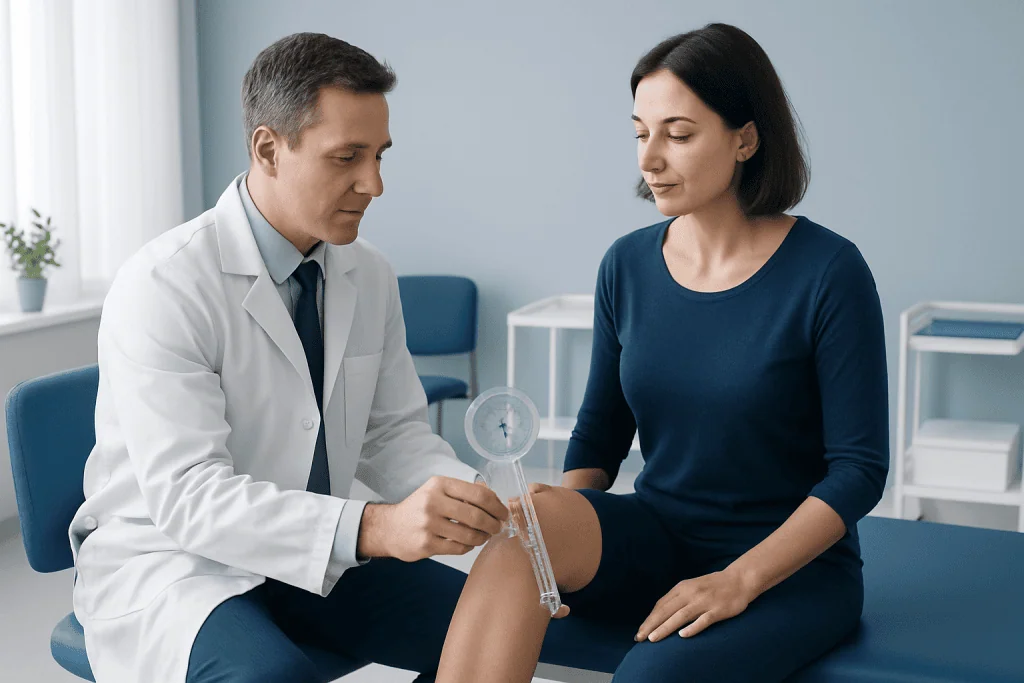
During an examination, the clinician usually asks the patient to move a joint in a specific way, such as bending the knee, lifting the arm, or turning the neck. The center of the goniometer is placed near the joint, and its arms are aligned with nearby anatomical landmarks. The angle is then measured and recorded.
Measurements may be taken in two main ways: active range of motion and passive range of motion. Active range of motion means the patient moves the joint independently. Passive range of motion means the clinician moves the joint while the patient relaxes. Comparing these can provide useful clues. For example, if passive motion is greater than active motion, weakness or pain may be limiting movement. If both are restricted, stiffness in the joint or surrounding tissues may be contributing.
Good technique matters. Positioning, pain level, muscle guarding, and swelling can all affect the reading. For that reason, clinicians try to use consistent methods and often repeat the measurement to improve reliability. Patients do not need to prepare in a special way, although wearing loose clothing and reporting pain honestly can help make the assessment more accurate and comfortable.
Conditions and Situations Where a Goniometer May Be Helpful
A goniometer is not a treatment by itself. It is an assessment tool that helps clinicians understand how a joint is functioning. It may be used after sports injuries, falls, fractures, sprains, tendon injuries, or surgery. It is also commonly used in chronic conditions that affect movement over time.
Examples include osteoarthritis, inflammatory joint disease, muscle and tendon problems, scar-related stiffness, and post-operative recovery. It may also be helpful in rehabilitation after stroke or other neurological conditions where joint movement can be limited by weakness, spasticity, or reduced motor control. In some people, measuring range of motion helps distinguish whether the main problem is pain, mechanical stiffness, weakness, or fear of movement.
Patients may encounter goniometer testing during care for knee arthritis, shoulder stiffness, or recovery after a fracture. It is also used before and after rehabilitation programs, and sometimes around procedures such as physical therapy and rehabilitation or orthopedic rehabilitation to track progress more objectively.
In orthopedic practice, measurements may be combined with strength testing, walking assessment, balance evaluation, imaging, and a physical exam to form a more complete picture of function.
What the Results Can Show
Goniometer results show how much movement is available at a joint. A clinician may compare the result with expected normal ranges, with the opposite side of the body, or with earlier measurements from the same patient. The interpretation depends on age, anatomy, pain, injury history, and the person’s daily functional needs.
A reduced range of motion can have several causes. These include joint swelling, pain, muscle tightness, tendon injury, ligament injury, scar tissue, arthritis, or mechanical blockage within the joint. In some cases, the joint itself is not the main issue; weakness, nerve-related problems, or poor movement control may limit motion. This is why a goniometer reading is interpreted as part of a broader clinical assessment rather than in isolation.
Improvement in the angle measured can suggest that treatment is helping, especially when it is accompanied by better function and less pain. However, a larger range of motion is not always the only goal. In some situations, stable movement with good strength, balance, and less pain may matter more than achieving a textbook number.
How Goniometer Measurements Support Treatment and Recovery
Once a movement limitation is identified, the next step is to address its cause. Treatment may include exercise therapy, stretching, strengthening, edema control, bracing, manual therapy, pain management, or treatment of an underlying condition. Goniometer measurements can help set realistic goals, such as improving knee flexion enough to sit comfortably or restoring shoulder motion needed for daily tasks.
After surgery or injury, repeat measurements help show whether recovery is moving in the right direction. This can be especially useful in structured rehabilitation programs. For example, after ligament reconstruction, fracture repair, or treatment for a stiff shoulder, range of motion milestones may help shape the next phase of care. When a patient is not improving as expected, measurements can also signal the need for reassessment.
Depending on the cause of limited movement, care may include exercise-based rehabilitation, medication review, imaging, or specialist referral. Some patients may need evaluation in orthopedics for structural joint problems, while others benefit most from conservative management. In selected cases, care may relate to shoulder impingement syndrome or further orthopedic evaluation such as orthopedic care.
Near the end of the care pathway, many clinicians continue using goniometer measurements to confirm that gains are maintained, not just achieved briefly. This makes the tool useful from first assessment through long-term follow-up.
Limitations, Accuracy, and What Patients Should Know
Although a goniometer is widely used and evidence-based, it is not perfect. Measurements can vary between clinicians or even between repeated attempts if positioning changes. For this reason, results are most reliable when the same joint is measured in the same way over time, ideally by trained professionals following standardized methods.
Pain can affect performance significantly. A patient may stop moving because of discomfort before reaching the full available range. Swelling, fatigue, anxiety, and muscle guarding can also influence the result. This does not make the measurement useless; instead, it reminds clinicians to interpret it in context and combine it with other findings.
Patients may also notice that a “normal” number on paper does not always mean they feel fully recovered. Function matters. Someone may technically regain motion but still have trouble with strength, endurance, coordination, or confidence in using the joint. That is why treatment plans usually address movement quality and daily function, not only joint angles.
For international patients who need coordinated evaluation, Acibadem International’s multidisciplinary specialists and JCI-accredited hospitals assess joint movement as part of broader musculoskeletal and rehabilitation care.
When to Seek Medical Care
A goniometer itself does not diagnose an emergency, but changes in joint movement can be a reason to seek medical attention. A patient should consider medical evaluation if a joint suddenly becomes difficult to move, movement is limited after an injury, or stiffness is getting worse over time without a clear explanation.
Prompt care is especially important when reduced movement is accompanied by significant swelling, severe pain, deformity, fever, weakness, numbness, or inability to bear weight or use the limb normally. These symptoms may suggest a fracture, dislocation, infection, nerve problem, or another condition that needs urgent assessment.
Even when symptoms are not urgent, persistent stiffness or loss of motion deserves attention if it interferes with work, sleep, sports, self-care, or recovery after treatment. A qualified doctor or rehabilitation professional can assess the cause, measure range of motion accurately, and recommend appropriate next steps.
Frequently asked questions
What is a goniometer used for?
A goniometer is used to measure the angle of a joint and the amount of movement available in that joint. Clinicians use it to assess stiffness, monitor recovery, and help plan rehabilitation.
Is goniometer testing painful?
The tool itself does not cause pain. However, moving an injured or inflamed joint during the test may feel uncomfortable, so patients should tell the clinician if pain occurs.
Which joints can be measured with a goniometer?
Many joints can be measured, including the shoulder, elbow, wrist, fingers, hip, knee, ankle, neck, and jaw. The exact method depends on the joint and the type of movement being tested.
What is the difference between active and passive range of motion?
Active range of motion is how far a patient can move a joint on their own. Passive range of motion is how far the joint can move when a clinician moves it for them, which can help identify whether pain, weakness, or stiffness is contributing.
Can a goniometer diagnose arthritis or a tear by itself?
No. A goniometer measures movement, but it does not identify the exact cause on its own. Clinicians combine the measurement with symptoms, physical examination, and sometimes imaging or other tests.
Why might my range of motion change from one visit to another?
Range of motion can vary with pain, swelling, fatigue, healing, exercise, and even time of day. Small differences are common, which is why consistent technique and repeated measurements are helpful.
References
- American Academy of Orthopaedic Surgeons
- American Physical Therapy Association
- National Institute of Arthritis and Musculoskeletal and Skin Diseases
- MedlinePlus
- World Health Organization
This article is for general information only and is not a substitute for professional medical advice. Please consult a qualified doctor about your individual situation.
Joint and spine care in Turkey — expert assessment & treatment
JCI-accredited · board-certified surgeons · reply within 24h
Add us as a Preferred Source to see more of our trusted health content across Google Search, AI Overviews and Discover.

More from the Health Library

Pimecrolimus Cream: A Complete Medical Overview

Tick Bite: A Complete Medical Overview

Deglycyrrhizinated Licorice: A Complete Medical Overview

Car S E X: A Complete Medical Overview

Hep B Surface Antibody — Explained by Medical Evidence, Not Myths