Goniotomy Surgery: Procedure, Recovery and Results

Goniotomy improves drainage through the trabecular meshwork, the eye’s main outflow tissue. It is commonly considered for open-angle glaucoma, sometimes at the same time as cataract surgery.
Key Takeaways
- Goniotomy improves drainage through the trabecular meshwork, the eye’s main outflow tissue.
- It is commonly considered for open-angle glaucoma, sometimes at the same time as cataract surgery.
- Recovery is usually quicker than after traditional filtering surgery, although vision can be temporarily blurred.
- Success means achieving a safer eye pressure, often with fewer medicines; outcomes differ between individuals.
- Regular follow-up is essential because glaucoma-related optic nerve damage cannot be reversed.
Goniotomy surgery is a type of minimally invasive glaucoma surgery (MIGS) that opens part of the eye’s natural drainage pathway to lower intraocular pressure. It may reduce the need for glaucoma drops, but follow-up care remains important because glaucoma requires lifelong monitoring.
Overview: What Is Goniotomy Surgery?
Goniotomy surgery is a minimally invasive glaucoma procedure that lowers pressure inside the eye by improving the natural outflow of aqueous humor, the clear fluid produced in the front part of the eye. It is usually performed for open-angle glaucoma, a condition in which fluid can reach the drainage angle but does not leave the eye efficiently enough. Reducing pressure helps slow or prevent further damage to the optic nerve.
During the procedure, an ophthalmic surgeon makes a small opening in the trabecular meshwork, a tissue at the drainage angle of the eye. This allows fluid to access the drainage channels more easily. Unlike traditional glaucoma filtering operations, goniotomy generally does not create an external drainage bleb under the eyelid.
Goniotomy may be performed on its own or combined with cataract surgery. It is one option within minimally invasive glaucoma surgery, often called MIGS. The right approach depends on the glaucoma type and severity, eye pressure, optic nerve findings, current treatment, and the person’s overall eye health.
How Goniotomy Works and Who May Be a Candidate
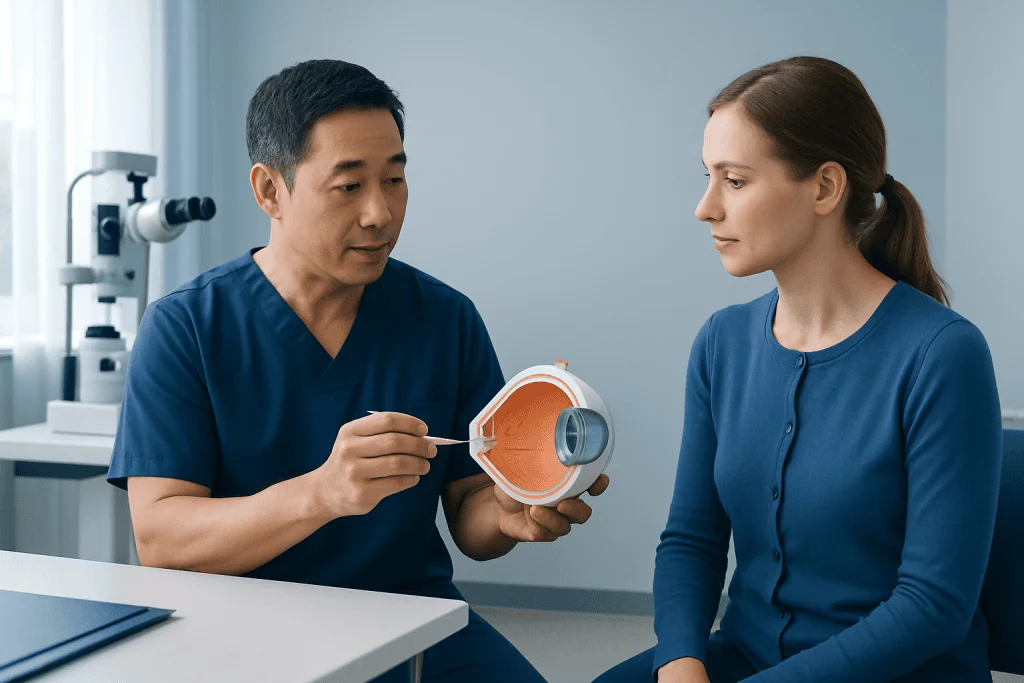
In a healthy eye, aqueous humor flows through the pupil and exits mainly through the trabecular meshwork at the angle between the iris and cornea. In open-angle glaucoma, resistance in this tissue can cause intraocular pressure to rise. Goniotomy bypasses or removes a small section of this resistance, helping fluid reach Schlemm’s canal and the eye’s natural collector channels.
Potential candidates often have mild to moderate primary open-angle glaucoma, ocular hypertension, or some forms of secondary open-angle glaucoma. The procedure may be particularly useful when pressure remains above the individual target despite eye drops, when drops cause side effects, or when a person hopes to reduce the daily treatment burden. It may also be discussed when cataract surgery is already planned.
It is not appropriate for every type of glaucoma. Eyes with a closed or very narrow drainage angle, extensive angle scarring, active inflammation, or certain previous eye surgeries may need a different approach. A detailed glaucoma assessment, including pressure measurements, optic nerve examination, visual field testing, and angle evaluation with gonioscopy, helps the surgeon recommend suitable treatment.
- Goniotomy is designed to control eye pressure, not restore vision already lost from glaucoma.
- Some people still need pressure-lowering drops after surgery.
- If pressure remains too high, additional laser treatment or surgery may be needed later.
Goniotomy Surgery Procedure: Step by Step
Goniotomy is usually an outpatient procedure. The eye is numbed with anesthetic drops or a local anesthetic injection; some people may also receive medicine to help them relax. General anesthesia is less common in adults but may be used in selected circumstances, including in young children or when clinically appropriate.
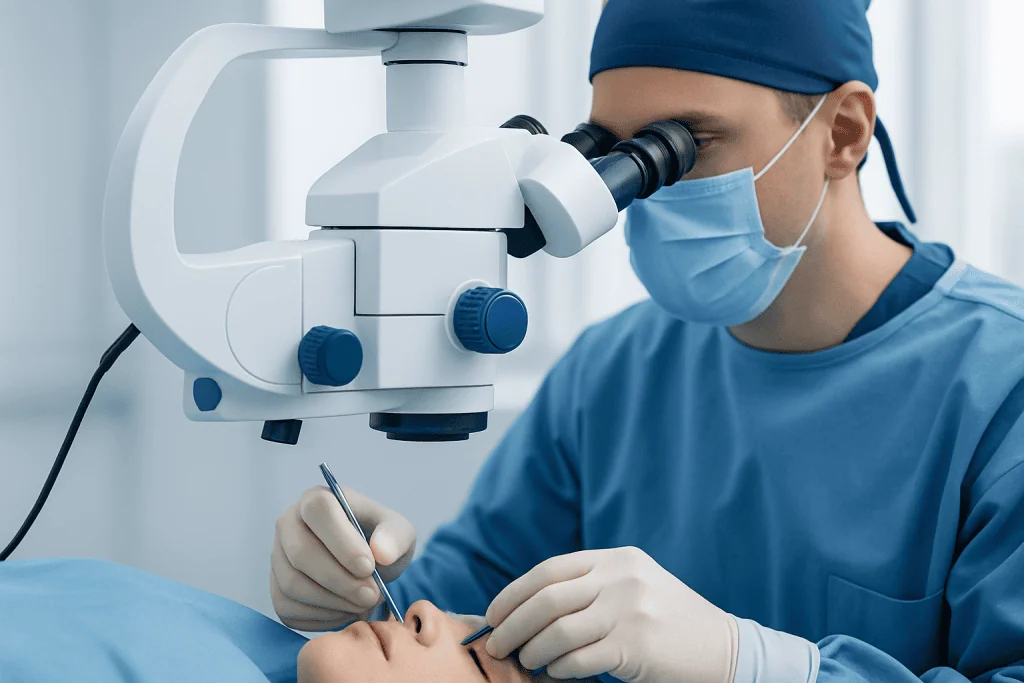
The surgeon makes a very small incision in the cornea and fills the front of the eye with a clear gel to maintain its shape. Using a microscope and a special lens to view the drainage angle, the surgeon passes a fine instrument through the incision and opens a segment of the trabecular meshwork. The exact technique and device can vary, but the goal remains the same: to improve access to the natural drainage system.
If cataract surgery is being done at the same time, the cloudy lens is removed and replaced with an artificial intraocular lens before or during the glaucoma portion of the operation, according to the surgical plan. The corneal incision is typically self-sealing and may not require stitches. The eye is protected with a shield after the procedure.
The operation itself is often relatively brief, but time in the surgical center includes preparation, anesthesia, recovery observation, and discharge instructions. A responsible adult may be needed to accompany the patient home, especially when sedation has been used.
Goniotomy Surgery Recovery: What to Expect
Goniotomy surgery recovery is commonly shorter and less restrictive than recovery after traditional glaucoma filtering surgery. Mild scratchiness, tearing, light sensitivity, redness, and fluctuating or blurred vision can occur during the early healing period. A small amount of blood in the front of the eye, called a hyphema, is also relatively common after angle surgery and often clears gradually under ophthalmic supervision.
Prescription anti-inflammatory and antibiotic eye drops are commonly used after surgery. The ophthalmologist will explain exactly how and when to use them, as well as whether pre-existing glaucoma drops should continue. Follow-up visits are important because eye pressure can change during the first days and weeks, even when the eye feels comfortable.
Patients are generally advised to avoid rubbing or pressing on the eye, swimming or using hot tubs until cleared, and strenuous exercise or heavy lifting in the early recovery period. They should use the protective shield as directed, especially while sleeping. Reading, screen use, and gentle walking are often possible as comfort and vision allow, but individual instructions take priority.
Vision may improve more slowly when goniotomy is performed alone, particularly if glaucoma or another eye condition already affects sight. When it is combined with cataract surgery, the visual recovery pattern may reflect both procedures. The surgeon can give the most relevant expectations after examining the eye at follow-up.
How Long Does It Take to Recover From a Goniotomy?
Many people return to light daily activities within several days after a goniotomy, while the eye may take a few weeks to settle fully. The precise goniotomy recovery time varies with the amount of inflammation, whether there is a temporary hyphema, the starting eye pressure, and whether cataract surgery was performed at the same time.
Blurred vision is often most noticeable in the first few days. Some people see more clearly within a week, while others need several weeks for vision and comfort to stabilize. Follow-up appointments commonly occur soon after surgery and then over the following weeks or months, because the pressure response is as important as how the eye feels.
Patients should not drive until their vision meets legal and practical safety requirements and their eye doctor agrees it is appropriate. They should contact the surgical team promptly if vision worsens suddenly, pain becomes significant, redness increases, or nausea and vomiting occur, as these symptoms may require urgent assessment.
How Many Days Should I Rest After Glaucoma Surgery?
After goniotomy, many patients need one to several days of reduced activity, rather than strict bed rest. Resting on the day of surgery and taking things gently for the first few days is often sensible. However, the appropriate time away from work, driving, exercise, and lifting depends on the person’s occupation, vision in each eye, and the exact glaucoma procedure performed.
For the first one to two weeks, ophthalmologists commonly recommend avoiding heavy lifting, strenuous exercise, bending that places pressure on the eye, and activities that could expose the eye to dust, water, or injury. The surgeon may modify this advice if there has been bleeding in the eye, pressure changes, or another recovery concern.
Traditional glaucoma operations such as trabeculectomy usually involve more activity restrictions and closer monitoring than goniotomy. It is important not to compare recovery plans directly: each procedure controls pressure through a different mechanism and has different healing needs.
Benefits, Risks and Goniotomy Surgery Success Rate
The main potential benefit of goniotomy is a meaningful reduction in intraocular pressure through the eye’s own drainage system. Some people can also reduce the number of glaucoma eye drops they need. Because the incisions are small and no external filtering bleb is created, recovery can be more straightforward than with some conventional glaucoma surgeries.
A goniotomy surgery success rate cannot be summarized by one number that applies to everyone. Studies define success differently, such as reaching a target pressure, lowering pressure by a certain amount, or doing so with fewer medicines and without additional surgery. Results are influenced by glaucoma type and stage, baseline pressure, prior treatment, surgical technique, and whether cataract surgery is combined with goniotomy.
Possible risks include temporary bleeding in the front of the eye, inflammation, pressure that is too high or too low, corneal swelling, infection, and the need for additional treatment. Serious complications are uncommon but possible with any eye surgery. The surgeon will explain the expected benefits and the specific risks for the individual eye before obtaining consent.
Even when the procedure lowers pressure successfully, glaucoma monitoring remains lifelong. Regular pressure checks, optic nerve imaging, and visual field assessments help identify whether treatment is continuing to protect vision effectively.
How Long Does It Take for an Eye to Heal After a Trabeculectomy?
Trabeculectomy is a different glaucoma operation from goniotomy. It creates a controlled new route for fluid to leave the eye, often forming a small drainage area, or bleb, beneath the upper eyelid. It is commonly reserved for eyes needing a greater pressure reduction than MIGS procedures are likely to provide.
Initial healing after trabeculectomy often takes several weeks, but the eye may require careful adjustment and monitoring for months. Vision can fluctuate while the pressure and bleb healing are managed. Postoperative visits may be frequent, and the surgeon may use medicines or office-based treatments to support appropriate healing.
Because trabeculectomy recovery is more involved, patients should follow individualized instructions about work, exercise, eye protection, and drops. A person considering glaucoma surgery should ask why one procedure is recommended over another, what target pressure is needed, and what follow-up commitment is expected.
At Acibadem International, multidisciplinary ophthalmology specialists at JCI-accredited hospitals assess glaucoma and provide individualized surgical and follow-up care for international patients.
When to Seek Medical Care
Urgent medical advice is needed after goniotomy or any eye operation if there is severe or increasing eye pain, a sudden decrease in vision, marked redness or swelling, flashes or a curtain-like shadow in vision, increasing discharge, or nausea and vomiting. These symptoms do not always mean a serious problem, but they should be assessed promptly.
Patients should also contact their ophthalmologist if they accidentally rub or injure the operated eye, miss important postoperative drops, or are uncertain about their recovery instructions. Attending all scheduled visits is one of the most important parts of safe glaucoma care, as pressure changes may not cause noticeable symptoms.
Before surgery, a person should seek timely eye assessment for persistent blurred vision, halos around lights, progressive side-vision loss, or a known glaucoma diagnosis with pressure that is not at target. Glaucoma often develops without early warning signs, so regular eye examinations are valuable for people with risk factors such as older age, family history, high eye pressure, diabetes, severe short-sightedness, or long-term steroid use.
Frequently asked questions
Is goniotomy surgery painful?
The eye is numbed for the procedure, so significant pain during surgery is not expected. Mild irritation, a gritty sensation, or light sensitivity can occur afterward and is usually managed with prescribed drops and routine postoperative care. Severe or increasing pain should be reported promptly.
Can goniotomy cure glaucoma?
Goniotomy does not cure glaucoma or reverse damage that has already occurred to the optic nerve. Its purpose is to lower intraocular pressure and reduce the risk of further damage. Ongoing eye examinations remain necessary after surgery.
Will I still need glaucoma drops after goniotomy?
Some patients need fewer drops after successful surgery, while others continue one or more medicines. The decision depends on the eye pressure achieved compared with the person’s target pressure. Drops should only be stopped or changed on the ophthalmologist’s advice.
Can goniotomy be done with cataract surgery?
Yes. Goniotomy is often performed alongside cataract surgery in suitable patients with open-angle glaucoma. Combining procedures may allow cataract treatment and pressure-lowering treatment during one operation, but suitability depends on the individual eye and glaucoma goals.
What should I avoid after goniotomy?
Patients are usually advised not to rub the eye and to avoid swimming, hot tubs, heavy lifting, and strenuous activity until cleared by their surgeon. They should use prescribed drops and an eye shield exactly as directed. Individual restrictions may differ depending on the postoperative examination findings.
Does a small amount of blood in the eye after goniotomy mean the surgery failed?
Not necessarily. A small hyphema can occur because goniotomy works in the drainage angle, where blood vessels are nearby. The surgical team will monitor it, as most mild cases improve with time, but any new or worsening vision change should be reported.
References
- American Academy of Ophthalmology
- National Eye Institute
- Glaucoma Research Foundation
- European Glaucoma Society
This article is for general information only and is not a substitute for professional medical advice. Please consult a qualified doctor about your individual situation.
Explore treatments in Turkey — costs, top hospitals & a free quote
JCI-accredited · board-certified surgeons · reply within 24h
Add us as a Preferred Source to see more of our trusted health content across Google Search, AI Overviews and Discover.