Gowers Sign: What Patients Need to Know
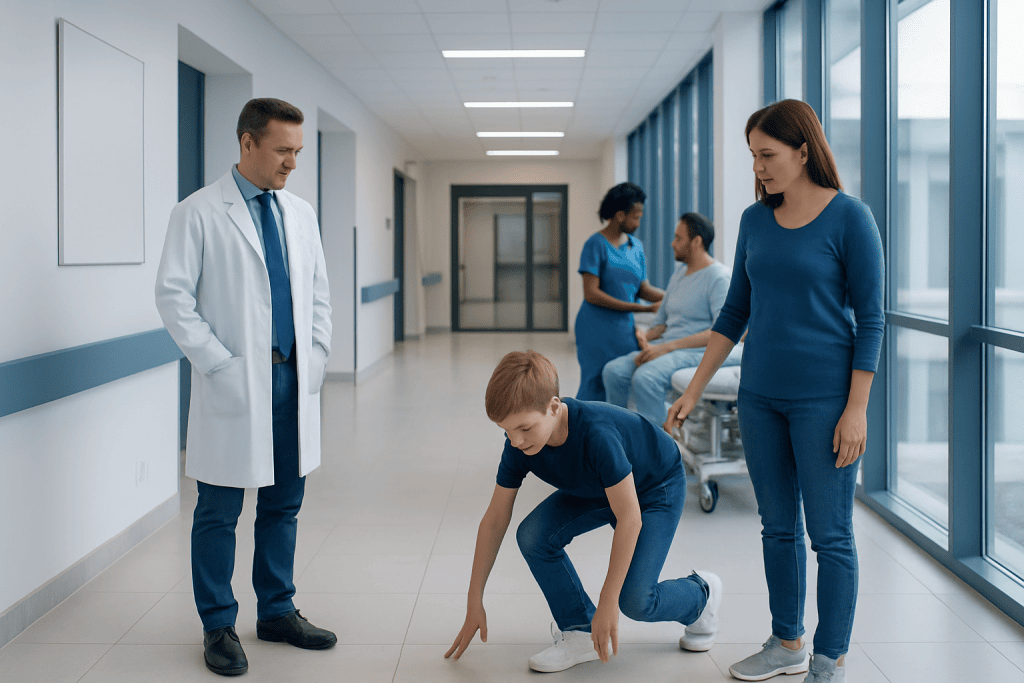
Gowers sign describes how a person gets up from the floor, not a disease itself. It most often reflects weakness of the hip and thigh muscles, also called proximal muscle weakness.
Key Takeaways
- Gowers sign describes how a person gets up from the floor, not a disease itself.
- It most often reflects weakness of the hip and thigh muscles, also called proximal muscle weakness.
- The sign may occur in several neuromuscular, inflammatory, metabolic, or endocrine conditions.
- A medical evaluation may include a physical examination, blood tests, genetic testing, imaging, or nerve and muscle studies.
- New, worsening, or unexplained difficulty standing up, climbing stairs, or walking should be discussed with a doctor.
Gowers sign is an observed movement pattern in which a person uses their hands to push on their thighs while rising from the floor. It can be a clue to weakness in the muscles around the hips and thighs, but it is not a diagnosis on its own and should be assessed by a qualified clinician.
What Is Gowers Sign?
Gowers sign is a pattern of movement seen when someone rises from the floor. Rather than standing up in one smooth motion, the person may first roll onto their hands and knees, place their hands on their legs, and progressively push upward on their thighs until they are standing. This movement can help compensate for weakness in the muscles of the hips, buttocks, and upper legs.
The sign is named after the neurologist Sir William Richard Gowers, who described it in children with muscular weakness. Although it is often associated with muscular dystrophy, especially Duchenne muscular dystrophy, it is not specific to one condition. A clinician interprets Gowers sign alongside a person’s age, symptoms, medical history, physical examination, and test results.
It is also important to distinguish a true Gowers sign from difficulty standing caused mainly by pain, stiffness, poor balance, joint problems, or temporary fatigue. For example, a person with severe knee pain may use their hands to rise, but the underlying issue may not be muscle weakness. Careful assessment helps identify the reason for the movement pattern.
How Gowers Sign May Look in Daily Life
A person with Gowers sign may appear to “climb up” their own body when getting off the floor. They may first turn onto their stomach or side, move onto hands and knees, raise the hips, straighten the knees, and then use both hands to push against the lower legs and thighs. This sequence can reduce the demand on weakened hip and thigh muscles.
Families may first notice this pattern during play, exercise, school activities, or after a child has been sitting on the floor. In adults, it may become noticeable after gardening, working at floor level, or recovering from a fall. The movement can be subtle at first, particularly if the person has learned effective ways to compensate.
Other activities that can be affected by proximal muscle weakness include climbing stairs, running, jumping, standing from a low chair, lifting objects overhead, or walking uphill. Some people develop a waddling walk or tire more quickly than expected. These symptoms can vary widely depending on the cause and the degree of muscle involvement.
Possible Causes of Gowers Sign
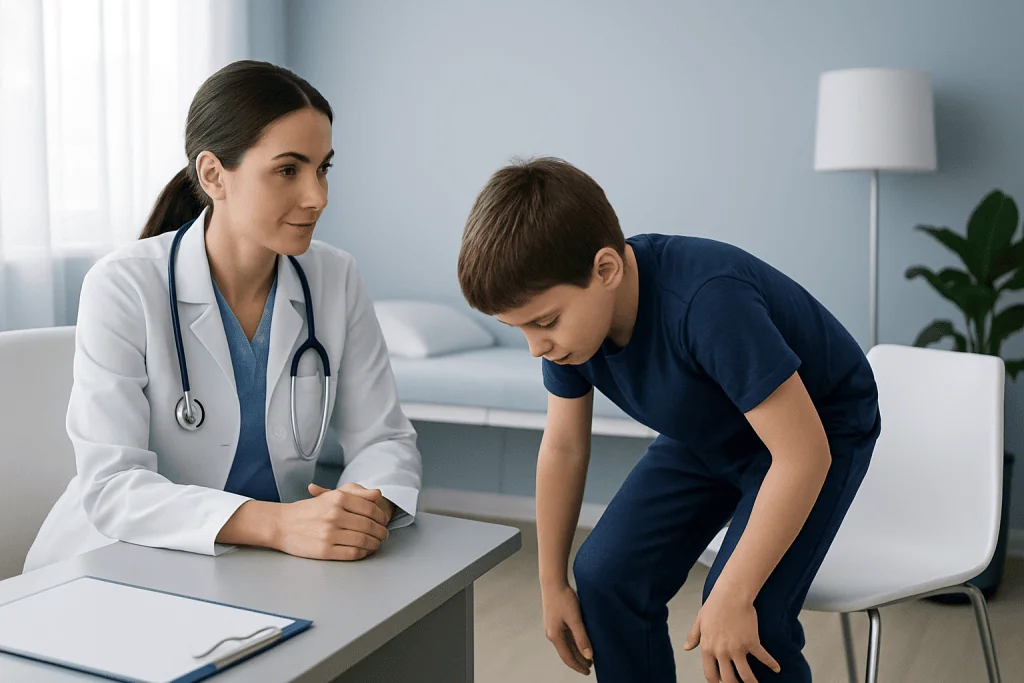
Gowers sign generally points to weakness in proximal muscles, meaning muscles closest to the center of the body. In children, one important cause is muscular dystrophy, a group of inherited conditions that gradually affect muscle function. Duchenne and Becker muscular dystrophy are well-known examples, but many other inherited muscle disorders can cause a similar pattern.
Other possible causes include limb-girdle muscular dystrophies, spinal muscular atrophy, congenital myopathies, and certain metabolic muscle disorders. Inflammatory muscle diseases, such as juvenile dermatomyositis or polymyositis, can also lead to weakness around the hips and shoulders. These conditions may have additional features, such as muscle pain, skin changes, fatigue, or difficulty lifting the arms.
In adults, clinicians may also consider endocrine conditions, including thyroid disorders and Cushing syndrome, as well as medication-related muscle problems. Long-term use of corticosteroid medicines can contribute to muscle weakness in some circumstances. Nerve disorders, prolonged inactivity, severe illness, and age-related loss of muscle mass may also make standing from the floor more difficult.
Not everyone who uses their hands to get up has a serious neuromuscular condition. Arthritis, injury, obesity, reduced flexibility, balance concerns, and deconditioning can all change how a person rises. However, persistent or progressive difficulty deserves medical attention, particularly when it occurs with other signs of weakness.
Symptoms That May Occur Alongside It
The symptoms that accompany Gowers sign depend on its cause. Common concerns include frequent falls, trouble running or keeping up with peers, difficulty climbing stairs, reduced ability to jump, or needing support to rise from a chair. In some people, weakness is gradual and may be noticed only when daily tasks become more demanding.
Children with an underlying neuromuscular condition may have delayed motor milestones, calf enlargement, toe walking, a waddling gait, or difficulty participating in physical activities. They may seem to tire quickly, although tiredness alone is common and does not establish a muscle disorder. Some children may also have learning, speech, heart, or breathing concerns depending on the particular condition.
Adults may report trouble lifting the arms to wash hair or reach shelves, rising from low seats, walking up slopes, or carrying items. Muscle aching, cramps, swallowing difficulties, numbness, unexplained weight changes, skin rash, or shortness of breath can provide useful diagnostic clues. A person should share all symptoms with their healthcare professional, even if they seem unrelated.
How Doctors Evaluate Gowers Sign
A doctor will usually begin by asking when the movement pattern started, whether it is worsening, and which activities are difficult. They may ask about falls, pain, exercise tolerance, family history of muscle or nerve disorders, developmental history in children, current medicines, and any recent illness. A parent or caregiver video of the person getting up from the floor can sometimes be useful, provided it is shared securely during the medical visit.
The physical examination may assess muscle strength, walking pattern, posture, reflexes, coordination, joint range of motion, and the ability to stand from a chair or climb steps. The clinician may also look for calf enlargement, skin changes, contractures, or signs affecting the heart, lungs, or nervous system. Examination findings help guide which tests are appropriate.
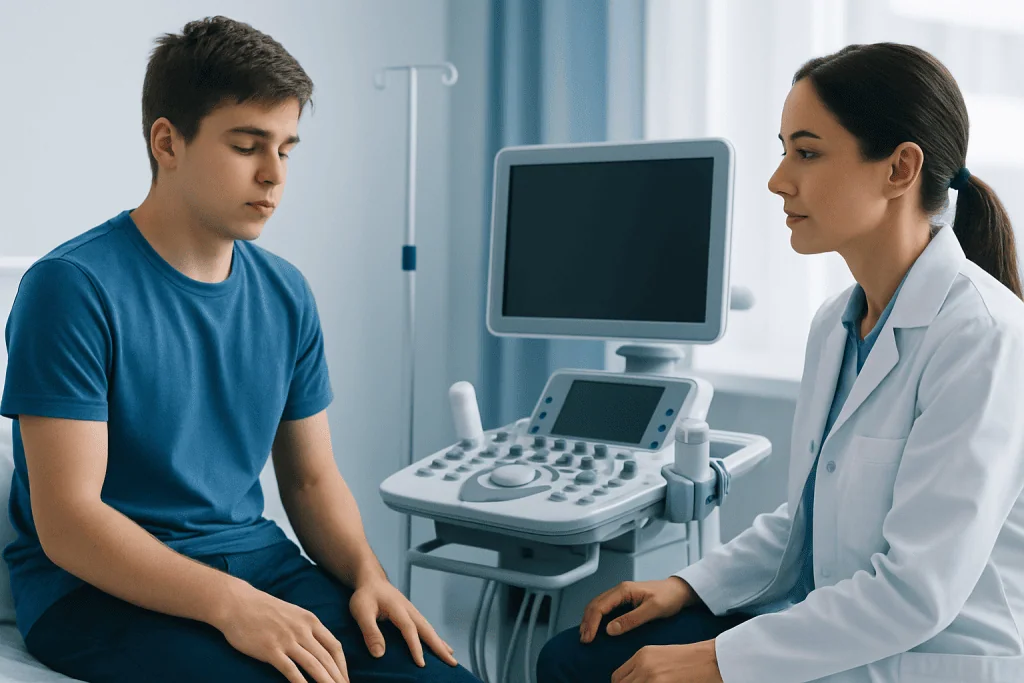
Possible investigations include blood tests such as creatine kinase, which may rise when muscle fibers are damaged, and tests of thyroid function or inflammation when indicated. Genetic testing can identify many inherited neuromuscular conditions. Depending on the situation, doctors may recommend electromyography and nerve conduction studies, muscle MRI, heart testing, breathing tests, or occasionally a muscle biopsy.
Finding the cause can take time because several conditions can produce similar symptoms. Referral to a neurologist, pediatric neurologist, rehabilitation specialist, geneticist, rheumatologist, endocrinologist, or orthopedic clinician may be appropriate. A stepwise assessment is often the safest and most informative approach.
Treatment and Day-to-Day Support
Treatment focuses on the underlying cause of Gowers sign. Some conditions have disease-specific medicines, while others are managed with rehabilitation, monitoring, and supportive care. For inflammatory or endocrine causes, treating the inflammation or hormone imbalance may improve muscle strength. For inherited neuromuscular conditions, care may include medications when suitable, physical therapy, respiratory and heart monitoring, and genetic counseling.
Physical and occupational therapy can help preserve mobility, improve safe movement strategies, and support independence in daily activities. A therapist can advise on stretching, appropriate activity, stair safety, seating, and equipment when needed. Exercise recommendations should be individualized; intense or exhausting exercise may not be suitable for every muscle disorder.
Maintaining balanced nutrition, regular sleep, and activity within a clinician’s advice can support overall function. It is generally sensible to avoid unsupervised strength-training programs or supplements marketed as muscle cures, especially before a diagnosis is clear. A doctor should review any new weakness after starting a medicine, including prescription drugs, over-the-counter products, and supplements.
Acibadem International’s multidisciplinary specialists and JCI-accredited hospitals can evaluate muscle weakness and coordinate care for international patients when specialist assessment is needed.
When to Seek Medical Care
A person should arrange a medical assessment if they or their child repeatedly use their hands to push up from the floor, have trouble climbing stairs, experience frequent falls, or notice gradual loss of strength. Evaluation is particularly important when the difficulty is worsening, affecting school, work, exercise, or independent daily activities, or when there is a family history of muscular or nerve disease.
Prompt medical advice is needed for new weakness that develops over days or weeks, weakness after starting a medicine, or weakness accompanied by significant muscle pain, dark urine, fever, rash, swallowing difficulty, or unexplained weight loss. These features may require timely testing to identify a treatable cause.
Emergency care is appropriate if weakness begins suddenly or is associated with trouble breathing, choking, inability to stand or walk, severe back pain with bladder or bowel changes, facial drooping, speech difficulty, or one-sided weakness. These symptoms may indicate an urgent neurological or medical problem and should not be attributed to Gowers sign alone.
Frequently asked questions
Is Gowers sign always caused by muscular dystrophy?
No. Gowers sign is often associated with muscular dystrophy, but it can occur in other conditions that weaken the hip and thigh muscles. These include inflammatory muscle diseases, endocrine disorders, nerve disorders, and some metabolic conditions. Pain or joint problems can also cause a person to use their hands when standing, although this is not necessarily a true Gowers sign.
Can adults have Gowers sign?
Yes. Although it is commonly discussed in relation to children, adults can also show this movement pattern. In adults, the cause may include inherited muscle conditions, inflammatory myopathies, medication effects, hormonal disorders, deconditioning, or orthopedic problems. A new or progressive change should be evaluated by a healthcare professional.
Does Gowers sign mean muscle weakness is severe?
The sign suggests that the muscles used to extend the hips and knees may not be strong enough to lift the body easily from the floor. Its presence does not by itself measure the severity of weakness or predict how quickly symptoms will progress. A detailed clinical examination and appropriate tests are needed to understand the degree and cause of weakness.
How is Gowers sign tested?
A clinician may ask a person to sit or lie on the floor and then observe how they return to standing. The examination also includes checking walking, stair climbing, rising from a chair, reflexes, balance, and muscle strength. This should be done safely, with support nearby if there is a risk of falling.
Can physical therapy help someone with Gowers sign?
Physical therapy may help improve mobility, maintain flexibility, reduce fall risk, and teach safer ways to move. The best program depends on the underlying cause, because certain muscle disorders require avoidance of overly strenuous or damaging exercise. A therapist and physician can tailor activity recommendations to the individual.
Should parents be concerned if a child uses their hands to stand up once?
One isolated episode may happen when a child is tired, playing, sore after activity, or simply using an unusual movement pattern. Repeated use of the hands to climb up the legs, especially together with falls, delayed running, stair difficulty, or a waddling walk, should be discussed with a pediatrician. Early assessment can help clarify whether any further testing is needed.
References
- National Institute of Neurological Disorders and Stroke
- Muscular Dystrophy Association
- Centers for Disease Control and Prevention
- American Academy of Pediatrics
- National Health Service
This article is for general information only and is not a substitute for professional medical advice. Please consult a qualified doctor about your individual situation.
Joint and spine care in Turkey — expert assessment & treatment
JCI-accredited · board-certified surgeons · reply within 24h
Add us as a Preferred Source to see more of our trusted health content across Google Search, AI Overviews and Discover.