Growth Hormone Testing: When It Is Measured and What Results May Mean

A single random growth hormone level is often not enough to diagnose a hormone problem. Doctors commonly use IGF-1 testing along with growth hormone stimulation or suppression tests.
Key Takeaways
- A single random growth hormone level is often not enough to diagnose a hormone problem.
- Doctors commonly use IGF-1 testing along with growth hormone stimulation or suppression tests.
- Testing may be recommended for poor growth in children or symptoms of hormone excess or deficiency in adults.
- Results must be interpreted together with symptoms, medical history, and sometimes pituitary imaging.
- Abnormal results do not always mean a final diagnosis and may need confirmation with additional tests.
Growth hormone testing is used to evaluate whether the body is making too little or too much growth hormone. Because growth hormone is released in pulses, testing often includes related blood tests and special stimulation or suppression tests to give a clearer answer.
Overview of growth hormone testing
Growth hormone testing is a group of blood-based evaluations used to understand how the body produces and regulates growth hormone. Growth hormone is made by the pituitary gland, a small gland at the base of the brain. It helps support normal growth in children and plays important roles in metabolism, muscle mass, bone health, and body composition throughout life.
Testing is not always straightforward because growth hormone is released in short bursts during the day and night. This means the amount in the bloodstream can change quickly, even in healthy people. For that reason, doctors often measure another substance called insulin-like growth factor 1, or IGF-1, and may order special stimulation or suppression tests instead of relying on one random blood sample.
Growth hormone testing may be used in children who are growing more slowly than expected and in adults with symptoms that suggest too little or too much growth hormone. The goal is to understand whether the pituitary gland and related hormonal pathways are functioning normally and whether further evaluation is needed.
When growth hormone is measured
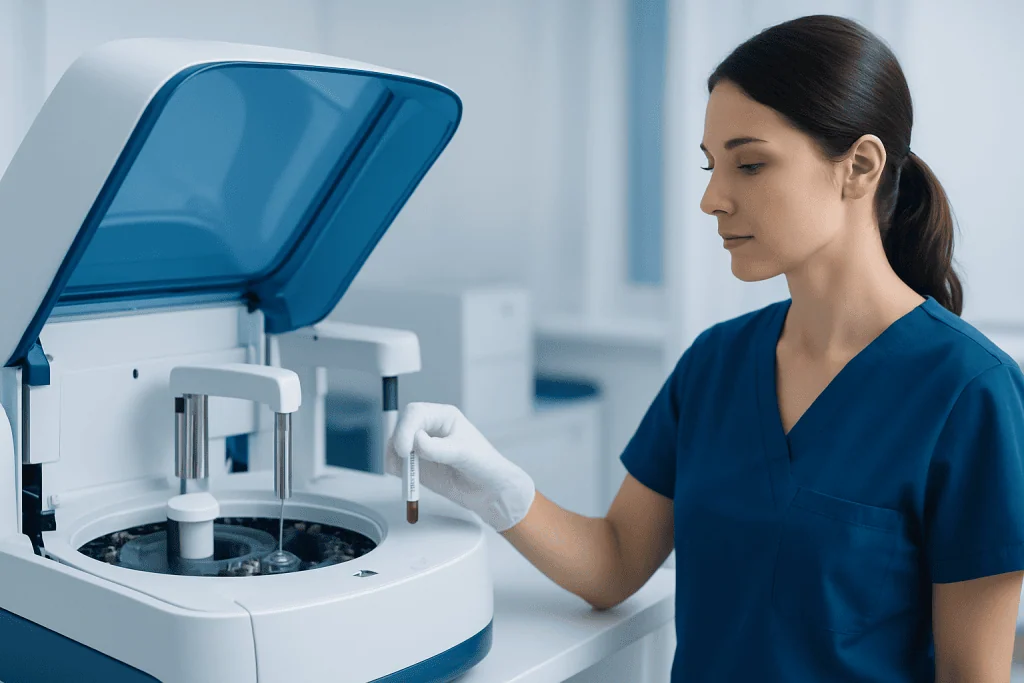
Doctors usually request growth hormone testing when symptoms, physical findings, or growth patterns raise concern. In children, testing may be considered if height is significantly below expected range, growth slows over time, or puberty appears delayed. In adults, testing may be considered when there are signs of hormone deficiency or excess, especially if there is known or suspected pituitary disease.
Growth hormone may be measured in several different situations. A random growth hormone level is sometimes obtained, but by itself it often has limited value because hormone release is naturally pulsatile. An IGF-1 blood test is frequently more helpful as a starting point because IGF-1 tends to stay more stable throughout the day and reflects average growth hormone activity.
More specialized tests are used when a clearer answer is needed. A growth hormone stimulation test helps evaluate suspected deficiency by checking whether the pituitary can release enough hormone after a trigger. A growth hormone suppression test helps evaluate suspected excess by seeing whether growth hormone levels appropriately fall after a glucose drink.
- Children with short stature or slow growth
- Adults with possible pituitary disorders
- People with symptoms of acromegaly or gigantism
- Follow-up after treatment for a pituitary condition
Symptoms and conditions that may lead to testing

In children, growth hormone deficiency may be suspected when growth is slower than expected for age, height is noticeably below peers, or bone age appears delayed. Some children may have normal body proportions but seem younger than their age because growth has not progressed at the usual rate. Testing is only one part of the evaluation, which also includes family growth patterns, nutrition, and general health.
In adults, growth hormone deficiency can be harder to recognize because it does not affect height. Instead, it may be associated with reduced energy, decreased exercise tolerance, lower muscle mass, increased body fat, or reduced bone density. These symptoms are not specific to growth hormone problems, so doctors usually consider the full clinical picture before ordering testing.
Testing for growth hormone excess may be considered when there are signs of acromegaly in adults, such as enlargement of the hands or feet, changes in facial features, joint discomfort, headaches, or excessive sweating. In children and adolescents whose growth plates are still open, too much growth hormone can lead to unusual tall stature and rapid growth, a condition related to pituitary tumors or other rare causes.
How the tests are performed
Growth hormone testing usually involves blood samples taken in a clinic or hospital setting. The exact process depends on the type of test. An IGF-1 test is a standard blood draw, while stimulation and suppression tests take longer and may require several samples over a few hours. Patients may be asked to fast beforehand, and the care team gives specific instructions about food, drinks, and medicines.
In a growth hormone stimulation test, a medicine or other stimulus is used to encourage the pituitary gland to release growth hormone. Blood samples are then collected at set intervals to see whether levels rise as expected. This test is commonly used when growth hormone deficiency is suspected. In some cases, other pituitary hormones are also checked because more than one hormone pathway may be affected.
In a suppression test, usually used when hormone excess is suspected, the patient drinks a glucose solution and blood samples are collected afterward. In healthy regulation, growth hormone should decrease after glucose intake. If it does not suppress appropriately, doctors may consider further evaluation for conditions such as acromegaly. If there is concern about pituitary structure, imaging such as MRI scanning may be recommended to look more closely at the gland.
What results may mean
Growth hormone test results are interpreted carefully because normal values can vary by age, test type, laboratory method, and clinical context. A low random growth hormone level does not automatically mean deficiency, and a high random level does not automatically mean excess. This is one reason why doctors often rely on IGF-1, dynamic testing, and symptoms rather than one isolated result.
If a stimulation test shows that growth hormone does not rise enough, the findings may support growth hormone deficiency. In children, this may help explain poor growth. In adults, it may suggest pituitary dysfunction, especially in someone who has had pituitary surgery, radiation, head injury, or another hormonal disorder. Doctors may then look for the underlying cause and assess other hormone systems as well.
If a suppression test shows that growth hormone does not fall as expected, the result may suggest growth hormone excess. Elevated IGF-1 can strengthen this suspicion. In adults, this can point toward acromegaly; in children, excess before growth plates close can lead to very rapid growth. Confirmation may involve repeat blood testing, pituitary imaging, and specialist evaluation. Some people may also need additional blood tests to assess related hormones and overall health.
Diagnosis and what may happen next
A diagnosis is not made from growth hormone testing alone. Doctors combine test results with a physical examination, growth charts in children, symptom history, and other laboratory findings. Thyroid disease, chronic illness, poor nutrition, delayed puberty, and genetic factors can also affect growth and energy levels, so these may need to be considered before confirming a growth hormone disorder.
If the pattern suggests pituitary disease, an endocrinologist may recommend further hormone evaluation and imaging of the pituitary gland. In some cases, visual symptoms, headaches, or signs of pressure from a pituitary mass may lead to a broader workup. This may include assessment for acromegaly or other pituitary conditions depending on the findings.
When testing is done in children, the doctor also considers growth over time rather than a single measurement. A child who is small but growing steadily may be evaluated differently from a child whose growth rate is clearly slowing. Careful follow-up is often as important as the first set of test results.
Treatment options for abnormal growth hormone findings
Treatment depends on the underlying cause, the age of the patient, and whether there is too little or too much growth hormone. If confirmed growth hormone deficiency is present, some patients may be treated with growth hormone replacement under specialist supervision. Follow-up is important to monitor benefit, side effects, and whether dose adjustments are needed over time.
If testing suggests growth hormone excess, treatment aims to reduce abnormal hormone production and address the cause. This may involve surgery for a pituitary tumor, medicines that lower growth hormone activity, or radiotherapy in selected cases. If a pituitary mass is responsible, management may include pituitary adenoma surgery after a full endocrine and imaging assessment.
Supportive care can also matter. Children may need regular growth monitoring, while adults may need evaluation of blood pressure, blood sugar, sleep issues, joint symptoms, and bone health. In some situations, treatment plans are coordinated by endocrinologists, neurosurgeons, radiologists, and other specialists. Acibadem International’s multidisciplinary specialists and JCI-accredited hospitals diagnose and treat growth hormone-related pituitary disorders for international patients when advanced evaluation is needed.
Preparing for testing and when to see a doctor
Before growth hormone testing, it helps to follow the care team’s instructions closely. Some tests require fasting, and certain medicines may affect the results. Parents should also bring a child’s growth records if available, and adults may find it useful to list symptoms, previous hormone problems, surgeries, or head injuries. Good preparation can help the results be more reliable and easier to interpret.
A doctor should be consulted if a child is not growing as expected, if puberty seems unusually delayed, or if an adult has symptoms that raise concern for pituitary hormone imbalance. Medical advice is also important if there are headaches, visual changes, enlarging hands or feet, or unexplained changes in facial features. These symptoms do not always mean a serious disorder, but they do deserve proper assessment.
People who have already been treated for a pituitary condition may need repeat testing over time. Ongoing monitoring helps check whether hormone levels are stable and whether treatment remains effective. Because growth hormone testing is complex, results are best reviewed by a qualified doctor, usually an endocrinologist, who can explain what they mean in the context of the whole person.
Frequently asked questions
Why is a single growth hormone blood test often not enough?
Growth hormone is released in pulses, so levels can rise and fall quickly throughout the day. A single random result may look low or high even when overall regulation is normal. That is why doctors often use IGF-1 and dynamic stimulation or suppression tests for a more accurate picture.
What is the difference between a growth hormone test and an IGF-1 test?
A growth hormone test measures the hormone directly in the blood at a specific time or during a special dynamic test. An IGF-1 test measures a related substance made mainly in the liver in response to growth hormone. IGF-1 is more stable during the day, so it can better reflect average growth hormone activity.
Does an abnormal result mean someone definitely has a pituitary disorder?
Not always. Results must be interpreted along with symptoms, medical history, physical findings, and sometimes repeat tests or imaging. Other health conditions, nutrition, age, and certain medicines can also influence hormone-related test results.
How should someone prepare for a growth hormone stimulation or suppression test?
Preparation depends on the specific test, but fasting is often required. The care team may also give instructions about medicines, exercise, and timing of the appointment. It is important to follow these directions carefully so the results are as reliable as possible.
Can adults have growth hormone deficiency?
Yes. In adults, growth hormone deficiency does not affect height, but it may be linked with changes in body composition, lower energy, reduced exercise capacity, and bone health concerns. Because these symptoms are nonspecific, diagnosis usually requires specialist assessment and formal testing.
What conditions can cause too much growth hormone?
The most common cause is a growth hormone-producing pituitary adenoma, which is a usually noncancerous tumor of the pituitary gland. In adults this can lead to acromegaly, while in children it can cause excessive growth before the growth plates close. Doctors usually confirm the diagnosis with blood tests and pituitary imaging.
References
- Endocrine Society
- National Institute of Diabetes and Digestive and Kidney Diseases
- MedlinePlus
- Merck Manual Consumer Version
- Mayo Clinic
This article is for general information only and is not a substitute for professional medical advice. Please consult a qualified doctor about your individual situation.
Medical weight-loss options in Turkey — costs & eligibility
JCI-accredited · board-certified surgeons · reply within 24h
Add us as a Preferred Source to see more of our trusted health content across Google Search, AI Overviews and Discover.
Check your numbers in seconds
BMI, calories, due date, blood pressure and 30+ more clinical calculators — free, instant, doctor-reviewed ranges.