Guidelines for Treatment of Stroke: How It Works, Results and What to Expect

Stroke is a medical emergency; rapid assessment and treatment can protect brain function and improve recovery. Ischemic and hemorrhagic strokes require different treatments, so brain imaging is essential before treatment decisions are made.
Key Takeaways
- Stroke is a medical emergency; rapid assessment and treatment can protect brain function and improve recovery.
- Ischemic and hemorrhagic strokes require different treatments, so brain imaging is essential before treatment decisions are made.
- Eligible patients with ischemic stroke may receive clot-dissolving medicine, mechanical thrombectomy, or both.
- Rehabilitation commonly begins in hospital and is tailored to mobility, communication, swallowing, thinking, and emotional needs.
- Long-term stroke care includes identifying the cause and managing risk factors to help prevent another stroke.
Guidelines for treatment of stroke focus on recognizing symptoms quickly, determining the stroke type with urgent brain imaging, and starting the right treatment without delay. Care may include medicine to dissolve a clot, a catheter procedure to remove it, management of bleeding, prevention of further strokes, and rehabilitation.
Overview: How stroke treatment guidelines work
Guidelines for treatment of stroke provide a structured approach for emergency teams, neurologists, radiologists, rehabilitation specialists, and primary care clinicians. They emphasize that a suspected stroke should be assessed urgently, because some treatments are time-sensitive and work best when delivered as early as possible.
A stroke occurs when part of the brain is deprived of blood flow or when bleeding occurs in or around the brain. The two main types are ischemic stroke, caused by a blocked blood vessel, and hemorrhagic stroke, caused by a ruptured blood vessel. The treatment pathway differs substantially between these types, which is why urgent imaging is a central part of stroke care.
Current care does not follow a single identical plan for every person. The team considers the time symptoms started or when the person was last known well, brain scan findings, the location of any blocked vessel or bleeding, medical history, medicines such as anticoagulants, and the person’s usual level of independence. Patients can learn more about the condition through stroke information and care options.
What are the standard treatment guidelines for stroke?
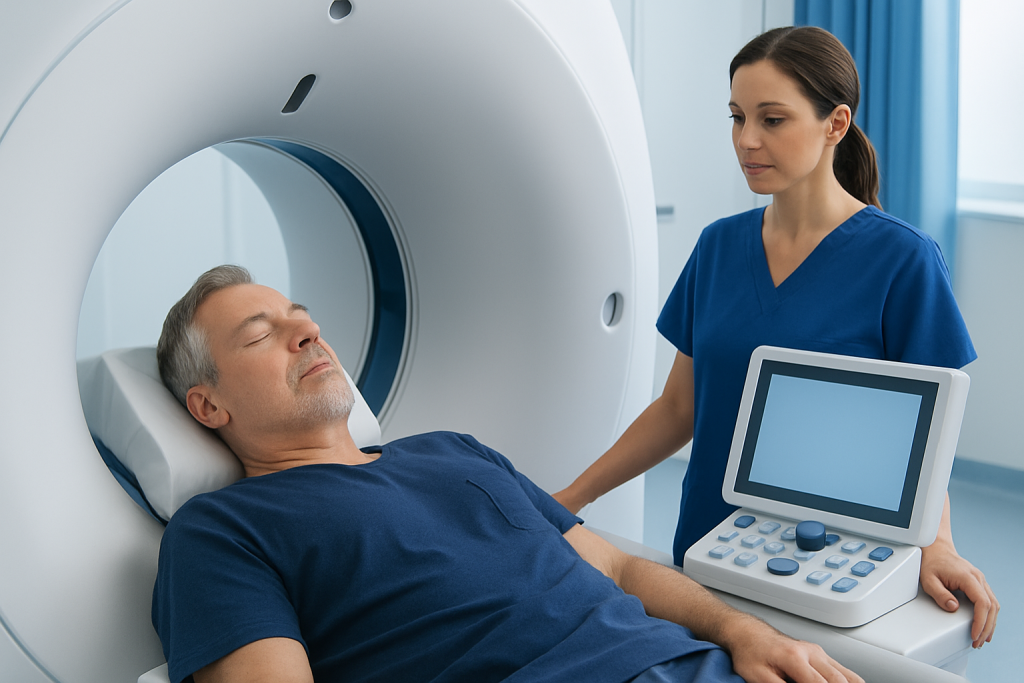
Standard stroke treatment guidelines begin with emergency stabilization. Healthcare professionals check airway, breathing, circulation, blood glucose, temperature, blood pressure, heart rhythm, and neurological symptoms. A non-contrast CT scan or MRI is performed promptly to distinguish bleeding from a blockage and to identify whether urgent reperfusion treatment may be appropriate.
For an ischemic stroke, treatment may include intravenous thrombolysis, a medicine intended to dissolve an eligible blood clot, when the person arrives within the appropriate treatment window and has no contraindications. Some people with a blockage in a major brain artery may also be assessed for mechanical thrombectomy, in which specialists use a catheter to remove the clot. Advanced imaging can help identify selected patients who may benefit beyond the earliest time window.
For a hemorrhagic stroke, care focuses on controlling bleeding, managing blood pressure carefully, reversing blood-thinning medication when applicable, treating increased pressure in the brain, and seeking neurosurgical or neurointerventional input when needed. Both stroke types require close monitoring in a stroke unit and early planning for prevention and recovery.
- Rapid recognition of possible stroke symptoms and emergency transport
- Urgent CT or MRI brain imaging and blood vessel imaging when indicated
- Time-sensitive reperfusion treatment for eligible ischemic stroke
- Specialist treatment of brain bleeding and its complications
- Early rehabilitation, swallowing assessment, and secondary prevention planning
How acute stroke procedures work: candidacy and step-by-step care
Mechanical thrombectomy is a catheter-based procedure used for selected ischemic strokes caused by a large-vessel blockage. It is not appropriate for every stroke. Candidacy depends on scan findings, the blocked artery, the amount of brain tissue already injured, the likely time since onset, symptoms, and overall health. The decision is made urgently by a specialist stroke team.
During the procedure, an interventional specialist guides a thin catheter through an artery, usually from the groin or wrist, toward the blocked brain vessel using X-ray guidance. A small device may capture the clot or suction may be used to remove it. The aim is to restore blood flow to brain tissue that may still be viable. Where suitable, mechanical thrombectomy may be performed alongside or after clot-dissolving treatment.
Following thrombolysis or thrombectomy, patients are monitored closely for neurological changes, blood pressure, bleeding, heart rhythm disturbances, and swallowing safety. Repeat imaging may be performed. Not every person is eligible for these treatments, and a clinician may recommend another pathway when the risks outweigh the potential benefit.
What is the 1/3,6/12 rule for stroke patients?
The “1/3, 6/12 rule” is not a universal or formally standardized stroke treatment guideline. It is sometimes used informally in rehabilitation settings to describe the idea that recovery is often most noticeable in the first weeks and months after stroke, with progress commonly becoming slower over time. However, it should not be used to predict an individual person’s outcome.
Recovery after stroke varies widely. It is influenced by stroke type and severity, the area of the brain affected, early treatment, age, existing health conditions, access to rehabilitation, and personal goals. Some people make substantial gains after six or twelve months, particularly with continued practice, therapy, assistive technology, and management of complications.
Rather than relying on a fixed timeline, rehabilitation teams regularly assess function and adjust treatment goals. Improvement may involve walking, hand use, speech, swallowing, memory, attention, mood, fatigue management, and return to daily activities. Progress can be meaningful even when it occurs gradually.
What are the 7 D's of stroke care?
The 7 D’s of stroke care are a teaching framework that highlights the sequence of actions needed to reduce delays in acute stroke treatment. The exact wording may vary slightly between organizations, but it commonly includes Detection, Dispatch, Delivery, Door, Data, Decision, and Drug or Device.
Detection means recognizing possible stroke symptoms, such as facial drooping, arm weakness, speech difficulty, sudden vision changes, severe imbalance, or a sudden severe headache. Dispatch refers to calling emergency services. Delivery describes prompt transport to an appropriate hospital, ideally one equipped to provide stroke imaging and specialized treatment.
At the hospital, Door represents immediate arrival and triage, Data means rapid collection of clinical information and brain imaging, and Decision is the specialist assessment of the best treatment. Drug or Device refers to appropriate thrombolysis, thrombectomy, bleeding-control measures, or other urgent interventions. The framework reinforces a key message: people should not drive themselves or wait for symptoms to improve when stroke is suspected.
What are the recommended guidelines for stroke therapy?
Recommended guidelines for stroke therapy support early, individualized rehabilitation once the person is medically stable. Therapy should address the areas affected by stroke rather than applying one fixed programme. A multidisciplinary team may include physiotherapists, occupational therapists, speech and language therapists, rehabilitation physicians, nurses, dietitians, psychologists, social workers, and neurologists.
Physiotherapy may help with balance, strength, movement, walking, transfers, and safe physical activity. Occupational therapy focuses on practical daily activities such as dressing, washing, eating, using the bathroom, household tasks, and adaptations for home or work. Speech and language therapy can support communication, cognitive-communication difficulties, and swallowing problems.
Guidelines also recommend screening for swallowing difficulties before food, drink, or oral medicines are given, where clinically appropriate. This helps reduce the risk of aspiration. Recovery planning should include education for the patient and family, management of depression or anxiety, prevention of falls and pressure injuries, and follow-up after discharge. Specialist stroke rehabilitation can be adapted as needs change over time.
Benefits, risks, recovery timeline and preventing another stroke
The main potential benefit of rapid stroke treatment is preserving brain tissue and improving the chance of independence. Thrombolysis and thrombectomy can be highly valuable for carefully selected people with ischemic stroke, but both have risks. These may include bleeding, including bleeding in the brain, damage to blood vessels, contrast-related complications, allergic reactions, or failure to restore blood flow. The care team weighs these risks against the likely benefit in each situation.
Recovery begins immediately after acute treatment. During the first days, the focus is medical stability, prevention of complications, safe swallowing, early movement where appropriate, and identifying rehabilitation needs. Hospital discharge may occur after a short stay or may require a longer period of inpatient rehabilitation, depending on symptoms and support needs. Recovery can continue for months or longer.
Preventing a further stroke is an essential part of the treatment plan. Depending on the cause, this may involve antiplatelet or anticoagulant medicines, treatment for high blood pressure, cholesterol management, diabetes care, smoking cessation, regular physical activity, a balanced eating pattern, and treatment of heart rhythm problems such as atrial fibrillation. Follow-up appointments are important for reviewing medicines, test results, rehabilitation progress, and new symptoms.
Acibadem International’s multidisciplinary specialists in JCI-accredited hospitals diagnose and treat stroke and support international patients through acute care, rehabilitation, and follow-up planning.
When to seek medical care
Emergency medical care is needed immediately if a person develops sudden facial weakness, weakness or numbness in an arm or leg, trouble speaking or understanding speech, loss of balance, sudden vision loss or double vision, confusion, or a sudden severe headache. Even if symptoms disappear within minutes, urgent assessment is needed because this may be a transient ischemic attack, sometimes called a mini-stroke.
Call local emergency services rather than waiting, arranging a routine appointment, or driving the person to hospital. Note the time the person was last known to be well, as this information may affect treatment choices. Do not give food, drink, aspirin, or other medicines unless instructed by emergency professionals, because swallowing may be affected and some medicines can be unsafe in bleeding-related stroke.
After a stroke, medical advice should also be sought promptly for worsening weakness, new speech or visual symptoms, severe headache, repeated vomiting, chest pain, shortness of breath, seizures, fever, falls, or signs of depression and distress. Timely review can help identify complications and ensure the recovery plan remains appropriate.
Frequently asked questions
Can stroke be treated successfully?
Many strokes can be treated, particularly when emergency care begins quickly. The outcome depends on the type, location, and severity of the stroke, how soon treatment is given, and a person’s individual health factors. Early rehabilitation and prevention of another stroke are also important parts of successful care.
How quickly should stroke treatment start?
Stroke treatment should start as soon as possible after symptoms begin or after the person was last known well. Emergency assessment, brain imaging, and specialist decisions are made urgently because time-sensitive treatments may be available. Anyone with possible stroke symptoms should call emergency services immediately.
Is thrombectomy better than clot-busting medicine?
They are different treatments and are sometimes used together. Clot-busting medicine may be suitable for eligible people within the appropriate time window, while thrombectomy is mainly used for selected large-vessel blockages. The best approach depends on imaging findings, timing, medical history, and stroke severity.
What happens if a stroke patient cannot swallow safely?
A swallowing assessment is usually performed early after stroke when swallowing problems are suspected. Food, drinks, and oral medicines may be temporarily modified or withheld until safe swallowing is confirmed. The healthcare team may recommend texture changes, swallowing therapy, or temporary alternative nutrition when needed.
How long does stroke rehabilitation last?
The length of rehabilitation varies greatly. Some people need a short period of therapy, while others benefit from support for months or longer. Rehabilitation goals are reviewed over time and may include movement, daily activities, communication, cognition, mood, and community participation.
Can another stroke be prevented?
Not all strokes can be prevented, but treating underlying risk factors can lower the risk of another event. This may include controlling blood pressure, managing diabetes and cholesterol, taking prescribed medicines, stopping smoking, staying active, and treating conditions such as atrial fibrillation. A clinician can develop an individualized prevention plan.
References
- World Health Organization
- American Heart Association and American Stroke Association
- European Stroke Organisation
- National Institute for Health and Care Excellence
- World Stroke Organization
This article is for general information only and is not a substitute for professional medical advice. Please consult a qualified doctor about your individual situation.
Explore treatments in Turkey — costs, top hospitals & a free quote
JCI-accredited · board-certified surgeons · reply within 24h
Add us as a Preferred Source to see more of our trusted health content across Google Search, AI Overviews and Discover.
Check your numbers in seconds
BMI, calories, due date, blood pressure and 30+ more clinical calculators — free, instant, doctor-reviewed ranges.