H Pylori Test — Explained by Medical Evidence, Not Myths

An h pylori test helps diagnose a common stomach infection linked to gastritis and peptic ulcers. Urea breath and stool antigen tests are commonly preferred because they can detect active infection.
Key Takeaways
- An h pylori test helps diagnose a common stomach infection linked to gastritis and peptic ulcers.
- Urea breath and stool antigen tests are commonly preferred because they can detect active infection.
- Certain medicines, especially antibiotics, bismuth, and acid-reducing drugs, can affect test accuracy.
- Blood antibody tests are less useful for confirming a current infection because antibodies can remain after the bacteria are gone.
- Testing after treatment is important to confirm that the infection has been cleared.
An h pylori test is used to find Helicobacter pylori, a bacterium that can cause gastritis, ulcers, and ongoing indigestion symptoms. The best test depends on the person’s symptoms, age, medicines, and whether the goal is first diagnosis or confirming that treatment worked.
Overview: What an H Pylori Test Checks For
An h pylori test checks for infection with Helicobacter pylori, often called H. pylori. This bacterium can live in the stomach lining and may lead to irritation, inflammation, or ulcers. Many people with the infection have few or no symptoms, while others develop stomach pain, nausea, bloating, or recurring indigestion.
Testing matters because symptoms alone cannot reliably show whether H. pylori is present. Heartburn, gastritis, ulcers, and other digestive conditions can feel similar. A test helps a doctor decide whether treatment is needed and whether symptoms may be linked to gastritis or stomach ulcer disease.
Several test types are available. Some look for signs of active infection, such as the urea breath test and stool antigen test. Others, such as blood antibody tests, show whether the immune system has reacted to the bacteria at some point, but they may not prove a current infection.
Who May Need an H Pylori Test
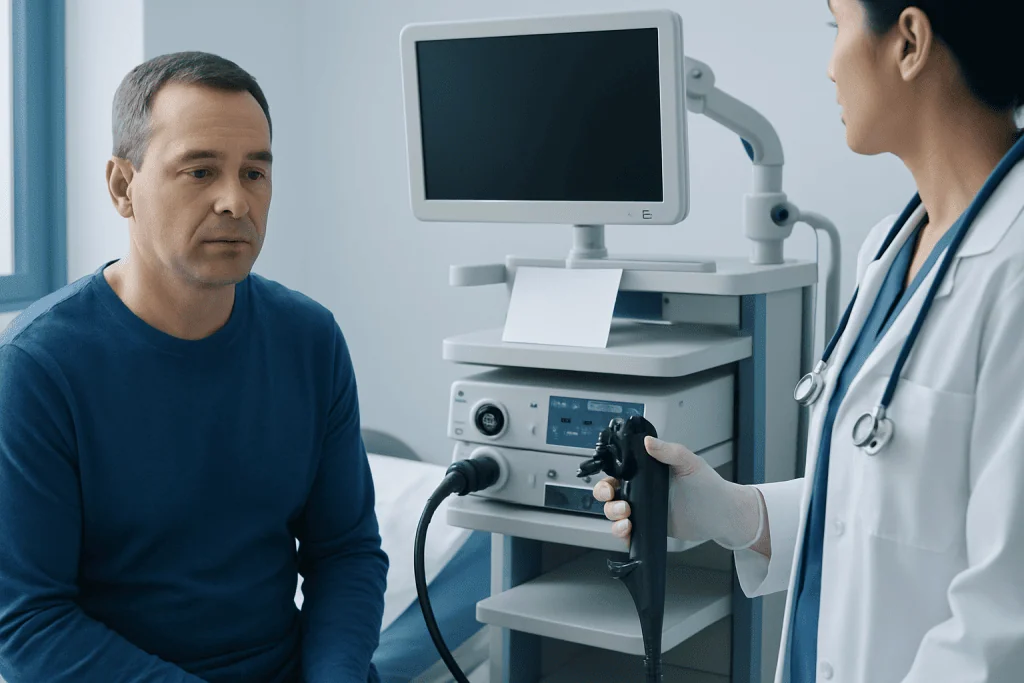
A doctor may recommend an h pylori test for someone with persistent upper abdominal discomfort, burning pain, early fullness, nausea, frequent belching, or long-lasting indigestion. Testing may also be advised when symptoms suggest an ulcer, especially if the pain is recurrent or related to meals.
It can also be considered in people with a history of peptic ulcer disease, certain stomach lining changes, or unexplained iron deficiency anemia in selected cases. In some situations, testing is used after treatment to make sure the infection has cleared.
Not everyone with occasional stomach upset needs immediate testing. The decision usually depends on age, symptom pattern, alarm features, medication use, and medical history. A clinician may also assess whether another digestive condition, including reflux, could better explain the symptoms.
- Persistent indigestion or upper abdominal pain
- Suspected or known peptic ulcer
- Follow-up after previous H. pylori treatment
- Unexplained symptoms that do not improve as expected
Types of H Pylori Tests and How They Differ

The urea breath test is one of the most widely used options. The person swallows a special substance containing urea, and if H. pylori is present, the bacteria break it down in a way that can be measured in the breath. This test is noninvasive and commonly used both to diagnose active infection and to confirm that treatment worked.
The stool antigen test looks for proteins from H. pylori in a stool sample. Like the breath test, it can detect active infection and is often used before treatment and after treatment. It is practical and reliable when done under the right conditions.
Blood tests measure antibodies to H. pylori. Because antibodies can remain in the body for a long time, a positive blood test may reflect past exposure rather than a current infection. For that reason, blood antibody testing is usually less helpful when the aim is to confirm active infection or treatment success.
Endoscopy-based testing may be used when a person needs a closer look at the stomach and upper digestive tract. During endoscopy, a doctor can take tissue samples for rapid urease testing, microscopy, or biopsy-based analysis. This approach may be appropriate when there are alarm symptoms, bleeding, anemia, unexplained weight loss, difficulty swallowing, or concern about a more serious condition. In these cases, an upper gastrointestinal evaluation such as endoscopy may help diagnose both the infection and other possible causes of symptoms.
Preparing for the Test and What Can Affect Accuracy
Preparation is important because some medicines can reduce the amount of bacteria in the stomach and lead to false-negative results. Antibiotics, bismuth-containing medicines, and proton pump inhibitors may interfere with breath and stool tests. A doctor will usually explain whether any medicines should be stopped before testing and for how long.
People should not stop prescription medicines on their own. The timing of testing and medication changes should be individualized, especially for those with ulcer symptoms, reflux, or chronic digestive problems. If symptoms are significant, a clinician may suggest an alternative plan rather than delaying care.
The exact instructions depend on the test. Breath tests may require fasting for a period beforehand. Stool tests require a properly collected sample. If endoscopy is planned, there may be separate preparation steps, including fasting and instructions related to sedation.
- Tell the doctor about antibiotics taken recently
- Report use of acid blockers or bismuth products
- Follow fasting instructions carefully if given
- Ask when to schedule a follow-up test after treatment
What H Pylori Test Results Mean
A positive result on a breath test, stool antigen test, or biopsy-based test generally suggests an active H. pylori infection. The next step is usually treatment with a combination of medicines chosen according to current clinical guidance, local resistance patterns, allergy history, and prior antibiotic exposure.
A negative result may mean there is no infection, but the result must be interpreted in context. If a person recently used antibiotics, bismuth, or acid-suppressing medication, the test may miss an existing infection. When symptoms strongly suggest H. pylori or an ulcer, a doctor may repeat testing or choose a different method.
After treatment, doctors often recommend a repeat breath test or stool antigen test to confirm that the bacteria are gone. This is important because symptoms can improve even when the infection has not been fully eradicated. Confirming cure reduces the risk of ongoing inflammation and recurrent ulcer disease.
Treatment After a Positive Test
If the h pylori test is positive, treatment usually involves a combination of antibiotics together with acid-suppressing medicine. The exact regimen varies. Selection depends on factors such as antibiotic resistance patterns, previous antibiotic use, medication allergies, and whether the person has already been treated before.
Completing the full course is important, even if symptoms improve early. Skipping doses or stopping treatment too soon can lower the chance of eradication. Doctors may also discuss ways to reduce stomach irritation during recovery, such as avoiding smoking, limiting alcohol, and reviewing the use of anti-inflammatory pain medicines that can worsen ulcers.
When symptoms include persistent pain, black stools, vomiting blood, or known ulcer disease, care may involve broader evaluation and management. In some cases, specialists may combine medical treatment with investigations such as gastroenterology assessment or digestive health check-up to look for related stomach conditions and monitor healing.
Self-Care, Prevention, and Follow-Up
H. pylori is thought to spread mainly through person-to-person contact or contaminated food and water, although transmission is not always clear in an individual case. Good hand hygiene, safe food handling, and clean drinking water are sensible general prevention measures. These steps cannot guarantee prevention, but they help reduce the risk of many gastrointestinal infections.
Self-care should focus on symptom support rather than self-diagnosis. Over-the-counter products may temporarily reduce discomfort, but they do not reliably identify the cause. Repeated indigestion, ulcer-like pain, or symptoms that return after short-term relief should be discussed with a doctor rather than managed indefinitely at home.
Follow-up is a key part of care. People treated for H. pylori are often advised to return for confirmation testing after an appropriate interval. This matters especially in those with ulcers, persistent symptoms, or a history of complications. Near the end of the care pathway, some patients may choose evaluation at centers such as Acibadem International, where multidisciplinary specialists in JCI-accredited hospitals diagnose and treat digestive conditions for international patients.
When to Seek Medical Care
Medical advice is appropriate if upper abdominal pain, nausea, bloating, or indigestion lasts more than a few weeks, keeps coming back, or interferes with eating and daily life. A doctor can help decide whether an h pylori test is the right next step or whether another condition should be considered.
More urgent assessment is needed for warning signs such as vomiting blood, black or tarry stools, unexplained weight loss, progressive difficulty swallowing, fainting, or severe ongoing abdominal pain. These symptoms do not always mean a serious disease, but they should not be ignored because they can point to bleeding, an ulcer complication, or another condition that needs prompt attention.
Children, older adults, and people with significant medical conditions may need a more individualized approach. Anyone unsure about symptoms, test choice, or medication preparation should consult a qualified healthcare professional before making changes or relying on home remedies alone.
Frequently asked questions
What is the most accurate h pylori test?
Urea breath tests and stool antigen tests are commonly used because they can detect active infection and are generally reliable when preparation instructions are followed. Endoscopy-based biopsy tests can also be very accurate, especially when a direct examination of the stomach is needed.
Can a blood test diagnose H. pylori?
A blood test can show antibodies to H. pylori, but it does not always prove that the infection is currently active. Antibodies may remain positive even after the bacteria have been cleared, so blood testing is often less useful than breath or stool testing.
Do acid reflux medicines affect an h pylori test?
Yes, some acid-reducing medicines, especially proton pump inhibitors, can affect breath and stool test results. A doctor may advise stopping certain medicines before testing, but this should only be done with medical guidance.
How long after treatment should someone be retested?
Retesting is usually done after enough time has passed for treatment to finish and for medicines that affect results to clear. The exact timing varies, so the treating doctor will give specific instructions based on the medicines used and the person’s symptoms.
Is an h pylori test painful?
Most h pylori tests are not painful. Breath and stool tests are noninvasive, while a blood test involves a standard blood draw. Endoscopy is more involved, but it is usually performed with supportive measures to improve comfort.
Should everyone with stomach pain get tested for H. pylori?
Not always. Testing is guided by symptoms, age, medical history, medicine use, and whether warning signs are present. A clinician can decide whether testing, symptom treatment, or further evaluation is the most appropriate next step.
References
- American College of Gastroenterology
- National Institute of Diabetes and Digestive and Kidney Diseases
- Mayo Clinic
- World Gastroenterology Organisation
- National Health Service
This article is for general information only and is not a substitute for professional medical advice. Please consult a qualified doctor about your individual situation.
Persistent digestive symptoms? Get evaluated in Turkey
JCI-accredited · board-certified surgeons · reply within 24h
Add us as a Preferred Source to see more of our trusted health content across Google Search, AI Overviews and Discover.

More from the Health Library



Related Specialists

Prof. Dr. Uygur Er
Neurosurgery
Assoc. Prof. Dr. Murat Baştopcu
Cardiovascular Surgery
Prof. Dr. Metin Gürsürer
Cardiology
Fzt. Serkan Başkurt
Physical Medicine & Rehabilitation