Hair Restoration: A Complete Medical Overview

Hair restoration starts with identifying the cause of hair loss, not just treating the visible thinning. Both non-surgical and surgical options may help, depending on the type and stage of hair loss.
Key Takeaways
- Hair restoration starts with identifying the cause of hair loss, not just treating the visible thinning.
- Both non-surgical and surgical options may help, depending on the type and stage of hair loss.
- A healthy donor area and stable hair loss pattern are important for hair transplant planning.
- Results usually develop gradually and often require ongoing care to maintain improvement.
- Sudden, patchy, or scar-related hair loss should be evaluated by a doctor promptly.
Hair restoration is a medical approach to improving hair density, slowing further loss, or replacing hair in areas of thinning or baldness. It may involve diagnosis of the cause, non-surgical treatment, and in some cases hair transplant procedures, depending on the pattern of loss and the health of the scalp.
Overview: what hair restoration means
Hair restoration is the broad medical term for treatments used to improve hair coverage, slow further hair loss, or restore hair in areas where it has become thin or absent. It is not a single procedure. Instead, it includes a careful diagnosis, a plan based on the cause of hair loss, and one or more therapies that may be medical, procedural, or surgical.
For many people, the most effective approach begins with understanding why hair loss is happening. Common causes include inherited pattern hair loss, hormonal changes, nutritional issues, scalp inflammation, stress-related shedding, and some medical conditions. Because these causes behave differently, treatment is most helpful when it matches the underlying problem rather than relying on a one-size-fits-all solution.
Hair restoration can help men and women, but expectations should be realistic. The goal may be to preserve existing hair, improve thickness, reshape the hairline, or fill selected areas with transplanted follicles. Some people benefit from medicines or supportive therapies alone, while others may be candidates for hair transplant after a full scalp assessment.
How normal hair growth works and why hair is lost
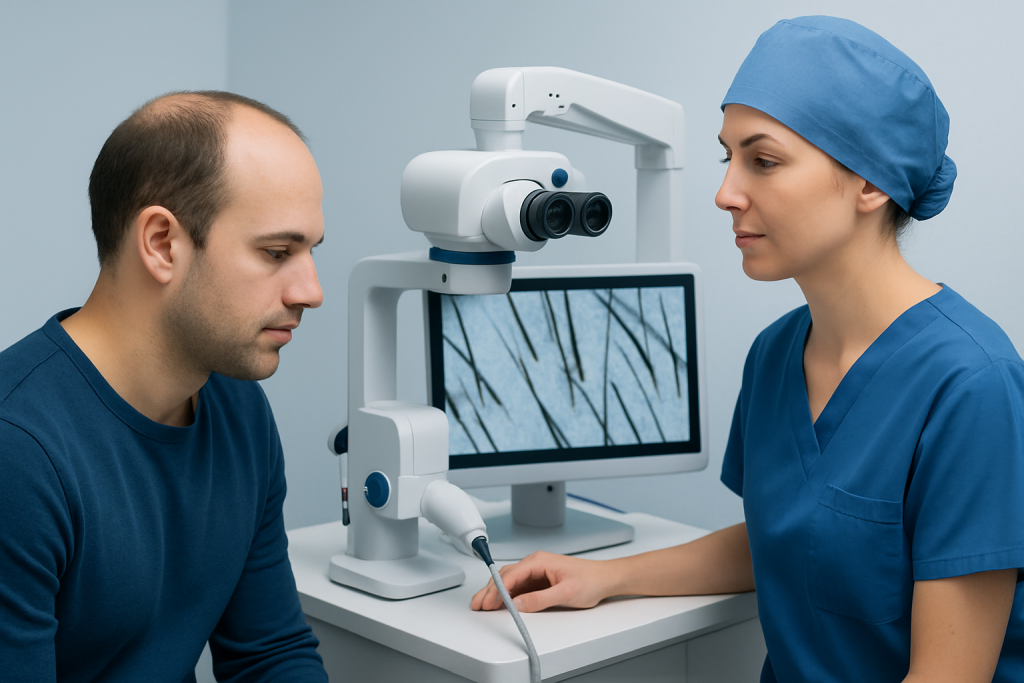
Each hair follicle follows a cycle with growth, transition, rest, and shedding phases. At any time, different hairs are in different phases, which is why losing some hair daily is normal. Problems arise when more hairs shift into shedding, when growth becomes shorter and weaker, or when follicles shrink over time and produce finer strands.
In inherited pattern hair loss, also called androgenetic alopecia, follicles gradually become smaller under the influence of hormones and genetic sensitivity. This often causes a receding hairline or crown thinning in men and diffuse thinning over the top of the scalp in women. The process is usually gradual, which is why early assessment can be helpful.
Other forms of hair loss behave differently. alopecia areata can cause smooth, round patches due to an autoimmune process. Telogen effluvium often leads to more diffuse shedding after illness, emotional stress, childbirth, surgery, rapid weight loss, or certain medicines. Scarring forms of hair loss may permanently damage follicles, making early medical care especially important.
Who may benefit from hair restoration

People seek hair restoration for many reasons, including progressive thinning, widening of the part line, recession of the frontal hairline, reduced beard or eyebrow density, or hair loss after trauma or previous procedures. The best candidates are those whose scalp condition and hair loss pattern have been medically assessed and whose expectations align with what treatment can realistically achieve.
Non-surgical hair restoration may suit people in earlier stages of hair loss, those with active shedding, or those who are not ready for surgery. Surgical restoration is usually considered when hair loss is more established and the donor area at the back or sides of the scalp is strong enough to provide follicles for transfer. A surgeon also considers age, future hair loss, scalp flexibility, hair texture, and overall health.
Not every type of hair loss should move directly to transplantation. If there is scalp redness, pain, heavy flaking, scaling, patchy loss, or rapid shedding, a medical cause needs attention first. In these cases, diagnosing the scalp disorder can be as important as planning cosmetic improvement.
Symptoms and signs that deserve evaluation
Hair loss may appear in several ways. Some people notice more hair on the pillow, in the shower, or on a hairbrush. Others see slow thinning over months or years, especially at the temples, crown, or midline part. A decreasing ponytail volume, increased scalp visibility under bright light, or changes in hair texture can also be early clues.
Certain signs suggest that medical evaluation is particularly important. These include sudden shedding, bald patches, a receding hairline at a young age, scalp itching or burning, pustules, scaling, or tenderness. Loss of eyebrows, eyelashes, or body hair may also point to a broader condition rather than simple pattern loss.
A doctor may ask when the hair loss began, whether it is constant or episodic, and whether there have been triggers such as fever, major stress, pregnancy, weight change, or new medications. Family history matters, but it does not explain every case. A structured evaluation helps clarify whether the issue is reversible shedding, pattern loss, inflammation, or scarring.
Diagnosis before treatment
Diagnosis is a central part of hair restoration. A clinician usually begins with a history and scalp examination, looking at the pattern of loss, the density of donor hair, and signs of inflammation or scarring. Magnified scalp inspection may be used to assess follicle miniaturization, hair shaft differences, and scalp health in more detail.
Depending on the presentation, additional tests may be appropriate. These can include blood tests for iron status, thyroid function, vitamin deficiencies, or hormonal factors. In selected cases, a hair pull test or scalp biopsy may help distinguish between non-scarring and scarring alopecia. This matters because scarring forms may require prompt treatment to protect remaining follicles.
Treatment planning is strongest when diagnosis is precise. Someone with temporary shedding may recover with time and management of the trigger. Someone with pattern hair loss may benefit from a long-term maintenance plan. When surgery is being considered, careful diagnosis also helps determine whether the donor area is suitable and whether transplanted hair is likely to blend naturally over time.
Hair restoration treatment options
Hair restoration may involve non-surgical treatment, surgery, or a combination of both. Non-surgical options are often used to slow progression, support existing follicles, and improve the quality of the scalp environment. Depending on the diagnosis, a doctor may recommend topical treatments, prescription medicines, treatment of scalp inflammation, or correction of contributing nutritional or medical issues. In some cases, treating conditions such as seborrheic dermatitis can improve scalp comfort and support overall hair care.
Surgical hair restoration most often means transplanting healthy follicles from a donor area to thinning or bald regions. Modern techniques aim to place follicular units in a way that respects natural direction, density, and hairline design. The two best-known methods are follicular unit extraction and follicular unit transplantation, and the most appropriate option depends on hair characteristics, donor supply, hairstyle preferences, and surgical planning. Patients considering this route may be evaluated for FUE hair transplant or other tailored approaches.
Supportive therapies may be used alongside a broader plan in selected clinics. Some patients are offered PRP as an adjunct, although suitability and expected benefit vary and it should be discussed in the context of the specific diagnosis. In established hair loss, the goal is usually improvement rather than a complete return to previous density, and long-term maintenance may still be needed after a procedure.
- Medical treatment may help preserve existing hair.
- Transplant surgery moves permanent donor follicles to selected areas.
- Combination care can support both short-term recovery and long-term maintenance.
- Results develop gradually as transplanted or treated follicles enter normal growth cycles.
Recovery, results, and self-care after hair restoration
Hair restoration results are gradual because follicles need time to cycle back into active growth. After a transplant, temporary shedding of transplanted hairs is common before new growth begins. Improvement often appears in stages rather than all at once, so follow-up visits are important to monitor healing, growth, and whether further maintenance treatment is needed.
Self-care supports the outcome. Patients are usually advised to follow scalp washing instructions carefully, avoid trauma to the treated area, and use medicines only as directed by their doctor. Good general health habits also matter, including balanced nutrition, management of medical conditions, and avoiding harsh hair practices such as excessive heat, tight hairstyles, or irritating chemicals.
Hair restoration does not stop the natural aging process of unaffected follicles. Because of this, many people need an ongoing strategy to preserve surrounding hair and maintain a natural appearance over time. Near the end of care planning, some international patients may choose centers such as Acibadem International, where multidisciplinary specialists in JCI-accredited hospitals diagnose and treat hair loss and hair restoration needs in a coordinated setting.
When to seek medical care
Medical review is advisable when hair loss is sudden, patchy, painful, or associated with redness, scaling, or scarring. It is also a good idea to seek care if hair loss follows a new medication, major illness, childbirth, or rapid weight change, or if it affects eyebrows or eyelashes. These features can point to causes that need treatment beyond cosmetic restoration.
Anyone thinking about surgery should also have a proper medical evaluation first. A specialist can confirm the diagnosis, explain which treatments are suitable, and discuss what degree of improvement is realistic. Early advice can help protect existing hair and prevent delays in treating conditions that may become harder to manage later.
Frequently asked questions
What is hair restoration?
Hair restoration is a medical term for treatments that help improve hair coverage or manage hair loss. It can include diagnosing the cause, using medicines or scalp treatments, and in some cases performing hair transplant surgery.
Is hair restoration the same as a hair transplant?
No. A hair transplant is one type of hair restoration, but not the only one. Hair restoration also includes non-surgical approaches that may slow hair loss, support regrowth, or treat an underlying scalp condition.
Who is a good candidate for hair transplant surgery?
Good candidates usually have a stable pattern of hair loss, adequate donor hair, and a healthy scalp. A specialist also considers age, future hair loss, medical history, and whether expectations are realistic.
How long does it take to see results from hair restoration?
Results depend on the treatment used and the type of hair loss. Medical therapies often need several months to show benefit, and transplanted follicles also need time to cycle into new growth after the procedure.
Can women have hair restoration?
Yes. Women may benefit from both medical and, in selected cases, surgical hair restoration. The best approach depends on the pattern of thinning, the cause of hair loss, and the condition of the donor area.
Does hair restoration work for every type of hair loss?
Not always. Some forms of hair loss respond well to treatment, while others require control of inflammation or may cause permanent follicle damage. This is why a proper diagnosis is important before choosing a treatment.
When should someone see a doctor about hair loss?
A doctor should evaluate hair loss that is sudden, patchy, painful, or linked with itching, redness, or scalp scaling. Medical advice is also important if shedding follows illness, stress, childbirth, or a new medication, or if surgery is being considered.
This article is for general information only and is not a substitute for professional medical advice. Please consult a qualified doctor about your individual situation.
Hair transplant in Turkey — costs, graft counts & a free assessment
JCI-accredited · board-certified surgeons · reply within 24h
Add us as a Preferred Source to see more of our trusted health content across Google Search, AI Overviews and Discover.

More from the Health Library

Nonenal Odor — Explained by Medical Evidence, Not Myths

Emotional Abuse: An Evidence-Based Guide for Patients
Bed Sores Ulcer: An Evidence-Based Guide for Patients

Syringomyelia: What Patients Need to Know

Myoclonic Seizure: What Patients Need to Know