Hair Restoration for Men: Procedure, Recovery and Results

Hair restoration begins with identifying the cause of thinning, which is commonly androgenetic alopecia in men. Follicular unit extraction (FUE) and follicular unit transplantation (FUT) move permanent donor hairs to thinning areas.
Key Takeaways
- Hair restoration begins with identifying the cause of thinning, which is commonly androgenetic alopecia in men.
- Follicular unit extraction (FUE) and follicular unit transplantation (FUT) move permanent donor hairs to thinning areas.
- Transplanted hairs commonly shed early, then begin new growth after several months; final maturation can take 12 months or longer.
- Hair transplantation redistributes existing hair rather than creating new follicles, so donor supply and future hair loss matter.
- Medication may help preserve existing hair and can be considered before or after surgery under medical supervision.
Hair restoration for men can involve medication, hair transplantation, or both, depending on the cause and pattern of hair loss. A specialist assessment helps identify whether hair loss is stable enough for a procedure and sets realistic expectations for recovery and long-term results.
Hair Restoration for Men: An Overview
Hair restoration for men includes medical and surgical approaches used to improve the appearance of thinning hair or bald areas. For many men, the main cause is androgenetic alopecia, also called male pattern hair loss. This inherited condition typically causes recession at the temples, thinning at the crown, or both.
A hair restoration plan should begin with an assessment of the scalp, hair-loss pattern, donor-hair density, medical history, and personal goals. Options may include medications that slow hair loss, non-surgical approaches that improve coverage, or a hair transplant that moves follicles from a fuller area of the scalp to an area with thinning.
A transplant can provide long-lasting coverage because donor follicles are usually taken from the back and sides of the scalp, where hair is often more resistant to hormonal hair loss. However, it does not stop future thinning of non-transplanted hair. For this reason, planning should consider both present hair loss and the likelihood of progression over time.
Understanding Male Pattern Hair Loss and Other Causes
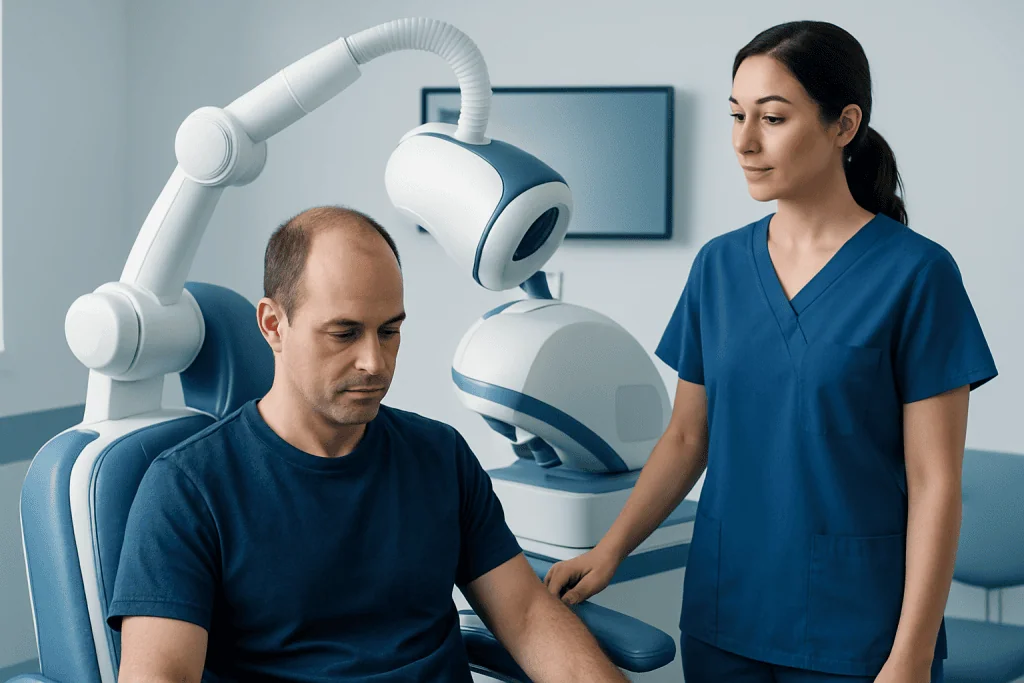
Male pattern hair loss is influenced by genetics and sensitivity of hair follicles to androgens, including dihydrotestosterone (DHT). The follicles gradually become smaller, producing shorter, finer hairs until visible scalp coverage is reduced. The process may begin in adulthood and can progress at different rates.
Not every case of hair loss is male pattern hair loss. Sudden shedding, patchy bald areas, scalp scaling, pain, redness, or itching can suggest another condition. Causes may include alopecia areata, fungal infection, thyroid disease, nutritional deficiency, medication effects, major illness, stress-related shedding, or scarring scalp disorders.
A clinician may examine the scalp and hair shafts, review family and medical history, and sometimes order blood tests or perform further evaluation. Identifying the cause is important because some forms of hair loss may improve with targeted treatment, while a transplant may not be appropriate until the underlying condition is controlled.
Hair Transplant Techniques and Who May Be Suitable

Hair transplantation moves naturally growing follicular units from a donor area to areas of hair loss. The two main approaches are follicular unit extraction (FUE) and follicular unit transplantation (FUT), sometimes called strip surgery. Both can produce natural-looking results when performed with careful planning and appropriate graft placement.
In FUE, individual follicular units are removed one by one, leaving tiny round scars that are usually less noticeable when hair is kept short. In FUT, a narrow strip of donor scalp is removed and divided into grafts; it can yield many grafts in one session but leaves a linear scar. The best technique depends on hair characteristics, donor availability, hairstyle preferences, degree of hair loss, and the surgical team’s assessment.
Suitable candidates generally have adequate stable donor hair, a realistic understanding of density limits, and a healthy scalp. Men with rapidly progressing hair loss may be advised to first consider medical treatment and monitoring. A consultation for hair transplant surgery should include discussion of the hairline design, expected number of sessions, scarring, possible complications, and the need to protect existing hair.
- FUE may be preferred by men who want to wear their hair shorter.
- FUT may be considered when a larger number of grafts is needed and a linear scar is acceptable.
- Beard or body hair may occasionally supplement scalp donor hair, but its growth characteristics can differ.
What Is the Success Rate of Hair Restoration for Men?
The success of hair restoration depends on what is meant by success. In hair transplantation, surgeons assess graft survival, healing, natural appearance, and whether the coverage achieved matches the person’s goals. When healthy follicles are harvested, handled, and placed appropriately, many transplanted grafts can grow, but no procedure can promise that every graft will survive or that a particular density will be achieved.
Results are affected by the quality and amount of donor hair, the extent of baldness, scalp health, surgical technique, aftercare, smoking status, and continuing loss of native hair. Fine hair, very advanced hair loss, limited donor supply, or unrealistic expectations can make it harder to create dense coverage, especially across a large scalp area.
Medical treatment can also be an important part of successful long-term planning. A dermatologist or hair-restoration clinician may discuss medicines such as topical minoxidil or prescription treatments that affect DHT, considering possible benefits, side effects, and individual health factors. These treatments do not create unlimited donor hair, but they may help preserve susceptible existing follicles.
How Long Do 3,000 Hair Grafts Take?
A procedure involving 3,000 grafts commonly takes most of a day and may take longer depending on the technique, team structure, hair characteristics, and whether the procedure is performed in one or more sessions. FUE can be especially time-consuming because follicles are individually extracted and then placed into recipient sites.
The term graft refers to a naturally occurring follicular unit, which may contain one to several hairs. Therefore, 3,000 grafts does not equal 3,000 individual hairs. The number of grafts needed depends on the size of the area being treated, the desired density, the hairline plan, and how much donor hair can be safely harvested.
During the procedure, the person is usually awake and the scalp is numbed with local anesthetic. There are breaks for meals, stretching, and comfort. A surgical team should explain the anticipated duration, what to bring on the day, and whether an overnight stay or a staged procedure is recommended.
How Painful Is Hair Restoration?
Hair restoration surgery is usually performed with local anesthetic, so the person should not feel sharp pain during graft extraction or placement. The anesthetic injections can cause brief discomfort, pressure, or stinging. Some clinics may also offer medication to help a person feel more relaxed, when medically appropriate.
After the anesthetic wears off, it is common to have mild soreness, tightness, tenderness, or swelling for several days. FUE often causes discomfort in the donor area, while FUT may cause more tightness around the linear incision. Pain is generally managed with the aftercare plan provided by the surgical team.
Severe or increasing pain, spreading redness, fever, drainage, or swelling that does not improve should be reported promptly, as these may require medical review. Following instructions for cleansing, sleeping position, activity, and medication use supports comfortable healing.
Recovery Timeline and Expected Results
Early recovery involves protecting the grafts while the scalp heals. Tiny crusts may form around transplanted follicles, and temporary swelling of the forehead or scalp can occur. The care team will provide specific instructions on washing, avoiding rubbing or scratching, sleeping with the head elevated if advised, and returning to exercise, headwear, work, and sun exposure.
It is normal for many transplanted hairs to shed within the first several weeks. This is often called shock shedding and does not necessarily mean the follicles have failed. New growth usually begins gradually after a few months, then becomes more noticeable over subsequent months. Hair texture and thickness continue to mature, and final results may take 12 months or longer to evaluate.
Existing non-transplanted hair can continue to thin because a transplant does not alter the underlying tendency toward androgenetic alopecia. Long-term follow-up may include discussion of medical therapy, hairstyle strategies, or a future procedure if donor supply permits. Patients should avoid judging the outcome too early, as visible change occurs gradually.
Acibadem International’s multidisciplinary specialists and JCI-accredited hospitals support international patients with assessment and treatment planning for hair loss and hair restoration procedures.
When to Seek Medical Care
Men should seek medical care for sudden or rapidly worsening hair loss, round or patchy bald spots, scalp pain, burning, itching, scaling, pus, or significant redness. Medical evaluation is also advisable when hair loss begins after a new medicine, serious illness, major weight change, or a period of significant physical or emotional stress.
Before pursuing a hair transplant, it is sensible to consult a qualified dermatologist or clinician experienced in hair loss. They can determine whether the hair loss pattern is likely to remain stable, identify conditions that need treatment first, and explain whether medical management, a procedure, or both may be appropriate.
Urgent medical advice is appropriate if scalp symptoms are accompanied by fever, a rapidly spreading rash, or signs of infection. A planned consultation is also valuable for anyone who feels distressed by hair loss, as concerns about appearance can affect confidence and emotional well-being.
Frequently asked questions
What is hair restoration for men?
Hair restoration for men refers to treatments used to address thinning hair or baldness. It may include medicines that help preserve existing hair, hair transplantation, and cosmetic approaches that improve the appearance of coverage. The most suitable option depends on the cause and pattern of hair loss.
What did Elon Musk use to regrow hair?
Elon Musk has not publicly confirmed a specific medical treatment or procedure for his hair. Public photographs have led some observers to speculate that he may have had a hair transplant, but this cannot be verified. Treatment decisions should be based on an individual clinical assessment rather than a celebrity’s appearance.
Can a hair transplant look natural?
A hair transplant can look natural when the hairline, graft direction, angle, and density are planned carefully. Natural-looking results also depend on matching the procedure to the person’s hair type, donor supply, age, and expected future hair loss. A conservative, age-appropriate hairline is often important for long-term appearance.
How long does it take to recover from a hair transplant?
Most people can return to many everyday activities within several days, although the scalp may remain tender and visibly crusted for a short period. Instructions about exercise, swimming, sun exposure, and hats vary by procedure and surgeon. New transplanted hair growth usually begins after several months, with maturation continuing for about a year or longer.
Is hair restoration permanent for men?
Transplanted follicles from the donor area often retain much of their resistance to male pattern hair loss and can provide long-lasting growth. However, a transplant does not prevent ongoing thinning in nearby, non-transplanted hair. Medical treatment and long-term follow-up may help maintain a balanced appearance.
Is a hair transplant suitable for every man with hair loss?
No. A transplant may not be appropriate for men with inadequate donor hair, uncontrolled scalp disease, active scarring hair loss, or rapidly changing hair loss patterns. A clinician should first identify the cause of the hair loss and discuss realistic options.
References
- American Academy of Dermatology
- International Society of Hair Restoration Surgery
- National Institute of Arthritis and Musculoskeletal and Skin Diseases
- Mayo Clinic
This article is for general information only and is not a substitute for professional medical advice. Please consult a qualified doctor about your individual situation.
Hair transplant in Turkey — costs, graft counts & a free assessment
JCI-accredited · board-certified surgeons · reply within 24h
Add us as a Preferred Source to see more of our trusted health content across Google Search, AI Overviews and Discover.