Hair Surgeon: Procedure, Recovery and Results

A qualified hair surgeon first identifies the cause and pattern of hair loss before recommending a procedure. Follicular unit transplantation is usually performed using FUE or FUT techniques, each with different donor-area considerations.
Key Takeaways
- A qualified hair surgeon first identifies the cause and pattern of hair loss before recommending a procedure.
- Follicular unit transplantation is usually performed using FUE or FUT techniques, each with different donor-area considerations.
- Transplanted hairs commonly shed early after surgery; visible new growth usually develops gradually over several months.
- Hair transplant surgery redistributes existing follicles rather than creating new hair or stopping future hair loss.
- Careful aftercare, realistic expectations and treatment of underlying hair loss help support the best long-term outcome.
A hair surgeon is a doctor who evaluates hair loss, confirms whether surgery is suitable, and performs or supervises procedures that move healthy hair follicles to thinning areas. Hair restoration can produce lasting, natural-looking growth for selected patients, but results depend on the cause of hair loss, donor-hair availability, technique, healing and ongoing care.
What Does a Hair Surgeon Do?
A hair surgeon is a physician who evaluates hair loss and performs surgical hair restoration when it is medically appropriate. The role includes reviewing a person’s health history, examining the scalp and donor area, identifying the likely cause of hair loss, planning the hairline and graft distribution, and explaining expected outcomes. A responsible consultation focuses on whether surgery is suitable—not simply on placing the largest possible number of grafts.
Hair transplantation generally moves follicles from a stable donor area, most often the back or sides of the scalp, to areas affected by thinning or baldness. Because the follicles come from the patient, there is no concern about immune rejection. However, transplant surgery does not make new follicles, and the amount of available donor hair limits what can safely be achieved.
Hair surgeons may work alongside dermatologists, plastic surgeons and other clinicians, particularly when hair loss may be related to skin disease, hormonal changes, nutritional issues, medication effects or autoimmune conditions. Establishing the diagnosis before surgery is important because some types of hair loss need medical treatment rather than transplantation.
Who May Be a Candidate for Hair Restoration Surgery?
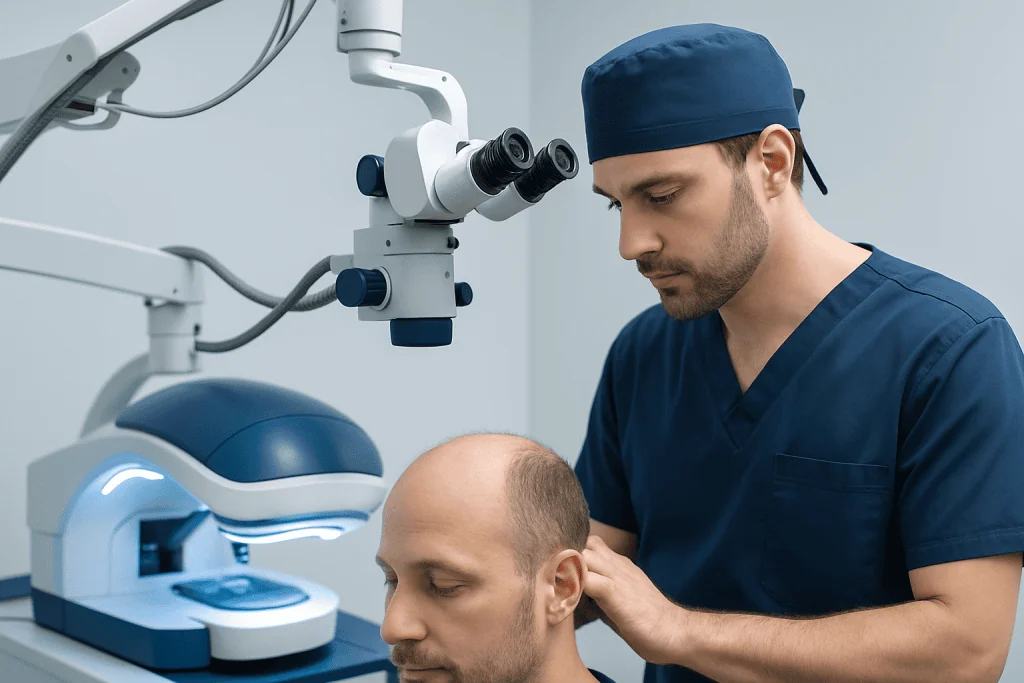
Many candidates have androgenetic alopecia, also called male-pattern or female-pattern hair loss. This common inherited condition causes gradual miniaturisation of hair follicles in a recognisable pattern. A surgeon considers the stability and progression of hair loss, the density and quality of donor hair, scalp health, age, general health and the person’s goals before recommending a procedure.
People with a well-defined area of hair loss from a healed injury, burn or some previous surgical scars may also be considered for transplantation. In contrast, active scalp inflammation, untreated infection, uncontrolled medical conditions, very limited donor density or rapidly changing hair loss may mean that surgery should be postponed or avoided.
Hair loss can have several causes. An assessment may include discussion of family history, recent illness or stress, diet, medications, menstrual or hormonal history when relevant, and hair-care practices. It can also help distinguish pattern hair loss from alopecia areata, an autoimmune condition that usually requires a different clinical approach.
- Hair loss should be reasonably stable or have a long-term management plan.
- The donor area should have sufficient healthy follicles for the desired coverage.
- Expectations should be realistic: the goal is improved coverage and appearance, not necessarily the density of adolescence.
- The person should be able to follow post-procedure instructions and attend follow-up care.
How Hair Transplant Procedures Are Performed
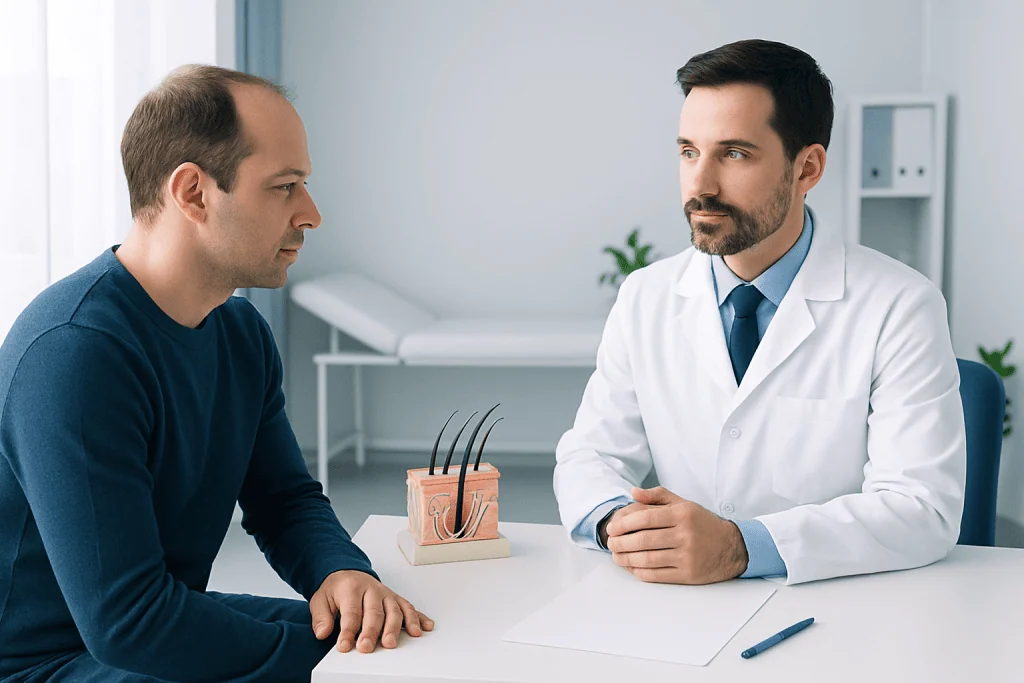
The two main methods of harvesting donor follicles are follicular unit excision (FUE) and follicular unit transplantation (FUT), sometimes called strip surgery. In FUE, individual follicular units are removed from the donor area using small instruments. In FUT, a narrow strip of donor scalp is removed, after which follicular units are prepared under magnification; the donor site is closed with sutures and leaves a linear scar.
During either method, the surgeon creates very small recipient sites in the thinning area and places grafts according to the planned angle, direction and distribution of natural hair growth. Hairline design is especially important. A conservative, age-appropriate hairline can help preserve donor hair and allow for possible future thinning.
Procedures are commonly performed with local anaesthesia, sometimes with additional medication to help the patient relax when appropriate. The duration varies with the size and complexity of the treatment area. For people considering procedural options, a specialist can explain hair transplant surgery and whether FUE, FUT or non-surgical care fits their diagnosis and goals.
Although graft placement is a technical procedure, good planning is equally important. A surgeon should discuss the likely number of sessions, the possibility of ongoing hair loss in non-transplanted areas, donor-site scarring, and the potential role of medical therapy to protect existing hair.
Recovery: What to Expect After the Procedure
Most people go home on the day of the procedure. Mild swelling, tenderness, tightness or temporary numbness in the donor and recipient areas can occur during the early healing period. Small crusts commonly form around the implanted follicles. The care team will give individual instructions about washing, sleeping position, activity, headwear, medications and when to return for review.
Protecting the grafts is particularly important in the first days. Patients are generally advised not to rub, scratch or pick the scalp, and to avoid strenuous exercise, swimming and activities that may cause significant sweating until the surgeon says it is safe. Direct sun exposure should also be limited while the scalp heals. Instructions differ by technique and individual circumstances, so the surgical team’s advice should take priority.
A temporary shedding phase is expected in many patients. The transplanted hair shafts may fall out several weeks after the procedure, while the follicles remain under the skin and begin a new growth cycle. Existing, non-transplanted hair can also shed temporarily after surgery; this is sometimes called shock loss and is more likely where native hair is already fragile.
Contact the care team promptly if there is worsening pain, increasing redness, pus-like drainage, fever, significant bleeding, marked swelling, an allergic reaction or any concern about healing. These issues are uncommon but deserve timely medical review.
When Will Results Be Visible?
Hair transplant results develop gradually because follicles need time to establish a normal growth cycle. Early regrowth may be fine and uneven. Noticeable improvement often begins after several months, while fuller maturation can continue for about 12 to 18 months. Growth timing varies among individuals and between scalp areas.
The final appearance is influenced by donor-hair characteristics, including colour, curl, thickness and density; the extent of hair loss; graft survival; scalp condition; and how hair loss progresses after surgery. A transplant can improve coverage, but it cannot fully replace hair that has been lost across a very large area when donor supply is limited.
Transplanted follicles from a stable donor area tend to retain many of their original characteristics. Still, surrounding native hair may continue to thin over time. For this reason, a hair surgeon may discuss evidence-based medical options for pattern hair loss, such as platelet-rich plasma (PRP) hair treatment in selected settings, alongside established medication options where clinically appropriate. The suitability, benefits and limitations of any treatment should be reviewed individually.
Risks, Limitations and Long-Term Planning
Hair transplantation is generally considered safe when performed by appropriately trained clinicians in suitable candidates, but it is still a surgical procedure. Potential risks include bleeding, infection, swelling, pain, altered sensation, visible scarring, folliculitis, uneven growth, poor graft survival and an unnatural-looking hairline or density if planning or technique is inadequate.
FUE usually leaves multiple tiny dot-like donor scars, while FUT leaves a linear donor scar. Either may be noticeable depending on healing, hair length, skin characteristics and the number of grafts harvested. No technique is scar-free, and no surgeon can guarantee a specific cosmetic result.
Long-term planning is essential because pattern hair loss may continue. A very low hairline or overly aggressive use of donor hair early on can reduce options later. A careful surgeon balances present improvement with preservation of donor resources and may recommend a staged approach rather than attempting maximal coverage in one procedure.
People should feel comfortable asking who will perform each part of the procedure, what qualifications and experience the clinical team has, how complications are managed, and what follow-up is included. Clear answers help support informed consent and safer decision-making.
When to Seek Medical Care
Medical assessment is advisable before considering a hair transplant, especially if hair loss is sudden, patchy, painful, associated with scaling or redness, or accompanied by symptoms elsewhere in the body. These features can point to conditions that need diagnosis and treatment before any cosmetic procedure is considered.
A doctor should also assess hair loss that begins after a new medication, major illness, childbirth, restrictive dieting or significant weight change. Blood tests or scalp examination may be appropriate in some cases to look for contributing factors such as iron deficiency, thyroid disease or inflammatory scalp disorders.
After a hair procedure, urgent medical advice is appropriate for fever, spreading redness, rapidly increasing swelling, severe pain, unusual discharge, persistent bleeding or signs of an allergic reaction. Acibadem International’s multidisciplinary specialists and JCI-accredited hospitals diagnose and treat hair-loss concerns and provide hair restoration care for international patients.
Frequently asked questions
Is a hair surgeon a dermatologist or a plastic surgeon?
A hair surgeon may have a background in dermatology, plastic surgery or another medical specialty, depending on local licensing and training pathways. More important than the title alone are medical qualification, specific training in hair restoration, experience with the proposed technique and appropriate clinical oversight.
Does a hair transplant look natural?
It can look natural when the hairline, graft placement and density are planned carefully around the person’s facial features, age and existing hair. Natural results also depend on suitable donor hair, graft survival and the continued health of surrounding native hair.
How long does recovery from a hair transplant take?
The scalp usually heals enough for many routine activities within days to a couple of weeks, but the exact timeframe varies by procedure and individual healing. Crusting and temporary shedding are common, while visible new growth takes months rather than days or weeks.
Are FUE and FUT equally effective?
Both FUE and FUT can provide successful grafts when they are properly performed in an appropriate candidate. The better option depends on donor density, hairstyle preferences, scalp characteristics, the number of grafts needed and tolerance for different types of donor scarring.
Will transplanted hair fall out again?
The implanted hair shafts often shed temporarily in the first weeks after surgery, which is a normal part of the growth cycle. The transplanted follicles are generally more resistant to pattern hair loss, but outcomes vary and non-transplanted hair may still thin over time.
Can women have hair transplant surgery?
Some women are suitable candidates, particularly when they have stable, localised thinning and adequate donor density. Because diffuse thinning and non-pattern causes are more common in some women, thorough medical evaluation is especially important before surgery.
References
- American Academy of Dermatology
- International Society of Hair Restoration Surgery
- Mayo Clinic
- National Health Service
- U.S. Food and Drug Administration
This article is for general information only and is not a substitute for professional medical advice. Please consult a qualified doctor about your individual situation.
Hair transplant in Turkey — costs, graft counts & a free assessment
JCI-accredited · board-certified surgeons · reply within 24h
Add us as a Preferred Source to see more of our trusted health content across Google Search, AI Overviews and Discover.

More from the Health Library

Debilitating: What Patients Need to Know

Magnesium Citrate: What Patients Need to Know

Hypercapnia: A Complete Medical Overview

Pimple on Vegina: What Patients Need to Know

Sleep Hygiene: What Patients Need to Know