Hair Thinning Treatment: Early Signs, Risk Factors, and How It Is Treated

Hair thinning is a symptom with many possible causes, not a single diagnosis. Early evaluation can help protect existing hair and guide the right treatment plan.
Key Takeaways
- Hair thinning is a symptom with many possible causes, not a single diagnosis.
- Early evaluation can help protect existing hair and guide the right treatment plan.
- Common causes include genetic hair loss, stress-related shedding, hormonal changes, scalp disease, and nutrient deficiencies.
- Treatment may combine lifestyle measures, medical therapy, and selected procedures based on the underlying cause.
- Sudden shedding, patchy loss, scalp symptoms, or thinning with other health changes should be assessed by a doctor.
Hair thinning treatment works best when it starts with identifying why the hair is becoming less dense. Depending on the cause, treatment may involve improving scalp health, correcting nutritional or hormonal problems, using medicines, or considering procedures to support regrowth.
Overview: What hair thinning treatment involves
Hair thinning treatment is the medical and supportive care used to slow ongoing hair loss, improve scalp health, and encourage stronger regrowth when possible. The best approach depends on the reason for thinning rather than on the appearance alone. For some people, treatment focuses on hereditary hair loss; for others, the priority is correcting a temporary trigger such as illness, stress, iron deficiency, or hormonal change.
A patient-friendly way to think about thinning is that the hair cycle has been disturbed. Hair normally grows, rests, and sheds in a balanced pattern. When that balance changes, more hairs may shed than usual, individual strands may become finer, or the scalp may become more visible over time. A careful assessment helps distinguish common patterns such as hair loss linked to genetics from inflammatory or medical causes that need different care.
Early action matters because protecting existing hair is often easier than restoring hair that has been lost for a long time. Many people benefit from a combined plan that includes gentle hair care, treatment of scalp conditions, management of underlying health issues, and regular follow-up to see whether the chosen treatment is working.
Early signs and symptoms to notice
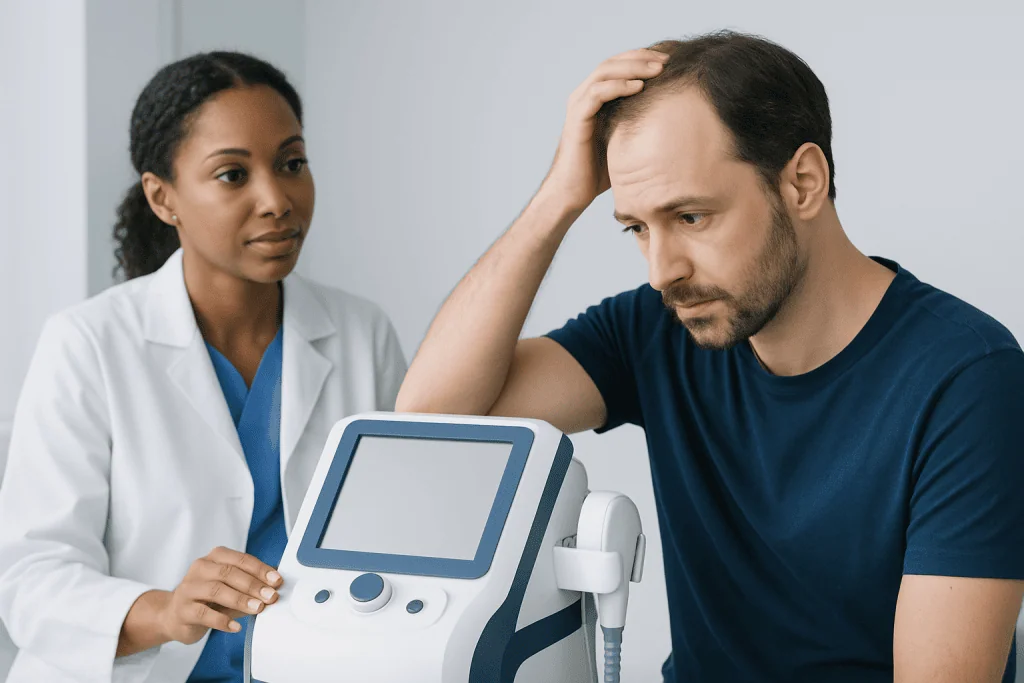
Hair thinning can develop gradually, so the first signs are often subtle. A person may notice that the ponytail feels smaller, the part line looks wider, or more scalp shows in bright light. Others see extra hair on a brush, pillow, or shower drain. In hereditary thinning, the change usually happens over months to years rather than suddenly.
The pattern can offer useful clues. Men often notice thinning at the temples or crown, while women commonly see diffuse thinning across the top of the scalp with a broader central part. Temporary shedding after stress, fever, surgery, childbirth, or major weight loss often appears as increased daily hair fall from all over the scalp.
Scalp symptoms are also important. Itching, burning, redness, scaling, tenderness, or painful bumps may suggest inflammation or infection rather than simple pattern thinning. Patchy loss, broken hairs, or loss of eyebrows and body hair can also point to a different diagnosis and should be assessed carefully.
- More hair shedding than usual during washing or brushing
- A wider part or reduced hair volume
- Receding hairline or thinning at the crown
- Visible scalp in photos or under overhead light
- Itchy, flaky, red, or sore scalp
Why hair becomes thinner: causes and risk factors

There are several broad categories of causes. The most common is androgenetic alopecia, often called male or female pattern hair loss, which tends to run in families and causes gradual miniaturization of hair follicles. Another common cause is telogen effluvium, a temporary shift of hairs into the shedding phase after triggers such as illness, emotional stress, childbirth, rapid dieting, medication changes, or surgery.
Hormonal and metabolic issues can also contribute. Thyroid disease, iron deficiency, low protein intake, vitamin or mineral deficiencies, and hormonal changes around menopause or conditions associated with androgen excess may all affect hair growth. In some cases, medicines can play a role, including some drugs used for blood pressure, mood disorders, acne, or cancer treatment.
Scalp disorders are another important group. Dandruff, seborrheic dermatitis, fungal infection, psoriasis, and scarring forms of alopecia can impair the scalp environment or directly damage follicles. Frequent heat styling, tight hairstyles, chemical processing, and harsh grooming can worsen breakage and traction-related loss. Because treatment differs widely between causes, the most useful next step is usually a dermatologic or medical evaluation rather than guessing from symptoms alone.
How doctors diagnose the cause
Diagnosis begins with a detailed history. The doctor will ask when the thinning started, whether it is gradual or sudden, and whether there have been recent stressors, illnesses, childbirth, weight changes, dietary restriction, or new medications. Family history matters, as does the presence of acne, irregular periods, fatigue, or other symptoms that could suggest hormonal or nutritional causes.
The scalp and hair are then examined closely. A clinician may look at the pattern of thinning, signs of inflammation, scaling, follicle changes, broken hairs, or miniaturized hairs. In some settings, magnified examination of the scalp helps reveal the type of hair loss. A gentle pull test may be used to estimate active shedding.
Blood tests are sometimes recommended when the pattern suggests an underlying medical issue. These may include tests related to iron stores, thyroid function, vitamin status, or hormones, depending on the person’s age, symptoms, and history. If the diagnosis remains unclear or a scarring alopecia is suspected, a small scalp biopsy may be advised. This step can be important because some inflammatory conditions need prompt treatment to help prevent permanent follicle damage.
Hair thinning treatment options
Hair thinning treatment should match the diagnosis. For pattern hair loss, doctors may recommend evidence-based medical therapy to slow miniaturization and support thicker growth over time. For temporary shedding, treatment often centers on removing the trigger, optimizing nutrition, and allowing the hair cycle to recover. Scalp inflammation, dandruff, or infection may require medicated shampoos or prescription anti-inflammatory or antifungal treatment before regrowth can improve.
Some patients are candidates for procedural support when conservative measures are not enough or when thinning has become more established. Options may include hair transplant surgery for selected hereditary hair loss patterns, especially when donor hair is healthy and the pattern is stable enough for planning. Supportive dermatology-based treatments may also be discussed to improve scalp condition and maximize response to medical care.
If another health problem is contributing, treating that issue is part of the hair plan. For example, evaluation and management of thyroid imbalance, iron deficiency, or related endocrine concerns can be essential. In some situations, care may involve coordination with specialists in endocrinology or broader dermatology assessment. People with autoimmune or inflammatory patterns may also need investigation for conditions such as alopecia areata, which is treated differently from common pattern thinning.
- Medical therapy for pattern hair loss when appropriate
- Treatment of dandruff, dermatitis, infection, or scalp inflammation
- Correction of nutritional, hormonal, or medical contributors
- Gentle hair care to reduce breakage and traction
- Procedural options for selected long-term cases
Prevention and self-care that support healthier hair
Not all hair thinning can be prevented, especially when genetics are the main factor, but healthy habits can reduce avoidable stress on the hair and scalp. A balanced diet with adequate protein, iron, zinc, and vitamins supports normal hair cycling. Extreme dieting and rapid weight loss can trigger shedding, so gradual, sustainable nutrition changes are usually kinder to the hair.
Scalp care also matters. Gentle cleansing, prompt treatment of dandruff or irritation, and avoiding overly harsh products can help preserve the scalp environment. Heat styling, repeated bleaching, strong chemical straightening, and very tight hairstyles can worsen breakage or cause traction-related thinning. Choosing looser styles and reducing mechanical stress often helps protect the hair that is already present.
Stress management, good sleep, and attention to overall health may also make a difference, especially when shedding follows a major life event or illness. Self-care alone does not replace diagnosis, but it can support recovery and improve the response to treatment. Patience is important, as hair growth is slow and visible improvement often takes several months.
When to seek medical care
Medical evaluation is a good idea when hair thinning is persistent, worsening, or causing distress. It is especially important to seek care if hair loss is sudden, patchy, or associated with scalp pain, redness, scaling, pus, or scarring. These features can suggest an inflammatory or infectious problem that may need prompt treatment.
A doctor should also be consulted if thinning happens along with fatigue, weight change, menstrual irregularity, acne, increased facial hair, or other symptoms that could indicate a hormonal or nutritional issue. Children and adolescents with hair loss should be assessed rather than treated only with home remedies. People receiving cancer therapy or taking new medications should ask their treating team whether the hair change may be drug-related.
Near the end of the diagnostic journey, some patients benefit from multidisciplinary review if the cause is complex or more than one factor is involved. Acibadem International’s multidisciplinary specialists in JCI-accredited hospitals diagnose and treat hair and scalp conditions for international patients, coordinating dermatologic, endocrine, and procedural care when needed.
Frequently asked questions
Can hair thinning be reversed?
Sometimes. Hair thinning caused by stress, illness, nutritional problems, or certain medications may improve once the trigger is addressed. Hereditary thinning usually cannot be fully reversed, but treatment may slow further loss and improve density.
How long does hair thinning treatment take to work?
Hair grows slowly, so results usually take time. Many people need several months before reduced shedding or early regrowth becomes noticeable. Regular follow-up helps determine whether the current plan is effective.
Is hair thinning the same as hair shedding?
Not exactly. Shedding means more hairs than usual are falling out, while thinning refers to reduced hair density or finer strands over time. Some people experience both at the same time.
Does washing the hair more often cause thinning?
Routine washing does not usually cause hair thinning. Washing may make normal shedding more visible because loose hairs come out during shampooing. Very harsh products or aggressive scrubbing, however, can irritate the scalp or worsen breakage.
Should a person take supplements for thinning hair?
Supplements can help when a true deficiency is present, but they are not the right answer for every type of hair loss. Taking unnecessary supplements may be unhelpful or occasionally harmful. It is best to discuss testing and treatment with a qualified doctor.
When is a hair transplant considered?
A hair transplant may be considered when thinning is mainly due to stable pattern hair loss and there is enough healthy donor hair. It is not suitable for every cause of thinning, especially active inflammatory or diffuse shedding conditions. A specialist assessment is needed to decide whether it is appropriate.
References
- American Academy of Dermatology
- National Institute of Arthritis and Musculoskeletal and Skin Diseases
- Mayo Clinic
- National Health Service
- MedlinePlus
This article is for general information only and is not a substitute for professional medical advice. Please consult a qualified doctor about your individual situation.
Hair transplant in Turkey — costs, graft counts & a free assessment
JCI-accredited · board-certified surgeons · reply within 24h
Add us as a Preferred Source to see more of our trusted health content across Google Search, AI Overviews and Discover.
Check your numbers in seconds
BMI, calories, due date, blood pressure and 30+ more clinical calculators — free, instant, doctor-reviewed ranges.