

Hand Therapy After Injury or Surgery: Motion, Strength, and Scar Care

Hand therapy is individualized according to the injury, surgery, healing stage, and the surgeon’s precautions. Early, safe motion can help reduce stiffness, but exercises must be done only as advised to protect healing tissues.
Key Takeaways
- Hand therapy is individualized according to the injury, surgery, healing stage, and the surgeon’s precautions.
- Early, safe motion can help reduce stiffness, but exercises must be done only as advised to protect healing tissues.
- Strengthening usually begins later, after sufficient healing and improved motion.
- Scar care, swelling control, and desensitization are important parts of recovery, not optional extras.
- New numbness, increasing pain, wound changes, or loss of movement should be discussed promptly with a qualified doctor.
Hand therapy after injury or surgery helps restore safe movement, strength, comfort, and daily hand function. A structured rehabilitation plan can also guide swelling control, scar care, splint use, and gradual return to activities.
Overview
Hand therapy after injury or surgery is a specialized form of rehabilitation focused on restoring movement, strength, coordination, sensation, and daily function. It may be recommended after fractures, tendon or nerve repairs, ligament injuries, burns, crush injuries, joint replacements, amputations, or operations for conditions such as carpal tunnel syndrome, trigger finger, or Dupuytren’s contracture.
The hand is small but highly complex. Bones, joints, tendons, nerves, blood vessels, skin, and scars all influence how well the fingers, thumb, wrist, and forearm work together. Because of this complexity, recovery is usually more effective when therapy follows a clear plan agreed between the surgeon, rehabilitation physician, and hand therapist.
Hand therapy is not simply a set of exercises. It may include protective splinting, wound and scar management, swelling control, range-of-motion work, strengthening, sensory re-education, pain education, and training for practical tasks such as writing, cooking, dressing, work duties, or sports. The goal is to help the patient use the hand as safely and confidently as possible while respecting tissue healing.
Recovery Goals and Typical Timeline
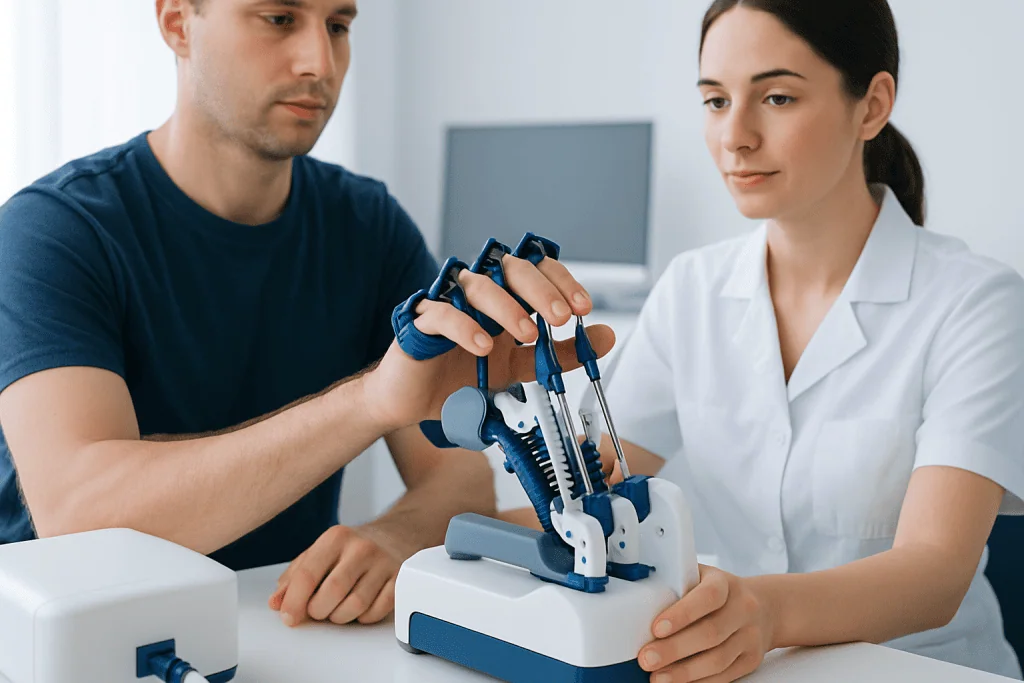
Recovery timelines vary widely. A minor soft tissue injury may improve within weeks, while a tendon repair, fracture, nerve injury, or complex surgery may require several months of guided rehabilitation. The exact plan depends on the diagnosis, type of procedure, fixation method, tissue quality, age, general health, smoking status, diabetes control, and how the hand responds to therapy.
In the early phase, the main goals are protection, swelling control, wound care, pain reduction, and gentle movement if allowed. Some patients need a custom splint to protect a repair or keep a joint in a safe position. Others may be encouraged to begin specific controlled motion early to prevent adhesions and stiffness. The key point is that early movement should be safe movement, not forceful or improvised activity.
As healing progresses, therapy usually shifts toward improving flexibility, tendon gliding, joint motion, scar mobility, grip and pinch strength, dexterity, and endurance. Later rehabilitation focuses on returning to real-life tasks. This may include work simulation, tool handling, keyboard use, household activities, childcare tasks, musical instruments, or sport-specific training.
Motion: Regaining Flexibility and Tendon Glide
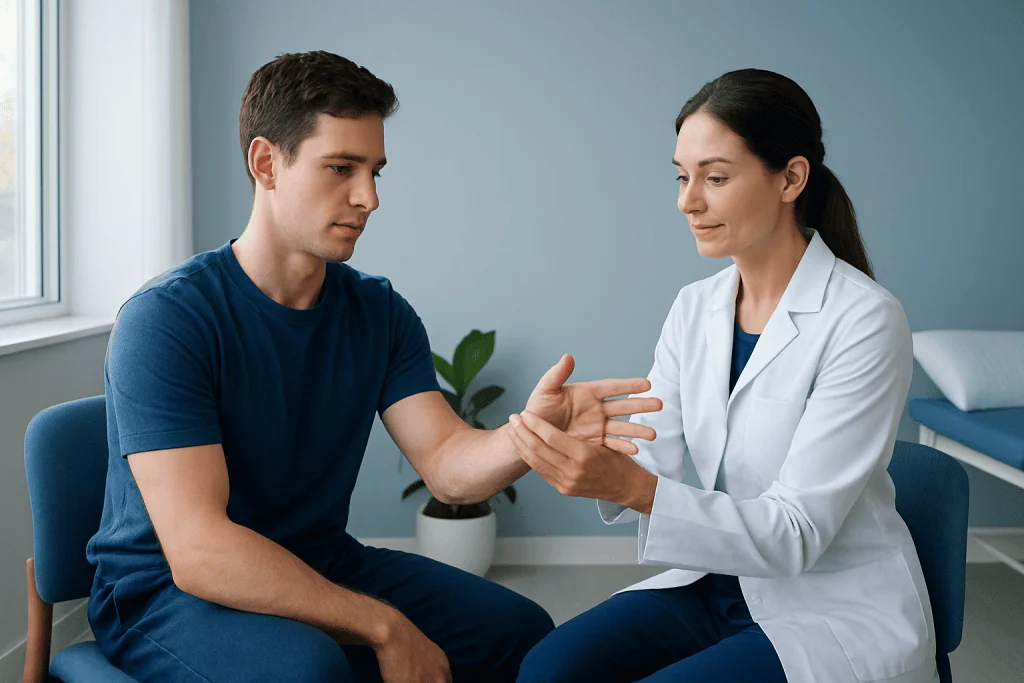
Stiffness is common after hand injury or surgery because swelling, pain, immobilization, scar tissue, and protective guarding can limit movement. A hand therapist may teach exercises that target specific joints and tendons. These may include finger bending and straightening, thumb opposition, wrist motion, tendon-gliding sequences, blocking exercises, and gentle stretching when appropriate.
Exercises are usually prescribed with clear instructions on frequency, repetitions, and limits. More exercise is not always better. Overdoing motion too early may increase swelling, pain, or stress on healing tissues. On the other hand, avoiding movement for too long can contribute to stiffness. The safest balance depends on the injury and should be guided by the treating team.
Patients are often asked to focus on smooth, comfortable movement rather than force. Warmth, elevation, or gentle massage may be used before exercise if recommended. After exercise, the hand may feel worked but should not have prolonged increased pain, marked swelling, color change, or loss of motion. These signs should be reported to the therapist or doctor.
Strength, Coordination, and Daily Function
Strengthening is usually introduced after the injured or repaired tissues have enough healing capacity. The timing is especially important after tendon repair, ligament reconstruction, fracture fixation, or nerve surgery. Beginning strengthening too early may risk irritation or tissue overload, while delaying it unnecessarily may slow functional recovery. The rehabilitation plan should therefore be individualized.
Hand strengthening may include putty exercises, graded grip tools, pinch training, wrist and forearm resistance exercises, rubber band work, weight-bearing progressions, or task-based activities. Therapy often starts with light resistance and advances gradually. The therapist may monitor grip strength, pinch strength, range of motion, swelling, pain, and how the hand performs in daily tasks.
Coordination and dexterity are also essential. A patient may regain strength but still struggle with buttons, coins, handwriting, phone use, or fine tools. Therapy can include activities that retrain precision, timing, and sensory feedback. For people returning to manual work, sports, or musical performance, rehabilitation may include progressive practice that reflects the real demands of the activity.
Scar Care, Swelling, and Sensitivity
Scar care is an important part of hand therapy because scars can become tight, raised, tender, itchy, or stuck to deeper tissues. When the wound is fully closed and the medical team confirms it is safe, therapy may include scar massage, moisturization, silicone products, compression, and movement that helps the skin glide. These methods are selected according to the wound stage and skin condition.
Swelling can limit motion and increase discomfort. Common strategies include elevation, gentle active movement, compression wraps or gloves, manual edema techniques, and avoiding long periods with the hand hanging down. Persistent or increasing swelling should be assessed, especially if it is associated with worsening pain, redness, heat, fever, or reduced finger movement.
Some patients experience hypersensitivity, numbness, tingling, or altered sensation after injury or surgery, particularly when nerves are involved. Desensitization may use graded textures, tapping, vibration, or functional contact with different materials. Sensory re-education may help the brain interpret touch more accurately over time. These techniques should be introduced carefully and adjusted to the patient’s tolerance.
Splints, Protection, and Self-care at Home
Splints are commonly used in hand rehabilitation to protect healing tissues, prevent deformity, reduce pain, or position the hand for better function. Some splints are worn continuously except during hygiene or exercises, while others are used only at night or during specific activities. The patient should understand when to wear the splint, how to clean it, and what problems to report.
Home self-care supports therapy progress. Patients are usually encouraged to keep appointments, perform only the prescribed exercises, protect the hand from excessive force, and monitor the skin. Good nutrition, hydration, sleep, and management of long-term conditions such as diabetes can also support healing. Smoking can interfere with circulation and tissue repair, so patients who smoke should ask their doctor for cessation support.
Helpful home habits may include:
- Keeping the hand elevated when swelling is present, if advised.
- Moving uninvolved joints such as the shoulder and elbow to avoid stiffness.
- Checking the skin under splints for pressure marks, blisters, or irritation.
- Avoiding lifting, gripping, pushing, or pulling beyond the approved limits.
- Using the hand in light daily tasks only when cleared by the care team.
When to See a Doctor or Hand Specialist
Most discomfort during rehabilitation is manageable and improves gradually. However, patients should contact their doctor or therapist if symptoms change unexpectedly. New or worsening numbness, increasing pain, spreading redness, wound drainage, fever, sudden swelling, finger color change, a splint that causes pressure, or a sudden inability to move a finger should be assessed promptly.
It is also important to seek medical advice if progress has plateaued, if the hand remains very stiff despite therapy, or if daily function is not improving as expected. Sometimes treatment plans need adjustment. Imaging, surgical review, medication review, splint modification, or a different rehabilitation approach may be needed.
International patients may benefit from coordinated care when surgery, therapy, and follow-up need to be planned together. Acibadem International’s multidisciplinary specialists and JCI-accredited hospitals diagnose and treat hand injuries and postoperative rehabilitation needs for international patients, with care plans tailored to the individual case.
Frequently asked questions
When should hand therapy start after injury or surgery?
The starting time depends on the injury and the surgeon’s instructions. Some patients begin gentle movement within days, while others need a period of protection in a splint or cast. Therapy should not begin with unsupervised exercises unless the treating doctor has cleared them.
Is pain normal during hand therapy exercises?
Mild discomfort or stretching can occur, especially when stiffness is present. Sharp pain, increasing swelling, prolonged throbbing, color change, or loss of movement is not something to ignore. Patients should tell their therapist or doctor so the plan can be adjusted safely.
How long does hand rehabilitation usually take?
The duration varies from a few weeks to several months depending on the injury, operation, healing, and functional goals. Tendon repairs, fractures, nerve injuries, and complex trauma often need longer rehabilitation. Regular follow-up helps the care team measure progress and modify treatment.
Can scar massage be done at home?
Scar massage may be done at home only after the wound is fully closed and the care team confirms it is safe. The therapist can teach the correct pressure, direction, and frequency. Massage should not be performed on open wounds, infected skin, or areas that have not healed.
Why is my hand still swollen after surgery?
Swelling is common after hand surgery because the hand has many small tissues in a limited space and is often held below heart level during daily activities. It usually improves with elevation, movement, and compression when recommended. Worsening swelling with redness, heat, fever, or severe pain should be checked by a doctor.
When can I return to work or sports?
Return to work or sports depends on tissue healing, strength, motion, pain control, and the demands of the activity. Desk tasks may be possible earlier than heavy manual work or contact sports. The safest timing should be agreed with the surgeon and therapist.
References
- American Society for Surgery of the Hand
- British Society for Surgery of the Hand
- American Academy of Orthopaedic Surgeons
- National Institute for Health and Care Excellence
- World Federation of Occupational Therapists
This article is for general information only and is not a substitute for professional medical advice. Please consult a qualified doctor about your individual situation.
Joint and spine care in Turkey — expert assessment & treatment
JCI-accredited · board-certified surgeons · reply within 24h
Add us as a Preferred Source to see more of our trusted health content across Google Search, AI Overviews and Discover.

More from the Health Library



Related Specialists
Asim Sakalli
Physical Medicine & Rehabilitation
Prof. Dr. Hale Göksever Çelik
Gynecology & Obstetrics
Dr. Erkan Aliosman
Emergency Service
Prof. Dr. Sefa Müezzinoğlu
Orthopedic Surgery & Traumatology