Head and Neck Cancer Treatment: How It Works, Results and What to Expect

Head and neck cancer treatment is planned by a multidisciplinary team and often uses more than one treatment approach. Surgery, radiation therapy and systemic treatments can be used alone or in combination, depending on the cancer site and stage.
Key Takeaways
- Head and neck cancer treatment is planned by a multidisciplinary team and often uses more than one treatment approach.
- Surgery, radiation therapy and systemic treatments can be used alone or in combination, depending on the cancer site and stage.
- Treatment aims to control or remove cancer while preserving breathing, swallowing, speech and appearance whenever possible.
- Recovery varies widely; nutrition, dental care, speech and swallowing therapy are important parts of care.
- New or persistent throat, mouth, neck or voice symptoms should be assessed promptly by a qualified clinician.
Head and neck cancer treatment is individualized and may combine surgery, radiation therapy, chemotherapy, targeted therapy, immunotherapy and supportive rehabilitation. The care plan depends on where the cancer started, its stage and biology, and the person’s overall health, speech, swallowing and nutrition needs.
Overview: How head and neck cancer treatment works
Head and neck cancer treatment uses one or more approaches to remove, destroy or control cancer cells. The main treatments are surgery, radiation therapy and systemic medicines, including chemotherapy, targeted therapy and immunotherapy. The most suitable plan depends on the exact location of the cancer, such as the mouth, throat, voice box, nasal area or salivary glands, as well as its stage, HPV status for certain throat cancers, and the person’s general health.
Care is usually coordinated by a multidisciplinary team. This may include head and neck surgeons, radiation oncologists, medical oncologists, radiologists, pathologists, dentists, dietitians, speech and swallowing therapists, nurses and rehabilitation specialists. Their shared goal is cancer control while protecting important functions such as swallowing, speaking, breathing, hearing and shoulder movement whenever possible.
Some early cancers can be treated with one main method, often surgery or radiation therapy. More advanced cancers may require combined treatment, such as surgery followed by radiation, or radiation given with a systemic medicine. Treatment recommendations should be based on careful staging and a discussion of benefits, possible side effects and the individual’s preferences.
Assessment and candidacy for treatment
Before treatment begins, the team confirms the diagnosis with a biopsy and determines the cancer stage. Assessment may include an examination of the mouth, throat and neck, a flexible camera examination through the nose, and imaging such as CT, MRI or PET-CT. Tests help show the tumor’s size, whether lymph nodes are involved and whether there is evidence of spread beyond the head and neck.
For cancers of the oropharynx, which includes the tonsils and base of the tongue, tumor testing may include HPV-related markers. This information can help guide prognosis and treatment discussions, although it does not replace full staging. Pathology findings, including tumor type and features seen under the microscope, are also important.
Doctors also assess factors that affect safety and recovery. These include nutritional status, dental health, kidney and liver function, hearing, lung and heart health, smoking and alcohol use, existing swallowing difficulties, and ability to attend appointments. A person may be offered a feeding-support plan, dental treatment before radiation, or speech and swallowing evaluation before treatment starts.
- Surgery may be suitable when the tumor can be removed with an acceptable effect on function and appearance.
- Radiation therapy may be used instead of surgery for some cancers or after surgery when there is a higher risk of recurrence.
- Systemic treatment may be combined with radiation for locally advanced disease or used for cancer that has returned or spread.
Treatment pathway: step by step

After staging, the multidisciplinary team reviews the case and explains the recommended pathway. If surgery is advised, the surgeon discusses the planned approach, whether lymph nodes in the neck need treatment, and whether reconstruction may be needed. Some tumors can be removed through the mouth using minimally invasive techniques; others require an external incision or more extensive reconstruction with tissue from another part of the body.
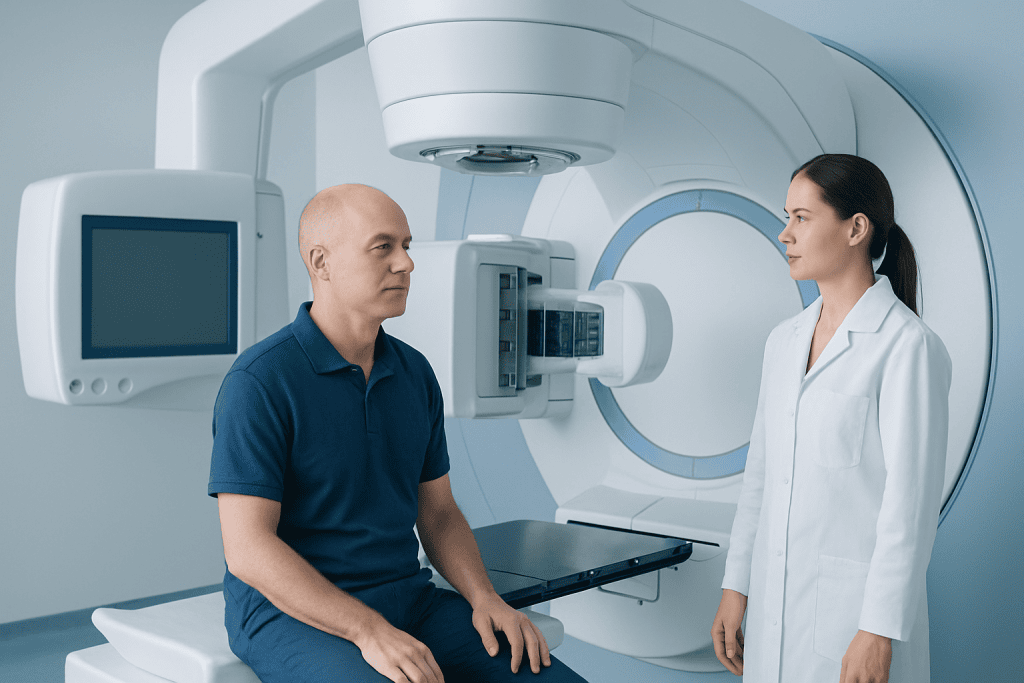
Radiation therapy is carefully planned before the first session. A custom mask helps keep the head and neck still, and planning scans allow the team to target the tumor area while limiting exposure to nearby healthy tissues. External-beam radiation is commonly delivered in short weekday sessions over several weeks. When chemotherapy or another systemic medicine is given with radiation, it is intended to make cancer cells more sensitive to radiation in selected situations.
Systemic medicines circulate through the bloodstream. Chemotherapy may be used with radiation, before or after other treatment in selected circumstances, or to control recurrent or metastatic disease. Targeted treatments and immunotherapy may be options for particular cancers, especially when disease has returned or spread. The choice depends on pathology, prior treatment, overall health and likely side effects.
Supportive care begins alongside cancer treatment, not only afterward. It may include pain relief, mouth care, nutrition support, management of nausea or skin changes, dental care, physical therapy, and speech and swallowing rehabilitation. A coordinated approach helps address both immediate side effects and longer-term function.
Benefits, risks and side effects
The potential benefit of head and neck cancer treatment is to cure cancer when it is localized or locally advanced, or to control disease and symptoms when cure is not possible. Early-stage cancers generally have more treatment options with less extensive therapy. Even when treatment is intensive, advances in surgical techniques, radiation planning and supportive care can help limit effects on normal tissues and daily life.
Side effects vary according to treatment type and the area treated. Surgery can cause pain, bleeding, infection, scarring, changes in speech or swallowing, shoulder weakness after neck surgery, or changes in appearance. Reconstruction and rehabilitation may be recommended when surgery affects the jaw, tongue, throat or other structures needed for function.
Radiation to the head and neck can cause tiredness, sore mouth and throat, dry mouth, taste changes, thick saliva, skin irritation, difficulty swallowing and weight loss. Some effects, particularly dry mouth, dental problems, tissue stiffness, thyroid changes or swallowing difficulties, may last longer and require ongoing care. Chemotherapy, targeted therapy and immunotherapy have different possible effects, such as low blood counts, nausea, kidney or nerve effects, skin reactions, diarrhea, or immune-related inflammation. The oncology team monitors for these problems and adjusts care when needed.
People should tell their team promptly about fever, inability to drink fluids, worsening pain, severe diarrhea, breathing difficulty, uncontrolled vomiting, new confusion, or rapidly increasing swelling. Early management of symptoms can prevent complications and support completion of treatment.
Recovery timeline and rehabilitation
Recovery after head and neck cancer treatment is individual. Following a smaller operation, a person may return to many usual activities within a few weeks, although healing and follow-up continue. Recovery after major surgery with reconstruction can take longer and may involve a hospital stay, temporary tubes for breathing or feeding, wound care and structured rehabilitation.
After radiation therapy, mouth and throat symptoms often build gradually during treatment and may be most noticeable in the first one to two weeks after it ends. Many acute effects begin improving over the following weeks, but energy, taste, saliva production and swallowing can take months to recover. Some people have lasting changes and benefit from long-term dental, nutrition and swallowing support.
Speech-language therapists can teach exercises and strategies to protect swallowing and communication. Dietitians help maintain calorie, protein and fluid intake, which can be challenging when chewing or swallowing hurts. Regular mouth care and dental follow-up are especially important after radiation because the teeth and jawbone may be more vulnerable to complications.
Follow-up appointments monitor healing, treatment effects and any sign of recurrence. They may include physical examinations, camera examinations, imaging when indicated, thyroid testing after neck radiation, and discussions about tobacco cessation, alcohol reduction, emotional well-being and return to work or social activities.
What is the average life expectancy for someone with head and neck cancer?
There is no single average life expectancy that applies to everyone with head and neck cancer. Outlook depends strongly on the original cancer site, stage at diagnosis, whether nearby lymph nodes or distant organs are involved, tumor biology such as HPV association in certain throat cancers, response to treatment, and overall health.
Many people with early-stage disease are treated successfully, while more advanced or recurrent cancer may require more intensive treatment and can have a less favorable outlook. Clinicians often discuss prognosis using survival estimates for groups of people, but these estimates cannot predict an individual outcome. They may also be based on people treated years earlier, before newer techniques and medicines became available.
A treating oncology team is best placed to explain prognosis in a personal and sensitive way after reviewing the pathology, imaging and treatment response. Asking what the treatment aims to achieve and what factors most influence the outlook can help people and families make informed decisions.
How fast do head and neck cancers grow?
Head and neck cancers do not all grow at the same rate. Their growth can vary with the cancer type, location, tumor biology and immune factors. Some cause symptoms or become noticeable over weeks to months, while others may develop more gradually. It is not possible to judge growth rate reliably from symptoms alone.
A persistent mouth ulcer, hoarse voice, swallowing difficulty, neck lump, one-sided throat or ear pain, coughing up blood, unexplained weight loss, or a blocked nose that does not improve deserves medical assessment. These symptoms can also have non-cancer causes, but evaluation is important when they persist, recur or worsen.
Once cancer is suspected, timely assessment helps avoid unnecessary delay. This does not mean every symptom is an emergency; rather, it means arranging review with a doctor, dentist or ear, nose and throat specialist so the cause can be identified and treated appropriately.
How serious is head and neck cancer?
Head and neck cancer is a serious condition because it can affect vital functions, including breathing, eating, swallowing and speaking, and some cancers can spread to lymph nodes or other organs. However, seriousness varies considerably. When found early, many head and neck cancers can be treated effectively, and treatment planning increasingly focuses on both cancer control and quality of life.
More advanced cancers may need combined treatment and closer follow-up. In all stages, supportive care matters: maintaining nutrition, managing pain, protecting oral health, stopping tobacco use and limiting alcohol can improve well-being during and after treatment. Emotional support is also valuable, as changes in speech, appearance and daily routines can be difficult.
People should avoid assuming the worst based on symptoms or an online description. A confirmed diagnosis, accurate staging and a specialist discussion provide the clearest basis for understanding the situation and available options.
When to seek medical care
Medical advice should be sought for symptoms in the mouth, throat, voice box or neck that last longer than two to three weeks, particularly if there is no clear explanation. Examples include a mouth sore that does not heal, a new neck lump, persistent hoarseness, painful or difficult swallowing, unexplained bleeding in the mouth or nose, or ongoing one-sided ear or throat pain.
Urgent medical assessment is appropriate for trouble breathing, inability to swallow saliva, significant bleeding, rapidly enlarging neck swelling, severe dehydration or a sudden major change in alertness. These symptoms may have causes other than cancer, but they require prompt evaluation.
Acibadem International’s multidisciplinary specialists at JCI-accredited hospitals support international patients with diagnosis, treatment planning and rehabilitation for head and neck cancers. A qualified clinician can explain whether surgery, radiation therapy, medicines or combined treatment may be appropriate for the individual situation.
Frequently asked questions
How long does it take to recover from head and neck cancer treatment?
Recovery can range from several weeks after a smaller procedure to many months after major surgery, radiation therapy or combined treatment. Acute radiation side effects commonly improve in the weeks after treatment, while swallowing, energy, taste and dry mouth may take longer to improve. Rehabilitation, nutrition support and regular follow-up can make recovery safer and more manageable.
Can head and neck cancer be treated without surgery?
Yes. For some cancers, radiation therapy may be used as the main treatment, sometimes with chemotherapy or another systemic medicine. Whether this is appropriate depends on the tumor site, stage, pathology and expected impact on function. A multidisciplinary team can compare non-surgical and surgical options.
Will head and neck cancer treatment affect swallowing?
Swallowing may be affected by the cancer itself and by surgery or radiation treatment, especially when the mouth, throat or voice box is involved. A speech-language therapist can assess swallowing before, during and after treatment and provide exercises or strategies. Early nutrition support is important if eating or drinking becomes difficult.
Is chemotherapy always needed for head and neck cancer?
No. Chemotherapy is not necessary for every head and neck cancer. It may be combined with radiation for some locally advanced cancers or used for recurrent or metastatic disease, while many early cancers can be treated with surgery or radiation alone. The decision is individualized.
Can head and neck cancer return after treatment?
It can return in some people, which is why regular follow-up is important after treatment. Follow-up visits help clinicians monitor recovery, manage long-term effects and investigate new symptoms promptly. Avoiding tobacco and limiting alcohol are important parts of reducing risk and supporting overall health.
What should a person eat during head and neck cancer treatment?
Food choices should be adapted to symptoms, treatment and swallowing ability. Soft, moist, high-protein and high-calorie foods may be easier for some people, while a dietitian can recommend safe changes when mouth soreness, dry mouth or weight loss occurs. People should not restrict food or use supplements in place of medical nutrition advice without speaking with their care team.
References
- World Health Organization
- National Cancer Institute
- American Cancer Society
- European Society for Medical Oncology
- American Society of Clinical Oncology
This article is for general information only and is not a substitute for professional medical advice. Please consult a qualified doctor about your individual situation.
Neck Cancer in Turkey — costs, top hospitals & a free quote
JCI-accredited · board-certified surgeons · reply within 24h
Add us as a Preferred Source to see more of our trusted health content across Google Search, AI Overviews and Discover.