Head Injury: An Evidence-Based Guide for Patients

A head injury can range from a minor scalp bump to a traumatic brain injury affecting brain function. Warning signs such as worsening headache, repeated vomiting, confusion, seizure, or loss of consciousness need prompt medical care.
Key Takeaways
- A head injury can range from a minor scalp bump to a traumatic brain injury affecting brain function.
- Warning signs such as worsening headache, repeated vomiting, confusion, seizure, or loss of consciousness need prompt medical care.
- Diagnosis may include a physical and neurological exam, observation, and sometimes imaging such as CT or MRI.
- Treatment depends on severity and may include rest, symptom monitoring, medication guidance, rehabilitation, or surgery.
- Children, older adults, people taking blood thinners, and anyone with a high-impact injury should be assessed carefully.
Head injury means damage caused by a blow, jolt, or penetrating trauma to the head, and it can affect the scalp, skull, or brain. Many head injuries are mild, but some need urgent evaluation because symptoms may appear later or worsen over time.
Overview
A head injury is any trauma involving the scalp, skull, face, or brain. In everyday use, the term often includes mild injuries such as bumps and cuts, as well as more serious problems such as concussion or bleeding around the brain. The key point for patients is that the seriousness of a head injury is not judged only by the size of the bump or whether there is a cut. What matters most is how the person feels, how the brain is functioning, and whether symptoms are changing over time.
Head injuries are common after falls, sports accidents, road traffic incidents, workplace injuries, and assaults. Some symptoms appear immediately, while others develop over several hours. Because of this, careful observation is often just as important as the first exam. A person may seem well at first but later develop warning signs that need urgent medical attention.
Doctors often divide head injury into mild, moderate, and severe forms. A mild head injury may include a brief change in alertness, headache, dizziness, or a concussion without major imaging findings. More severe injuries can involve skull fractures, bleeding, swelling, or direct damage to brain tissue, also called traumatic brain injury. Early assessment helps identify who can recover safely at home and who needs hospital monitoring or treatment.
Symptoms and possible warning signs
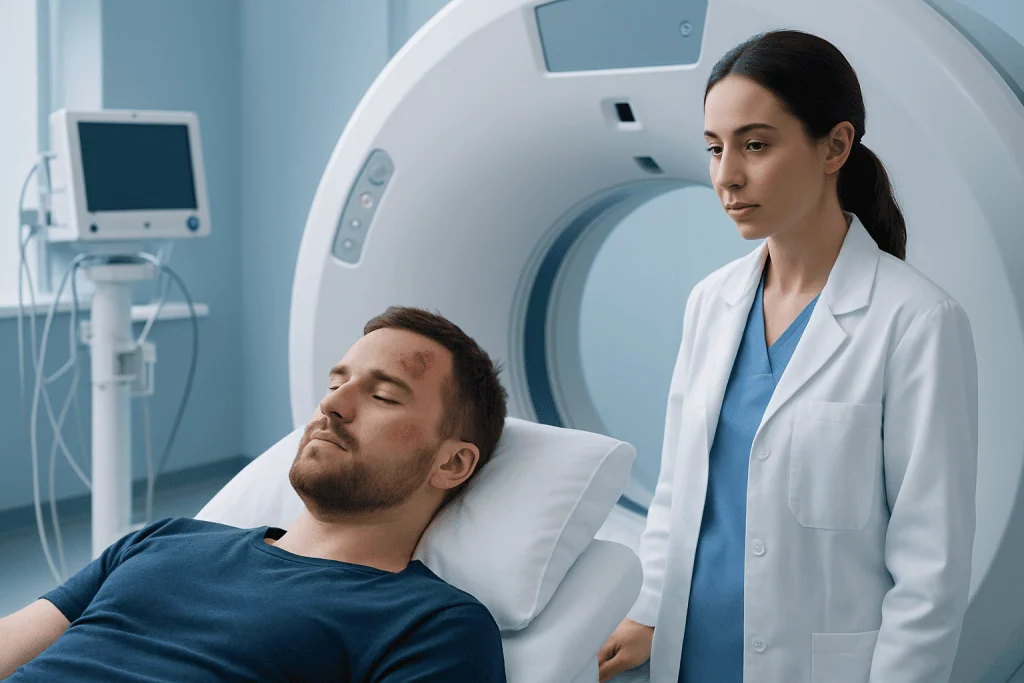
Head injury symptoms vary widely. Mild symptoms may include headache, scalp tenderness, dizziness, nausea, sensitivity to light or noise, fatigue, and trouble concentrating. Some people notice memory gaps around the event, feel mentally slowed, or become more emotional than usual. These symptoms are commonly seen after concussion and often improve gradually with time and guided recovery.
More concerning symptoms suggest possible bleeding, swelling, or significant brain dysfunction. These include loss of consciousness, repeated vomiting, increasing confusion, unusual drowsiness, slurred speech, weakness, numbness, poor balance, seizure, or severe worsening headache. One pupil becoming larger than the other, clear fluid leaking from the nose or ears, or obvious deformity of the skull also require urgent assessment.
Symptoms can look different in children, especially infants who cannot describe what they feel. Warning signs in young children may include persistent crying, difficulty waking, repeated vomiting, poor feeding, unusual irritability, limpness, or reduced interest in normal play. Older adults may also present differently, sometimes with subtle confusion or sleepiness after a fall. A lower threshold for evaluation is usually appropriate in these groups.
- Common mild symptoms: headache, dizziness, nausea, brief confusion, sensitivity to light, tiredness
- Urgent warning signs: repeated vomiting, seizure, worsening headache, weakness, confusion, passing out
- Special caution groups: infants, older adults, and people taking blood thinners
How head injuries happen and who is at higher risk
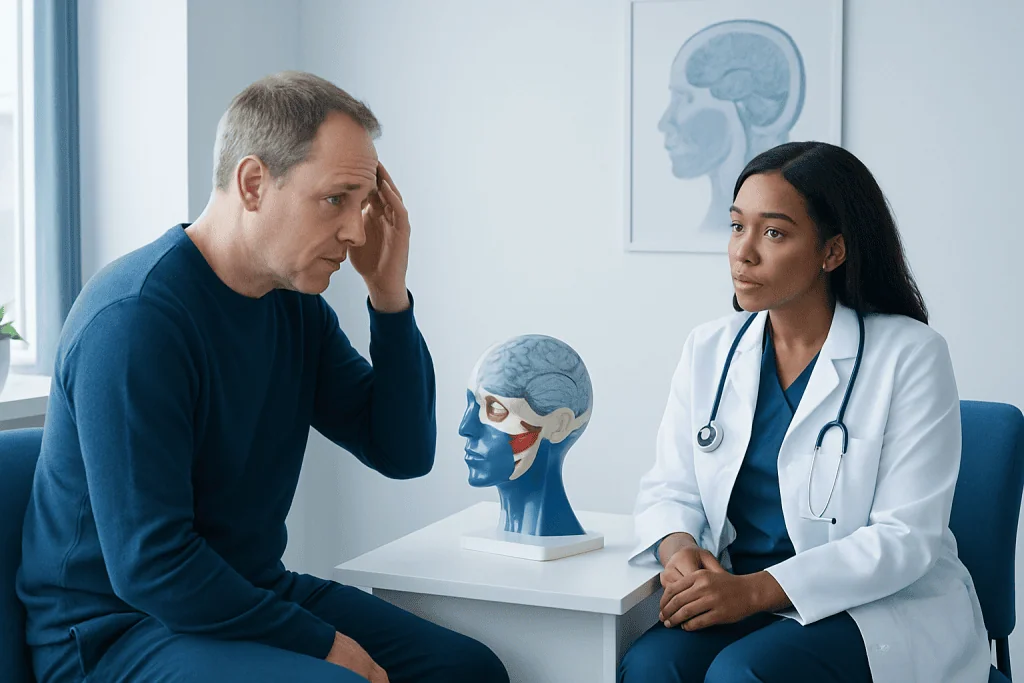
The most common causes of head injury are falls, contact sports, bicycle or scooter crashes, motor vehicle collisions, and direct blows during daily activities or work. Head injuries can also occur during rapid acceleration and deceleration, even without a visible external wound. In these situations, the brain may move within the skull, leading to concussion or more serious internal injury.
Some factors increase the risk of both having a head injury and developing complications from one. Children are vulnerable because of play, sports, and falls. Older adults are at increased risk because balance problems, weaker bones, and medications can make even a relatively minor fall more important. People who take anticoagulants or antiplatelet medicines deserve particular attention because bleeding can occur more easily and may not be obvious at first.
Alcohol or drug use can raise the chance of injury and make symptoms harder to interpret. Previous concussion, certain neurological conditions, and high-risk occupations may also affect recovery and management. In some cases, a head injury may happen together with neck trauma, facial fractures, or other body injuries, so clinicians assess the whole person rather than the head alone.
Diagnosis and medical assessment
Assessment begins with understanding what happened, whether there was loss of consciousness, how symptoms have changed, and whether there are risk factors such as blood-thinning medication. Doctors then perform a physical examination that checks alertness, memory, speech, coordination, pupils, eye movements, strength, sensation, and signs of scalp or skull injury. The neck may also be examined because head and cervical spine injuries can occur together.
Not every head injury needs a scan. Imaging is usually guided by clinical findings and established decision tools. A CT scan is commonly used in urgent settings because it can quickly detect bleeding, swelling, or skull fracture. An MRI may be used later in selected cases when symptoms continue or when doctors need more detail about the brain. If a concussion is suspected, the diagnosis is often clinical, meaning it is based on symptoms and examination rather than imaging alone.
Observation can be an important part of diagnosis. Some patients are monitored in the emergency department or hospital because symptoms can evolve over time. When someone goes home, they are usually given clear instructions about what symptoms to watch for and when to return immediately. If symptoms are prolonged, referral to specialists in neurology, rehabilitation, or related fields may be recommended. Depending on the situation, evaluation may involve neurology assessment or advanced MRI imaging.
Treatment options and recovery
Treatment depends on the type and severity of the head injury. Minor scalp wounds may need cleaning, closure, and routine wound care. Mild concussion is usually managed with a short period of rest followed by a gradual return to normal mental and physical activity under medical guidance. Complete bed rest for long periods is not usually advised; instead, recovery is supported by paced activity, adequate sleep, hydration, and avoiding another head injury during the healing period.
Pain relief may be recommended, but medication choices should follow a clinician’s advice, especially soon after the injury. Some patients need treatment for nausea, balance symptoms, sleep disturbance, or headaches. If symptoms persist, rehabilitation may include physical therapy, vestibular therapy, occupational therapy, speech therapy, or cognitive support. Persistent headaches may overlap with conditions discussed on pages such as migraine, although a doctor should confirm the cause.
Moderate or severe head injuries may require hospital admission, close neurological monitoring, treatment to control swelling, and sometimes surgery. Neurosurgical care may be needed for skull fractures, bleeding, pressure on the brain, or penetrating trauma. In selected cases, this can involve neurosurgical treatment. Recovery can continue for weeks to months, and follow-up is important because mood, sleep, memory, and concentration may take time to improve even after the immediate danger has passed.
Prevention and self-care after a head injury
Many head injuries can be reduced through practical safety steps. Wearing seat belts, using age-appropriate car seats, and choosing well-fitted helmets for cycling, scooters, horseback riding, skiing, or contact sports are important protective measures. At home, fall prevention matters, especially for older adults. Good lighting, secure rugs, handrails, proper footwear, and reviewing medications that affect balance can all help reduce risk.
After a mild head injury, self-care focuses on rest, observation, and a gradual return to normal activity. Alcohol, recreational drugs, and activities with a risk of another blow to the head should be avoided until a clinician says it is safe. Screen time, work, study, and exercise may need temporary adjustment if they worsen symptoms. It is often helpful for a trusted adult to stay with the injured person for the first day if possible, especially if symptoms are still changing.
Written instructions are useful because concentration can be reduced after a concussion. Patients should seek medical advice before returning to driving, operating machinery, or high-risk sports. Children and athletes generally need a structured return-to-learn or return-to-play plan. For international patients needing coordinated evaluation and recovery planning, Acibadem International’s multidisciplinary specialists at JCI-accredited hospitals diagnose and treat head injury and related neurological conditions.
When to seek medical care
Medical care should be sought urgently after any head injury with loss of consciousness, seizure, repeated vomiting, severe or worsening headache, confusion, unusual behavior, weakness, numbness, trouble speaking, or increasing drowsiness. Emergency assessment is also important after a high-speed crash, a significant fall, a penetrating injury, or if there may be a skull fracture. A person who cannot be reliably observed at home should also be assessed in a medical setting.
Even if symptoms seem mild, medical advice is recommended for infants, older adults, people taking blood thinners, and anyone with a bleeding disorder. It is also sensible to seek care if symptoms do not improve over several days, if work or school functioning is clearly affected, or if there are ongoing headaches, dizziness, sleep problems, memory concerns, or mood changes. A lingering symptom pattern may reflect concussion and deserves review.
Patients should not drive themselves to emergency care if they are dizzy, confused, or sleepy. If there is any concern about worsening brain injury, calling emergency services is the safest option. Prompt evaluation helps doctors rule out dangerous complications and guide a safer recovery plan.
Frequently asked questions
What is considered a head injury?
A head injury is trauma to the scalp, skull, face, or brain. It can be as minor as a scalp bruise or as serious as a concussion, skull fracture, or bleeding around the brain.
Can a head injury be serious even without losing consciousness?
Yes. Many people with concussion or even more significant brain injury do not lose consciousness. Doctors look at the full pattern of symptoms, the mechanism of injury, examination findings, and sometimes imaging.
How long do symptoms last after a mild head injury?
Many mild symptoms improve over days to a few weeks, but recovery times vary. Some people have longer-lasting problems with headache, concentration, dizziness, sleep, or mood and should follow up with a clinician.
Should someone sleep after a head injury?
Sleep itself is not harmful after a mild head injury if the person has already been assessed or has no warning signs. The main concern is making sure they can be monitored and that urgent symptoms such as increasing confusion, repeated vomiting, or difficulty waking are not missed.
When is a CT scan needed for a head injury?
A CT scan is not needed for every head injury. It is usually considered when there are red-flag symptoms, concerning examination findings, use of blood thinners, or a mechanism of injury that raises concern for bleeding or skull fracture.
What should be avoided after a concussion or mild head injury?
Patients are usually advised to avoid alcohol, recreational drugs, and activities that could cause another head impact until medically cleared. Strenuous physical activity, driving, heavy screen time, and demanding mental tasks may also need temporary adjustment if they worsen symptoms.
This article is for general information only and is not a substitute for professional medical advice. Please consult a qualified doctor about your individual situation.
Hair transplant in Turkey — costs, graft counts & a free assessment
JCI-accredited · board-certified surgeons · reply within 24h
Add us as a Preferred Source to see more of our trusted health content across Google Search, AI Overviews and Discover.

More from the Health Library

Best Rice for Diabetics: A Complete Medical Overview

Face Mask Using Honey: An Evidence-Based Guide for Patients

Alcohol: An Evidence-Based Guide for Patients

Proper Squat Form: What Patients Need to Know

Nux Vomica: An Evidence-Based Guide for Patients