Hearing AIDS: A Complete Medical Overview

Hearing aids can help adults and children with many forms of hearing loss, especially sensorineural hearing loss. A hearing test and professional fitting are important because hearing aids are not one-size-fits-all devices.
Key Takeaways
- Hearing aids can help adults and children with many forms of hearing loss, especially sensorineural hearing loss.
- A hearing test and professional fitting are important because hearing aids are not one-size-fits-all devices.
- Modern hearing aids can improve speech understanding, but benefit depends on the type of hearing loss, listening environment, and regular use.
- Adjustment takes time; the brain often needs weeks to adapt to amplified sound.
- Ongoing follow-up, cleaning, and device maintenance are essential for comfort and best performance.
Hearing aids are small electronic devices that help many people hear speech and everyday sounds more clearly. They do not restore normal hearing, but when chosen and fitted properly, they can significantly improve communication, participation, and quality of life.
Overview: What Hearing Aids Do
Hearing aids are medical devices designed to make sounds easier to hear for people with hearing loss. They work by picking up sound, processing it, and delivering an amplified signal into the ear. For many people, this can make conversation clearer, reduce listening effort, and support safer daily living.
These devices are not the same as general sound amplifiers. A true hearing aid is selected and adjusted based on a person’s hearing test, ear anatomy, communication needs, and lifestyle. This individualized fitting is important because hearing loss varies from person to person in both degree and pattern.
Hearing aids do not cure hearing loss and do not recreate natural hearing exactly. However, modern devices can improve access to speech, environmental sounds, and social interaction. People often notice benefits in one-to-one conversation, watching television at a comfortable volume, hearing alarms, and participating in family or work activities.
Hearing aids are commonly used for age-related hearing loss, noise-related hearing damage, and some other long-term hearing conditions. In some situations, other approaches may be considered, including medical treatment for an ear disorder, hearing loss evaluation, or procedures such as cochlear implant treatment for severe hearing loss when hearing aids no longer provide enough benefit.
Who May Benefit From Hearing Aids
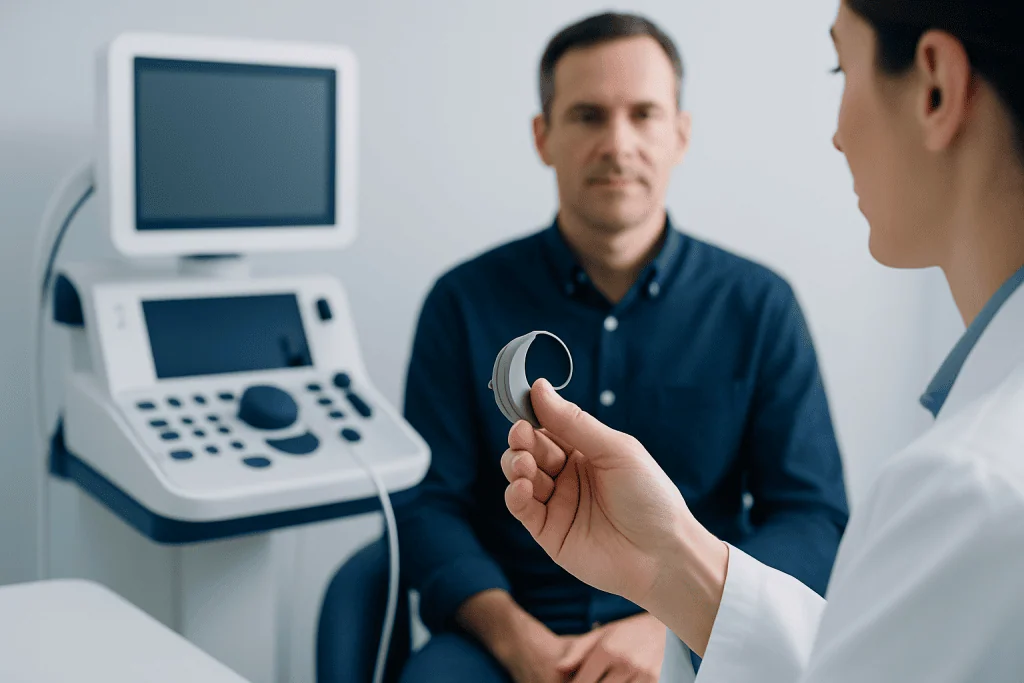
People who struggle to follow speech, especially in groups or background noise, may benefit from hearing aids. Common signs include frequently asking others to repeat themselves, misunderstanding words, feeling that people mumble, turning the television up louder than others prefer, or avoiding social situations because listening has become tiring.
Hearing aids are most often recommended for sensorineural hearing loss, which usually results from aging, long-term noise exposure, or inner ear damage. They may also help some people with mixed hearing loss, depending on the cause. If hearing loss is caused by wax blockage, fluid, infection, or another treatable ear problem, the first step is usually medical care rather than immediate amplification.
Children may also use hearing aids, but pediatric fitting requires specialized assessment and regular monitoring because hearing supports speech and language development. In adults, hearing aids can help maintain communication, independence, and participation in work and relationships.
Benefit depends on several factors, including how much hearing is reduced, whether one or both ears are affected, the health of the inner ear and auditory nerve, and how consistently the devices are used. Even when hearing aids are appropriate, realistic expectations are important: they can improve hearing, but they may not remove all difficulty in very noisy places.
Types of Hearing Aids and Their Features

Hearing aids come in several styles. Behind-the-ear devices sit behind the ear and connect to an earmold or thin tube. Receiver-in-canal designs place a small speaker in the ear canal and are widely used because they can be discreet while still offering strong sound quality. In-the-ear and in-the-canal models fit more directly in the outer ear and may be suitable for selected users depending on hearing level and dexterity.
The best style depends on hearing needs, ear shape, comfort, ease of handling, and cosmetic preference. Some people need larger devices because they are easier to insert, remove, and clean. Others may prefer smaller options if their hearing loss and ear anatomy allow it. A hearing specialist can explain which styles are medically and practically suitable.
Modern hearing aids may include directional microphones, feedback reduction, noise management, rechargeable batteries, telecoil technology, smartphone connectivity, and custom listening programs. These features can make daily use more convenient, but the most important factor is still the quality of fitting and programming.
For people with certain ear diseases or structural ear issues, standard hearing aids may not be the only option. Depending on the clinical situation, related ENT assessment or procedures such as ear surgery may be part of care. A specialist may also evaluate symptoms linked with otitis media or other ear conditions before recommending amplification.
How Hearing Aids Are Chosen and Fitted
Choosing hearing aids usually begins with a full hearing evaluation. This often includes a medical history, ear examination, and hearing tests performed by an audiologist or ear specialist. The results show the type and degree of hearing loss and help determine whether hearing aids are likely to help.
After testing, the clinician discusses listening goals, daily environments, hand function, vision, and previous hearing aid experience. Someone who spends time in meetings, restaurants, or family gatherings may need different settings than a person who mainly listens in quiet environments. Comfort, ease of use, and the need for one or two devices are also reviewed carefully.
Programming is based on the measured hearing levels rather than guesswork. During the fitting, the hearing aid’s output is adjusted so soft sounds become more audible while louder sounds stay comfortable. The person is then taught how to place the device, charge or change batteries, clean it, and recognize common problems such as feedback or blocked tubing.
Follow-up visits are an important part of care. It is common to need fine-tuning after real-world use. If hearing loss progresses or listening needs change, the settings may need to be updated. Some patients also undergo a broader hearing test evaluation when hearing seems to change, speech clarity worsens, or one ear performs differently from the other.
What to Expect After Starting Hearing Aids
Many people expect instant, perfect hearing, but adaptation is usually gradual. At first, everyday sounds such as footsteps, paper rustling, kitchen noise, or traffic may seem unusually prominent. This does not necessarily mean the device is too loud; rather, the brain is relearning how to process sounds that were previously reduced or absent.
Consistent daily use helps this adjustment process. Most clinicians encourage building up wear time and practicing in a variety of settings, starting with quiet conversation and moving toward more challenging environments. Listening in background noise may improve, but it often remains more difficult than listening in a quiet room.
Speech may sound clearer over time as the user becomes familiar with amplified sound. Family members can help by speaking clearly, facing the listener, and reducing competing noise when possible. Additional communication strategies, such as good lighting and minimizing distance between speakers, can improve the benefit of hearing aids.
If a device feels painful, whistles frequently, or does not seem to help, follow-up review is important rather than abandoning use. Problems may relate to fit, earwax, incorrect settings, hearing changes, or unrealistic expectations. Early support often makes long-term success more likely.
Care, Maintenance, and Self-Care
Regular cleaning and storage help hearing aids work properly and last longer. Users are usually advised to keep devices dry, wipe them daily, and remove earwax from openings as instructed by their hearing professional. Moisture, skin oils, hairspray, and dust can interfere with microphones and receivers.
Batteries should be charged or replaced according to the manufacturer’s guidance. Rechargeable devices need a consistent charging routine, while traditional batteries should be stored safely and kept away from children and pets. If sound becomes weak or distorted, a simple maintenance step such as replacing a wax filter or recharging the device may solve the issue.
Hearing health also includes protecting the ears from further damage. Using hearing protection around loud tools, concerts, machinery, or firearms can help preserve remaining hearing. Managing chronic health conditions, attending follow-up hearing checks, and treating ear infections or wax impaction promptly are also useful self-care steps.
People who wear hearing aids should not try to clean deep inside the ear canal with cotton swabs or sharp objects. This can push wax farther in or injure the ear. If hearing suddenly worsens, the device stops helping, or there is discomfort, professional assessment is safer than home troubleshooting alone.
Limits of Hearing Aids and Other Treatment Options
Although hearing aids can be very helpful, they have limits. They amplify and process sound, but they cannot fully correct sound distortion caused by severe inner ear damage. In some people, speech may still be hard to understand even when sound is loud enough, particularly in noisy environments.
Some conditions require treatment beyond hearing aids. Earwax, infection, eardrum problems, fluid behind the eardrum, or certain middle ear disorders may need medical or surgical care. In these situations, the goal is first to identify whether the hearing problem is temporary, treatable, or progressive.
When hearing loss becomes severe to profound and hearing aids no longer provide enough speech understanding, other technologies may be discussed. Depending on the person’s test results and medical evaluation, options may include implantable hearing devices or cochlear implants. These are used only after careful specialist assessment.
People with balance symptoms, one-sided hearing loss, ringing in one ear, or ear pressure may also need ENT review because these features can suggest an underlying condition rather than simple age-related decline. A structured assessment helps ensure that the chosen treatment matches the cause of the hearing difficulty.
When to Seek Medical Care
Medical care should be sought if hearing loss appears suddenly, affects only one ear, or is accompanied by ear pain, discharge, dizziness, severe ringing, facial weakness, or a sense of blocked hearing that does not improve. These symptoms can point to conditions that need prompt diagnosis. Sudden hearing loss in particular should not be ignored.
It is also sensible to arrange an evaluation if hearing gradually worsens, communication is becoming difficult, or loved ones notice repeated misunderstandings. A professional assessment can show whether hearing aids are likely to help or whether another ear problem needs treatment first.
People already using hearing aids should seek review if a device causes pain, repeated feedback, skin irritation, or limited benefit despite regular use. Follow-up can often solve fit or programming issues and may detect hearing changes that require a new plan.
Near the end of the care pathway, some patients value coordinated support from ENT specialists, audiologists, and rehabilitation teams. Acibadem International’s multidisciplinary specialists in JCI-accredited hospitals diagnose and treat hearing conditions for international patients when more advanced evaluation or treatment is needed.
Frequently asked questions
Do hearing aids restore normal hearing?
No. Hearing aids improve access to sound and speech, but they do not fully restore natural hearing. Many people hear and communicate better with them, especially after proper fitting and an adjustment period.
How long does it take to get used to hearing aids?
Adjustment often takes days to weeks, and sometimes longer. The brain needs time to adapt to sounds that may not have been heard clearly for a long time. Regular daily use usually helps this process.
Should both ears be fitted if both ears have hearing loss?
Often yes, if hearing loss affects both ears and there is no medical reason to do otherwise. Two hearing aids can improve sound balance, awareness of the environment, and understanding of speech in many listening situations.
Can hearing aids help with tinnitus?
For some people, yes. By improving access to outside sounds, hearing aids may make tinnitus less noticeable. Some devices also include tinnitus support features, but suitability varies by person.
What is the difference between hearing aids and sound amplifiers?
Hearing aids are medical devices adjusted to a person’s hearing test and communication needs. General sound amplifiers increase many sounds without individualized fitting, so they may not be appropriate for hearing loss management.
When are hearing aids not enough?
They may not provide enough benefit when hearing loss is severe to profound or when speech understanding remains poor despite correct fitting. In those cases, a specialist may discuss other options after a full evaluation.
References
- World Health Organization
- National Institute on Deafness and Other Communication Disorders
- American Academy of Audiology
- American Speech-Language-Hearing Association
- National Institute for Health and Care Excellence
This article is for general information only and is not a substitute for professional medical advice. Please consult a qualified doctor about your individual situation.
Explore treatments in Turkey — costs, top hospitals & a free quote
JCI-accredited · board-certified surgeons · reply within 24h
Add us as a Preferred Source to see more of our trusted health content across Google Search, AI Overviews and Discover.