Heel Pain: Common Causes, Related Conditions, and When to See a Doctor

Heel pain is a symptom, not a diagnosis, and can have several different causes. Plantar fasciitis is one of the most common reasons for pain under the heel, especially with the first steps in the morning.
Key Takeaways
- Heel pain is a symptom, not a diagnosis, and can have several different causes.
- Plantar fasciitis is one of the most common reasons for pain under the heel, especially with the first steps in the morning.
- Pain at the back of the heel may be related to the Achilles tendon, bursitis, or bone changes.
- Supportive shoes, stretching, and reducing repetitive strain often help mild heel pain improve.
- Medical review is important if heel pain is severe, follows an injury, or does not improve over time.
Heel pain is a common symptom that often comes from strain on the tissues supporting the heel, especially the plantar fascia or Achilles tendon. While many cases improve with rest, supportive footwear, and activity changes, persistent or severe heel pain may need medical evaluation to identify the exact cause.
Overview: What heel pain usually means
Heel pain is most often linked to irritation or strain in the structures that absorb force during standing, walking, and exercise. In many people, the pain comes from overuse, poor foot support, tight calf muscles, or inflammation where tendons and connective tissue attach to the heel bone. The exact location of the pain often gives useful clues: pain under the heel commonly points to plantar fascia problems, while pain at the back of the heel may involve the Achilles tendon or nearby bursae.
Because the heel carries body weight with every step, even a small problem can become noticeable in daily life. Pain may begin gradually, appear after a change in activity, or develop with prolonged standing on hard surfaces. Some people feel sharp pain with their first steps in the morning, while others notice soreness that worsens during or after activity.
Although heel pain is often not serious, it should not be ignored when it is persistent, severe, or associated with swelling, redness, numbness, or difficulty bearing weight. A proper assessment helps distinguish common overuse conditions from less common causes such as fracture, nerve irritation, inflammatory arthritis, or infection.
Common symptoms and how heel pain can feel
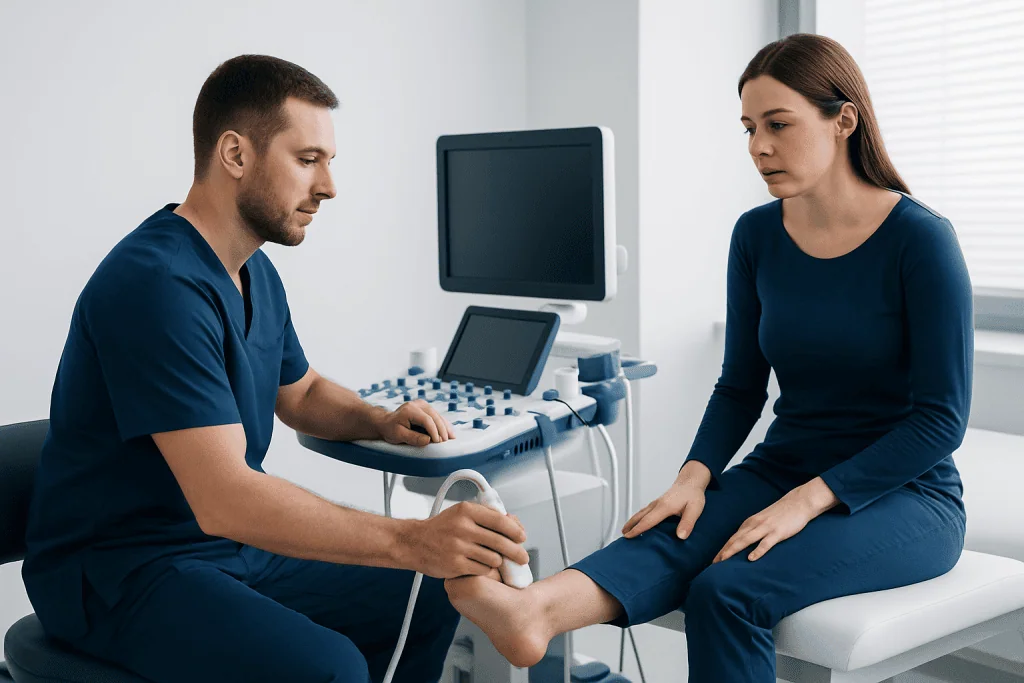
Heel pain can feel different depending on the cause. Some people describe a stabbing pain under the heel with the first steps after getting out of bed. Others feel a dull ache after long periods of standing, burning discomfort around the heel, or tenderness at the back of the ankle where the Achilles tendon inserts into the heel bone.
The pain may be limited to one heel or affect both feet. It can be worse in the morning, after exercise, or after rest. In some cases, pain improves once the foot “warms up,” then returns later in the day. Swelling, stiffness, and tenderness to touch may also be present.
Symptoms that help guide evaluation include:
- Pain under the heel, especially with first steps
- Pain at the back of the heel or above it
- Heel pain that worsens after running, jumping, or prolonged standing
- Tight calf muscles or reduced ankle flexibility
- Swelling, bruising, redness, or warmth
- Numbness, tingling, or burning sensations
These details matter because heel pain is a broad symptom rather than a single disorder. Identifying patterns in timing, location, and triggers can help a doctor decide whether the problem is mechanical, inflammatory, nerve-related, or injury-related.
Common causes and related conditions
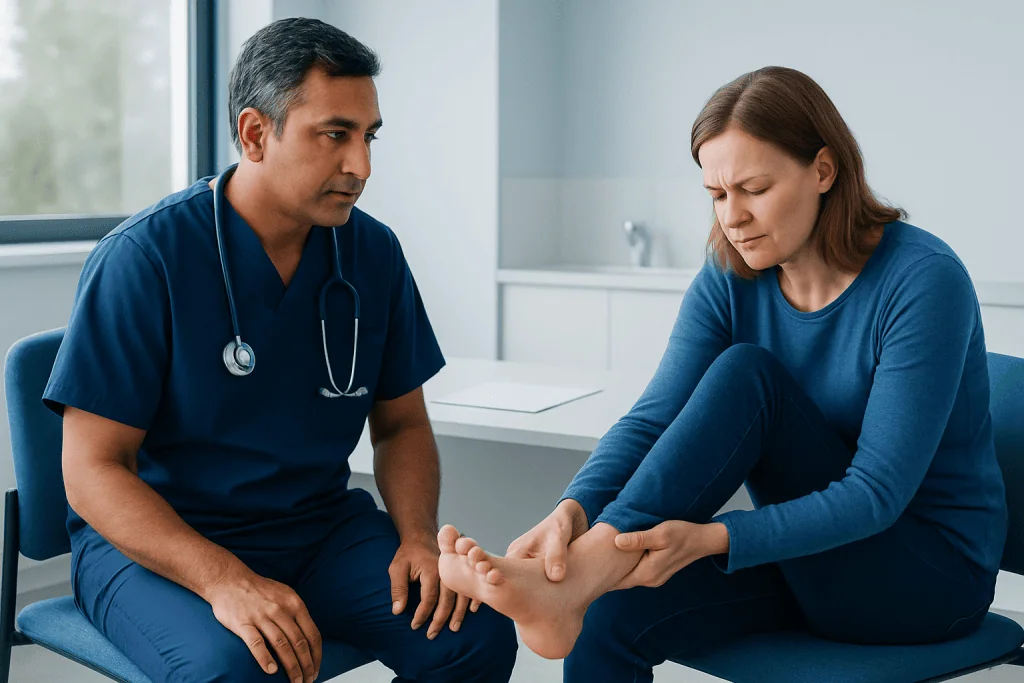
The most frequent cause of heel pain is plantar fasciitis, a condition involving irritation of the thick band of tissue that supports the arch of the foot. It usually causes pain under the heel and is often most noticeable with the first steps in the morning or after sitting. Tight calf muscles, prolonged standing, increased activity, excess strain on the arch, and unsupportive footwear can all contribute.
Pain at the back of the heel is often related to Achilles tendon problems, including tendon irritation or degeneration. Insertional Achilles tendinopathy affects the point where the tendon attaches to the heel bone, while retrocalcaneal bursitis involves inflammation of the cushioning sac near the tendon. A bony prominence at the back of the heel, sometimes called a Haglund deformity, may also irritate nearby tissues.
Other causes of heel pain include heel pad syndrome, stress fracture of the heel bone, nerve compression, and inflammatory joint conditions. Athletes and highly active individuals can develop overuse injuries from repetitive impact. People with flat feet, high arches, obesity, diabetes, or altered walking patterns may place more stress on heel structures. Less common but important causes include infection, systemic inflammatory disease, and referred pain from the lower back.
Sometimes heel pain appears together with broader foot or walking problems. In this setting, evaluation by specialists in foot and ankle care, orthopedic assessment, or physical therapy and rehabilitation may help clarify the source and guide treatment.
Risk factors that make heel pain more likely
Heel pain can affect people of many ages, but some factors make it more likely. Repetitive strain from running, dancing, court sports, or jobs that require long hours on the feet can overload the heel. A sudden increase in training intensity, longer walking distances during travel, or exercising on hard surfaces can also trigger symptoms.
Foot shape and body mechanics matter as well. Flat feet, high arches, limited ankle flexibility, and tight calf muscles can all change how force is distributed through the foot. Shoes with poor arch support, worn-out soles, or minimal cushioning may increase stress on the plantar fascia and heel pad.
Age can play a role because tissues naturally become less flexible over time. Excess body weight increases the mechanical load on the heel with every step. Certain medical conditions, including inflammatory arthritis, diabetes, and some nerve disorders, may either contribute directly to heel pain or make recovery slower. Recognizing these risk factors helps explain why pain developed and what changes may reduce recurrence.
How doctors diagnose heel pain
Diagnosis starts with a focused medical history and physical examination. A doctor will usually ask where the pain is located, when it began, what activities make it better or worse, and whether there was any injury. Questions about morning pain, recent changes in exercise, footwear, and other health conditions are often especially helpful.
During the examination, the foot and ankle are checked for tenderness, swelling, alignment, arch shape, walking pattern, range of motion, and calf tightness. Pressing on specific points can help distinguish plantar fascia pain from Achilles tendon pain, bursitis, or heel pad problems. The doctor may also look for signs of nerve irritation or systemic inflammatory disease.
Imaging is not always needed for typical mild cases, but it may be used when symptoms are severe, prolonged, unusual, or related to injury. X-rays can help detect fractures, heel spurs, or bony changes. Ultrasound and MRI may be used to assess soft tissues such as the plantar fascia or Achilles tendon. If there are signs of inflammation beyond the foot, blood tests may be considered to look for related conditions.
When diagnosis is uncertain or symptoms are not improving, further assessment may involve MRI or a review by specialists in diagnostic imaging. This helps ensure treatment matches the underlying cause rather than only the symptom.
Treatment options for heel pain
Treatment depends on the cause, but many cases improve with conservative care. Resting from high-impact activity, avoiding triggers, and using supportive footwear are often early steps. Ice can help reduce discomfort after activity. Stretching the calf muscles and plantar fascia may improve flexibility and reduce strain, especially when morning pain is prominent.
Doctors may recommend physical therapy, temporary activity modification, taping, heel cushions, orthotic inserts, or a night splint in selected cases. Anti-inflammatory medicines may be appropriate for some people, depending on their overall health and a doctor’s advice. If there is an underlying biomechanical issue, treatment often focuses on improving foot support and muscle balance rather than only relieving pain.
More persistent cases may need targeted treatment. Achilles tendon disorders may benefit from structured strengthening programs, while stress fractures require protection from impact and time to heal. Inflammatory causes are treated differently from overuse problems, which is why an accurate diagnosis matters. Invasive treatments such as injections or surgery are usually reserved for carefully selected situations after conservative measures have not provided enough improvement.
For people with ongoing symptoms, a multidisciplinary approach can be helpful. Acibadem International’s multidisciplinary specialists and JCI-accredited hospitals evaluate heel pain for international patients and tailor treatment according to the specific diagnosis and activity needs.
Self-care and prevention
Preventing heel pain often means reducing repeated strain on the foot and improving support. Shoes should fit well, provide cushioning, and suit the person’s daily activity. Replacing worn athletic shoes on time can be helpful, especially for runners and people who spend long periods standing or walking.
Regular stretching of the calf muscles and the plantar fascia may reduce tension on the heel. Gradually increasing exercise intensity rather than making sudden changes is another practical step. If a person notices pain developing after a new workout, longer walking distances, or standing on hard surfaces, early rest and adjustment of activity may prevent the problem from worsening.
Useful self-care steps include:
- Choosing supportive shoes with adequate cushioning
- Using heel pads or orthotic support if recommended
- Stretching calves and feet regularly
- Warming up before exercise
- Reducing repetitive impact during flare-ups
- Maintaining a healthy body weight when appropriate
Self-care is most effective when it is matched to the likely cause. For example, a person with plantar fascia strain may benefit from morning stretching, while someone with Achilles-related pain may need a different exercise program. If symptoms keep returning, medical guidance can help identify and address the reason.
When to seek medical care
Many cases of heel pain improve within a reasonable period with supportive care, but medical assessment is recommended when pain is severe, persistent, or interfering with daily activities. It is especially important to seek care if the pain began after a fall, twist, or sudden increase in activity and weight-bearing becomes difficult.
A doctor should also evaluate heel pain that is accompanied by swelling, redness, warmth, fever, bruising, numbness, tingling, or visible deformity. These features may suggest a cause that needs more specific treatment than routine rest and stretching. Pain in both heels along with joint stiffness or other body symptoms may point to an inflammatory condition that should not be overlooked.
Prompt medical review is sensible if heel pain does not improve, repeatedly returns, or occurs in someone with diabetes, poor circulation, or reduced sensation in the feet. Early diagnosis can support recovery, lower the risk of chronic symptoms, and help a person return more safely to work, exercise, and daily routines.
Frequently asked questions
What is the most common cause of heel pain?
One of the most common causes of heel pain is plantar fasciitis, which affects the thick band of tissue supporting the arch of the foot. It typically causes pain under the heel, especially with the first steps in the morning or after rest.
Why does heel pain feel worse in the morning?
Morning heel pain often happens because tissues such as the plantar fascia tighten slightly during sleep. When weight is placed on the foot again, the first steps can stretch the irritated tissue and trigger pain.
Can heel pain go away on its own?
Mild heel pain can improve with rest, supportive footwear, stretching, and avoiding activities that worsen symptoms. However, if pain continues, comes back often, or affects walking, a doctor should assess it to confirm the cause.
Is a heel spur always the reason for heel pain?
No. Heel spurs can appear on imaging even in people who do not have symptoms. In many cases, the pain is more closely related to soft tissue irritation such as plantar fasciitis rather than the spur itself.
When should someone worry about heel pain?
Heel pain should be evaluated promptly if it is severe, follows an injury, prevents normal walking, or comes with swelling, redness, fever, numbness, or deformity. Ongoing pain that does not improve with simple care also deserves medical attention.
What kind of doctor treats heel pain?
Heel pain may be assessed by a primary care doctor, orthopedic specialist, sports medicine physician, or podiatry professional depending on local practice. Physical therapists also play an important role in treatment, especially when exercise therapy and gait correction are needed.
References
- American Academy of Orthopaedic Surgeons
- American College of Foot and Ankle Surgeons
- National Institute of Arthritis and Musculoskeletal and Skin Diseases
- National Health Service
- Mayo Clinic
This article is for general information only and is not a substitute for professional medical advice. Please consult a qualified doctor about your individual situation.
Joint and spine care in Turkey — expert assessment & treatment
JCI-accredited · board-certified surgeons · reply within 24h
Add us as a Preferred Source to see more of our trusted health content across Google Search, AI Overviews and Discover.

More from the Health Library



Related Specialists

Selvî Yüce
Physical Medicine & Rehabilitation
Dt. Müge Tiralı Türkkan
Oral & Dental Health
Assoc. Prof. Dr. Taner Arpacı
Radiology
Assoc. Prof. Dr. Şafak Yılmaz Baran
Gynecology & Obstetrics