

Heliotrope Rash Explained: Common Triggers and Red Flags

Heliotrope rash usually appears as a purple or lilac discoloration on the upper eyelids, often with puffiness. It is classically linked to dermatomyositis, an autoimmune inflammatory disease that can affect skin and muscles.
Key Takeaways
- Heliotrope rash usually appears as a purple or lilac discoloration on the upper eyelids, often with puffiness.
- It is classically linked to dermatomyositis, an autoimmune inflammatory disease that can affect skin and muscles.
- The rash may appear before muscle weakness, so skin symptoms should not be ignored.
- Diagnosis often combines a physical exam, blood tests, imaging, and sometimes skin or muscle biopsy.
- Treatment focuses on the underlying cause and may include sun protection, topical care, and immune-modulating medicines.
- Medical review is important if the rash is persistent, spreading, or accompanied by weakness, trouble swallowing, or breathing symptoms.
Heliotrope rash is a violet or dusky-purple discoloration around the eyelids, sometimes with swelling, that is most strongly associated with dermatomyositis. Because it can signal an underlying inflammatory condition rather than a simple skin problem, persistent or unexplained cases should be assessed by a doctor.
What is a heliotrope rash?
Heliotrope rash is a distinctive skin finding that causes a violet, lilac, or dusky-purple discoloration around the eyes, especially on the upper eyelids. The skin may also look puffy or swollen. While many rashes around the eyes are due to irritation or allergy, heliotrope rash has a more specific medical meaning because it is strongly associated with an inflammatory autoimmune condition called dermatomyositis.
This rash is a symptom rather than a diagnosis on its own. In some people, it appears together with muscle weakness, fatigue, or other skin changes. In others, it may show up earlier than any muscle symptoms, which can make recognition especially important.
The term “heliotrope” refers to the purple shade of the rash. Because the skin around the eyes is thin and delicate, the color change is often easier to notice there than on other parts of the body. A doctor will usually consider the appearance, timing, and any other symptoms before deciding what testing is needed.
How heliotrope rash looks and feels
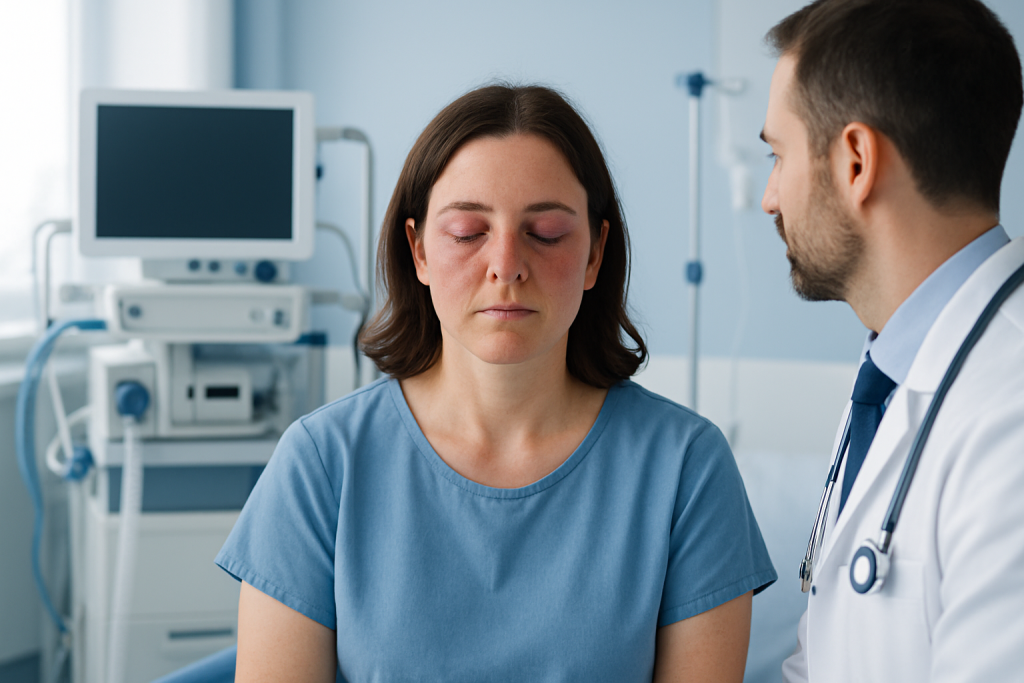
Most people with heliotrope rash notice a purple or reddish-purple patch over the eyelids. It can affect one or both eyes, but both sides are commonly involved. The rash may be flat or slightly raised, and swelling of the eyelids can make the eyes look tired or puffy.
The area may itch, burn, or feel sensitive, but some people have no discomfort at all. The rash can become more noticeable after sun exposure. In darker skin tones, the color may appear more brown-purple, gray-violet, or simply darker than the surrounding skin rather than bright purple.
Heliotrope rash often occurs along with other skin signs of dermatomyositis. These can include:
- Scaly or violaceous bumps over the knuckles, sometimes called Gottron papules
- Red or purple patches on the elbows, knees, or upper chest
- A rash on the shoulders or upper back that may worsen with sun exposure
- Changes around the nails, such as redness or visible small blood vessels
- Scalp irritation or hair thinning
Because the eyelid area is sensitive, this rash can sometimes be mistaken for eczema, contact dermatitis, or a cosmetic reaction. The color pattern, symmetry, swelling, and presence of other body symptoms help doctors tell the difference.
Common triggers and underlying causes

The most important cause of heliotrope rash is dermatomyositis, an autoimmune disease in which the immune system mistakenly attacks the skin and, in many cases, muscles. When muscle inflammation is present, a person may develop weakness in the shoulders, upper arms, hips, or thighs. Some people have mostly skin symptoms at first, while others have both skin and muscle features together.
Doctors do not usually think of heliotrope rash as being caused by a simple trigger alone, such as one food or one cosmetic product. However, certain factors can make the rash more noticeable or worsen it, especially if dermatomyositis is already present. These include sunlight, heat, and general immune activation. A recent infection may precede symptoms in some people, but it is not considered the main cause.
In adults, dermatomyositis can sometimes occur alongside other systemic illnesses, including interstitial lung disease or, less commonly, certain cancers. This does not mean every person with heliotrope rash has cancer, but it is one reason doctors take the symptom seriously and may recommend age-appropriate evaluation. Children can also develop juvenile dermatomyositis, which has different patterns of complications and follow-up needs.
Other conditions can cause eyelid rashes that resemble heliotrope rash, including eczema, allergic contact dermatitis, lupus, psoriasis, and some infections. That is why a visual similarity alone is not enough to make the diagnosis.
Red flags that should not be ignored
A heliotrope rash matters most when it appears with signs suggesting a broader inflammatory disease. One red flag is progressive muscle weakness, especially difficulty climbing stairs, rising from a chair, lifting objects, or reaching overhead. This pattern can point toward muscle involvement rather than a skin condition alone.
Other warning signs include trouble swallowing, a new cough, shortness of breath, unexplained fatigue, fever, unintended weight loss, or widespread rash. If the eyelid discoloration is persistent and unusual, especially when paired with rashes on the knuckles or chest, medical review is important even if weakness is mild or absent.
People should also seek prompt care if the area around the eyes becomes very painful, rapidly swollen, associated with vision changes, or accompanied by signs of infection such as pus or marked tenderness. These features are not typical of classic heliotrope rash and may suggest another urgent problem.
Because dermatomyositis can affect more than the skin, early assessment helps doctors check for complications and start appropriate management. This is particularly important if symptoms interfere with daily activities or keep getting worse over days to weeks.
How doctors diagnose the cause
Diagnosis begins with a careful history and physical examination. A doctor will ask when the rash started, whether it changes with sunlight, and whether there are symptoms such as muscle weakness, joint pain, swallowing problems, or breathlessness. The pattern of the rash and any associated skin findings can provide important clues.
Blood tests are often used to look for signs of muscle inflammation and autoimmunity. These may include muscle enzymes and autoimmune antibody testing. Depending on the situation, doctors may also recommend tests to assess organs that can be involved in inflammatory disease.
Imaging and specialized studies can help when muscle involvement is suspected. These may include MRI of affected muscles, electromyography, or chest imaging if breathing symptoms suggest lung involvement. In selected cases, a skin biopsy or muscle biopsy is used to confirm the diagnosis and exclude look-alike conditions.
Because heliotrope rash may be part of a complex condition, diagnosis sometimes involves more than one specialist, such as a dermatologist, rheumatologist, neurologist, or pulmonologist. If muscle disease is strongly suspected, a doctor may discuss further evaluation such as muscle biopsy or advanced imaging to clarify the diagnosis.
Treatment options and symptom management
Treatment depends on the underlying cause. If heliotrope rash is related to dermatomyositis, the main goal is to control inflammation, protect affected organs, and reduce skin symptoms. Doctors often use medicines that calm the immune system, sometimes together with topical therapies for the skin. The exact treatment plan varies based on whether the disease affects only the skin or also the muscles, lungs, or swallowing function.
Skin care is an important part of treatment. Gentle cleansers, fragrance-free moisturizers, and sun protection can help reduce irritation and flares. Because ultraviolet light can worsen dermatomyositis-related rashes, daily use of broad-spectrum sunscreen and protective clothing is commonly advised.
If muscle weakness is present, rehabilitation may be part of care once inflammation is being addressed. Some people benefit from supervised exercise or physical therapy to rebuild strength safely. When doctors need to investigate related muscle disease more fully, they may also consider neuromuscular disease treatment planning as part of specialist care.
When the diagnosis is uncertain or the rash could reflect another inflammatory skin disorder, management may include dermatology input and, if needed, tissue sampling such as skin biopsy. In international centers such as Acibadem International, multidisciplinary specialists at JCI-accredited hospitals evaluate skin, muscle, and systemic causes together for patients who need coordinated care.
Self-care and ways to reduce flares
Self-care does not replace medical assessment, but it can support treatment and reduce irritation. Sun protection is one of the most useful steps for many people with dermatomyositis-related skin changes. This includes sunscreen, sunglasses, wide-brimmed hats, and avoiding prolonged midday sun when possible.
The eyelid skin is delicate, so gentle habits matter. It may help to avoid rubbing the eyes, trying new cosmetics during an active flare, or using harsh exfoliants and fragranced products. Cool compresses may soothe mild discomfort, but any product applied near the eyes should be chosen carefully.
Keeping a symptom record can also be helpful. Noting when the rash appears, what seems to worsen it, and whether weakness or breathing symptoms develop can give doctors useful information. People should not start over-the-counter steroid creams around the eyes unless a clinician advises it, because the eyelid area is especially sensitive to side effects.
If heliotrope rash is part of a chronic inflammatory condition, regular follow-up is important even when the skin improves. Ongoing review helps monitor for recurrence, treatment side effects, and signs of involvement beyond the skin.
When to seek medical care
Medical care should be sought if a purple or violet rash around the eyes does not clear quickly, keeps returning, or appears together with swelling and other unusual skin findings. A clinician should also evaluate the rash if there is any new muscle weakness, marked fatigue, or difficulty with normal activities such as climbing stairs or lifting the arms.
Prompt assessment is especially important if there is trouble swallowing, shortness of breath, chest symptoms, or a rapidly worsening rash. These features can suggest more than a localized skin problem and may require broader testing. Eye pain, fever, vision changes, or signs of infection also need timely review because they may point to a different urgent condition.
People with a history of autoimmune disease or a strong family history of inflammatory disorders should mention this during evaluation. Early diagnosis can guide more targeted care and reduce delays in treating the underlying cause.
Frequently asked questions
Is heliotrope rash always caused by dermatomyositis?
Heliotrope rash is classically associated with dermatomyositis, but not every eyelid rash is a true heliotrope rash. Eczema, allergic reactions, lupus, psoriasis, and infections can sometimes look similar. A doctor uses the appearance of the rash, other symptoms, and tests to find the cause.
Can heliotrope rash appear before muscle weakness?
Yes. In some people, the skin changes appear before weakness develops, and in others muscle symptoms may be mild or delayed. That is one reason persistent purple discoloration around the eyes deserves medical attention.
Does heliotrope rash itch or hurt?
It can, but not always. Some people notice itching, burning, or tenderness, while others mainly see color change and swelling. Severe pain, marked redness, or pus is less typical and may suggest another condition.
Is heliotrope rash contagious?
No, heliotrope rash itself is not contagious. When it is related to dermatomyositis, it reflects inflammation within the body rather than an infection that spreads from person to person. Still, a doctor should confirm the diagnosis because some infections can mimic similar rashes.
How is heliotrope rash treated?
Treatment focuses on the underlying cause. If dermatomyositis is responsible, doctors may recommend immune-modulating medicines, skin-directed treatments, and strict sun protection. The plan depends on whether only the skin is involved or whether muscles, lungs, or swallowing are also affected.
When is heliotrope rash an emergency?
It is not usually an emergency by itself, but urgent care is needed if it comes with trouble breathing, difficulty swallowing, severe weakness, vision changes, or signs of infection. Rapid swelling around the eyes or intense pain also needs prompt assessment. These symptoms may indicate a more serious problem than a straightforward inflammatory rash.
References
- American Academy of Dermatology
- National Institute of Arthritis and Musculoskeletal and Skin Diseases
- National Organization for Rare Disorders
- Mayo Clinic
- Cleveland Clinic
This article is for general information only and is not a substitute for professional medical advice. Please consult a qualified doctor about your individual situation.
Explore treatments in Turkey — costs, top hospitals & a free quote
JCI-accredited · board-certified surgeons · reply within 24h
Add us as a Preferred Source to see more of our trusted health content across Google Search, AI Overviews and Discover.

More from the Health Library



Related Specialists

Dr. Aydin Aksoy
Cardiology
Prof. Dr. Murat Bozkurt
Orthopedic Surgery & Traumatology
Dyt. Ezgi Nur Zengin
Nutrition & Diet
Dr. Alaaddin Zirek
Ear Nose & Throat