Herniated Disc: An Evidence-Based Guide for Patients

A herniated disc occurs when the soft center of a spinal disc pushes through a weakened outer layer. Symptoms depend on which nerve is affected and may include back or neck pain, sciatica, tingling, numbness, or muscle weakness.
Key Takeaways
- A herniated disc occurs when the soft center of a spinal disc pushes through a weakened outer layer.
- Symptoms depend on which nerve is affected and may include back or neck pain, sciatica, tingling, numbness, or muscle weakness.
- Most cases improve with activity modification, physical therapy, and pain-relief measures rather than surgery.
- Urgent medical care is needed for new bowel or bladder problems, saddle numbness, severe weakness, or rapidly worsening symptoms.
- Diagnosis is based on symptoms and examination, with MRI used when symptoms are severe, persistent, or suggest nerve compression.
A herniated disc is a common spine problem in which part of an intervertebral disc pushes outward and may irritate or compress a nearby nerve. It can cause back or neck pain, pain traveling into an arm or leg, numbness, or weakness, but many people improve with conservative treatment over time.
What a Herniated Disc Is
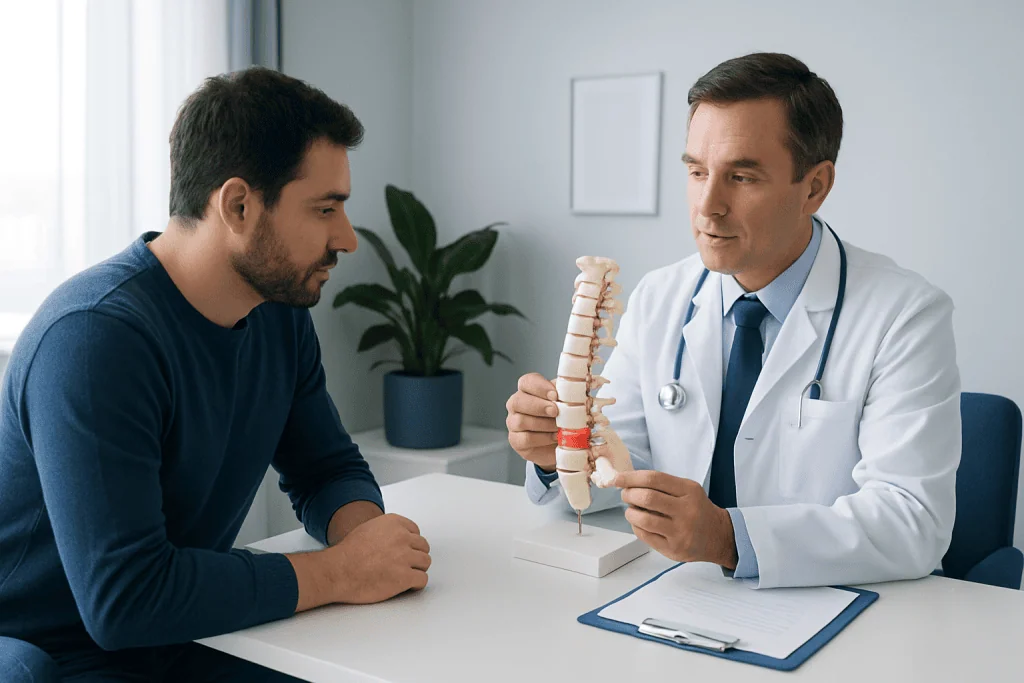
A herniated disc is a problem affecting one of the cushioning discs between the bones of the spine. These discs act like shock absorbers. Each disc has a softer center and a tougher outer ring. When part of the inner material pushes outward through a tear or weak area in the outer layer, it is called a herniated disc.
This change does not always cause symptoms. Some people have a herniated disc visible on imaging but feel little or no pain. Symptoms usually happen when the disc irritates or compresses a nearby spinal nerve. That is why one person may have severe symptoms, while another has none.
A herniated disc can occur in the lower back or the neck, and less commonly in the upper back. In the lower spine, it may cause pain traveling down the leg, often called sciatica. In the neck, it may cause pain, tingling, or weakness spreading into the shoulder, arm, or hand.
Although the term “slipped disc” is widely used, the disc does not actually slip out of place. A more accurate term is disc herniation. Understanding this can help patients discuss symptoms and treatment options more clearly with their doctor.
How It Feels: Common Symptoms
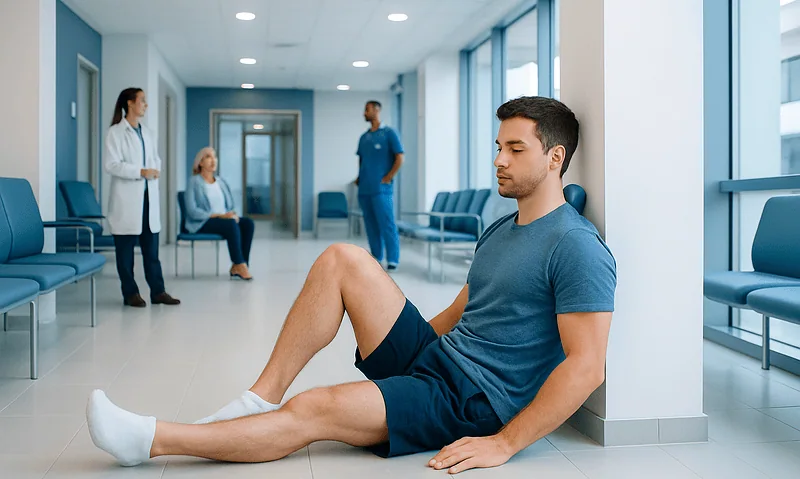
The symptoms of a herniated disc depend mainly on where the disc is located and whether a nerve is affected. In the lower back, symptoms often include low back pain together with pain that radiates into the buttock, thigh, calf, or foot. In the neck, pain may spread into the shoulder blade, arm, or fingers.
Nerve irritation can also cause sensory changes. People may describe tingling, pins-and-needles, numbness, or a burning sensation. Some notice that symptoms worsen with coughing, sneezing, bending, twisting, or sitting for long periods. Others feel better by changing position or walking gently.
Weakness is another important symptom. A person may have trouble lifting the front of the foot, gripping objects, or raising the arm, depending on which nerve is involved. Weakness should not be ignored, because it may suggest more significant nerve compression.
- Low back or neck pain
- Pain traveling into an arm or leg
- Tingling or numbness
- Muscle weakness
- Pain that changes with posture or movement
Not every episode of back pain means a disc herniation. Muscle strain, arthritis, spinal stenosis, and other conditions can cause similar symptoms. A clinician helps distinguish between these possibilities through history and examination.
Why Herniated Discs Happen
Discs naturally change with age. Over time, they lose some water content and become less flexible. This process, often called disc degeneration, makes the outer layer more likely to crack or tear. A herniated disc may then occur after lifting, twisting, repetitive strain, or sometimes with no obvious trigger at all.
Several factors can increase risk. These include aging, smoking, obesity, physically demanding work, prolonged sitting, and poor lifting mechanics. Family history may also play a role. Being physically inactive can contribute by weakening the muscles that support the spine.
Many people worry that one single movement “caused” the problem. In reality, a herniated disc often reflects gradual wear plus a final stress on the spine. This is why symptoms may start during an ordinary activity such as getting out of bed, reaching, or lifting a light object.
Other spine conditions may produce similar nerve-related symptoms. For example, disc wear and narrowing around nerves can overlap with spinal stenosis, especially in older adults. A careful assessment is important because treatment may differ depending on the underlying cause.
How Doctors Make the Diagnosis
Diagnosis starts with a detailed conversation about symptoms. The doctor usually asks where the pain begins, where it travels, whether there is numbness or weakness, and what movements make it better or worse. Information about work, injuries, previous episodes, and general health also helps guide the evaluation.
The physical exam checks posture, movement, reflexes, muscle strength, and sensation. In low back cases, the clinician may perform a straight-leg raise test to see whether lifting the leg reproduces sciatic pain. In neck cases, the exam focuses on arm strength, reflexes, and sensory changes. These findings help identify which nerve root may be involved.
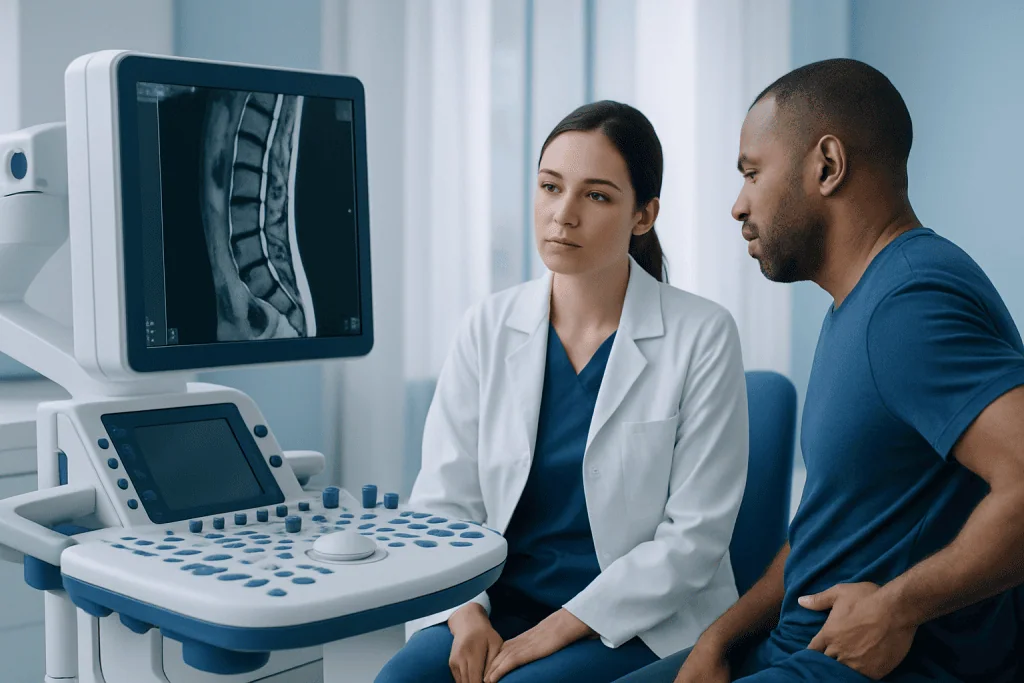
Imaging is not always needed right away. Many people with recent back or neck pain improve without scans. MRI is the most useful test when symptoms are severe, persistent, or associated with weakness, or when surgery or injections are being considered. It shows discs, nerves, and other soft tissues in detail. CT or X-rays may be used in selected situations, but they are less informative for disc material itself.
Sometimes doctors recommend additional tests such as nerve conduction studies or electromyography when the diagnosis is unclear or symptoms could come from another nerve disorder. These tests can help distinguish a herniated disc from other conditions affecting the nerves or muscles.
Treatment Options and Recovery
Most people with a herniated disc do not need surgery. Treatment often begins with a period of relative rest, meaning avoidance of activities that sharply worsen symptoms while staying as active as possible. Long periods of bed rest are generally not advised, because gentle movement usually supports recovery better than complete inactivity.
Common non-surgical approaches include pain-relief medicines, anti-inflammatory medication when appropriate, heat or cold application, and structured physical therapy and rehabilitation. A physical therapist may teach posture strategies, mobility work, core strengthening, and safer ways to lift or sit. These measures aim to reduce pain and support the spine as the irritated nerve settles.
If pain remains significant despite conservative care, doctors may consider other options such as image-guided injections to reduce inflammation around a compressed nerve. In selected cases with ongoing disabling symptoms or neurological deficits, specialist evaluation is appropriate. Some patients may benefit from spine surgery when there is clear nerve compression that has not improved, or when weakness is progressing.
Surgery is usually considered for carefully chosen reasons, not simply because a disc appears herniated on a scan. Many herniations shrink over time, and symptoms can improve as inflammation decreases. Recovery varies from person to person, but a gradual return to normal activity with attention to movement habits is often part of long-term success.
Self-Care, Prevention, and Daily Habits
While no method can prevent every herniated disc, healthy spine habits can lower risk and reduce flare-ups. Regular exercise that builds core and back strength, maintains flexibility, and supports a healthy weight is helpful for many people. Walking, swimming, and guided strengthening programs are common options.
Body mechanics matter. Lifting with the legs rather than bending from the waist, keeping objects close to the body, and avoiding sudden twisting under load can reduce strain on the spine. For people who sit for long periods, changing position often, using supportive seating, and taking short walking breaks may ease stress on discs and muscles.
Smoking cessation is another important step, since smoking affects disc health and healing. Good sleep habits, stress management, and pacing activities can also be useful. During recovery, the goal is usually to stay gently active without repeatedly provoking severe pain.
Some patients with persistent symptoms may need a broader plan that includes rehabilitation specialists, pain management, or further spine evaluation. In centers with multidisciplinary spine care, treatment can be tailored according to symptoms, examination, and imaging findings rather than relying on a one-size-fits-all approach.
When to Seek Medical Care
Prompt medical evaluation is important when back or neck pain is accompanied by symptoms suggesting nerve involvement. This includes pain shooting down an arm or leg, numbness, tingling, or weakness. Care is especially important if symptoms are getting worse rather than gradually improving.
Urgent medical attention is needed for warning signs such as new bowel or bladder control problems, numbness in the groin or inner thighs, severe or rapidly progressing weakness, or difficulty walking. These symptoms can signal significant nerve compression and should be assessed without delay.
A medical review is also wise when pain lasts more than a few weeks, interferes with sleep or daily function, or follows significant trauma. People with fever, unexplained weight loss, cancer history, or infection risk factors should also be assessed because not all spine pain is caused by a herniated disc.
For patients needing specialist input, evaluation may involve experts in neurosurgery or spine care depending on the pattern of symptoms. Acibadem International’s multidisciplinary specialists and JCI-accredited hospitals diagnose and treat spine conditions for international patients when advanced assessment or treatment is needed.
Frequently asked questions
Can a herniated disc heal on its own?
Yes, many herniated discs improve over time without surgery. Symptoms often lessen as inflammation decreases and the body gradually adapts or reabsorbs part of the disc material.
Is a herniated disc the same as sciatica?
No. A herniated disc is one possible cause of sciatica, which refers to pain traveling along the sciatic nerve into the leg. Sciatica is a symptom pattern, while a herniated disc is a structural spine problem.
How long does recovery usually take?
Recovery varies depending on the severity of nerve irritation, the disc location, and overall health. Many people begin to improve over several days to weeks, while fuller recovery may take longer in some cases.
When is surgery needed for a herniated disc?
Surgery is usually reserved for situations such as persistent disabling pain despite conservative treatment, progressive weakness, or emergency warning signs like bowel or bladder dysfunction. The decision is based on symptoms, examination findings, and imaging results together.
Should a person with a herniated disc stay in bed?
Extended bed rest is generally not recommended. Gentle activity and gradual return to normal movement are usually more helpful, though it is sensible to avoid actions that sharply worsen symptoms.
What is the best scan for a herniated disc?
MRI is usually the most informative imaging test because it shows the discs, nerves, and surrounding soft tissues clearly. However, not everyone needs imaging immediately, especially if symptoms are mild and improving.
References
- National Institute of Arthritis and Musculoskeletal and Skin Diseases
- American Academy of Orthopaedic Surgeons
- National Institute of Neurological Disorders and Stroke
- Mayo Clinic
- North American Spine Society
This article is for general information only and is not a substitute for professional medical advice. Please consult a qualified doctor about your individual situation.
Joint and spine care in Turkey — expert assessment & treatment
JCI-accredited · board-certified surgeons · reply within 24h
Add us as a Preferred Source to see more of our trusted health content across Google Search, AI Overviews and Discover.