Herniated disc Symptoms: Early Signs You Should Not Ignore

Herniated disc symptoms vary according to the affected spinal level and the nerve under pressure. Pain that shoots into an arm or leg, tingling, numbness and weakness are common nerve-related symptoms.
Key Takeaways
- Herniated disc symptoms vary according to the affected spinal level and the nerve under pressure.
- Pain that shoots into an arm or leg, tingling, numbness and weakness are common nerve-related symptoms.
- Not all back or neck pain is caused by a herniated disc; a clinical examination helps identify the likely source.
- New bladder or bowel problems, numbness around the groin, or rapidly worsening weakness require emergency medical care.
- Conservative treatment is effective for many people, while surgery may be considered for persistent or severe nerve compression.
Herniated disc symptoms often begin with pain that travels from the neck or lower back into an arm, buttock or leg, sometimes accompanied by tingling, numbness or weakness. Many cases improve with non-surgical care, but certain symptoms need prompt medical assessment to protect nerve function.
Overview: What Do Herniated Disc Symptoms Feel Like?
Herniated disc symptoms commonly include sharp, burning or electric-like pain that spreads from the lower back into the buttock and leg, or from the neck into the shoulder and arm. Tingling, numbness and muscle weakness can occur when displaced disc material irritates or compresses a nearby spinal nerve.
Spinal discs are soft, cushioning structures between the bones of the spine. A disc herniation occurs when part of the softer inner material pushes through a tear or weak area in the tougher outer layer. This may cause no symptoms at all, particularly if the disc does not affect a nerve.
The lower back, especially the lumbar spine, is the most frequent location. A lower-back disc herniation can cause sciatica, meaning pain that follows the sciatic nerve pathway into one leg. Herniations can also occur in the neck, where they may affect an arm, or less commonly in the middle back.
Symptoms can develop suddenly after strain or gradually over time. Their severity does not always match the size of the herniation seen on imaging, so a clinician considers the person’s symptoms and examination findings rather than relying on a scan alone.
Early Signs and Symptom Checklist
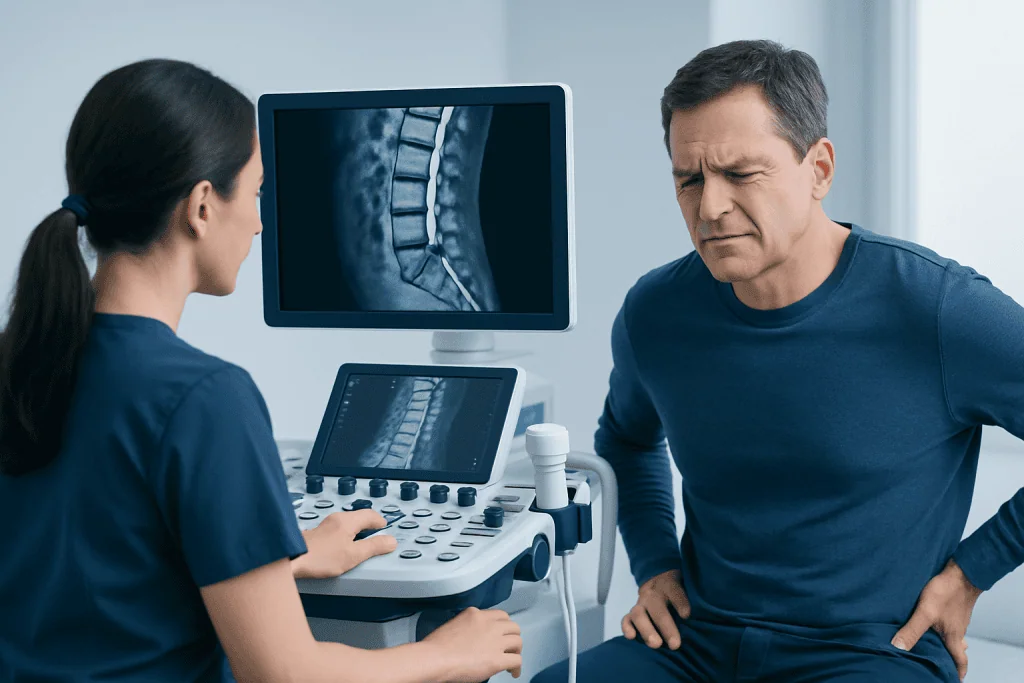
Early symptoms may be mild and intermittent. They can become more noticeable with prolonged sitting, bending, twisting, coughing, sneezing or lifting. Some people first notice discomfort in the back or neck, while others develop leg or arm symptoms with little or no spinal pain.
Possible herniated disc symptoms include:
- Lower-back or neck pain that may feel aching, sharp or burning
- Pain radiating into the buttock, thigh, calf or foot, often on one side
- Pain extending into the shoulder, arm, hand or fingers
- Tingling, “pins and needles” or reduced sensation in a limb
- Muscle weakness, such as difficulty lifting the front of the foot, gripping objects or pushing off while walking
- Pain that worsens with certain positions, straining or coughing
The exact pattern can offer useful clues. For example, pain traveling down the back of the leg may indicate irritation of a lower lumbar or sacral nerve root, whereas neck pain with symptoms in the hand may point to a cervical nerve root. However, similar symptoms can arise from other conditions, including muscle injury, arthritis, spinal narrowing or peripheral nerve problems.
Symptoms may fluctuate. A flare does not automatically mean that permanent damage is occurring, but new weakness or steadily worsening neurological symptoms should not be ignored.
Why a Disc Herniates: Causes and Risk Factors

A disc can herniate as part of age-related disc changes. Over time, discs tend to lose water content and flexibility, making the outer layer more prone to small tears. Through such a tear, inner disc material can bulge outward or escape into the spinal canal.
A single event such as lifting, twisting or a fall can trigger symptoms, especially when a disc is already weakened. However, many people cannot identify one clear injury. Repeated bending, heavy physical work, long periods of sitting, vibration exposure and reduced core strength may contribute in some individuals.
Risk is also influenced by factors such as smoking, higher body weight, family predisposition and limited physical activity. These factors do not mean a person will definitely develop a herniation, and they should not be viewed as blame. They can be discussed constructively with a healthcare professional as part of a long-term spine-health plan.
It is important to distinguish disc herniation from other spinal conditions. Degenerative changes on an MRI are common, including in people without pain. A diagnosis becomes most meaningful when imaging findings correspond with the person’s symptoms and nerve examination.
How Doctors Diagnose a Herniated Disc
Diagnosis starts with a careful history. A doctor will ask where pain travels, what activities trigger it, whether there is numbness or weakness, and whether any bladder, bowel or balance changes are present. The pattern and timing of symptoms help identify whether a spinal nerve may be involved.
During the physical examination, the clinician may assess posture, walking, range of motion, reflexes, sensation and muscle strength. Leg-raising tests may be used for suspected lumbar nerve irritation, while neck movements and arm tests can help evaluate cervical symptoms.
Imaging is not always needed at the first visit. When symptoms are persistent, severe, associated with neurological deficits, or suggest another important cause, magnetic resonance imaging (MRI) is often the preferred scan because it shows discs, nerves and other soft tissues clearly. X-rays can assess bone alignment but do not directly show a herniated disc.
Occasionally, tests such as electromyography and nerve conduction studies may help clarify whether symptoms are coming from a spinal nerve or another nerve condition. The aim is to create an individualized treatment plan rather than treat an imaging result alone.
Treatment Options and When a Procedure May Help
Most people with a symptomatic herniated disc begin with non-surgical treatment. This may include remaining gently active, modifying painful activities for a short period, guided physiotherapy, posture and movement advice, and clinician-recommended pain-relief options. Extended bed rest is generally not advised because it can reduce strength and delay a return to normal movement.
Physiotherapy may focus on improving mobility, strengthening the trunk and supporting muscles, and gradually restoring everyday activities. In selected cases, a specialist may discuss an injection intended to reduce inflammation around an irritated nerve. Injections can relieve symptoms for some people, but they do not remove the disc herniation itself.
Surgery may be considered when nerve pain remains disabling despite appropriate conservative care, when weakness is significant or progressing, or when there are emergency signs of severe nerve compression. For an appropriate candidate, herniated disc treatment may involve removing the portion of disc that is pressing on the nerve, commonly through a procedure called discectomy or microdiscectomy.
During a discectomy, the surgeon accesses the affected area of the spine through a small incision and removes only the disc material compressing the nerve whenever possible. The potential benefit is faster relief of leg or arm pain caused by nerve compression. Risks vary by procedure and person but can include infection, bleeding, a spinal fluid leak, nerve injury, persistent symptoms or recurrent disc herniation; these should be reviewed carefully with the surgical team.
Recovery, Prevention and Everyday Self-Care
Recovery depends on symptom severity and the treatment chosen. With non-surgical care, many people improve over several weeks, although numbness or weakness may take longer to settle. Gradual progress is common, and a clinician or physiotherapist can advise when to resume work, exercise and heavier tasks.
After discectomy, early walking is often encouraged when medically appropriate. The care team provides individual guidance about wound care, sitting, driving, lifting and return to work. Many people resume light activities within weeks, while physically demanding work and full rehabilitation may take longer. A follow-up plan is important to monitor healing and functional recovery.
There is no guaranteed way to prevent every disc herniation, but healthy movement habits can support spinal health. Regular activity, strength training suited to the individual, gradual lifting techniques, avoiding smoking and maintaining a weight that supports mobility may reduce strain on the spine.
During a painful episode, avoiding repeated movements that clearly aggravate symptoms can be sensible, but complete inactivity is usually unhelpful. A qualified clinician can recommend safe activity modifications and rule out symptoms that require more urgent treatment.
When to Seek Medical Care
Medical assessment is appropriate for back or neck pain that radiates into an arm or leg, persists, interferes with sleep or daily activities, or is accompanied by tingling or numbness. An appointment should be arranged promptly if weakness develops, such as a foot that catches while walking, reduced hand grip, or increasing difficulty climbing stairs.
Emergency medical care is needed for new loss of bladder or bowel control, difficulty passing urine, numbness in the groin, buttocks or inner thighs, or rapidly progressing weakness in one or both legs. These can be warning signs of severe nerve compression and require immediate evaluation.
A doctor should also assess pain following significant trauma, pain associated with fever or unexplained weight loss, or symptoms in a person with a history of cancer, immune suppression or serious infection risk. These features may indicate causes other than a routine disc herniation.
Acibadem International’s multidisciplinary spine specialists and JCI-accredited hospitals assess and treat herniated disc conditions for international patients, including when specialist imaging, rehabilitation or surgical evaluation is needed.
Frequently asked questions
Can a herniated disc cause symptoms without back pain?
Yes. A herniated disc can primarily irritate a nerve, causing pain, tingling or numbness in the leg or arm with little noticeable back or neck pain. The location of symptoms depends on the spinal level and nerve involved.
What is the difference between a bulging disc and a herniated disc?
A bulging disc extends beyond its usual boundary more broadly, often without a tear in the outer disc layer. A herniated disc generally involves focal displacement of inner disc material through a weakened or torn outer layer. Both findings can be symptom-free or can cause symptoms if a nerve is affected.
Do herniated disc symptoms go away on their own?
Many people improve with time and non-surgical treatment, especially when pain is managed and normal movement is gradually restored. The time course varies, and persistent pain, numbness or weakness should be reviewed by a healthcare professional.
Is walking good for a herniated disc?
Gentle walking is often helpful because it supports circulation and avoids prolonged bed rest. However, walking should be adjusted if it substantially increases pain, weakness or numbness. A clinician or physiotherapist can recommend a safe activity level.
When is surgery needed for a herniated disc?
Surgery may be considered when severe nerve pain does not improve with suitable non-surgical care, or when there is meaningful or worsening muscle weakness. It may be urgent when symptoms suggest severe compression of the lower spinal nerves, such as bladder or bowel changes or groin numbness.
Can a herniated disc come back after surgery?
A disc herniation can recur at the same level after surgery, although many people have lasting improvement. Following recovery guidance, returning gradually to activity and addressing modifiable risk factors may support overall spine health, but cannot eliminate recurrence risk entirely.
References
- National Institute of Neurological Disorders and Stroke
- American Academy of Orthopaedic Surgeons
- NHS
- Mayo Clinic
This article is for general information only and is not a substitute for professional medical advice. Please consult a qualified doctor about your individual situation.
Joint and spine care in Turkey — expert assessment & treatment
JCI-accredited · board-certified surgeons · reply within 24h
Add us as a Preferred Source to see more of our trusted health content across Google Search, AI Overviews and Discover.