Herpes on Buttocks: An Evidence-Based Guide for Patients

Herpes on buttocks is most often caused by herpes simplex virus and may recur in the same area. Symptoms can include tingling, burning, pain, blisters, sores, or skin sensitivity on the buttocks or nearby skin.
Key Takeaways
- Herpes on buttocks is most often caused by herpes simplex virus and may recur in the same area.
- Symptoms can include tingling, burning, pain, blisters, sores, or skin sensitivity on the buttocks or nearby skin.
- Other conditions such as folliculitis, shingles, friction rash, or dermatitis can look similar, so testing may be helpful.
- Antiviral medicines can shorten outbreaks and may help reduce future episodes and transmission risk.
- Medical review is important for a first outbreak, severe symptoms, pregnancy, or a weakened immune system.
Herpes on buttocks usually refers to a herpes simplex infection that causes clusters of painful or itchy blisters, sores, or recurrent skin irritation on or near the buttocks. It can be uncomfortable and sometimes mistaken for other skin conditions, but a clinician can usually diagnose it and recommend treatment to ease symptoms and reduce recurrences.
Overview
Herpes on buttocks is most commonly a skin outbreak caused by the herpes simplex virus, usually herpes simplex type 2, though type 1 can also be responsible. It may appear as small grouped blisters, shallow sores, or a patch of tender, irritated skin on one or both buttocks, sometimes extending toward the anal area, upper thighs, or lower back. The infection can be a first episode or a recurrence after the virus has remained inactive in nearby nerves.
Many people are surprised to learn that genital herpes does not always appear only on the genitals. Because the virus travels along nerves in the pelvic region, outbreaks can occur on nearby skin, including the buttocks. This can lead to confusion with chafing, insect bites, pimples, eczema, or fungal rashes, especially when blisters are subtle or already healing.
In most otherwise healthy adults, buttock herpes is not dangerous, but it can be painful, distressing, and contagious during active outbreaks. Clear diagnosis matters because antiviral treatment can help symptoms resolve sooner and can reduce the frequency of future episodes in some patients. For broader background, patients may also find it helpful to read about genital herpes.
What symptoms can herpes on buttocks cause?
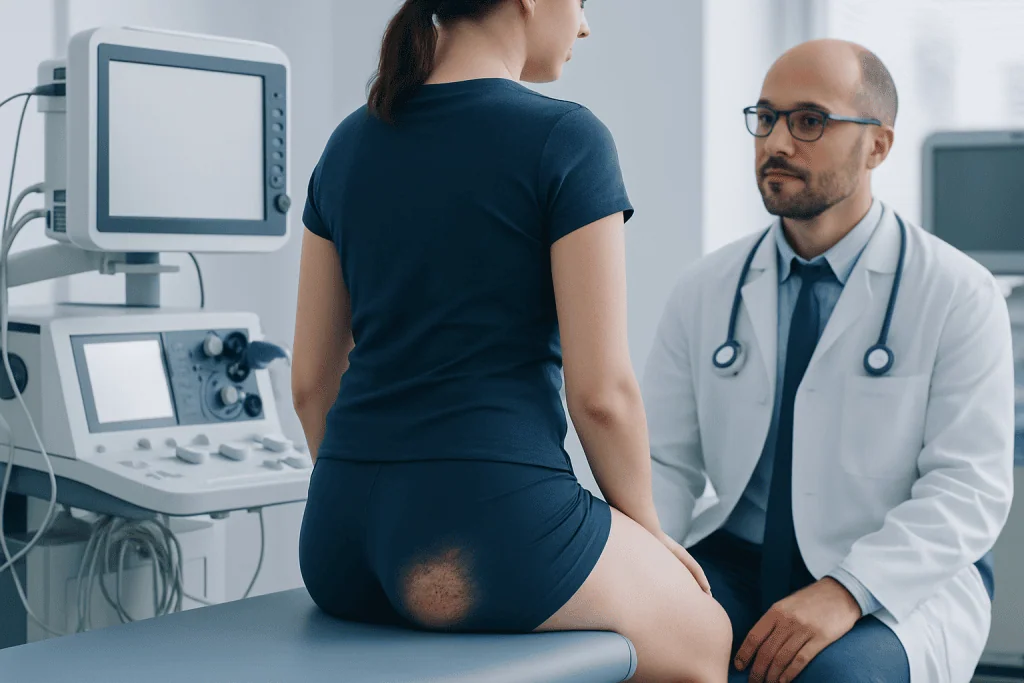
The symptoms of herpes on buttocks can vary from person to person and from one outbreak to the next. Some people first notice tingling, burning, itching, or a sense of nerve-like discomfort in a specific patch of skin before anything becomes visible. This early phase, called a prodrome, may begin hours to a couple of days before blisters or sores appear.
Visible skin changes often include clusters of small fluid-filled blisters that break and form shallow ulcers or crusts. The area may feel tender, warm, or painful, especially when sitting, walking, exercising, or clothing rubs against the skin. Some outbreaks are mild and look more like tiny cracks, red bumps, or irritated spots than classic blisters.
A first episode may be more intense than later recurrences. In some cases, people also have swollen lymph nodes, fatigue, body aches, fever, or pain during urination if nearby genital skin is involved. Recurring outbreaks are often shorter and milder, but they can still be uncomfortable and emotionally upsetting.
- Tingling, itching, or burning before a rash appears
- Grouped blisters or shallow sores on the buttocks
- Pain, tenderness, or skin sensitivity
- Crusting as lesions heal
- Occasional spread to the anal area, thighs, or genital region
Causes, spread, and risk factors

Herpes on buttocks is caused by herpes simplex virus entering the body through skin or mucosal contact, usually during sexual contact with an infected area. After the first infection, the virus remains dormant in nearby nerve cells and can reactivate later. When it reactivates, lesions may come back in the same general region, including the buttocks.
The infection spreads most easily through direct skin-to-skin contact during an active outbreak, especially when blisters or ulcers are present. However, herpes can sometimes spread even when no sores are visible, a process called asymptomatic viral shedding. This is one reason a person may acquire herpes without knowing a partner had it.
Certain factors can increase the chance of recurrence in some individuals, although triggers are not the same for everyone. Illness, stress, friction, lack of sleep, sunlight exposure, menstruation, and a weakened immune system are commonly reported. People with eczema or broken skin may notice more irritation during outbreaks, and those with reduced immunity may develop more extensive or persistent disease.
Buttock lesions can also sometimes reflect a nearby infection pattern rather than a separate condition. In clinical practice, doctors may consider overlap with anal herpes when symptoms involve the skin around the anus, pain with bowel movements, or sores extending between the buttocks.
How doctors diagnose it
Diagnosis begins with a medical history and careful examination of the skin. A clinician will ask when symptoms started, whether they recur in the same place, whether there is pain, itching, or tingling, and whether genital or anal symptoms are also present. This pattern often gives useful clues, especially if lesions are still fresh.
If sores or blisters are present, the most helpful test is usually a swab from the lesion for a molecular test such as PCR, which can detect herpes simplex virus and distinguish type 1 from type 2. Testing works best early in an outbreak, before lesions have fully crusted over. If the skin has already healed, blood tests may sometimes help show previous exposure, though they are less useful for confirming that a specific buttock rash was herpes.
Doctors also consider other conditions that can mimic buttock herpes. These include bacterial folliculitis, ingrown hairs, contact dermatitis, fungal infection, friction rash, shingles, insect bites, and less commonly autoimmune or inflammatory skin diseases. If symptoms are unusual, severe, or persistent, referral to a dermatologist, infectious disease specialist, or other appropriate clinician may be recommended. In some cases, a specialist may also use targeted dermatology evaluation to clarify the diagnosis.
Treatment options and what to expect
Treatment for herpes on buttocks usually focuses on antiviral medicines, symptom relief, and prevention of spread. Commonly used antiviral medications can shorten the duration of an outbreak and may reduce pain and viral shedding when started promptly. A doctor will decide whether episodic treatment for flare-ups or suppressive treatment taken regularly is more appropriate based on how often outbreaks occur, how severe they are, and whether transmission prevention is a priority.
Supportive care can also help. Keeping the area clean and dry, wearing loose breathable clothing, and avoiding picking at lesions can reduce irritation while the skin heals. Gentle washing and simple pain relief measures may be enough for mild outbreaks, but self-treatment should not replace a medical review if symptoms are severe or a diagnosis is uncertain.
People who have frequent recurrences, significant pain, or symptoms involving the anal or genital area may benefit from specialist assessment. Depending on the overall clinical picture, care may involve infectious diseases consultation or skin specialist care when diagnosis is difficult or symptoms are atypical. If the outbreak is part of a wider sexually transmitted infection evaluation, doctors may also advise related testing and partner counseling.
Healing time varies. Some recurrent outbreaks settle within days to two weeks, while a first episode can last longer. If sores are not improving, if pain is significant, or if lesions keep returning, follow-up is important to confirm the diagnosis and review the treatment plan.
Self-care, prevention, and reducing transmission
Self-care is helpful, but prevention also involves understanding when herpes is most contagious. The risk of transmission is highest when blisters, sores, or fresh crusts are present, so avoiding sexual contact during outbreaks is important. Because the virus can also be shed without visible lesions, barrier methods can lower risk but do not remove it completely, especially if affected skin lies outside the area covered.
Some people find it useful to identify personal recurrence triggers. Keeping track of outbreaks in relation to stress, illness, friction from exercise, menstruation, or lack of sleep may help in planning prevention strategies. Good sleep, skin protection, and managing general health can support the body, although they do not cure the virus.
It is also wise not to share items that contact lesions during an active outbreak if there is any chance of direct skin exposure. Hands should be washed after touching the area or applying creams. Patients with frequent recurrences may discuss daily suppressive antiviral treatment with a qualified clinician to reduce outbreaks and lower transmission risk to partners.
If symptoms are part of a broader sexual health concern, clinicians may recommend screening for other infections and practical advice about disclosure and partner protection. When needed, care may be coordinated through specialist infectious disease services as part of a personalized management plan.
When to seek medical care
Medical care should be sought for a first suspected herpes outbreak on the buttocks, because several conditions can look similar and timely testing is more accurate when lesions are new. A clinician can confirm whether herpes is the cause, advise on treatment, and explain how to reduce the chance of passing the infection to others.
Prompt review is especially important if pain is severe, urination is painful, sores are spreading quickly, fever is present, or the person is pregnant. Anyone with a weakened immune system, such as from cancer treatment, organ transplantation, advanced chronic illness, or immune-suppressing medication, should also seek care early because infections may be more severe or slow to heal.
Urgent assessment is advisable if there are signs of a different or more serious problem, such as extensive redness, pus, rapidly worsening pain, or symptoms suggesting shingles or bacterial infection. Near the end of the care pathway, some patients may also wish to know that Acibadem International’s multidisciplinary specialists and JCI-accredited hospitals evaluate and treat herpes-related skin conditions for international patients.
Frequently asked questions
Can herpes appear only on the buttocks?
Yes. Herpes simplex can affect the buttocks without obvious sores on the genitals because the virus may reactivate along nearby nerves. Even so, a clinician may ask about genital or anal symptoms because these areas can be involved at the same time.
What does herpes on buttocks look like?
It often appears as small grouped blisters that break into shallow sores and then crust as they heal. In some people, it is less typical and may look like red bumps, tiny cracks, or a patch of irritated tender skin.
Is herpes on buttocks always sexually transmitted?
Herpes simplex in this area is commonly linked to skin-to-skin sexual contact, but the exact route is not always obvious. A person may also acquire herpes from a partner who has no visible sores at the time because the virus can sometimes spread without symptoms.
How is herpes on buttocks different from shingles?
Both can cause painful blisters, but shingles is caused by the varicella-zoster virus rather than herpes simplex. Shingles often follows a band-like pattern on one side of the body and may be associated with more intense nerve pain, so medical assessment is useful when the diagnosis is uncertain.
Will herpes on buttocks keep coming back?
It can recur because the virus remains dormant in nerve tissue after the first infection. Some people have only one outbreak, while others have repeated episodes; recurrence patterns vary widely from person to person.
Can treatment cure herpes on buttocks completely?
Current treatments do not remove herpes simplex from the body completely. However, antiviral medicines can shorten outbreaks, ease symptoms, and in some cases reduce how often recurrences happen.
References
- Centers for Disease Control and Prevention
- World Health Organization
- American Academy of Dermatology
- National Health Service
- Mayo Clinic
This article is for general information only and is not a substitute for professional medical advice. Please consult a qualified doctor about your individual situation.
Explore treatments in Turkey — costs, top hospitals & a free quote
JCI-accredited · board-certified surgeons · reply within 24h
Add us as a Preferred Source to see more of our trusted health content across Google Search, AI Overviews and Discover.

More from the Health Library

Rybelsus Weight Loss: What Patients Need to Know

Spinal Muscular Atrophy — Explained by Medical Evidence, Not Myths

Dermal Piercing — Explained by Medical Evidence, Not Myths

Zestril: An Evidence-Based Guide for Patients

Graviola Benefits: A Complete Medical Overview