

Spinal Muscular Atrophy — Explained by Medical Evidence, Not Myths

Spinal muscular atrophy is an inherited neuromuscular disease most often caused by changes in the SMN1 gene. Its main feature is progressive muscle weakness, especially in the muscles used for movement, swallowing, and breathing.
Key Takeaways
- Spinal muscular atrophy is an inherited neuromuscular disease most often caused by changes in the SMN1 gene.
- Its main feature is progressive muscle weakness, especially in the muscles used for movement, swallowing, and breathing.
- SMA can begin in infancy, childhood, or adulthood, and symptoms vary widely between individuals.
- Diagnosis usually involves a clinical examination and genetic testing, sometimes supported by nerve and muscle studies.
- Treatment often combines disease-modifying therapy with respiratory, nutritional, orthopedic, and rehabilitation care.
- Prompt medical evaluation is important if a baby, child, or adult develops unexplained muscle weakness or motor delay.
Spinal muscular atrophy is a genetic condition that affects the nerve cells controlling voluntary muscles, leading to weakness that can range from mild to severe. Medical evidence shows that early diagnosis, breathing and nutrition support, rehabilitation, and disease-modifying therapies can make a meaningful difference in quality of life.
Overview
Spinal muscular atrophy is a genetic neuromuscular disease that damages motor neurons, the specialized nerve cells in the spinal cord and brainstem that control voluntary muscle movement. As these cells are lost, muscles become weaker and smaller over time. This can affect sitting, standing, walking, swallowing, coughing, and breathing, depending on the type and severity of the condition.
Medical evidence does not support common myths that spinal muscular atrophy is caused by injury, poor nutrition, or lack of exercise. It is an inherited disorder, most often linked to changes in the SMN1 gene. The condition can appear in babies, children, or adults, and its course differs from one person to another.
Today, care for spinal muscular atrophy is broader and more effective than in the past. Treatment may include disease-modifying medicines, respiratory support, feeding and nutrition guidance, physical therapy, and orthopedic care. Because needs often span several specialties, patients usually benefit from coordinated follow-up in centers experienced with neuromuscular diseases.
How spinal muscular atrophy affects the body
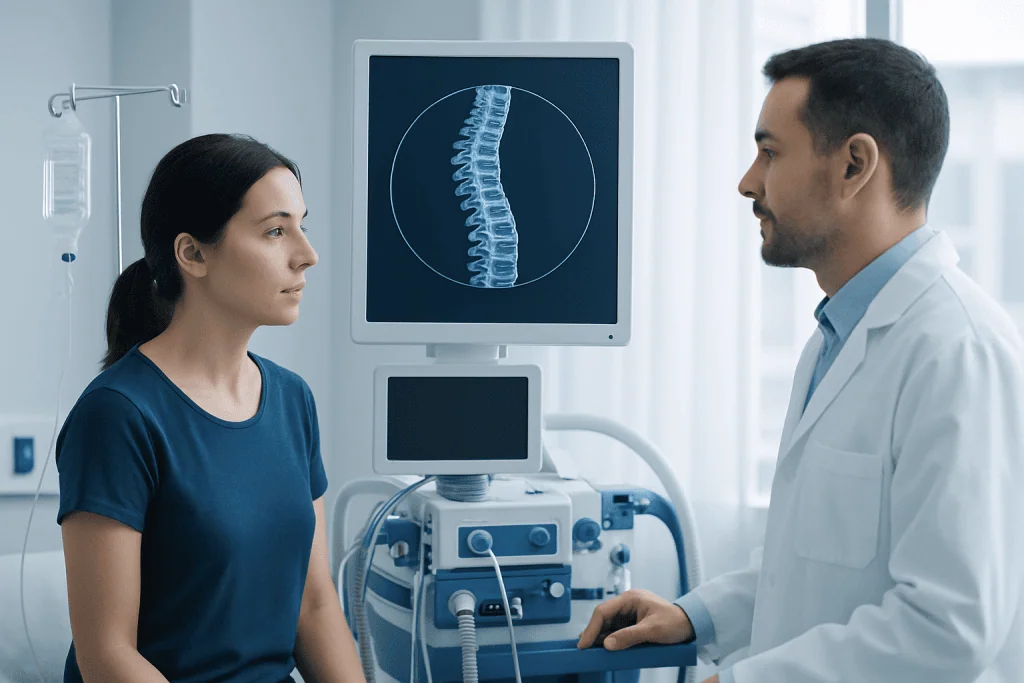
The core problem in spinal muscular atrophy is a shortage of survival motor neuron, or SMN, protein. Most cases happen because both copies of the SMN1 gene are missing or not working properly. Without enough SMN protein, motor neurons gradually stop functioning and die, reducing the nerve signals that normally tell muscles to contract.
This loss of nerve input leads to muscle weakness and muscle wasting, also called atrophy. Weakness usually affects the muscles closest to the center of the body first, such as the shoulders, hips, thighs, and trunk. The legs are often more affected than the arms, and neck control may be limited in more severe forms.
Spinal muscular atrophy does not usually affect sensation, so touch, pain, and temperature can remain normal. Intelligence is generally unaffected as well. However, because the muscles used for swallowing, coughing, and breathing may be involved, careful monitoring is important to protect nutrition, airway clearance, and lung health.
Doctors often classify SMA into types based on the age when symptoms begin and the highest motor milestone achieved. Although these categories can be useful, they do not capture every individual experience. Current care increasingly focuses on each person’s actual symptoms, function, and treatment goals rather than type alone.
Symptoms and types

The most recognizable symptom of spinal muscular atrophy is muscle weakness. In infants, this may appear as poor head control, reduced spontaneous movement, weak crying, feeding difficulty, or failure to reach expected motor milestones. A baby may seem “floppy,” a term doctors use for low muscle tone.
In children and adults, symptoms can include trouble standing from the floor, climbing stairs, running, lifting the arms, or walking long distances. Tremor in the fingers, frequent falls, fatigue with physical activity, and a curved spine can also occur. In some people, swallowing problems or repeated chest infections are an early clue that the breathing muscles are involved.
Common symptoms may include:
- Muscle weakness and reduced muscle bulk
- Delayed motor milestones
- Difficulty sitting, standing, or walking
- Trouble swallowing or weak cough
- Breathing difficulties, especially during sleep or infections
- Spinal curvature and joint stiffness over time
The major SMA types differ in age of onset and motor ability. Type 1 usually begins in infancy and is the most severe early-onset form. Type 2 often starts later in infancy, with children able to sit but not walk independently. Type 3 typically begins in childhood or adolescence and often allows walking, while Type 4 begins in adulthood and tends to be milder. Some related inherited conditions can resemble SMA, so symptoms should always be evaluated by a qualified neurologist.
Causes, inheritance, and risk factors
Spinal muscular atrophy is usually inherited in an autosomal recessive pattern. This means a child must receive one altered SMN1 gene from each parent to develop the condition. Parents who each carry one altered copy are called carriers; they usually have no symptoms themselves.
Another gene, called SMN2, helps explain why spinal muscular atrophy can vary so much in severity. SMN2 produces only a limited amount of functional SMN protein, but having more copies of SMN2 may partly compensate for the missing or abnormal SMN1 gene. In general, more SMN2 copies are associated with milder disease, though this is not an exact rule for every patient.
The main risk factor is family history or known carrier status. SMA can affect people of different ethnic backgrounds and may occur even when there is no previously known diagnosis in the family. Because carriers are usually healthy, families may not realize the condition is present until a child develops symptoms or genetic testing is performed.
It is important to distinguish spinal muscular atrophy from other causes of weakness such as muscular dystrophies, metabolic disorders, or acquired nerve diseases. Conditions such as amyotrophic lateral sclerosis may also involve motor weakness, but they differ in cause, age pattern, and treatment approach.
How doctors diagnose spinal muscular atrophy
Diagnosis begins with a detailed medical history and neurological examination. Doctors look for patterns such as symmetric muscle weakness, decreased muscle tone, reduced reflexes, and motor delays. They also ask about feeding, breathing, family history, and whether symptoms started in infancy, childhood, or adulthood.
Genetic testing is the key test for most people suspected of having spinal muscular atrophy. A blood test can identify abnormalities in the SMN1 gene and may also measure the number of SMN2 copies. In many healthcare systems, newborn screening is increasingly helping identify SMA before symptoms become obvious, which may allow earlier treatment.
Additional tests may be used when the diagnosis is unclear or to assess complications. These can include electromyography and nerve conduction studies, pulmonary function testing, swallowing assessment, and spinal imaging if scoliosis is suspected. Depending on the symptoms, doctors may also arrange genetic testing and a comprehensive neurological evaluation, sometimes including electromyography (EMG).
Because spinal muscular atrophy can affect several body systems, diagnosis is not only about naming the condition. It also involves understanding how the disease is affecting breathing, nutrition, mobility, bone health, and daily function. This fuller picture helps shape an individualized treatment plan.
Treatment options and long-term care
Treatment for spinal muscular atrophy has changed significantly in recent years. Disease-modifying therapies aim to increase SMN protein production or replace the missing gene function. Eligibility, timing, and expected benefit depend on the person’s age, clinical status, and local regulatory approvals, so treatment decisions should be made with specialists familiar with SMA care.
Supportive treatment remains essential even when a disease-modifying therapy is used. Breathing support may include airway clearance techniques, sleep studies, noninvasive ventilation, or infection-prevention strategies. Nutrition support may involve dietary adjustments, swallowing therapy, and in some cases feeding tube discussions when safe oral intake becomes difficult.
Rehabilitation is another core part of care. Physical therapy can help maintain range of motion, support posture, and reduce contractures. Occupational therapy may improve daily independence, while speech and swallowing therapy can support communication and safe feeding. Some patients may also benefit from physical therapy and rehabilitation and orthopedic follow-up for scoliosis or joint problems.
In selected situations, surgery may be considered, for example to manage severe scoliosis or other complications. Comprehensive care often also includes vaccination review, bone health monitoring, pain management, adaptive equipment, and psychosocial support for patients and families. Near the end of the care pathway, some international patients seek assessment in centers such as Acibadem International, where multidisciplinary specialists in JCI-accredited hospitals evaluate and treat complex neuromuscular conditions.
Prevention, family planning, and self-care
There is no way to prevent spinal muscular atrophy after the genetic change is inherited, but family planning and early detection can be helpful. Carrier screening may identify adults who carry an altered SMN1 gene before pregnancy. Genetic counseling can explain inheritance, testing options, and what results may mean for future children.
For people living with SMA, self-care focuses on preserving function and preventing complications. This may include keeping regular follow-up appointments, staying up to date with recommended vaccines, using prescribed respiratory devices correctly, and reporting changes in swallowing or breathing early. Daily stretching, positioning, and assistive devices can also support comfort and mobility.
Nutrition and bone health deserve ongoing attention. A balanced diet, appropriate calorie intake, and monitoring for constipation or reflux may help maintain comfort and energy. Because reduced movement can affect bone strength, doctors may check for vitamin deficiencies, fracture risk, and posture-related problems over time.
Emotional and practical support matter as well. Living with a chronic neuromuscular disease can affect school, work, sleep, and family routines. Social workers, psychologists, rehabilitation teams, and patient support organizations can help people adapt while maintaining independence and quality of life as much as possible.
When to seek medical care
Medical review is important any time a baby, child, or adult has unexplained muscle weakness, delayed motor milestones, frequent falls, or new difficulty with walking, climbing stairs, lifting the arms, or swallowing. These symptoms do not always mean spinal muscular atrophy, but they should not be ignored. Early assessment can speed diagnosis and open the door to supportive care and treatment.
More urgent medical attention is needed if there is shortness of breath, choking, repeated chest infections, poor feeding, dehydration, bluish lips, or signs of breathing difficulty during sleep such as pauses in breathing or marked morning headaches. In infants, weak crying, reduced movement, or trouble sucking and swallowing should prompt prompt pediatric evaluation.
People already diagnosed with SMA should contact their care team if they notice a clear decline in strength, increased fatigue, cough weakness, weight loss, pain, new spine curvature, or changes in sleep or breathing. Routine follow-up is important because some complications develop gradually and can be addressed more effectively when detected early.
If symptoms suggest a broader neurological disorder, specialists may also evaluate for related motor neuron or nerve conditions, including peripheral neuropathy where appropriate. A structured review by neurology, rehabilitation, respiratory, and nutrition teams often provides the clearest next steps.
Frequently asked questions
What is spinal muscular atrophy in simple terms?
Spinal muscular atrophy is an inherited disease that affects the nerve cells that control muscle movement. When these nerve cells do not work properly, muscles become weak and may shrink over time.
Is spinal muscular atrophy always diagnosed in babies?
No. Some forms begin in infancy, but others start in childhood, adolescence, or adulthood. The age at onset often influences how severe symptoms are, but each person can be different.
Can people with spinal muscular atrophy think and learn normally?
Yes, in most cases spinal muscular atrophy does not affect intelligence. The condition mainly affects muscle control, although swallowing and breathing muscles may also be involved.
How is spinal muscular atrophy confirmed?
Doctors usually confirm spinal muscular atrophy with genetic testing, typically from a blood sample. The evaluation may also include a neurological exam and tests that assess breathing, swallowing, or nerve and muscle function.
Is there a cure for spinal muscular atrophy?
There is currently no single cure that fully reverses spinal muscular atrophy. However, modern disease-modifying therapies and supportive care can improve function, reduce complications, and support quality of life.
Can adults develop spinal muscular atrophy?
Yes. Adult-onset SMA, often called Type 4, usually causes milder weakness that progresses more slowly than infant-onset forms. Even so, adults with persistent unexplained weakness should still be assessed by a doctor.
References
- National Institute of Neurological Disorders and Stroke
- Centers for Disease Control and Prevention
- Muscular Dystrophy Association
- GeneReviews
- National Organization for Rare Disorders
This article is for general information only and is not a substitute for professional medical advice. Please consult a qualified doctor about your individual situation.
Joint and spine care in Turkey — expert assessment & treatment
JCI-accredited · board-certified surgeons · reply within 24h
Add us as a Preferred Source to see more of our trusted health content across Google Search, AI Overviews and Discover.

More from the Health Library



Related Specialists
Prof. Dr. Esra Nur Ademoğlu Dilekçi
Endocrinology
Assoc. Prof. Dr. Özlem Karabudak Abuaf
Dermatology
Dr. Ezgi Topyıldız
Pediatric Allergy
Assoc. Prof. Dr. Umut Karabulut
Cardiology