High Knees: A Complete Medical Overview
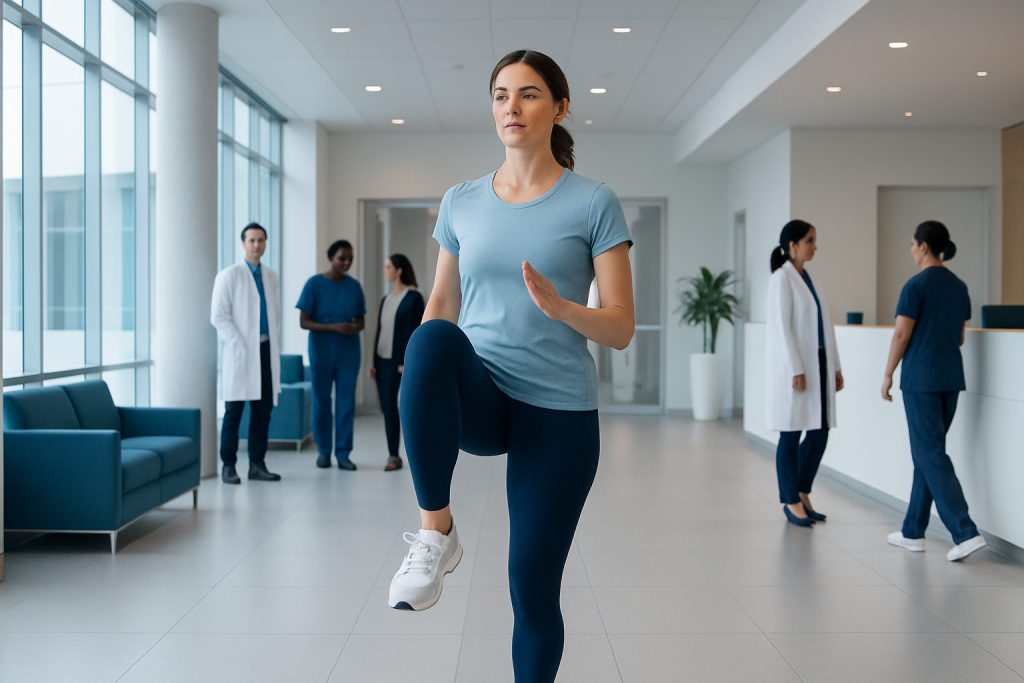
High knees are a versatile exercise used for warm-ups, cardio training, and agility work. Good posture, controlled landing, and gradual progression help reduce strain on the knees, hips, and lower back.
Key Takeaways
- High knees are a versatile exercise used for warm-ups, cardio training, and agility work.
- Good posture, controlled landing, and gradual progression help reduce strain on the knees, hips, and lower back.
- People with joint pain, balance problems, or heart and lung conditions may need modifications or medical advice before starting.
- Pain during or after high knees is not normal and may signal overuse, poor mechanics, or an underlying problem.
- A healthcare professional can help assess persistent pain, repeated injuries, or exercise limitations.
High knees are a simple cardio and coordination exercise that involves jogging or marching in place while lifting the knees toward hip level. When done with good form, they can support fitness, warm-ups, and athletic training, but technique, health conditions, and exercise intensity all affect safety.
Overview: What Are High Knees?
High knees are a bodyweight exercise in which a person jogs or marches in place while lifting each knee upward in a quick, alternating rhythm. The movement is often used to raise heart rate, warm up the lower body, and improve coordination. Depending on pace and intensity, high knees can function as a gentle mobility drill or a vigorous cardio interval.
Unlike many exercise articles that focus only on calories or performance, a medical overview also considers joint loading, muscle control, balance, and individual health status. High knees may look simple, but they place repeated demand on the ankles, knees, hips, core, and cardiovascular system. That is why form and exercise selection matter, especially for beginners, older adults, or people returning after injury.
In practical terms, high knees can be adapted to different needs. Some people perform them as a slow march for balance and hip mobility, while others use them as part of sports conditioning. The safest version depends on a person’s age, fitness level, medical history, footwear, and training surface.
How High Knees Work in the Body
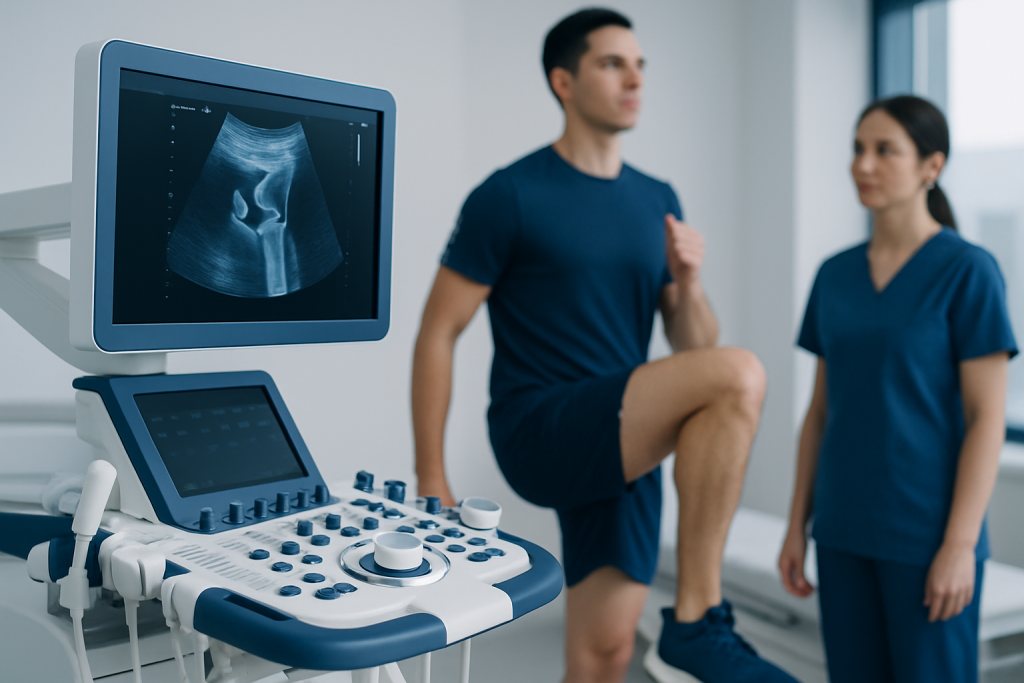
High knees primarily involve the hip flexors, quadriceps, calves, gluteal muscles, and core. The arms usually swing in coordination with the legs, which helps rhythm and balance. When performed briskly, the exercise also challenges the heart and lungs, making it a useful form of aerobic conditioning.
Because the movement is repetitive and often fast, the body must absorb impact with each landing. This means high knees are not only a muscle exercise but also a neuromuscular task. The brain, inner ear, joints, and muscles work together to maintain alignment and timing. People who have difficulty with balance, coordination, or lower-limb control may benefit from starting with a marching version.
High knees can also expose limitations that a person may not notice during daily walking. Tight hip flexors, weak core control, reduced ankle mobility, or poor landing mechanics can all become more obvious during this exercise. In that sense, high knees are both a workout and a simple movement screen.
- Main muscle groups involved: hip flexors, quadriceps, calves, gluteal muscles, abdominal muscles
- Physical capacities trained: cardiovascular endurance, rhythm, coordination, balance, agility
- Common uses: warm-up, interval training, sports drills, home exercise routines
Benefits of High Knees

When used appropriately, high knees can offer several health and fitness benefits. As a warm-up, they help increase blood flow, body temperature, and joint mobility before more demanding activity. This can prepare the muscles and nervous system for walking, running, strength training, or sports practice.
At a higher intensity, high knees can support cardiovascular fitness by raising the heart rate in a short time. They may also improve coordination between the arms and legs, which is useful in many forms of exercise and daily movement. For some people, especially those exercising at home, high knees are appealing because they require no equipment and little space.
Another advantage is adaptability. A clinician, physical therapist, or trainer can scale the movement up or down based on individual needs. A low-impact march may be suitable for gentle activity, while a faster version may fit interval programs. For people interested in broader joint and movement health, related concerns such as knee pain or recurring strain should be considered if the exercise causes discomfort.
Proper Form and Common Mistakes
Proper high knees form starts with an upright posture. The head stays neutral, the chest lifted, and the shoulders relaxed rather than hunched. The knees are lifted in an alternating pattern to a comfortable height, often toward hip level, while the feet land softly under the body. The abdominal muscles should stay gently engaged to support the trunk.
The speed of the exercise should never come at the expense of control. One common mistake is leaning too far backward or forward, which can place extra stress on the lower back and hips. Another is landing heavily on stiff legs, which may increase impact through the knees and ankles. Letting the knees collapse inward can also strain the lower limbs over time.
Beginners often benefit from learning the movement as a march before progressing to a jog. Supportive shoes and a stable, non-slippery surface are also important. If a person has ongoing movement limitations, a structured assessment and physical therapy and rehabilitation program may help improve mechanics, strength, and confidence with exercise.
- Keep the torso upright and avoid slouching.
- Lift the knees with control rather than forcing height.
- Land softly on the balls of the feet and roll through the step naturally.
- Use the arms in a relaxed, coordinated swing.
- Start slowly and increase speed only if form remains stable.
Risks, Side Effects, and Who Should Be Cautious
High knees are generally safe for healthy individuals when done in moderation, but they are not risk-free. Repeated impact and rapid leg lifting can aggravate knee, hip, ankle, or lower-back symptoms, especially if form is poor or the person increases intensity too quickly. Muscle soreness after new activity can be normal, but sharp pain, swelling, or persistent discomfort should not be ignored.
People with arthritis, prior ligament injuries, balance disorders, obesity-related joint stress, or recent surgery may need modifications. Those with heart disease, uncontrolled blood pressure, chronic lung disease, or unexplained shortness of breath should also use caution before starting vigorous exercise. In some cases, symptoms may reflect an underlying orthopedic or cardiovascular issue rather than simple deconditioning.
Exercise-related pain around the kneecap, tendon irritation, or recurring swelling may point to an overuse condition. Medical assessment may be useful if symptoms suggest sports injuries or a mechanical joint problem. Depending on the cause, care may include rest, activity adjustment, supervised rehabilitation, or in selected situations, orthopedic surgery.
How to Start High Knees Safely
For most people, the safest approach is to begin gradually. A short warm-up with walking, ankle circles, and gentle leg movements can help prepare the body. Then, high knees can start as a slow march for 20 to 30 seconds, followed by rest. As comfort improves, the duration or pace can be increased step by step.
Breathing should remain steady. If a person cannot speak in short sentences during the exercise, the intensity may be too high for their current fitness level. Good recovery between sets also matters. Overtraining can increase the risk of pain and reduce the benefits of the workout.
People with previous injuries or joint instability may benefit from an exercise plan tailored by a clinician. Supportive strengthening for the hips, thighs, calves, and core can improve tolerance. If pain continues despite activity changes, further evaluation and orthopedics and traumatology care may be appropriate to identify the source of symptoms.
When to Seek Medical Care
Medical care is advisable if high knees cause persistent pain, visible swelling, a feeling that the joint is giving way, or symptoms that interfere with walking or daily activities. Exercise should also stop if there is chest pain, marked shortness of breath, dizziness, or fainting. These symptoms are not typical effects of a routine workout and should be assessed promptly.
It is also reasonable to seek guidance if a person cannot perform low-impact versions because of balance problems, weakness, or repeated falls. A doctor or rehabilitation specialist can help determine whether the issue is related to joints, nerves, muscles, or general conditioning. Early assessment may help prevent a minor problem from becoming more limiting.
For international patients who need coordinated evaluation, Acibadem International’s multidisciplinary specialists in JCI-accredited hospitals diagnose and treat musculoskeletal and exercise-related conditions using individualized care plans. Medical advice should always be based on the person’s symptoms, examination findings, and overall health.
Frequently asked questions
Are high knees a good exercise for beginners?
Yes, high knees can be suitable for beginners if they start with a low-impact marching version. The movement should be slow, controlled, and brief at first, with attention to posture and breathing. If there is joint pain or poor balance, a healthcare professional may suggest safer modifications.
What muscles do high knees work?
High knees mainly work the hip flexors, quadriceps, calves, gluteal muscles, and core. The arms also contribute through coordinated swinging. At a faster pace, the exercise challenges the heart and lungs as well.
Can high knees hurt the knees?
They can aggravate the knees in some people, especially if form is poor, impact is heavy, or there is a pre-existing joint problem. Pain is more likely if someone progresses too quickly or exercises on a hard surface without proper footwear. Knee discomfort that lasts beyond mild temporary soreness should be evaluated.
Are high knees better as a warm-up or a workout?
They can be used for either purpose depending on intensity. A slower, controlled version works well in a warm-up, while a faster interval style can be part of a cardio workout. The best choice depends on the person’s fitness level and goals.
How long should a person do high knees?
There is no single ideal duration for everyone. Many people begin with short intervals, such as 20 to 30 seconds, then rest and repeat if comfortable. The duration can gradually increase as endurance and control improve.
Who should avoid or modify high knees?
People with recent injuries, significant arthritis, unstable joints, severe balance problems, or uncontrolled heart or lung disease may need to avoid or modify the exercise. A low-impact march or supervised plan may be safer. Medical advice is especially important if symptoms appear during activity.
This article is for general information only and is not a substitute for professional medical advice. Please consult a qualified doctor about your individual situation.
Joint and spine care in Turkey — expert assessment & treatment
JCI-accredited · board-certified surgeons · reply within 24h
Add us as a Preferred Source to see more of our trusted health content across Google Search, AI Overviews and Discover.
Check your numbers in seconds
BMI, calories, due date, blood pressure and 30+ more clinical calculators — free, instant, doctor-reviewed ranges.

More from the Health Library

Guaifenesin — Explained by Medical Evidence, Not Myths

Cut in Vagina: What Patients Need to Know

High Albumin Globulin Ratio: A Complete Medical Overview

Epidural Needle: What Patients Need to Know

Quadratus Lumborum Stretch: An Evidence-Based Guide for Patients

Microalbuminuria: A Complete Medical Overview
Orthopedic Surgery & Traumatology Specialists at Acibadem

Prof. Dr. Aziz Kaya Alturfan
Orthopedic Surgery & Traumatology
Dr. Baran Şen
Orthopedic Surgery & Traumatology
Prof. Dr. Barış Kocaoğlu
Orthopedic Surgery & Traumatology
Dr. Bengü Kasım
Physical Medicine & Rehabilitation