Hip Drop Exercise — Explained by Medical Evidence, Not Myths

Hip drop exercises primarily train the hip abductor muscles that help keep the pelvis level during single-leg activities. The goal is controlled pelvic movement, not a large range of motion or heavy load.
Key Takeaways
- Hip drop exercises primarily train the hip abductor muscles that help keep the pelvis level during single-leg activities.
- The goal is controlled pelvic movement, not a large range of motion or heavy load.
- Poor alignment, excessive movement, or pain may reduce the exercise’s usefulness and increase irritation.
- People with new injury, significant pain, or difficulty walking should seek individualized medical guidance before continuing.
- Strengthening works best alongside gradual activity progression and attention to overall movement patterns.
The hip drop exercise is a controlled movement used to train the muscles that stabilize the pelvis, especially the gluteus medius. It may support balance, walking mechanics, and lower-limb control, but it should not cause sharp pain or be used as a substitute for assessment of persistent hip, knee, or back symptoms.
What Is a Hip Drop Exercise?
A hip drop exercise is a controlled movement in which a person allows one side of the pelvis to lower slightly and then uses the muscles around the supporting hip to return the pelvis toward level. It is commonly performed while standing on one leg on a step, although related versions may be done with support or as part of a rehabilitation program.
The exercise is intended to challenge the hip abductors, particularly the gluteus medius and gluteus minimus. These muscles help stabilize the pelvis when a person walks, climbs stairs, runs, or stands on one leg. In this context, “hip drop” describes a movement drill; it does not mean that the exercise can change a person’s natural hip shape, bone structure, or body-fat distribution.
Medical evidence supports hip-focused strengthening as one component of care for some lower-limb movement problems. However, the value of a hip drop exercise depends on the individual’s symptoms, technique, strength, and goals. It is not necessary or appropriate for everyone.
What Muscles and Movements Does It Train?
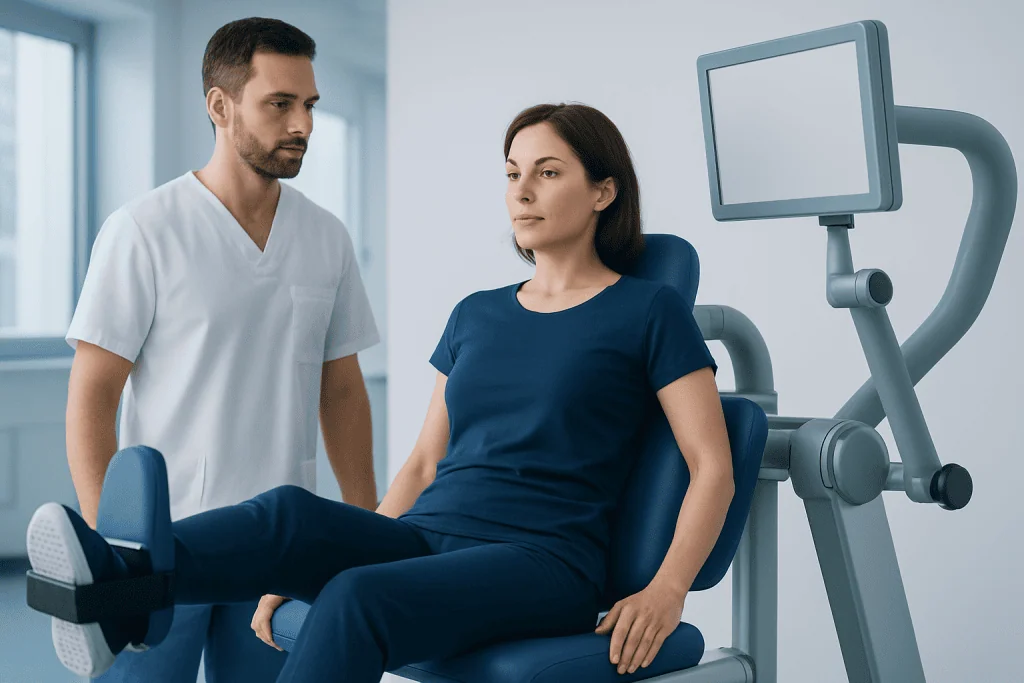
During a standing hip drop, the leg on the step is the working side. The gluteus medius on that side helps control the pelvis as the opposite side lowers and rises. The trunk, abdominal muscles, thigh muscles, and foot muscles also contribute to balance and alignment.
Hip abductor strength and coordination are important in single-leg tasks. When these muscles are not controlling the pelvis effectively, a person may compensate by leaning the trunk, allowing the knee to move inward, gripping with the toes, or moving from the low back rather than the hip. These patterns do not automatically indicate injury, but they can be useful observations during exercise assessment.
A small amount of pelvic motion is usually sufficient. The exercise is not designed to force a deep stretch, twist the spine, or repeatedly swing the leg. Quality, comfort, and control matter more than the size of the movement.
- Primary focus: hip abductors and pelvic stability.
- Additional demands: balance, ankle control, trunk stability, and coordination.
- Functional relevance: walking, stair use, running, and changing direction.
Potential Benefits and Limits of Hip Drop Exercises

When appropriately selected, hip drop exercises may help improve awareness and endurance of the muscles that support the pelvis. They can be useful in a broader program for people returning to activity after deconditioning or for those whose clinician has identified reduced hip control during walking, running, or single-leg tasks.
Hip strengthening is often included in conservative exercise programs for certain knee, hip, and lower-back complaints. For example, a clinician may consider it alongside other exercises for people with hip osteoarthritis or activity-related knee symptoms. Still, one exercise alone is unlikely to solve persistent pain, and a diagnosis should not be made from movement appearance alone.
Claims that hip drops “fix” uneven hips, eliminate all knee pain, reshape the waist, or correct every posture issue are not supported by medical evidence. Pelvic height can appear different for many reasons, including normal anatomy, posture, muscle tension, leg-length differences, spinal alignment, or how a person stands. A qualified clinician can help determine whether any asymmetry is clinically meaningful.
How to Perform a Standing Hip Drop Safely
Begin with a low, stable step or platform and use a wall, railing, or chair for light balance support if needed. Stand with one foot fully supported on the step and let the other leg hang freely beside it. Keep the supporting knee soft rather than locked, and aim to keep the chest comfortably upright.
Slowly allow the unsupported side of the pelvis to lower a small distance without bending the supporting knee or pushing the trunk far to one side. Then gently engage the muscles on the outside of the supporting hip to lift the pelvis back toward level. The movement should be smooth and quiet, with the pelvis doing the work rather than the foot pushing off the floor.
It is generally helpful to start with a range that is comfortable and easy to control. Breathing normally, moving slowly, and stopping before fatigue causes loss of alignment are sensible principles. A physiotherapist can tailor the exercise and may include physical therapy and rehabilitation when pain, weakness, or recovery needs require a more individualized plan.
- Keep the supporting foot stable and the knee aligned comfortably over the foot.
- Avoid holding the breath or tensing the shoulders.
- Do not force the pelvis beyond a comfortable range.
- Stop if sharp, catching, radiating, or worsening pain occurs.
Common Technique Errors and How to Modify the Exercise
A frequent error is bending and straightening the supporting knee instead of moving the pelvis. Another is leaning the entire trunk toward the working side, which can reduce the demand on the hip stabilizers. Some people also rotate the pelvis forward or backward rather than keeping it approximately facing ahead.
These errors are not a reason for self-criticism; they usually mean that the exercise is currently too challenging, the step is too high, or the person needs more support. Reducing the step height, holding a stable surface, slowing down, or practicing a simpler hip-strengthening movement may help.
For people who cannot stand on one leg comfortably, a clinician may recommend alternatives such as side-lying hip abduction, supported weight shifting, or other exercises selected after assessment. Exercise choices should account for balance, joint mobility, recent surgery, neurological conditions, and the person’s daily activities.
Who Should Be Cautious With Hip Drop Exercises?
Hip drops may not be suitable during an acute injury or when weight-bearing causes significant symptoms. People with severe hip or knee arthritis, a recent fracture, a recent joint operation, marked balance difficulty, or known bone fragility should ask their treating clinician or physiotherapist before starting a new single-leg exercise.
Symptoms around the hip can come from the joint, tendons, muscles, lower back, or structures elsewhere in the leg. Lateral hip tenderness, pain when lying on one side, or discomfort with prolonged walking may need assessment for conditions such as trochanteric bursitis or tendon-related pain. The appropriate exercise plan may differ depending on the cause.
People recovering from hip surgery should follow the restrictions and rehabilitation timeline provided by their surgical team. Returning to strengthening too quickly or using a movement that conflicts with postoperative precautions can delay recovery.
When to Seek Medical Care
Medical evaluation is advisable for hip pain that persists, worsens, limits walking or sleep, or does not improve with reasonable activity modification. A doctor or physiotherapist can review symptoms, examine movement and joint function, and advise whether imaging or a structured rehabilitation plan is needed.
Urgent medical care is important after a significant fall or injury, if a person cannot bear weight, has a visibly deformed joint, develops sudden severe pain, or experiences fever, redness, warmth, or substantial swelling around the hip. New numbness, weakness, or changes in bladder or bowel control also require prompt assessment.
Acibadem International’s multidisciplinary specialists and JCI-accredited hospitals assess hip and lower-limb concerns and provide treatment planning for international patients when needed. A personalized assessment is particularly valuable when symptoms recur despite careful exercise or interfere with normal activity.
Frequently asked questions
What does the hip drop exercise work?
The hip drop exercise mainly works the hip abductor muscles, especially the gluteus medius, which help stabilize the pelvis. It also involves balance and coordination through the trunk, knee, ankle, and foot. The supporting leg is typically the side doing most of the work.
Can hip drop exercises help with knee pain?
Hip strengthening can be part of an exercise plan for some forms of activity-related knee pain because hip control influences lower-limb movement. However, knee pain has many possible causes, so a hip drop exercise should not be treated as a universal solution. Persistent, swollen, locking, or unstable knees should be assessed by a health professional.
Should a hip drop exercise cause pain?
It may create mild muscle effort or fatigue around the outer hip, but it should not cause sharp, catching, or progressively worsening pain. Joint pain, pain that travels down the leg, or pain that remains after stopping is a reason to pause the exercise. A clinician can help identify a safer modification or alternative.
Can hip drops correct uneven hips?
Hip drops may improve muscular control during movement, but they do not change bone structure or reliably correct every visible pelvic asymmetry. Apparent unevenness can be related to posture, muscle tension, anatomy, or other factors. An assessment is appropriate if asymmetry is new, painful, or associated with limping.
How often should a person do hip drop exercises?
The appropriate frequency depends on current strength, symptoms, recovery status, and other physical activity. Many people begin with low-volume, controlled practice and allow time to recover before progressing. A physiotherapist can provide individualized guidance, particularly when the exercise is being used for pain or rehabilitation.
Is a hip drop exercise safe after hip replacement?
It may be appropriate at a later stage of recovery for some people, but timing and technique should be determined by the surgeon or rehabilitation team. Precautions vary according to the surgical approach, healing progress, and individual health factors. People should not add single-leg exercises without confirming that they fit their postoperative plan.
References
- American Academy of Orthopaedic Surgeons
- American Physical Therapy Association
- National Institute of Arthritis and Musculoskeletal and Skin Diseases
- National Health Service
This article is for general information only and is not a substitute for professional medical advice. Please consult a qualified doctor about your individual situation.
Explore treatments in Turkey — costs, top hospitals & a free quote
JCI-accredited · board-certified surgeons · reply within 24h
Add us as a Preferred Source to see more of our trusted health content across Google Search, AI Overviews and Discover.

More from the Health Library

Fugue — Explained by Medical Evidence, Not Myths

Transverse Fracture — Explained by Medical Evidence, Not Myths

Fingernail Fungus Pictures — Explained by Medical Evidence, Not Myths

Green Tea — Explained by Medical Evidence, Not Myths

Mct Oil: What Patients Need to Know

Backpacks for School — Explained by Medical Evidence, Not Myths
Orthopedic Surgery & Traumatology Specialists at Acibadem

Prof. Dr. Aziz Kaya Alturfan
Orthopedic Surgery & Traumatology
Dr. Baran Şen
Orthopedic Surgery & Traumatology
Prof. Dr. Barış Kocaoğlu
Orthopedic Surgery & Traumatology
Dr. Bengü Kasım
Physical Medicine & Rehabilitation