

Hip External Rotation: A Complete Medical Overview

Hip external rotation is a normal movement that helps with everyday mobility and balance. Pain, stiffness, weakness, or reduced range of motion can point to muscle, tendon, joint, or nerve-related causes.
Key Takeaways
- Hip external rotation is a normal movement that helps with everyday mobility and balance.
- Pain, stiffness, weakness, or reduced range of motion can point to muscle, tendon, joint, or nerve-related causes.
- Assessment usually includes a physical exam and sometimes imaging to look for structural hip problems.
- Treatment depends on the cause and may include rest, physical therapy, activity changes, medication, or specialist care.
- Persistent symptoms, limping, sudden severe pain, or trouble bearing weight should be evaluated by a doctor.
Hip external rotation is the movement that turns the thigh and knee outward from the body. It is essential for walking, changing direction, sitting cross-legged, and many sports, and problems with this motion can reflect muscle tightness, joint irritation, injury, or underlying hip conditions.
What hip external rotation means
Hip external rotation is the outward turning of the thigh at the hip joint. In practical terms, it happens when the knee and foot rotate away from the body’s midline. This movement is part of normal hip function and supports daily activities such as getting out of a car, stepping sideways, putting on shoes, and changing direction while walking.
The movement comes from a combination of joint shape, muscle action, and flexibility in the surrounding soft tissues. Several muscles help produce external rotation, including the gluteal muscles and smaller deep hip rotators. When these structures work together smoothly, the hip can move with control and without pain.
Hip external rotation can become important medically when it feels limited, painful, weak, or uneven from one side to the other. Some people notice it during exercise, while others become aware of it when sitting cross-legged, climbing stairs, or standing after prolonged sitting. Looking at this single movement can offer clues about the health of the hip, pelvis, and even the lower back.
Why this movement matters in daily life
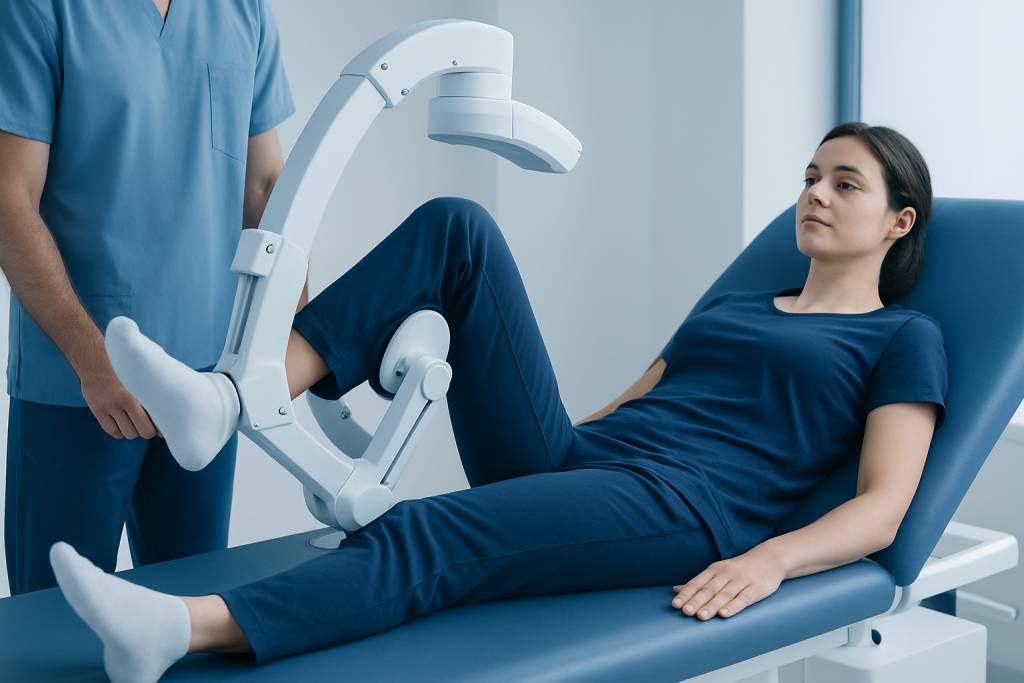
The hip is a ball-and-socket joint designed to move in several directions. External rotation plays a key role in stability, especially when standing on one leg, pivoting, or walking on uneven surfaces. Good control of this movement helps distribute forces through the pelvis and lower limbs more efficiently.
In athletes and active adults, hip external rotation contributes to performance in running, dancing, tennis, football, martial arts, and strength training. It may influence squat form, stride mechanics, and landing control. In children and older adults, it also affects balance, posture, and ease of movement during everyday tasks.
When hip external rotation is reduced or painful, the body often compensates. A person may turn the foot outward, twist through the knee, arch the lower back, or limit activity without realizing it. Over time, these movement changes may contribute to strain elsewhere, including the groin, buttock, knee, or lumbar spine.
Symptoms linked to hip external rotation problems

Not everyone with altered hip external rotation has the same symptoms. Some mainly notice stiffness, while others experience pain or a sense that one hip does not move normally. Symptoms may appear gradually or after a specific strain, fall, sports injury, or increase in training.
Common symptoms can include:
- Pain in the hip, groin, outer thigh, buttock, or lower back
- Stiffness when turning the leg outward
- Reduced range of motion on one or both sides
- Clicking, catching, or pinching sensations with movement
- Weakness or poor balance when standing on one leg
- Discomfort when sitting cross-legged, squatting, or pivoting
- Limping or avoiding certain activities
The location and timing of symptoms can help guide diagnosis. Groin pain may suggest joint-related issues, while buttock discomfort may be more related to deep rotator muscles, tendons, or irritation around the posterior hip. Pain that travels below the hip may also raise the possibility of referred pain from the lower back or irritation of nearby nerves.
If symptoms persist, worsen, or interfere with walking, sleep, exercise, or daily tasks, medical assessment is appropriate. A clinician can determine whether the movement problem is mainly muscular, structural, inflammatory, or related to another area.
Common causes and risk factors
There are many possible reasons for pain or restriction during hip external rotation. In some people, the main issue is soft-tissue tightness or weakness. In others, the joint itself is irritated or shaped in a way that makes certain movements uncomfortable. The cause is not always serious, but it should be evaluated if symptoms continue.
Muscle-related causes include tight hip flexors, overworked deep rotator muscles, weakness in the gluteal muscles, tendon irritation, or imbalances related to training, prolonged sitting, or poor movement mechanics. Overuse may develop gradually in runners, dancers, and people who repeat the same movement patterns at work or in sport.
Joint-related causes can include osteoarthritis, inflammation, labral irritation, bursitis, or impingement. Some structural conditions affect how the ball and socket move together. For example, a doctor may assess for hip impingement when turning movements provoke groin pain or pinching. Degenerative changes may also reduce motion over time, especially in older adults or after previous injury.
Other contributors include previous hip dislocation, fracture, pelvic or lower back disorders, leg-length differences, and less commonly nerve-related problems. Risk factors may include increasing age, high-impact sports, sudden increases in activity, obesity, prolonged inactivity, prior hip surgery, or underlying conditions such as osteoarthritis.
How doctors evaluate hip external rotation
Evaluation starts with a detailed history. A doctor or physiotherapist will ask when the symptoms began, what movements provoke them, whether there was an injury, and how symptoms affect walking, work, sleep, or exercise. The pattern of pain often helps distinguish muscle strain from deeper joint involvement.
The physical examination usually includes watching how the person stands, walks, squats, and moves the hip in different directions. The clinician may compare both sides, measure range of motion, check muscle strength, and perform gentle tests to identify whether the source of pain appears to be the joint, tendons, bursae, or lower back. A knee or foot problem can also influence hip mechanics, so nearby joints may be examined too.
Imaging is not always needed at the first visit, especially if symptoms are mild and suggest a simple strain. However, if pain is ongoing, severe, or linked to trauma, the doctor may request X-rays, ultrasound, or MRI. These tests can help evaluate arthritis, labral tears, inflammation, tendon problems, or other structural abnormalities. In some cases, blood tests may be used if infection or inflammatory disease is suspected.
When symptoms are complex, specialist assessment may be useful. This may involve orthopedic evaluation, sports medicine input, or rehabilitation planning. If surgery becomes relevant for a structural hip problem, options such as hip replacement or robotic orthopaedic surgery are considered only after careful diagnosis and when more conservative care is unlikely to provide enough relief.
Treatment options and rehabilitation
Treatment depends on the cause, severity, and the person’s activity level. Many cases improve with conservative care. Early treatment often focuses on reducing pain, avoiding aggravating movements for a short period, and gradually restoring comfortable motion. Rest does not usually mean complete inactivity; instead, it often means modifying activities to prevent further irritation.
Physical therapy is commonly recommended. A tailored program may include stretching for tight soft tissues, strengthening for the gluteal and pelvic muscles, balance work, and retraining of walking or sports technique. For some people, correcting movement patterns is more important than simply increasing flexibility. The goal is a hip that moves well and remains stable under load.
Doctors may also advise supportive measures such as heat or ice, short-term pain relief medication if appropriate, and changes in training or workstation setup. If inflammation around the joint or bursa is prominent, targeted treatments may be discussed. Structural problems can require more specialized management, and some people with advanced joint damage from hip osteoarthritis may eventually benefit from surgical treatment after non-surgical options have been tried.
Recovery time varies widely. A mild muscle-related problem may settle over weeks, while longstanding joint disorders can require more prolonged rehabilitation. Following a clear plan, progressing gradually, and checking technique during exercise can improve outcomes and reduce the chance of recurrence.
Self-care, prevention, and healthy movement habits
Healthy hip movement is supported by a balance of mobility, strength, and daily habits. People who sit for long periods may benefit from standing breaks, gentle movement during the day, and attention to posture. Before sport or exercise, a gradual warm-up can help the muscles and joint prepare for turning, pivoting, and impact.
Useful prevention strategies may include:
- Maintaining regular physical activity with a mix of mobility and strength work
- Progressing training volume gradually rather than suddenly increasing intensity
- Strengthening the gluteal, core, and thigh muscles
- Using proper technique for squats, lunges, and directional changes
- Taking breaks from prolonged sitting
- Wearing suitable footwear for activity
- Addressing early signs of pain before they become persistent
Self-care should be gentle and individualized. Forceful stretching into pain is usually not helpful and may worsen irritation. If an exercise causes sharp pain, catching, or increased limping, it should be stopped until a clinician advises a safer alternative. People with arthritis or recent injury often do better with structured guidance than with unsupervised internet routines.
For international patients needing specialist assessment, Acibadem International’s multidisciplinary teams in JCI-accredited hospitals diagnose and treat hip conditions with orthopedic, imaging, and rehabilitation support when appropriate.
When to seek medical care
Medical advice is recommended if hip external rotation is painful, clearly limited, or affecting daily activities for more than a short time. It is also sensible to seek assessment if symptoms keep returning, if one side feels significantly different from the other, or if pain interferes with exercise, sleep, or walking.
Prompt medical attention is especially important after a fall or injury, if there is sudden inability to bear weight, marked swelling, visible deformity, fever, or severe pain that does not improve with rest. Numbness, weakness, or pain that radiates far down the leg may suggest another cause that should be checked without delay.
Early evaluation can help clarify whether the issue is a straightforward soft-tissue problem or part of a more complex hip condition. Timely care often allows more effective treatment planning and may help prevent ongoing compensation patterns that place stress on the knee, pelvis, or back.
Frequently asked questions
What is hip external rotation in simple terms?
Hip external rotation is the movement that turns the thigh outward at the hip joint. It helps with actions such as pivoting, stepping sideways, sitting cross-legged, and getting in and out of a car.
Is limited hip external rotation always a sign of a serious problem?
No. It can happen from temporary muscle tightness, overuse, or minor strain. However, if it is persistent, painful, or associated with limping or reduced function, it should be assessed by a qualified clinician.
Can hip external rotation pain come from the back instead of the hip?
Yes. Pain felt during hip movement can sometimes be referred from the lower back, pelvis, or nearby nerves. A medical examination helps determine whether the source is the hip joint itself or another area.
What doctor treats problems with hip external rotation?
A primary care doctor, sports medicine physician, orthopedic specialist, or physiotherapist may evaluate this problem. The right specialist depends on whether symptoms seem related to injury, arthritis, training overload, or a more complex joint issue.
Will exercises help improve hip external rotation?
In many cases, yes. Exercises can help when the problem is related to weakness, stiffness, or movement control. The most effective program is individualized, because too much stretching or the wrong exercise may worsen symptoms in some structural hip conditions.
How long does recovery take?
Recovery time varies by cause. Mild soft-tissue problems may improve within weeks, while arthritis, labral irritation, or longstanding mechanical issues may require longer treatment and rehabilitation. A doctor or physiotherapist can give a more realistic timeline after evaluation.
References
- American Academy of Orthopaedic Surgeons
- National Institute of Arthritis and Musculoskeletal and Skin Diseases
- American Physical Therapy Association
- National Health Service
- Mayo Clinic
This article is for general information only and is not a substitute for professional medical advice. Please consult a qualified doctor about your individual situation.
Joint and spine care in Turkey — expert assessment & treatment
JCI-accredited · board-certified surgeons · reply within 24h
Add us as a Preferred Source to see more of our trusted health content across Google Search, AI Overviews and Discover.

More from the Health Library



Related Specialists

Dr. Evren Baca
Ophthalmology
Dr. Betül Toygar
Physical Medicine & Rehabilitation
Dr. Erdem Uzunoğlu
Pediatrics
Dr. Semra Pehlivan
Acibadem Life Clinical Service