Hip Fracture: Symptoms, Emergency Surgery, and Recovery

A hip fracture commonly causes severe hip or groin pain, inability to stand or walk, and sometimes a shortened or outward-turned leg. Most hip fractures are treated with surgery, often as soon as the patient is medically stable, because early repair supports safer recovery and mobility.
Key Takeaways
- A hip fracture commonly causes severe hip or groin pain, inability to stand or walk, and sometimes a shortened or outward-turned leg.
- Most hip fractures are treated with surgery, often as soon as the patient is medically stable, because early repair supports safer recovery and mobility.
- Recovery includes pain control, prevention of complications, physiotherapy, walking support, and treatment of underlying bone weakness such as osteoporosis.
- Older adults, people with osteoporosis, and those at risk of falls should take preventive steps such as strength training, home safety changes, vision checks, and bone health care.
- Any suspected hip fracture should be treated as an emergency; the person should not be forced to stand or walk.
A hip fracture is a serious injury, most often caused by a fall, that usually requires urgent medical assessment and surgery. Early treatment, safe rehabilitation, and prevention of future falls are central to recovery and long-term mobility.
Overview
A hip fracture is a break in the upper part of the thigh bone, called the femur, near the hip joint. It is different from a soft-tissue hip injury or a simple bruise because the bone itself has broken. Hip fractures are most common in older adults, especially after a fall from standing height, but they can also occur in younger people after high-energy trauma such as a road accident or sports injury.
The hip is essential for standing, walking, balance, and transferring from a bed or chair. Because of this, a fracture in this area can quickly affect independence and general health. Many people with a hip fracture cannot put weight on the injured leg, and pain may be severe even when lying still. Prompt medical evaluation helps confirm the diagnosis, relieve pain, and plan the safest treatment.
Most hip fractures require surgery. This is because surgery can stabilize or replace the damaged bone and allows the patient to begin moving again sooner. Delayed mobility increases the risk of complications such as blood clots, pressure injuries, chest infections, muscle loss, and loss of confidence. Treatment decisions are individualized according to the fracture type, the person’s age and activity level, bone quality, and overall medical condition.
Symptoms of a Hip Fracture

The most typical symptom of a hip fracture is sudden, intense pain in the hip, groin, thigh, or sometimes the knee after a fall or injury. The person may be unable to stand, walk, or lift the leg. In some cases, especially when the fracture is impacted or incomplete, the person may still be able to take a few steps, but pain usually worsens with weight-bearing or movement.
Visible changes can also occur. The injured leg may look shorter than the other leg or may turn outward. Swelling, bruising, or tenderness around the hip may develop, although these signs are not always obvious at first. Older adults may show less clear symptoms, particularly if they have memory problems or other medical conditions; a sudden inability to walk after a fall should always be taken seriously.
Common warning signs include:
- Severe pain in the hip, groin, thigh, or buttock after a fall
- Inability to stand, walk, or bear weight on the affected leg
- Pain that increases when the hip is moved
- A leg that appears shortened, rotated outward, or difficult to move
- Swelling, bruising, or tenderness around the hip
- Confusion, weakness, or distress in an older adult after a fall
If a hip fracture is suspected, the person should not be encouraged to walk, stretch, or be moved unnecessarily. Emergency medical services should be contacted so pain control, safe transfer, and hospital assessment can be arranged.
Causes and Risk Factors
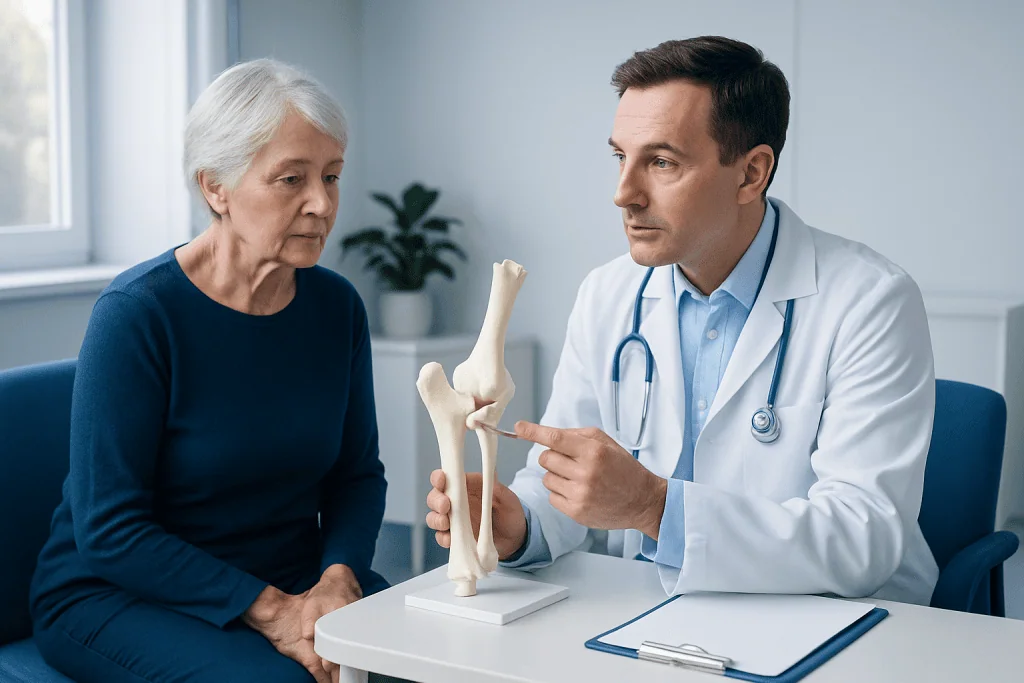
In older adults, most hip fractures occur after a low-energy fall, such as slipping in the bathroom, tripping on a rug, or falling while getting out of bed. The underlying reason is often reduced bone strength. Osteoporosis, a condition in which bones become thinner and more fragile, greatly increases the chance that a minor fall will cause a fracture. Hip fractures can also occur without a major fall if the bone is severely weakened.
In younger adults, the hip bone is usually stronger, so fractures typically require a stronger force. Examples include vehicle collisions, falls from height, or high-impact sports trauma. Less commonly, a fracture may develop through abnormal bone affected by a tumor, infection, or long-term medication-related bone changes. These situations require careful evaluation to identify and treat the underlying cause.
Risk factors for hip fracture include older age, osteoporosis, previous fragility fracture, family history of hip fracture, low body weight, smoking, high alcohol intake, vitamin D deficiency, poor balance, reduced muscle strength, vision problems, and certain medicines that increase drowsiness or dizziness. Medical conditions such as Parkinson’s disease, stroke, dementia, diabetes-related nerve problems, and arthritis can also raise fall risk.
Prevention is not only about bone density. It also involves reducing the chance of falling. A person with strong bones can still fracture a hip after a severe fall, and a person with weak bones may fracture more easily after a minor trip. For this reason, doctors often assess both bone health and fall risk after any hip fracture.
Diagnosis and Emergency Assessment
Diagnosis begins with the history of the injury, symptoms, physical examination, and imaging. In the emergency department, clinicians check pain level, circulation and sensation in the leg, overall medical stability, and any injuries caused by the fall. Blood tests, heart tracing, chest assessment, and medication review may be needed before surgery, especially in older adults or people with heart, lung, kidney, or blood-thinning medication issues.
An X-ray of the pelvis and hip usually confirms the fracture and shows its location. The main types include femoral neck fractures, which occur just below the ball of the hip joint; intertrochanteric fractures, which occur between the bony prominences of the upper femur; and subtrochanteric fractures, which occur slightly lower in the thigh bone. The exact type helps the orthopedic surgeon choose the best repair method.
Sometimes an X-ray looks normal even though symptoms strongly suggest a fracture. This can happen with small, non-displaced, or stress-type fractures. In such cases, a magnetic resonance imaging scan, or sometimes computed tomography, may be used to detect a hidden fracture. Accurate diagnosis matters because walking on an undetected fracture can worsen the injury.
Hip fracture care is usually coordinated by a team. This may include emergency physicians, orthopedic surgeons, anesthesiologists, internal medicine or geriatric specialists, nurses, physiotherapists, and rehabilitation professionals. The goal is to treat the fracture while also managing pain, hydration, nutrition, medications, and any medical conditions that may affect surgery and recovery.
Treatment Options and Emergency Surgery
For most patients, hip fracture treatment involves surgery once the person is medically stable. Surgery is often performed urgently, commonly within the first day or two when possible, because early fixation or replacement can reduce time in bed and support safer mobilization. However, timing must be balanced with the need to correct dehydration, anemia, infection, blood-thinner effects, or unstable heart or lung conditions before anesthesia.
The type of surgery depends on the fracture pattern and patient factors. Some fractures are repaired with screws, plates, or a sliding hip screw to hold the bone in position while it heals. Intertrochanteric and subtrochanteric fractures are often stabilized with an intramedullary nail or a plate-and-screw system. Certain femoral neck fractures, especially when displaced in older adults, may be treated with partial hip replacement, called hemiarthroplasty, or total hip replacement when appropriate.
Non-surgical treatment is uncommon but may be considered in carefully selected situations, such as a patient who is too medically fragile for an operation or has a very stable fracture with minimal pain. It generally requires close monitoring, pain control, prevention of complications, and a clear mobility plan. Because prolonged bed rest has significant risks, the decision to avoid surgery is made cautiously and with discussion between the medical team, patient, and family.
After surgery, care focuses on pain relief, early sitting and standing when safe, blood clot prevention, wound care, and monitoring for complications. Patients may receive walking aids such as a walker or crutches. The surgeon and physiotherapist advise how much weight can be placed on the leg, which may vary depending on the procedure and bone quality.
Recovery and Rehabilitation
Recovery after a hip fracture is a gradual process. Many patients begin physiotherapy in the hospital as soon as their condition allows, sometimes within a day after surgery. Early movement helps reduce complications and rebuilds confidence. The first goals are often sitting upright, standing with assistance, transferring safely, and taking short steps with a walker.
Rehabilitation continues after discharge, either at home, in an outpatient clinic, or in a rehabilitation facility depending on the patient’s needs. Exercises usually focus on hip and leg strength, balance, walking technique, safe stair use, and daily activities such as bathing, dressing, and getting in and out of a chair. Occupational therapy may help with home adaptations and equipment, including raised toilet seats, shower chairs, grab bars, and safe footwear.
Healing time varies. Factors such as age, pre-injury mobility, fracture type, surgery type, nutrition, medical conditions, cognitive function, and family support all influence recovery. Some people return close to their previous level of activity, while others need longer-term walking support. A realistic recovery plan includes patience, regular follow-up, and adjustment of goals as strength improves.
Recovery also includes preventing a second fracture. Doctors may recommend evaluation for osteoporosis, vitamin D deficiency, calcium intake, and medications that affect bone strength or balance. Pain should gradually improve, but new severe pain, wound redness, fever, calf swelling, shortness of breath, or sudden difficulty walking should be reported promptly to a healthcare professional.
Prevention and Self-Care
Preventing hip fractures means strengthening bones and reducing falls. Bone health measures may include adequate protein intake, calcium and vitamin D through diet or supplements when recommended, weight-bearing and resistance exercise, and treatment for osteoporosis if diagnosed. People who have already had a fragility fracture should ask their doctor whether a formal bone health assessment is needed.
Fall prevention is equally important. Simple home changes can make a major difference: removing loose rugs, improving lighting, keeping walkways clear, installing grab bars in the bathroom, using non-slip mats, and making sure frequently used items are easy to reach. Shoes should be supportive and well-fitting. Vision and hearing checks, medication reviews, and management of dizziness or low blood pressure can reduce avoidable falls.
Safe activity supports both prevention and recovery. Walking, balance exercises, supervised strength training, and programs such as tai chi may help improve stability in suitable patients. People with arthritis, neurological conditions, or previous falls should seek individualized exercise advice rather than avoiding movement altogether. The aim is confident, safe mobility, not overexertion.
For international patients seeking assessment or treatment, Acibadem International’s multidisciplinary orthopedic, rehabilitation, anesthesia, and internal medicine teams provide diagnosis and care for hip fractures in JCI-accredited hospitals. As with any medical decision, the best treatment plan depends on the individual patient’s clinical findings and should be discussed with qualified specialists.
When to See a Doctor
A suspected hip fracture is a medical emergency. Emergency help should be called if a person has hip or groin pain after a fall and cannot stand, walk, or move the leg normally. The person should be kept as comfortable and still as possible until trained medical professionals arrive. Food and drink may be avoided in case surgery or anesthesia is needed, unless emergency responders advise otherwise.
Medical review is also important after any fall in an older adult, even if pain seems mild at first. Some fractures are not obvious immediately, and symptoms may become clearer over several hours. Persistent hip, groin, thigh, or knee pain after a fall should be evaluated, especially if walking is painful or unsteady.
After treatment, follow-up appointments are essential. The surgeon checks bone healing, implant position, wound healing, pain control, and mobility progress. Patients and families should also discuss osteoporosis care, fall prevention, and long-term rehabilitation. Timely communication with the care team helps solve problems early and supports the safest possible recovery.
Frequently asked questions
Is a hip fracture the same as a broken hip?
Yes. A hip fracture is the medical term for a broken bone in the upper femur near the hip joint. It is not the same as a hip dislocation, muscle strain, or bruise, although symptoms may overlap at first.
Does every hip fracture need surgery?
Most hip fractures are treated with surgery because it stabilizes the bone and allows earlier movement. Non-surgical care may be considered only in selected cases, such as very stable fractures or when surgery is not safe due to severe medical illness. The decision should be made with an orthopedic and medical team.
How soon is surgery usually performed?
Surgery is generally performed as soon as the patient is medically stable, often within 24 to 48 hours when possible. Some patients need additional tests or treatment first, such as managing blood thinners, heart problems, infection, dehydration, or anemia. The aim is safe, timely surgery rather than unnecessary delay.
How long does recovery from a hip fracture take?
Recovery varies widely depending on age, health, fracture type, surgery type, and previous mobility. Many patients start standing and walking with assistance soon after surgery, but rebuilding strength and independence may take weeks to months. Ongoing rehabilitation and fall prevention are important parts of recovery.
Can a person walk after hip fracture surgery?
Many patients are encouraged to walk with assistance soon after surgery, if the surgeon and physiotherapist consider it safe. The amount of weight allowed on the leg depends on the fracture repair, bone quality, and overall condition. A walker, crutches, or other support may be needed during recovery.
What complications should families watch for after surgery?
Families should contact the healthcare team if there is fever, increasing wound redness or drainage, worsening pain, new confusion, calf swelling, chest pain, shortness of breath, or sudden loss of mobility. These symptoms do not always mean a serious problem, but they need prompt medical assessment. Regular follow-up helps detect and manage issues early.
How can another hip fracture be prevented?
Prevention includes treating osteoporosis when present, improving vitamin D and calcium intake if needed, doing safe strength and balance exercises, and reducing fall hazards at home. Medication review, vision checks, supportive shoes, and assistive devices can also help. A doctor can recommend a personalized prevention plan based on individual risk factors.
References
- American Academy of Orthopaedic Surgeons
- National Institute for Health and Care Excellence
- World Health Organization
- International Osteoporosis Foundation
- Mayo Clinic
This article is for general information only and is not a substitute for professional medical advice. Please consult a qualified doctor about your individual situation.
Joint and spine care in Turkey — expert assessment & treatment
JCI-accredited · board-certified surgeons · reply within 24h
Add us as a Preferred Source to see more of our trusted health content across Google Search, AI Overviews and Discover.

Orthopedics & Spine
Care for bones, joints and the musculoskeletal system, including joint replacement, sports injuries and trauma.
125 specialists in this unit